Knee Replacement Implants — What Actually Goes Inside Your Knee

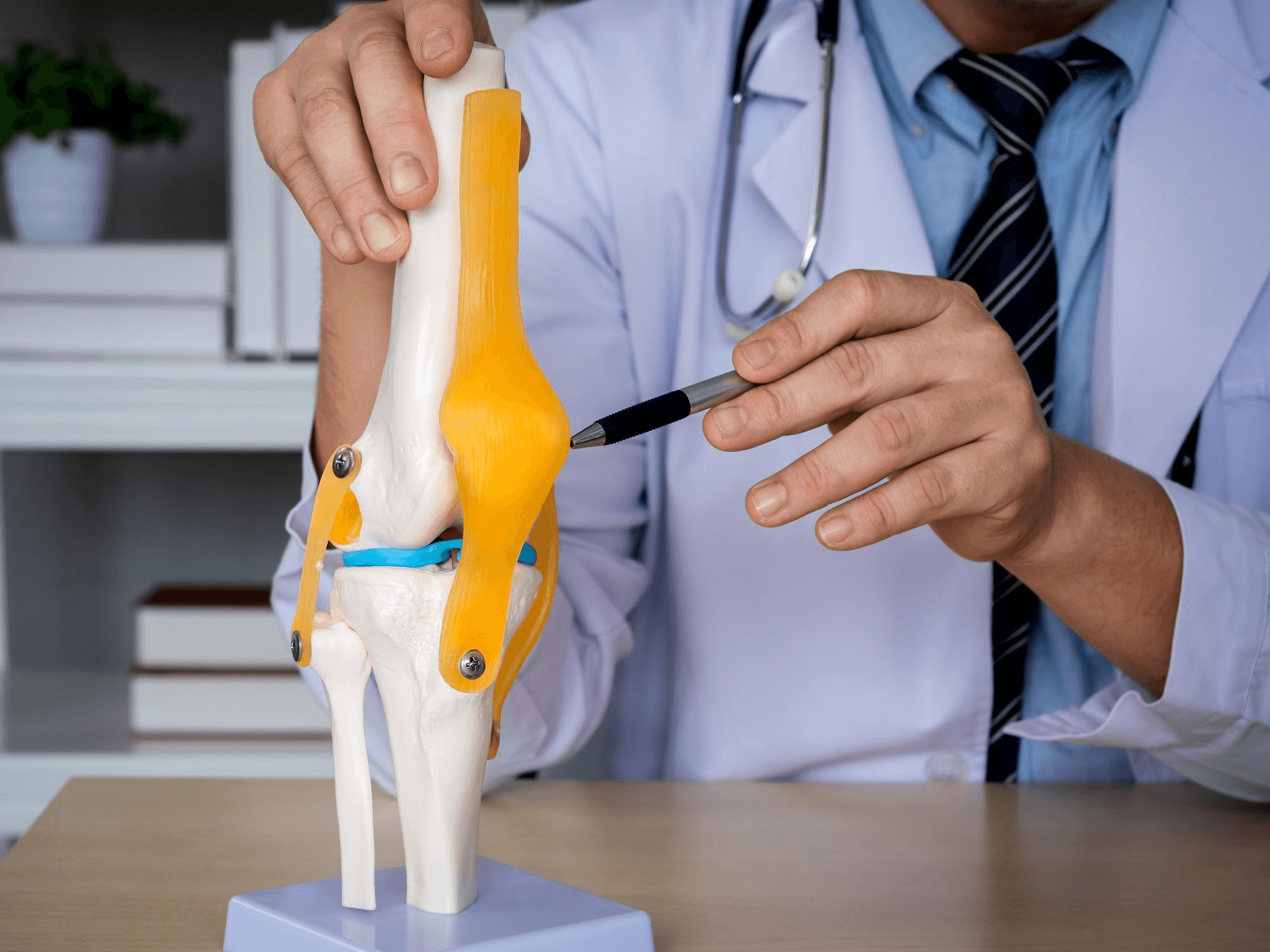
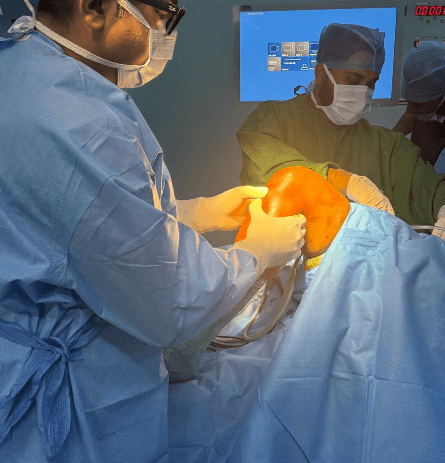
Doctor explaining knee implant components and surgical choices related to partial vs total knee replacement procedures.
Most patients who consent to knee replacement surgery do so with only a vague understanding of what will actually be placed inside their joint. "Metal and plastic" is the usual summary. Sometimes "a prosthesis." The specific components, the materials, why one option might be chosen over another — this almost never gets explained.
It should. The implant inside you will be there for 20 or more years. Understanding what it is and why it was selected is reasonable, and asking about it is entirely appropriate.
The Three Components of a Knee Replacement
A total knee replacement has three distinct parts:
1. Femoral Component
A curved, cap-like shell that fits over the reshaped end of the femur (thigh bone). It replaces the two smooth rounded condyles of the femur that normally glide against the tibia.
Made of metal alloy — cobalt-chromium is standard, titanium in some designs. The articulating (bearing) surface is highly polished.
2. Tibial Component
A flat metal tray that sits on the reshaped top surface of the tibia (shin bone). The tibial component has a stem or keel that goes into the bone for stability.
Made of cobalt-chromium or titanium alloy.
3. Tibial Polyethylene Insert (The Plastic Spacer)
The insert clicks or snaps into the tibial tray. The femoral component glides on this insert — it is the actual bearing surface of the joint.
This is where wear occurs. This is what eventually wears out over decades of use.
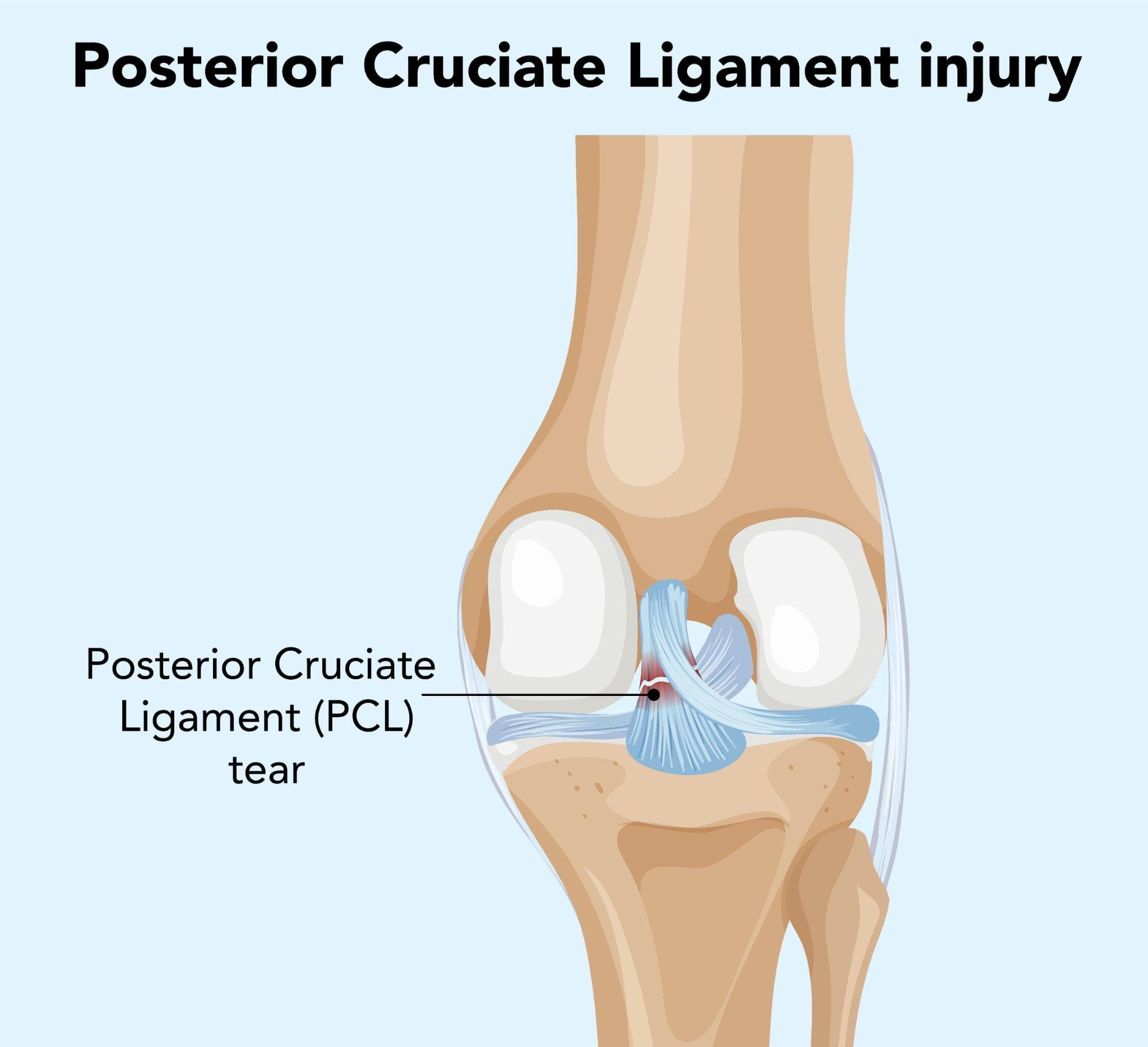
In cruciate-retaining (CR) designs: The insert has a relatively flat surface. The posterior cruciate ligament (PCL) is preserved, and its function helps the femoral component roll backward on the tibia naturally during knee flexion.
In posterior-stabilised (PS) designs: The PCL is removed. The insert has a central post that fits into a box on the femoral component, mechanically replicating the PCL's function. Most knee replacement systems used in India are posterior-stabilised, as it simplifies the balance and allows the surgeon more control over final knee function.
Optional: Patellar Component
In some systems, the back of the kneecap (patella) is also resurfaced with a plastic button anchored to bone. Whether to resurface the patella is a decision that varies by surgeon preference, patient anatomy, and pre-existing patella condition. In Indian practice, some surgeons resurface routinely; others reserve it for specific indications (significant pre-operative anterior knee pain, severe patellar arthritis on imaging).
The Critical Material: Highly Cross-Linked Polyethylene (HXLPE)
The single most important material advance in total knee replacement over the last two decades is highly cross-linked polyethylene.
Conventional polyethylene — used until the late 1990s and early 2000s — wore at a measurable rate. Wear debris accumulated around the joint, triggering osteolysis (bone resorption by the immune system reacting to plastic particles), ultimately loosening the implant.
Cross-linking polyethylene with radiation (and sometimes heat-treating afterward to reduce free radicals) rearranges the molecular structure, dramatically increasing wear resistance. Studies comparing HXLPE to conventional polyethylene show wear reductions of 50–80%.
Modern knee implants using HXLPE have projected 20–30 year lifespans. This is why the old advice of "wait until 60" is increasingly less relevant — the implant durability has improved substantially.
When choosing a surgeon or hospital for knee replacement, confirm that HXLPE is being used rather than conventional polyethylene. The cost difference is modest. The longevity difference is significant.
Cemented vs Cementless Fixation
The femoral and tibial components must be fixed to bone. Two methods:
Cemented
Bone cement (polymethylmethacrylate, PMMA) is applied to the interface between implant and bone. The cement fills microscopic gaps and hardens, creating an immediate, strong bond.
The most commonly used fixation method for total knee replacement globally and in India. Provides immediate stability, allowing early weight-bearing. Strong long-term data.
Appropriate for: Most patients, including older patients with any degree of bone quality reduction, and patients where immediate stability is prioritised.
Cementless (Porous Ingrowth)
The implant surface is textured or porous-coated. No cement is used. Initial stability comes from a press-fit into the prepared bone surface. Over 6–12 weeks, the patient's bone grows into the porous surface — osseointegration — creating a biological bond.
No cement means no future cement fragmentation (a theoretical failure mechanism in cemented implants). Potentially better suited for younger, more active patients with good bone quality.
Used less commonly in knee replacement than in hip replacement. The highly loaded, relatively flat tibial interface is more demanding for cementless fixation than the conical femoral stem in hip replacement.
Appropriate for: Younger patients (under 60) with excellent bone quality, where very long-term durability is the priority.
Hybrid fixation: Some surgeons use cemented tibial component (where cement is most important for reliable tibial fixation) and cementless femoral component. This is also a valid approach.
Mobile-Bearing vs Fixed-Bearing Inserts
Fixed-bearing: The polyethylene insert is locked into the tibial tray. It doesn't rotate. The simpler, more common design. Highly reliable.
Mobile-bearing (rotating platform): The insert is allowed to rotate on the tibial tray, theoretically accommodating small rotational mismatches and reducing stress at the polyethylene surface.
The clinical advantage of mobile-bearing over fixed-bearing in terms of patient outcomes has been difficult to demonstrate consistently in large studies. Both are appropriate. Mobile-bearing designs are sometimes used in specific clinical situations (certain anatomical patterns, specific surgeon preference).
Potential complication of mobile-bearing: Insert spin-out (dislocation of the rotating insert from the tray). Uncommon but does occur.
High-Flex Implants: Does It Help with Indian Lifestyle?
A frequent question in India: can I sit cross-legged (padmasana), squat (utkaṭāsana), or use a squatting toilet after knee replacement?
Standard knee replacement allows approximately 120–130 degrees of flexion in most patients. Sitting cross-legged and squatting require 130+ degrees.
High-flex implant designs — with modified femoral component geometry that allows greater flexion — theoretically enable more knee bending. Studies show these designs can achieve slightly greater flexion angles.
However, the clinical reality is nuanced:
- The limiting factor for deep flexion is often soft tissue (capsule, muscle tightness) rather than implant geometry
- High-flex implants require specific surgical technique for the additional flexion range to be achieved
- Squatting and sitting cross-legged after knee replacement involve complex biomechanics that high-flex implants alone cannot guarantee
For Indian patients who need to use squatting toilets or floor-sitting positions, the conversation about realistic post-operative expectations is as important as implant selection. Many patients manage sitting cross-legged with standard implants after thorough physiotherapy; some cannot manage it even with high-flex designs.
International vs Indian Implant Brands
Major international implant manufacturers — DePuy Synthes, Stryker, Zimmer Biomet, Smith & Nephew — have established product lines in India with decades of outcome data and regulatory approvals. These implants are more expensive but come with 15–25 year follow-up registry data from large national joint registries.
Indian-manufactured implants are available at lower cost. For patients whose insurance coverage is limited, they provide an option. However, long-term registry data comparable to international brands is less established.
When choosing a hospital for knee replacement, asking specifically which implant brand and system will be used — and whether it is HXLPE — is entirely reasonable and should receive a direct answer.
Dr. Mayank Chauhan at Prakash Hospital, Noida
Dr. Mayank Chauhan uses internationally registered knee replacement implants with established clinical pedigree at Prakash Hospital, Sector 33, Noida. The specific implant selection for each patient is discussed pre-operatively, including fixation method, bearing surface, and whether patellar resurfacing is indicated.
To book a consultation, call the number listed on the website.