Anesthesia for Orthopedic Surgery — What Are Your Options and How to Choose

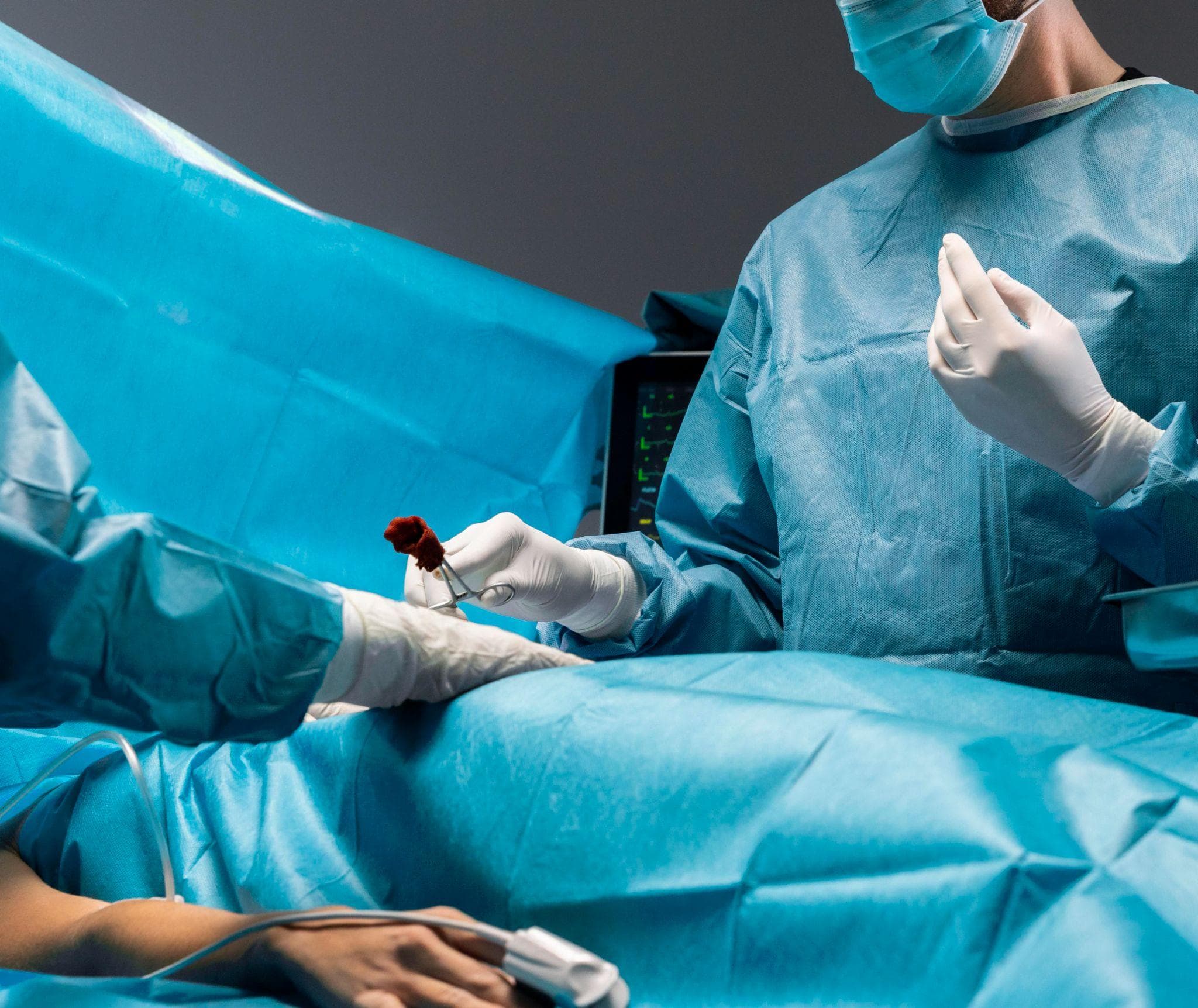
Orthopedic surgeons performing advanced shoulder arthroscopy surgery in a sterile operation theatre.
Most patients approach orthopedic surgery with questions focused on the operation itself — the implant, the incision, the recovery timeline. Anaesthesia often comes as an afterthought, something they assume the doctor will sort out.
But anaesthesia is not a passive backdrop to surgery. The type of anaesthesia chosen directly affects how comfortable you are during surgery, how much pain you experience immediately after, what your recovery is like in the first 24–48 hours, and what the risks are — particularly if you have specific medical conditions.
Understanding your options is part of being a prepared patient.
The Main Types Used in Orthopedic Surgery
1. General Anaesthesia (GA)
You are completely unconscious. Anaesthetic agents are administered intravenously and/or through a breathing gas mixture, causing loss of consciousness. A breathing tube is placed in your airway. You feel and remember nothing.
Used for: Complex spine surgery, shoulder surgery in certain positions, surgeries too long or complex for regional anaesthesia alone, patients who are not candidates for spinal anaesthesia, or patients who strongly prefer to be asleep.
Advantages:
- Complete loss of consciousness — no awareness of the procedure
- Allows full airway control
- Appropriate for very complex or prolonged surgery
Disadvantages:
- Temporary cognitive effects (confusion, slow thinking) are common for hours after waking — more significant in elderly patients
- Nausea and vomiting more common than with regional anaesthesia
- Slightly higher risk of chest complications post-operatively
- Associated with higher rates of post-operative delirium in elderly patients
2. Spinal Anaesthesia
A fine needle is placed between the lumbar vertebrae (the injection is into the cerebrospinal fluid surrounding the spinal cord). Local anaesthetic is injected, producing numbness from the waist down within minutes.
You are fully awake but feel absolutely nothing below the waist. Many patients receive a mild sedative to reduce anxiety and keep them comfortable, but they remain arousable and breathing independently.
Used for: Knee replacement, hip replacement, ankle surgery, and most lower limb orthopedic surgery.
Advantages:
- Excellent lower body anaesthesia for 2–3 hours
- No airway manipulation
- Lower risk of post-operative nausea
- Associated with less post-operative cognitive impairment than GA, particularly relevant in elderly patients
- Potentially lower blood loss during surgery (slightly)
- Faster recovery of alertness
Disadvantages:
- Does not provide upper body anaesthesia
- Duration limited (though can be extended with a spinal catheter in longer procedures)
- Very small risk of headache if the dura is accidentally punctured (post-dural puncture headache)
- Some patients find the idea of being awake during surgery uncomfortable (manageable with adequate sedation)
Spinal anaesthesia is the preferred technique for most knee and hip replacement surgery in India and globally.
3. Epidural Anaesthesia
Similar to spinal but with a catheter (fine tube) placed in the epidural space (outside the dura mater) rather than into the cerebrospinal fluid. This allows the anaesthesia to be topped up or modified throughout surgery and maintained post-operatively for pain control.
Used for: Prolonged lower limb surgery, thoracic/abdominal spine surgery, and as a component of post-operative pain management.
Advantage over spinal: Continuous infusion allows longer procedure duration and extended pain relief after surgery.
4. Regional Nerve Blocks
Local anaesthetic is injected near specific nerves or nerve plexuses supplying the operated area, numbing that region without affecting consciousness or the rest of the body.
Used in orthopedic surgery as:
- Primary anaesthesia (for some procedures, the nerve block alone is sufficient)
- Supplementary analgesia alongside spinal or GA — the most common use in modern joint replacement
Key nerve blocks in orthopedic surgery
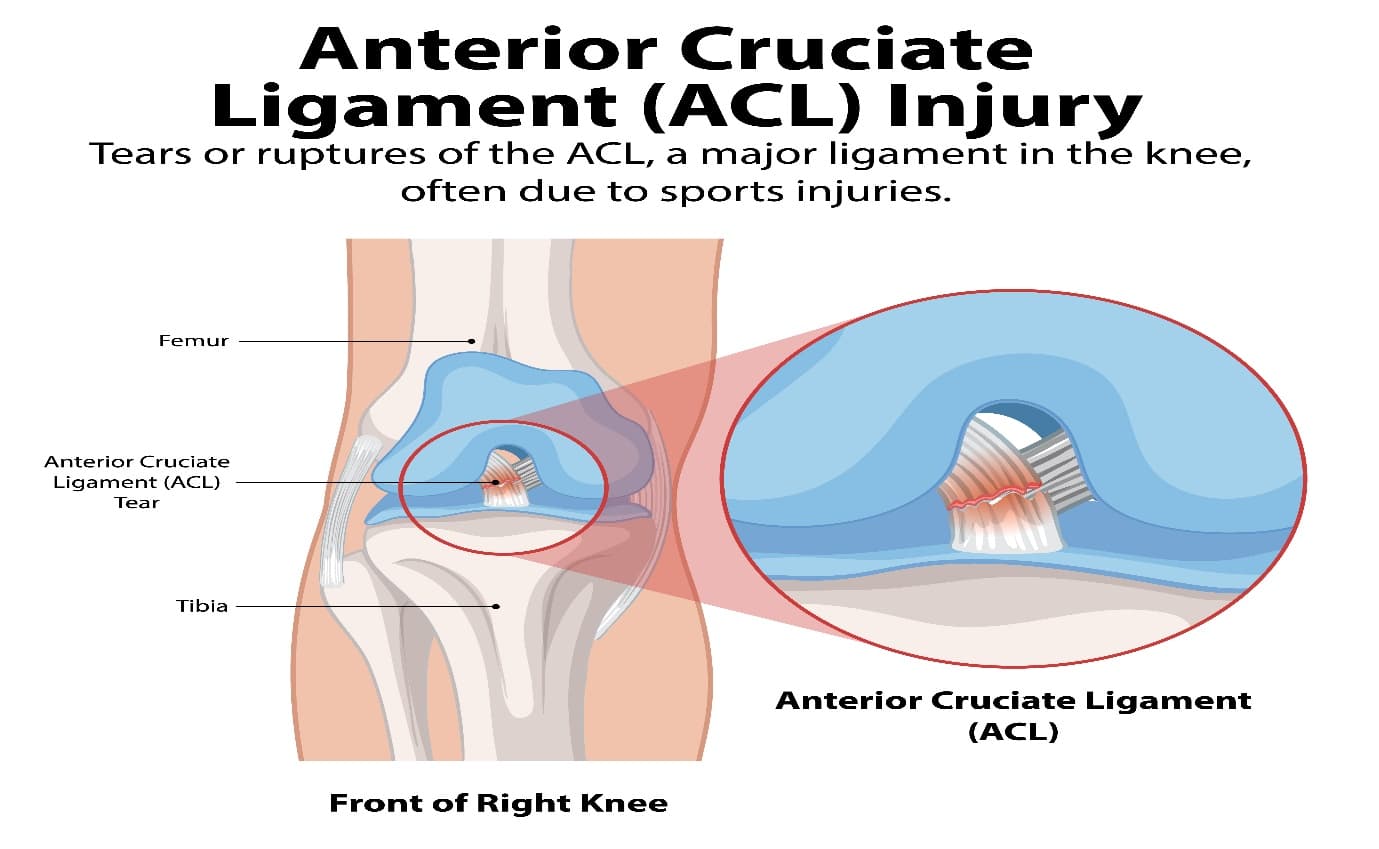
Femoral nerve block / Adductor canal block (ACB): Used for knee surgery. The femoral nerve or its terminal branch (saphenous nerve in the adductor canal) supplies sensation to the front and inner knee. A block here provides excellent post-operative pain control for knee replacement and ACL surgery. The adductor canal block is preferred over femoral nerve block in current practice — it provides equivalent pain control without weakening the quadriceps, allowing earlier safe mobilisation.
Interscalene nerve block: Used for shoulder surgery. Numbs the entire shoulder and arm via the brachial plexus at the neck level. Provides excellent post-operative pain control after rotator cuff repair, shoulder replacement, or ACL shoulder surgery.
Popliteal sciatic block: Numbs the posterior knee and leg below the knee. Often combined with a femoral or adductor canal block for complete knee anaesthesia, or used alone for foot and ankle procedures.
Pericapsular nerve group block (PENG): A newer technique specifically for hip procedures. Targets the articular branches supplying the hip capsule, providing hip pain control without the quadriceps weakness of femoral nerve block.
Ankle block / Regional blocks of the foot and hand: For distal extremity surgery, multiple small blocks around the ankle or wrist can provide complete regional anaesthesia for procedures on the foot or hand.
The Modern Standard: Multimodal Analgesia
For most joint replacement surgery, the current best practice combines multiple anaesthetic and analgesic strategies together — each targeting pain through different pathways:
- Spinal anaesthesia (primary surgical anaesthesia)
- Nerve block (adductor canal for knee, PENG or femoral for hip) — provides hours of post-operative pain control as the spinal wears off
- Peri-articular injection (PAI): A cocktail of local anaesthetic, anti-inflammatory agents, and sometimes adrenaline injected around the joint at the end of surgery by the orthopaedic surgeon — not by the anaesthesiologist. Provides localised pain control in the surgical area.
- Scheduled paracetamol and NSAIDs — the oral analgesic backbone
- Short-course opioids — as supplementary breakthrough analgesia, minimised to reduce side effects
The combination of these approaches allows most knee replacement patients to experience manageable rather than severe pain in the first 24–48 hours, earlier mobilisation, and shorter hospital stays.
How the Anaesthetic Decision Is Made
Several factors guide the anaesthesiologist and surgeon's recommendation:
The surgery: Spinal anaesthesia is standard for knee and hip replacement. Shoulder surgery typically requires GA or interscalene block. Spine surgery usually requires GA.
Your medical history: Patients with significant lower back pathology, previous spinal surgery, or blood clotting disorders may not be candidates for spinal anaesthesia. Patients with severe respiratory disease may be better candidates for regional rather than general anaesthesia to avoid respiratory complications.
Medications: Anticoagulants (blood thinners) affect whether and when a spinal or epidural can be safely placed.
Patient preference: Patients who strongly prefer to be completely asleep can usually have GA if there is no clinical contraindication. Patients who prefer to be awake can usually have adequate sedation alongside regional anaesthesia to feel comfortable.
Duration of surgery: Longer procedures may require epidural catheter rather than single-shot spinal, or may require GA.
Talking to Your Anaesthesiologist
At Prakash Hospital Noida, every elective surgical patient has a pre-operative assessment and anaesthesia consultation before their surgery date. This is the opportunity to:
- Disclose all medications (including supplements and over-the-counter drugs)
- Discuss any previous anaesthetic problems (nausea, difficult intubation, reactions)
- Ask about which technique is planned and why
- Express preferences about being awake versus asleep
- Ask about post-operative pain management
This consultation is not a formality. It is a genuine medical assessment that determines safe anaesthetic planning. Take advantage of it.
At Prakash Hospital, Noida
All orthopedic surgeries at Prakash Hospital, Sector 33, Noida, are performed under anaesthesia provided by experienced anaesthesiologists. Modern multimodal pain management protocols are standard. Nerve blocks for knee replacement and shoulder surgery are routinely available.
To book a consultation with Dr. Mayank Chauhan, call the number listed on the website.