Sports Injury Specialist in Noida — Getting the Right Assessment After a Sports Injury
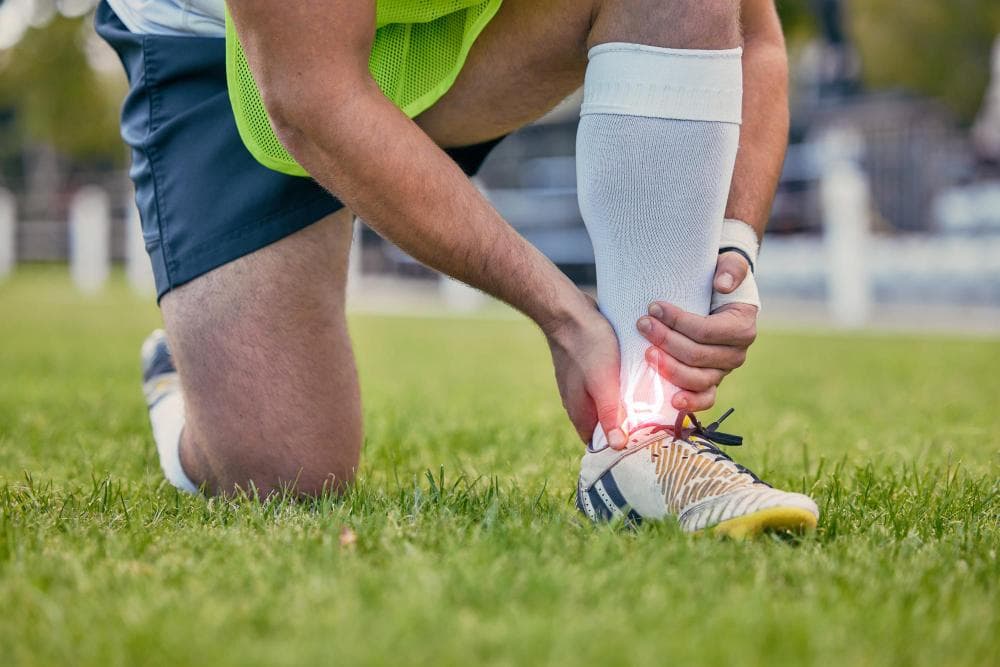
A male soccer player kneels on the grass, gripping his ankle with both hands and showing a pained expression. The area around his ankle is highlighted in red, indicating injury. The background features a blurred field and goalposts.
Sports injuries in Noida and the wider Delhi NCR region are at levels that would surprise most people who think of "sports injury specialists" as something you need only if you're a professional athlete.
Cricket academies across Noida and Greater Noida see weekend players tearing ACLs while diving for catches. Gym-goers in Indirapuram sustain patellar tendon strains from poor squat form. Kabaddi tournaments across Sector 63 and Gaur City produce ankle fractures, shoulder dislocations, and hamstring tears with regularity. Recreational badminton players in their 40s and 50s rupture Achilles tendons mid-game.
None of these people are professionals. All of them need the same quality of assessment and management as someone who plays for money.
Why Sports Injuries Need Specialist Assessment
The immediate reaction to a sports injury is usually rest, ice, and hope. Sometimes this works — minor strains and contusions resolve in 1–2 weeks with basic management.
But injuries involving the following structures usually don't resolve without proper diagnosis and specific treatment:
- Ligaments: ACL, PCL, collateral ligaments (knee), ATFL, CFL (ankle), AC joint (shoulder)
- Tendons: Achilles rupture, patellar tendon, rotator cuff, hamstring avulsion
- Menisci: Meniscal tears (particularly posterior horn, root, bucket-handle tears)
- Bones: Stress fractures, avulsion fractures, fractures that appear minor on initial X-ray
- Shoulder joint: Labral tears, rotator cuff tears, dislocation with Bankart lesion
These injuries look similar on day 1 — swelling, pain, reduced mobility. But their treatment is very different. A missed ACL tear in a young player returning to sport leads to repeated giving-way episodes and early meniscal and cartilage damage. A missed bucket-handle meniscal tear locks the knee and causes progressive articular cartilage damage. A missed Achilles tendon rupture managed with "rest" for three weeks before the diagnosis is corrected results in suboptimal surgical outcomes.
Getting the right diagnosis at the right time matters.
What a Sports Medicine Assessment Involves
At Prakash Hospital Noida, a sports injury evaluation by Dr. Mayank Chauhan covers:
Full history: Mechanism of injury (how it happened — the specific direction of force, the position of the limb), prior injuries to the same area, sport and activity level, training load in the weeks before injury, previous treatment received.
Physical examination: A systematic examination of the injured area — checking specific ligamentous stress tests (Lachman, anterior drawer, varus/valgus stress for the knee; anterior drawer, talar tilt for the ankle; sulcus sign, apprehension test for the shoulder), range of motion, strength, tenderness pattern, and neurovascular status.
A skilled sports medicine examination provides a strong differential diagnosis before imaging is ordered. This is important — imaging confirms a clinical impression, not the other way around.
Imaging:
- X-ray: Excludes fracture, shows bone pathology
- MRI: The essential investigation for most soft tissue sports injuries — ligament integrity, tendon continuity, meniscal morphology, cartilage quality, bone marrow oedema
- Ultrasound: Useful for dynamic assessment of tendons, superficial ligaments, and guided injection procedures
Common Sports Injuries Seen and Treated at Prakash Hospital, Noida
Knee Injuries
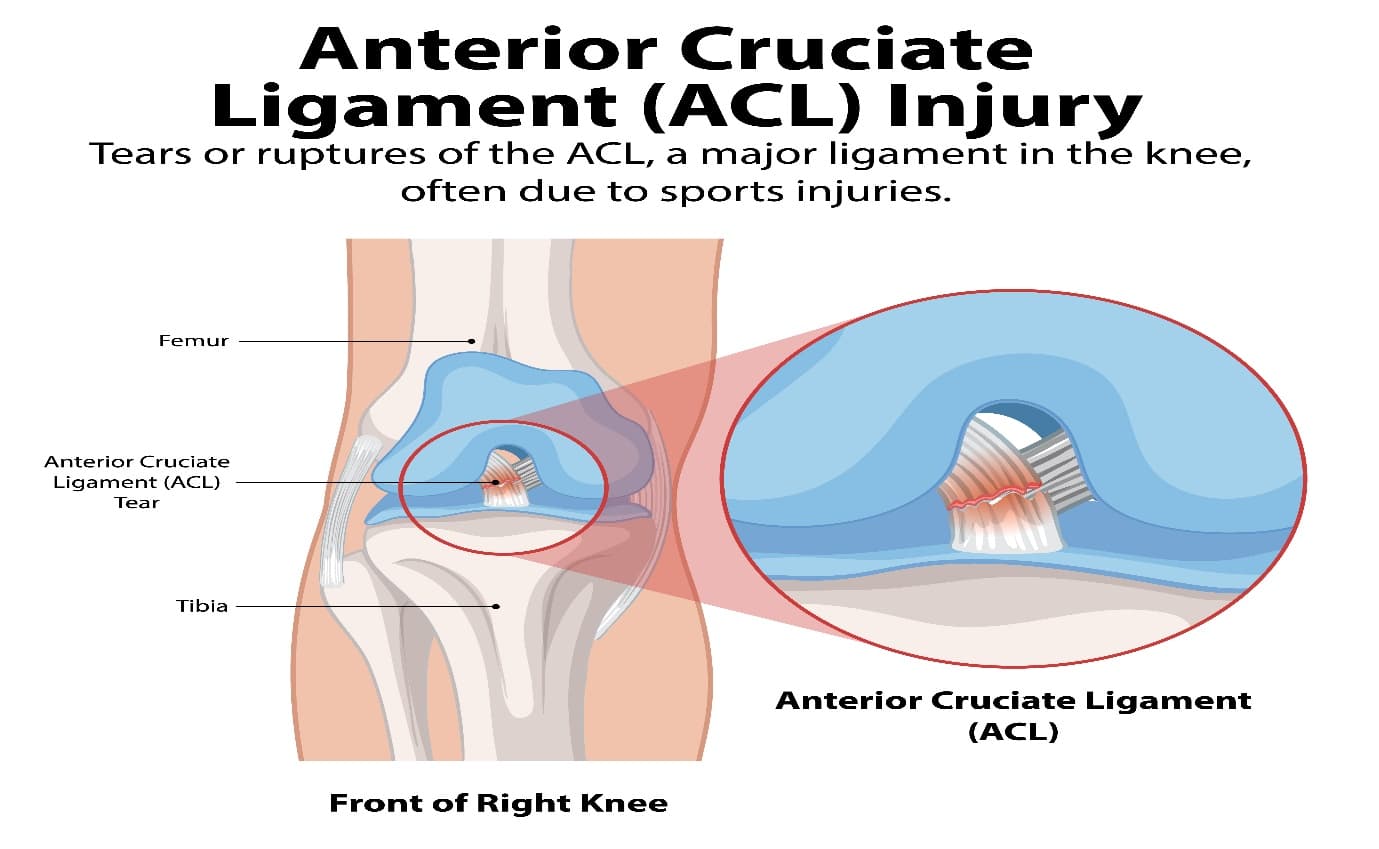
ACL tear: The most feared knee sports injury. Arthroscopic ACL reconstruction using hamstring autograft (the approach used by 94% of Indian orthopaedic surgeons). Return to cutting and pivoting sport at 8–12 months with criterion-based rehabilitation.
Meniscal tear: Assessment of tear pattern, zone, and healing potential determines whether repair or partial meniscectomy is appropriate. Both performed arthroscopically.
Patellar dislocation: First-time and recurrent patellar dislocation with medial patellofemoral ligament (MPFL) reconstruction where indicated. Assessment of trochlear morphology and alignment.
Cartilage damage: Focal chondral defects from acute impact or chronic shear — managed with arthroscopic debridement, microfracture, or OATS depending on grade and size.
Shoulder Injuries
Shoulder dislocation and instability: Assessment of Bankart lesion, bone loss, and Hill-Sachs engagement — determines whether Bankart repair or Latarjet procedure is indicated.
Rotator cuff tears: From acute trauma or chronic impingement. Arthroscopic repair for full-thickness tears in active patients.
Shoulder impingement: Subacromial bursitis and partial-thickness rotator cuff tears from repetitive overhead activity. Managed with physiotherapy, injection, and arthroscopy when conservative treatment fails.
SLAP tears: Superior labral tears from throwing sports. Assessment of tear type guides management — physiotherapy for degenerative SLAP, repair for traumatic SLAP in appropriate patients.
Ankle Injuries
Ankle ligament tears (lateral complex): Most ankle sprains heal with conservative management. High-grade tears with chronic instability causing repeated sprains may require Brostrom procedure (ligament repair with augmentation).
Syndesmosis injuries (high ankle sprain): Often underdiagnosed. Requires specific assessment and sometimes screw fixation.
Achilles tendon injuries: From tendinopathy managed with eccentric exercises and PRP to complete rupture requiring functional non-surgical management or surgical repair.
Hamstring and Muscle Injuries
Hamstring strains: Grade 1–3 assessment with MRI when needed. Graded rehabilitation with Nordic hamstring protocol. Proximal avulsion repair in appropriate patients.
Groin/adductor strains: Assessment of adductor origin injury, pubic symphysis involvement, and hip pathology (labral tears can present as groin pain in athletes).
Calf tears: Medial gastrocnemius tears ("tennis leg") — diagnosed clinically and with ultrasound. Managed conservatively.
Stress Fractures
Tibial, metatarsal, and navicular stress fractures from training overload. Require specific MRI assessment and carefully managed rest-to-return protocols. Navicular and femoral neck stress fractures are particularly high-risk and may require surgical fixation.
Who Comes to a Sports Injury Clinic in Noida?
Not just competitive athletes. Dr. Mayank Chauhan sees:
- Recreational and amateur cricketers, footballers, kabaddi players, and badminton players from across Noida sectors, Greater Noida, and Ghaziabad
- Gym members and fitness enthusiasts managing training-related injuries
- School and college athletes from institutions across the NCR
- Older recreational players (40s, 50s) who sustain injuries and are told "just rest" before considering that the injury has a specific diagnosis and treatment
- Returning athletes who have had previous injury and want to ensure they return to sport safely
The appointment involves a proper examination and honest conversation about the diagnosis, treatment options, realistic timeline for recovery, and how to prevent recurrence.
Getting to Prakash Hospital, Noida, from Across the NCR
Main Campus — Sector 33, Noida: D-12A, 12B, Sector 33, Noida — adjacent to the ISKCON Temple. Accessible from Noida Sector 18 Metro, or by road from across Noida sectors, Indirapuram, Vasundhara, and Ghaziabad. Parking available.
Greater Noida Campus — Sector Omega-1: For patients from Greater Noida, Pari Chowk, Noida Extension (Gaur City), and the Yamuna Expressway corridor.
Consultation hours: Monday–Saturday, 10 AM–8 PM; Sunday, 10 AM–2 PM.
Emergency cases — fractures, dislocations, acute injuries — are managed 24/7 through the emergency department at Sector 33.
To book a sports injury consultation with Dr. Mayank Chauhan, call the number listed on the website.