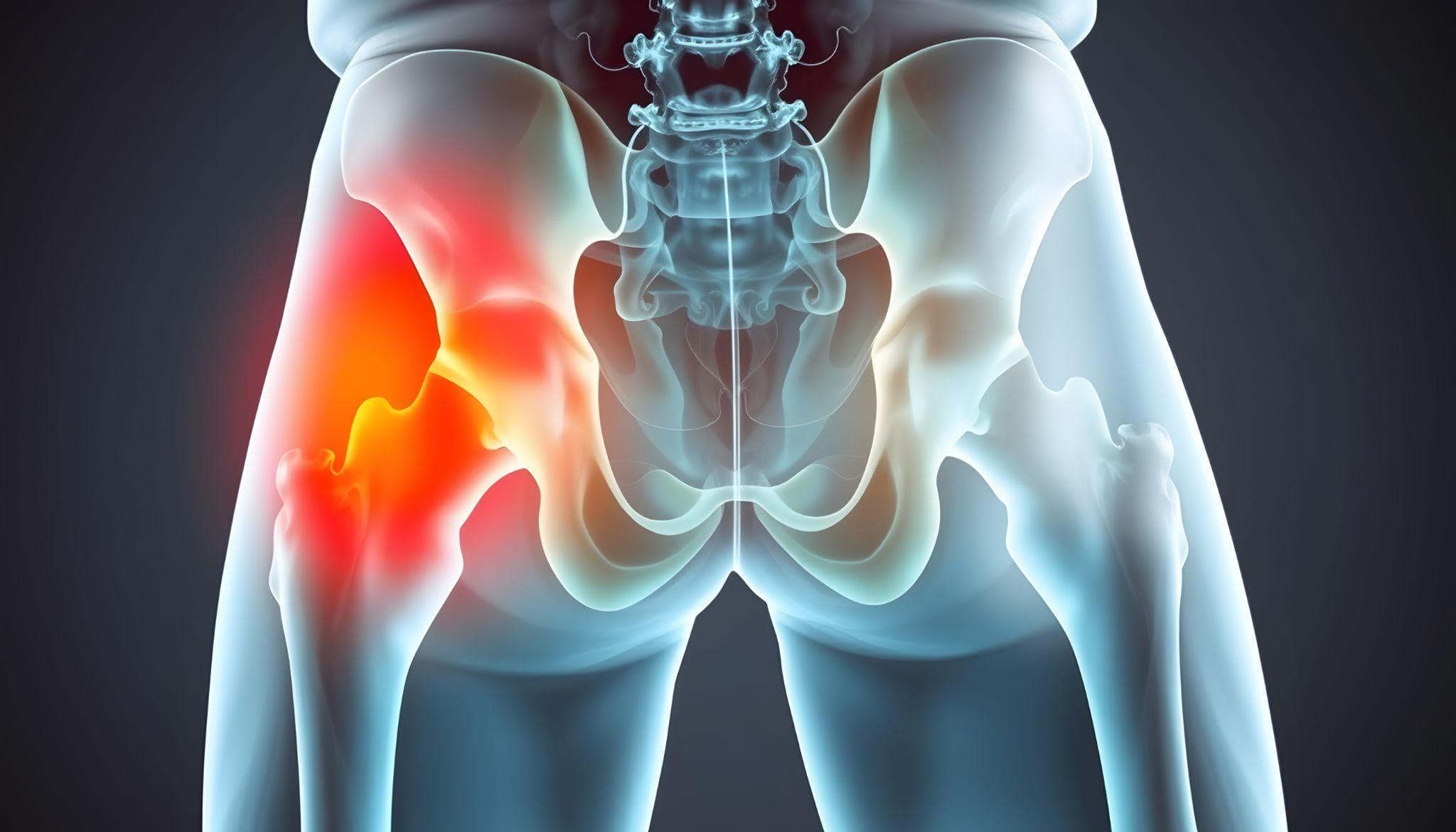
Walking After Knee Replacement - A Complete Guide For Indian Patients
A man is seen walking on an empty track with autumn leaves scattered around.
Among all the questions patients ask after knee replacement surgery, one comes up most consistently: "How much should I walk?" It sounds like a simple question. It is not. Walking too little and recovery slows — the muscles weaken, the joint stiffens, and DVT risk increases. Walking too much too soon, swelling increases, pain becomes unmanageable, and recovery is set back by days.
The answer is specific to the stage of recovery — and it changes significantly from the first day to the twelfth month. This guide gives you clear, practical guidance on walking at every stage after knee replacement, tailored to the reality of life as an Indian patient recovering at home in Noida or Greater Noida.
Why Walking Is the Most Important Exercise After Knee Replacement
Walking is not just one of several exercises after knee replacement. It is the most important functional activity in recovery, for several specific reasons.
Blood clot prevention: The single most dangerous early complication of knee replacement is deep vein thrombosis (DVT) — a blood clot forming in the leg veins. Walking activates the calf muscle pump, which propels blood back up the leg veins and prevents the venous stasis that allows clots to form. Every walk is a DVT prevention intervention.
Swelling reduction: Walking pumps synovial fluid through the joint and activates the lymphatic system that drains excess fluid from the swollen tissues. Counterintuitively, patients who walk more have less persistent swelling than those who rest more.
Preventing stiffness: A knee replacement that is not moved through its range regularly forms adhesions — fibrous scar tissue that limits movement. Walking maintains the knee's flexion and extension as the scar tissue matures.
Muscle retraining: The muscles around the new joint — the quadriceps, hamstrings, and calf — need to relearn how to work with the prosthetic joint. Walking is the most functional way to retrain this neuromuscular pattern.
Psychological recovery: The first independent walk after surgery — even 10 metres to the bathroom — is an enormous psychological milestone. It confirms to the patient that the new knee works and that life will return to normal.
Day 1 — Your First Steps After Surgery
Walking begins on the day of surgery or the morning after — not the day you are discharged, not "when you feel strong enough."
What Day 1 walking looks like:
A physiotherapist assists you to the edge of the bed. You are helped to stand with the support of a walking frame (walker). The operated leg feels strange — swollen, unfamiliar. With the physiotherapist holding the gait belt around your waist and your hands on the frame:
- Stand upright, weight equally distributed
- Advance the frame forward
- Step forward with the operated leg, heel first
- Step through with the non-operated leg
- Walk 5–10 metres
That is your first walk. It feels momentous because it is.
Technique matters from the start:
The correct walking pattern after knee replacement is heel-toe — the heel lands first, then the rest of the foot rolls through, then the toe pushes off. Walking flat-footed or on the toes produces an abnormal gait pattern that is hard to unlearn and strains the knee mechanically.
Frequency on Day 1:
2–3 short walks of 5–10 metres each, supervised.
Week 1 — Building the Foundation
In hospital and at home in the first week, the goal is regular short walking sessions throughout the day — not one long walk.
Distance targets:
- Day 1–2: 5–15 metres per walk, 3–4 walks per day
- Day 3–4: 15–30 metres per walk, 4 walks per day
- Day 5–7: 30–50 metres per walk, 4–5 walks per day
Walking aid: Frame (walker) throughout Week 1.
Surface: Flat surfaces only. Home corridors. Inside the apartment. Do not attempt stairs independently until cleared by the physiotherapist — stair technique needs to be taught correctly.
How it feels: The knee will be swollen and stiff. Pain is controlled with medication and should allow comfortable participation in short walks. If pain is not adequately controlled for walking, the medication dose or timing may need adjustment — discuss with your doctor.
The most important rule of Week 1:
After every walk, elevate the leg above heart level and apply ice (wrapped in cloth) for 15–20 minutes. This combination — movement followed by ice and elevation — is the most effective way to control swelling in the first week.
How much is too much in Week 1?
Signs you have overdone it: significantly increased swelling, pain that remains elevated even after rest and ice, wound that appears more inflamed. If this happens, reduce walking frequency the following day and report at your next follow-up.
Week 2–3 — Building Distance Gradually
Distance targets:
- Week 2: 5–10 minutes of walking per session, 3–4 sessions per day
- Week 3: 10–15 minutes per session, 3 sessions per day
Walking aid: Transition begins from frame to walking stick (held in the hand opposite the operated knee) as strength and confidence improve — typically mid-to-late Week 2 for robotic knee replacement patients, late Week 2 to early Week 3 for conventional replacement.
Stairs: Introduced by Week 2 with physiotherapy guidance.
- Going up: Lead with the non-operated (stronger) leg. "Up with the good."
- Going down: Lead with the operated leg. "Down with the bad."
- Always use the handrail initially.
Outdoors: First outdoor walk is a milestone most patients achieve in Week 2–3. A flat, even surface with a companion. 5–10 minutes initially. Uneven surfaces (broken footpaths, sand, grass) are attempted only when fully comfortable on even surfaces.
Gait assessment:
The key gait error in Week 2–3 is limping — favouring the operated leg by shifting weight to the non-operated side, shortening the stride, or avoiding full heel-strike on the operated side. A small limp is normal. A significant limp should be addressed with the physiotherapist — it indicates either inadequate pain control or insufficient quadriceps activation.
Week 4–6 — Walking Becomes Exercise
Distance targets:
- Week 4: 15–20 minutes continuously, 2–3 times per day
- Week 5: 20–30 minutes, twice daily
- Week 6: 30 minutes, once or twice daily
Walking aid: Many patients are walking without any aid by Week 4–5, or using a stick only outdoors or on uneven ground.
The right pace: A brisk-enough pace to feel like exercise but slow enough to maintain correct heel-toe technique and equal weight bearing. Not so slow that each step is carefully measured; not so fast that form is lost.
Shopping and errands:
Many patients attempt their first shopping trip to a local market or pharmacy in Week 4–5. Key practical points:
- Wear supportive, flat footwear (not sandals or chappals without back support — these provide inadequate ankle stability)
- Bring a stick, even if you've been walking without one at home — unfamiliar surfaces and crowds change the challenge level
- Plan rest points — don't attempt a 1-hour shopping trip in Week 5
Navigating Indian household challenges:
Many homes in Noida have low sitting surfaces — traditional floor seating, low furniture, squat toilets. Getting in and out of these requires more knee flexion than the knee typically has in early recovery. Practical guidance:
- A toilet seat raiser is essential for the first 4–6 weeks (widely available at medical shops in Sector 18, 27, and 62 markets in Noida)
- Avoid low sofas and floor seating until flexion exceeds 100–110 degrees, typically at 4–6 weeks
- For patients accustomed to Indian-style floor dining, a brief period of using a raised chair with a table is necessary
Month 2–3 — Building Endurance
Distance targets:
- Month 2: 30–45 minutes without stopping, once or twice daily
- Month 3: 45–60 minutes, as a daily routine
Walking aid: None for most patients by Month 2, though a stick may still be carried for confidence in crowded areas or uneven terrain.
Speed: Gradually normalising. The slight limp that was present in weeks 4–8 typically resolves by Month 2–3 as quadriceps strength improves and the brain fully integrates the new joint.
Hills and inclines:
Hills are introduced gradually. Going uphill is generally easier than downhill (descending requires eccentric quadriceps control — the muscle working against the force of gravity). Start with gentle inclines.
Stair independence:
By Month 2, most patients are climbing stairs with alternating feet (not step-to-step) — the normal adult pattern.
The morning stiffness adjustment:
Many patients find that the knee is at its stiffest in the morning, typically 15–30 minutes of stiffness after waking, which improves once the joint has been moved. The morning walk should always follow a brief warm-up of the exercises taught by the physiotherapist (ankle pumps, quad sets, heel slides) — this prepares the joint for weight-bearing and significantly reduces the duration of morning stiffness.
Month 3–6 — Building Full Activity
By Month 3, most patients are walking for fitness — not just walking for recovery.
Distance targets:
- Month 3: 3–5 km per day possible for motivated patients
- Month 4–6: 5–8 km per day for patients who were active before surgery
Terrain:
- Flat surfaces: Unrestricted by Month 3
- Gravel and uneven paths: Most patients are comfortable by Month 3
- Hiking trails (gentle): Month 4–5 for appropriate patients
- Inclined treadmill: Month 4 in most protocols
Adding variety:
From Month 3, walking can be supplemented with:
- Swimming: The lowest-impact cardiovascular exercise — cleared from Month 3 (depending on wound healing)
- Stationary cycling: Excellent for quadriceps and low-impact cardiovascular fitness — often cleared from Week 4–6
- Yoga (modified): Gentle classes with a teacher experienced in working with joint replacement patients — Month 3–4
6 Months to 1 Year — Walking Normally
By 6 months, walking has become unconsidered again for most patients — the way it was before the arthritis limited things. They walk to the temple, to the market, to visit family, on holidays. The new knee participates without being the focus of attention.
By 12 months, most patients report walking freely at whatever distances they choose — typically 5 km or more without stopping for patients who were active before the disease.
Studies show:
People who walk regularly after knee replacement regain full function significantly faster than those who don't. One meta-analysis found that patients who maintained a daily walking programme achieved a 40% faster return to full activity compared to those who completed the hospital programme and then became sedentary again.
Common Walking Mistakes After Knee Replacement
1. Walking too little:
Fear of pain or of damaging the new knee leads many patients to walk far less than they should. The implant is robust — it is designed for walking. The biggest risk of walking too little is weakness, stiffness, and loss of the functional gains made in the hospital.
2. Not resting between walks:
In Weeks 1–2, long continuous walks without rest periods increase swelling. Short, frequent walks (with elevation and icing between) are more effective than one long continuous walk.
3. Wearing inappropriate footwear:
Walking in Hawai chappals (slip-on rubber sandals), high heels, or unsupportive footwear significantly increases the effort required and the risk of falls. Wear supportive lace-up or velcro-closure athletic shoes for all walking during recovery.
4. Skipping the morning warm-up:
Morning stiffness is real. Walking straight from bed to the street is painful and produces a limp that sets a poor neuromuscular pattern. Five minutes of exercise before the first walk significantly improves the quality of that walk.
5. Stopping walking when it hurts:
The difference between "discomfort" and "pain that should stop the walk" is important. Mild aching in the knee during and after walking is expected and acceptable — it is the muscle-tendon-bone complex adapting to new mechanical demands. Sharp pain, sudden pain, or pain significantly above baseline is the signal to stop and consult.
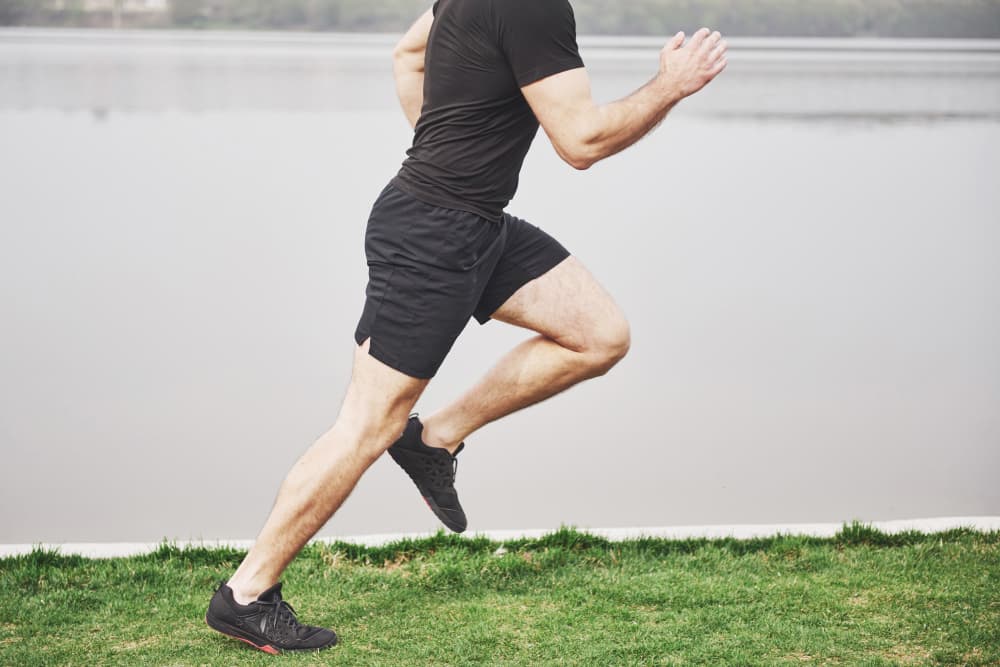
6. Rushing return to running:
Running produces impact forces on the knee of 8–10 times body weight. After knee replacement, running is not recommended — it significantly accelerates implant wear and is not part of the recovery or long-term activity plan for most patients. This is a permanent activity restriction, not just a temporary one.
Walking After Knee Replacement in Noida — Dr. Mayank Chauhan at Prakash Hospital
Dr. Mayank Chauhan, Senior Orthopedic Surgeon at Prakash Hospital, Sector 33, Noida, provides specific, stage-appropriate walking guidance to every knee replacement patient — from the Day 1 first steps in hospital through the 12-month follow-up.
For patients in Noida and Greater Noida who are in recovery and uncertain about their walking progress — whether they are doing too much, too little, or have plateaued unexpectedly — a follow-up consultation with Dr. Chauhan's team clarifies the picture and adjusts the rehabilitation plan.
To book a follow-up consultation, call the number listed on the website.
The Bottom Line
Walking after knee replacement is not optional — it is the therapy. Starting on Day 1, building consistently through the weeks and months, maintaining correct technique, and committing to a daily walking habit even after you feel "recovered" — these are the actions that determine whether knee replacement gives you back 5 years of active life or 25 years. The new knee was designed for walking. Use it.
To consult Dr. Mayank Chauhan, Senior Orthopedic Surgeon in Noida, call the number listed on the website.