Meniscus Tear - What It Is, How It Happens, and When You Need Surgery
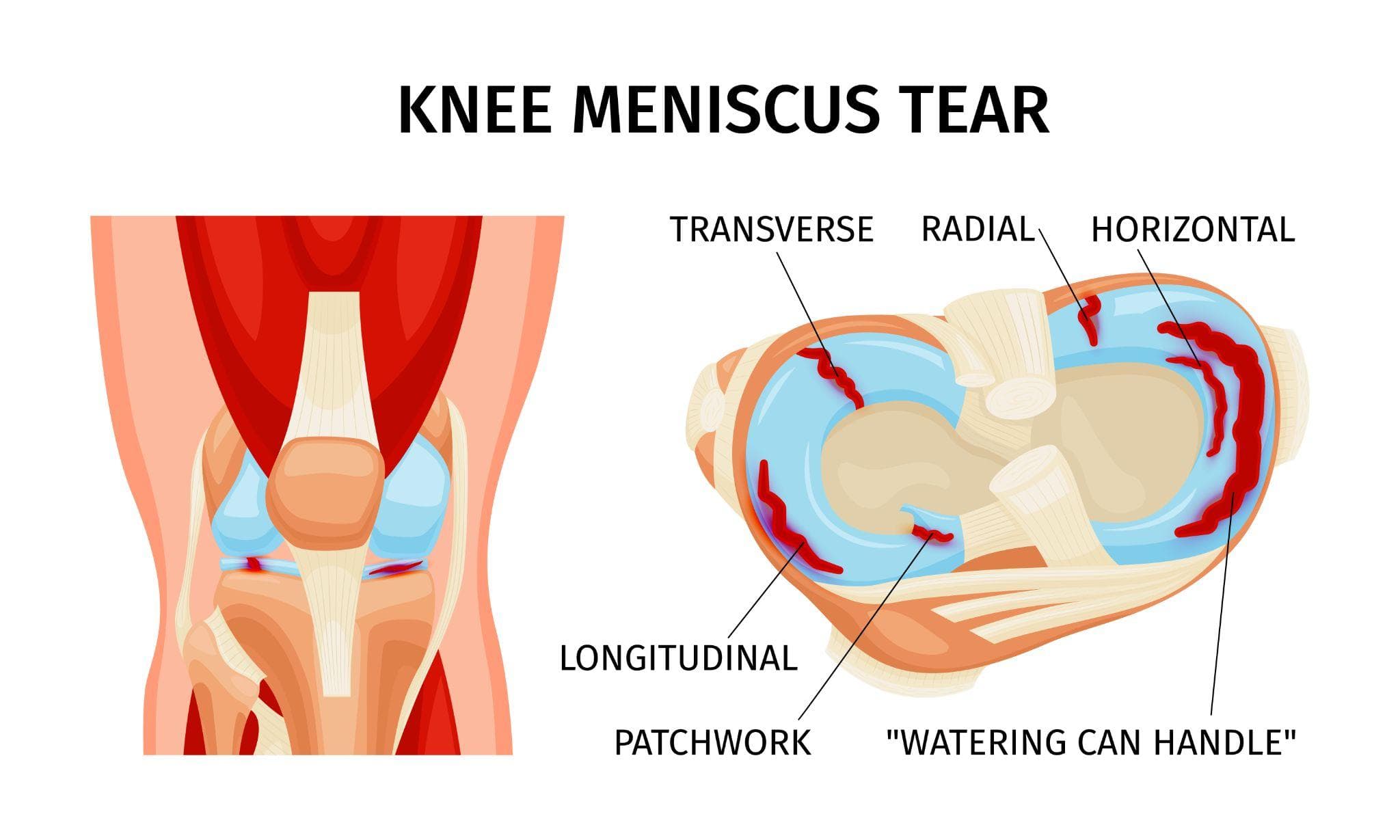
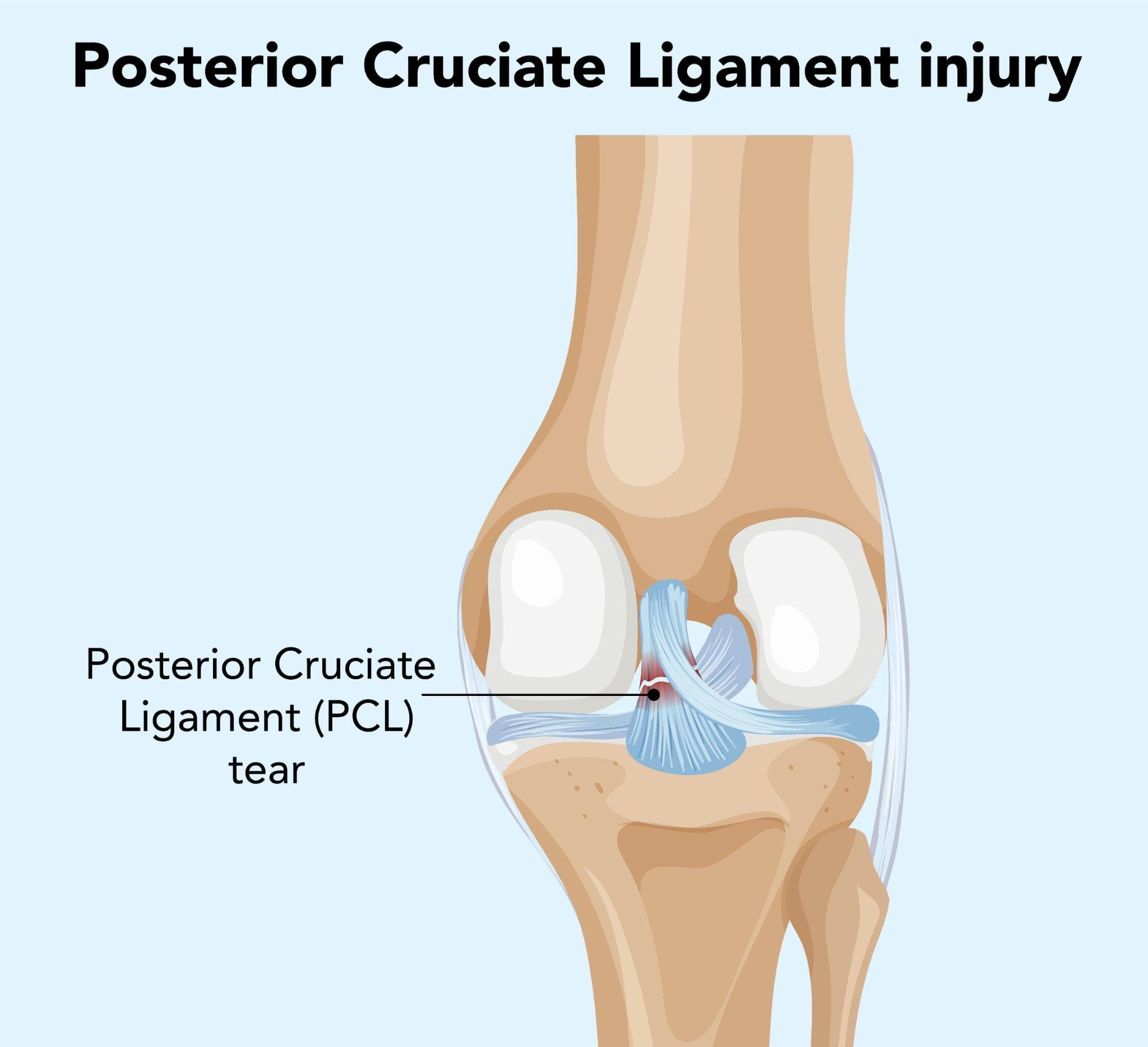
An anatomical illustration of a knee joint with labels for different types of meniscus tears. On the left, a front view shows the femur and tibia, while the right side provides a detailed cross-section of the knee.
The knee is one of the most complex and injury-prone joints in the body, and the meniscus is one of the most commonly injured structures within it. In Noida and across Delhi NCR, meniscus tears are seen daily — in young cricketers who twisted mid-sprint, in office workers who squatted awkwardly while getting out of a low car, and in elderly patients whose meniscus degenerates alongside their arthritis.
Despite being so common, meniscus injuries are frequently misunderstood. Many patients wait months with a painful, swollen, or locking knee before seeking evaluation. Others are rushed toward surgery that they don't necessarily need. Understanding what a meniscus tear actually is — and what the evidence says about when it needs to be fixed — is essential for making the right decision.
What Is the Meniscus?
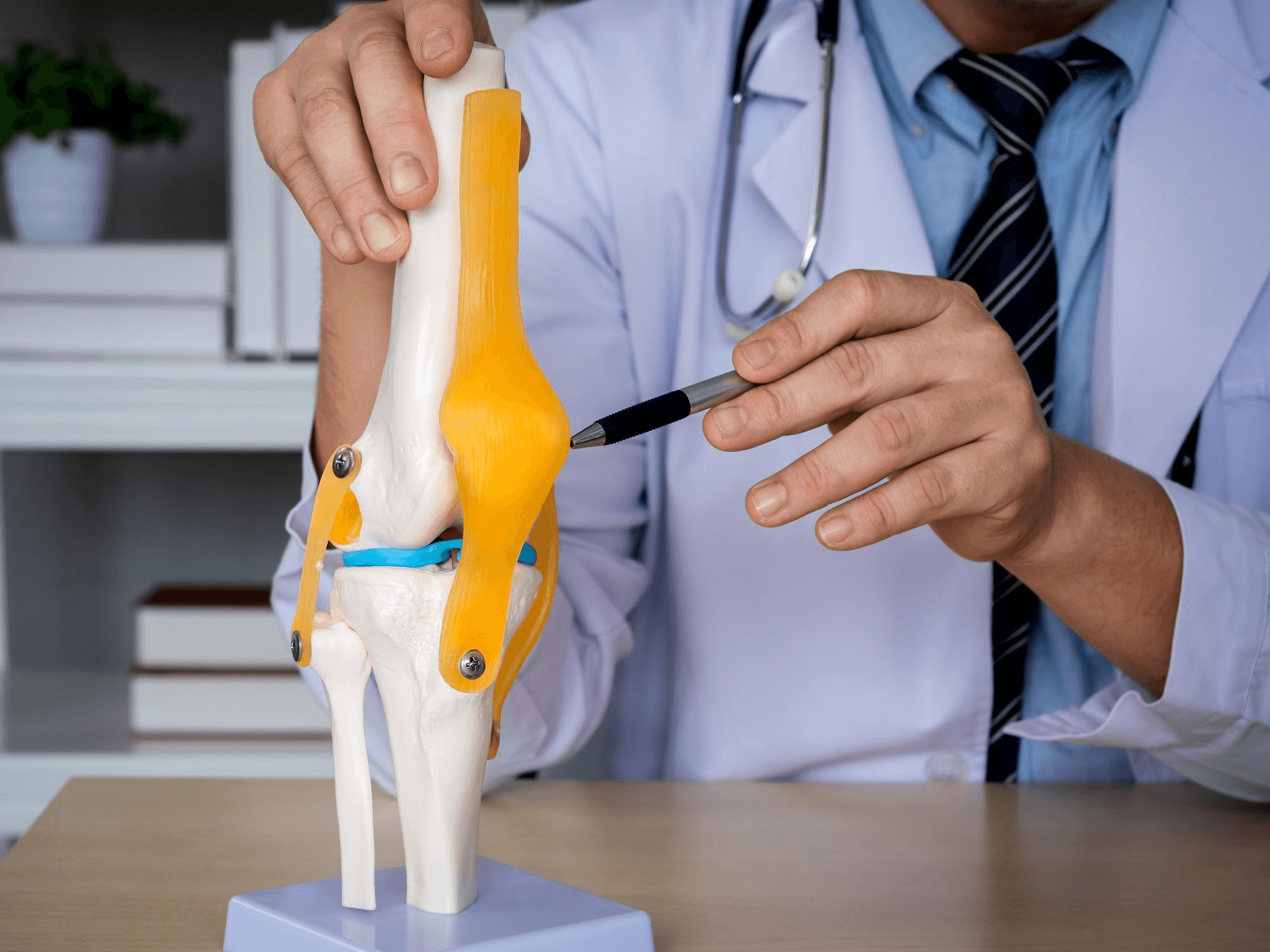
Each knee has two menisci — crescent-shaped wedges of fibrocartilage that sit between the femur (thigh bone) and tibia (shin bone) on the inner (medial) and outer (lateral) sides of the joint.
The menisci serve multiple critical functions:
- Shock absorption: They distribute and attenuate the forces passing through the knee — taking approximately 50% of the compressive load during standing and more during dynamic activities
- Stability: They increase the congruence (fit) between the femur and tibia, contributing to joint stability alongside the ligaments
- Lubrication: They help distribute synovial fluid across the joint surface
- Proprioception: They contain nerve endings that provide the brain with positional information about the knee
When the meniscus is removed — even partially — the articular cartilage on the femur and tibia is exposed to higher loads. This is well-established in long-term studies: knees from which meniscal tissue has been removed develop early osteoarthritis at higher rates than those where the meniscus was preserved. This is why the modern surgical philosophy has shifted strongly toward meniscal repair (stitching it back together) rather than meniscectomy (cutting the torn part out), wherever possible.
How Do Meniscus Tears Happen?
Acute Traumatic Tears (Younger Patients)
The most common mechanism: a combination of compression and rotation across the knee simultaneously. This happens with:
- Twisting while the foot is planted — the classic pivot or change of direction in cricket, football, or badminton
- Deep squatting with a loaded knee
- Landing awkwardly from a jump
- A direct impact to the knee (often in combination with other injuries like ACL tears)
In young athletes, acute traumatic tears are the most common presentation. The medial meniscus is injured more often than the lateral (approximately a 3:1 ratio).
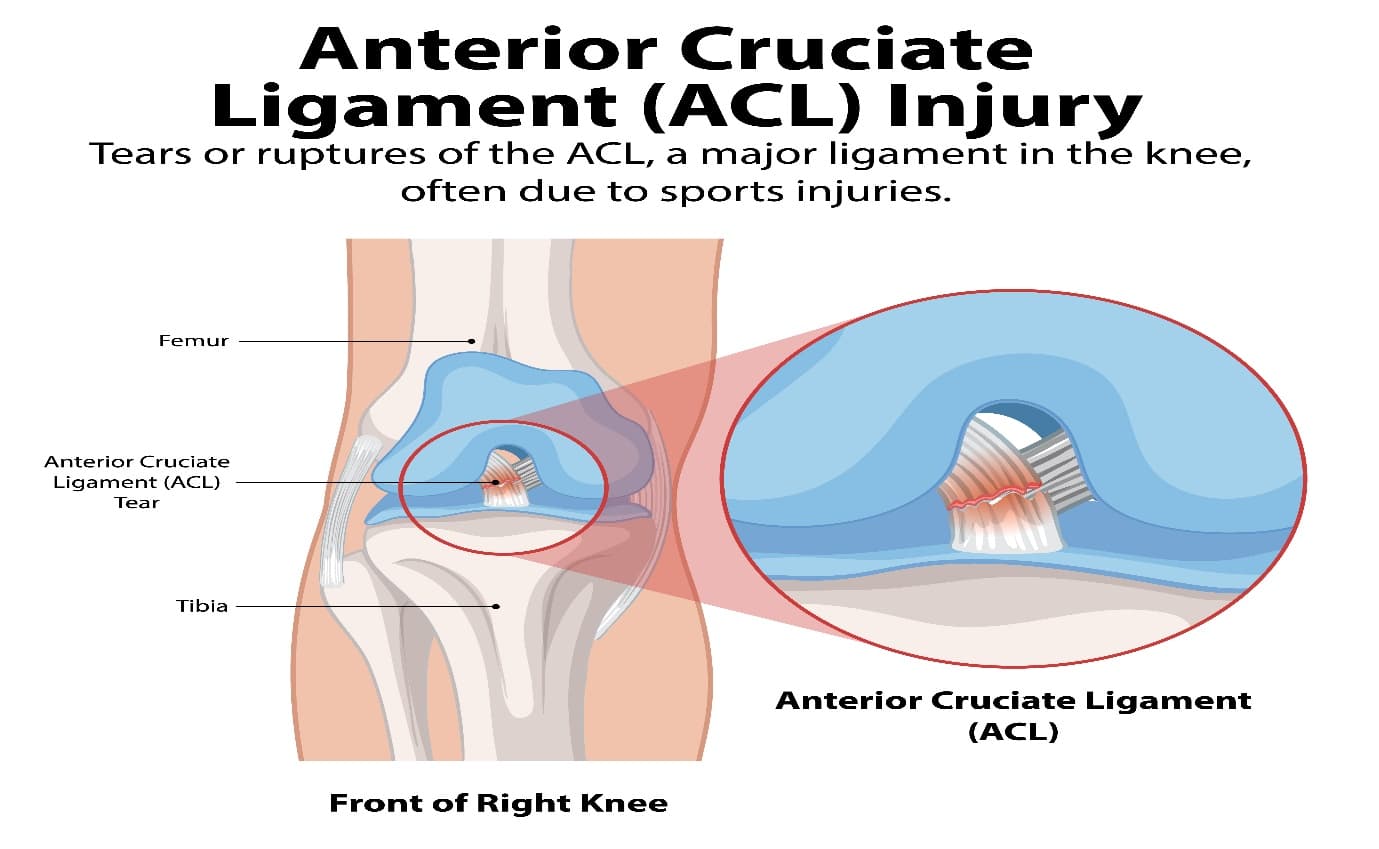
Association with ACL tears: Approximately 50% of ACL tears occur alongside meniscal tears. When both are present, both are typically addressed in the same surgery.
Degenerative Tears (Older Patients)
In patients over 50, the meniscus progressively loses its structural integrity — it dehydrates, becomes less flexible, and develops micro-tears. A degenerative tear can occur from trivial stress — getting up awkwardly from a low seat, stepping off a kerb, or sometimes spontaneously without a specific event.
Degenerative tears are closely associated with underlying osteoarthritis. In patients over 60 with knee OA, meniscal tears on MRI are extremely common — but many of them are not the primary source of pain. This distinction between a symptomatic tear and an incidental finding on MRI is clinically important and affects treatment.
Types of Meniscus Tears
The type of tear significantly influences whether repair is possible and what technique is appropriate
Longitudinal tear: Runs parallel to the long axis of the meniscus. If in the vascular (outer) zone, it can heal with repair. Bucket-handle tears — a specific type of longitudinal tear where a large flap folds into the joint — cause locking.
Radial tear: Cuts across the width of the meniscus, disrupting its circumferential collagen fibres. Significantly damages the hoop stress function of the meniscus. Difficult to repair — often requires partial meniscectomy.
Horizontal tear: Splits the meniscus horizontally into upper and lower leaves. Common in degenerative tears. The tear enters a region of poor vascularity and typically does not heal with repair.
Bucket-handle tear: A large vertical longitudinal tear where the inner fragment displaces into the intercondylar notch. Causes locking — the knee cannot be fully extended. A surgical emergency of sorts should be addressed promptly to prevent cartilage damage from the displaced fragment.
Root tear: The meniscus detaches at its attachment point to the tibial plateau. Dramatically increases contact stress on the cartilage. Often underdiagnosed. Associated with a rapid progression to arthritis if not repaired.
Flap tear: A portion of the meniscus creates a flap that can move into the joint, causing mechanical symptoms (clicking, catching).
The crucial distinction regarding vascularity:
- Outer third (red zone): Has good blood supply. Tears here can heal if repaired.
- Middle third (red-white zone): Variable healing capacity.
- Inner third (white zone): No blood supply. Cannot heal biologically. If this area requires surgery, partial meniscectomy is the treatment.
Symptoms — What a Meniscus Tear Feels Like
Acute tear:
- Pain — often sharp and localised at the joint line (the inner or outer edge of the knee) at the time of injury
- Swelling — develops over 12–24 hours (slower than the rapid haemarthrosis of an ACL tear, which swells within 2 hours)
- Stiffness — difficulty fully bending or straightening the knee
- Clicking, catching, or popping with certain movements — particularly pivoting or squatting
- Locking — in bucket-handle tears, the knee cannot be fully extended. This feels like something is "stuck" inside the joint.
Chronic or degenerative tear:
- Intermittent joint-line pain — worse with squatting, stair climbing, and sustained activity
- Recurrent swelling that comes and goes
- A sensation of "giving way" in some patients
- Stiffness after periods of inactivity
Diagnosis
Clinical Examination
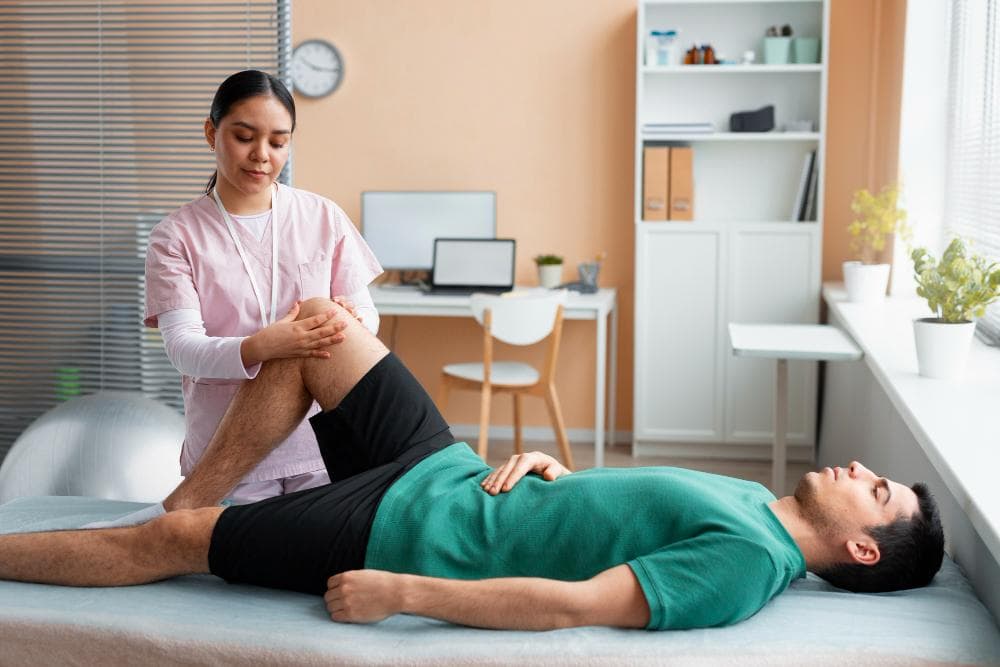
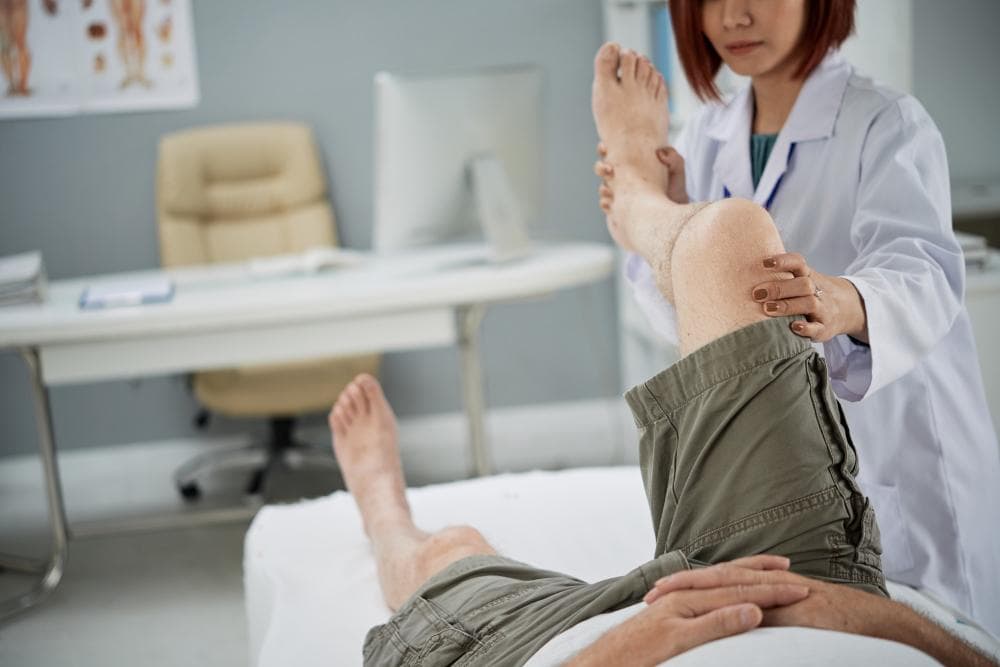
Joint line tenderness: Palpating the medial or lateral joint line in a specific position typically reproduces pain with a meniscus tear.
McMurray's test: The knee is flexed, and the tibia is rotated — a palpable or audible "click" with pain at the joint line suggests a meniscus tear. The direction of rotation identifies which meniscus is likely involved.
Thessaly test: The patient stands on one leg with the knee slightly bent and rotates their body. If this reproduces joint-line pain or mechanical symptoms, it is positive for meniscal tear.
Apley's test: Done with the patient prone — compression and rotation of the knee produce pain.
None of these tests alone diagnoses a meniscus tear definitively — the combination of the clinical story, mechanism of injury, physical findings, and imaging provides the diagnosis.
MRI
The gold standard for diagnosing meniscus tears — sensitivity approximately 90% for medial tears, slightly lower for lateral tears. MRI shows:
- The location of the tear (which compartment, which zone)
- The type of tear (longitudinal, radial, bucket-handle, root)
- The degree of displacement
- Associated findings — ACL injury, chondral damage, other structural pathology
An important caveat: Meniscal abnormalities on MRI are very common in adults over 40 — many without symptoms. An MRI finding of a degenerative meniscal signal change does not automatically mean the meniscus is the cause of the patient's pain. The clinical picture must correspond to the imaging findings.
Treatment — Conservative vs. Surgical
Conservative Management
Not all meniscus tears need surgery. Studies have shown that conservative management (physiotherapy) is equivalent to arthroscopic partial meniscectomy for many degenerative meniscal tears in patients over 45 — a finding from multiple well-conducted randomised controlled trials (including the METEOR and FINISH trials).
Who is suitable for conservative management?
- Patients with degenerative tears in the context of mild OA, without significant mechanical symptoms (locking, severe catching)
- Small, stable tears in the outer (vascular) zone that may heal spontaneously
- Patients with posterior horn tears and minimal symptoms
- Elderly patients whose primary problem is OA with an incidental meniscal tear
Conservative treatment involves:
- Rest and activity modification (avoiding activities that provoke symptoms)
- Physiotherapy — quadriceps strengthening, range-of-motion exercises, proprioception training
- NSAIDs and/or injection therapy for pain management
- A trial of 6–8 weeks before surgical discussion
Surgical Treatment: Arthroscopic Knee Surgery
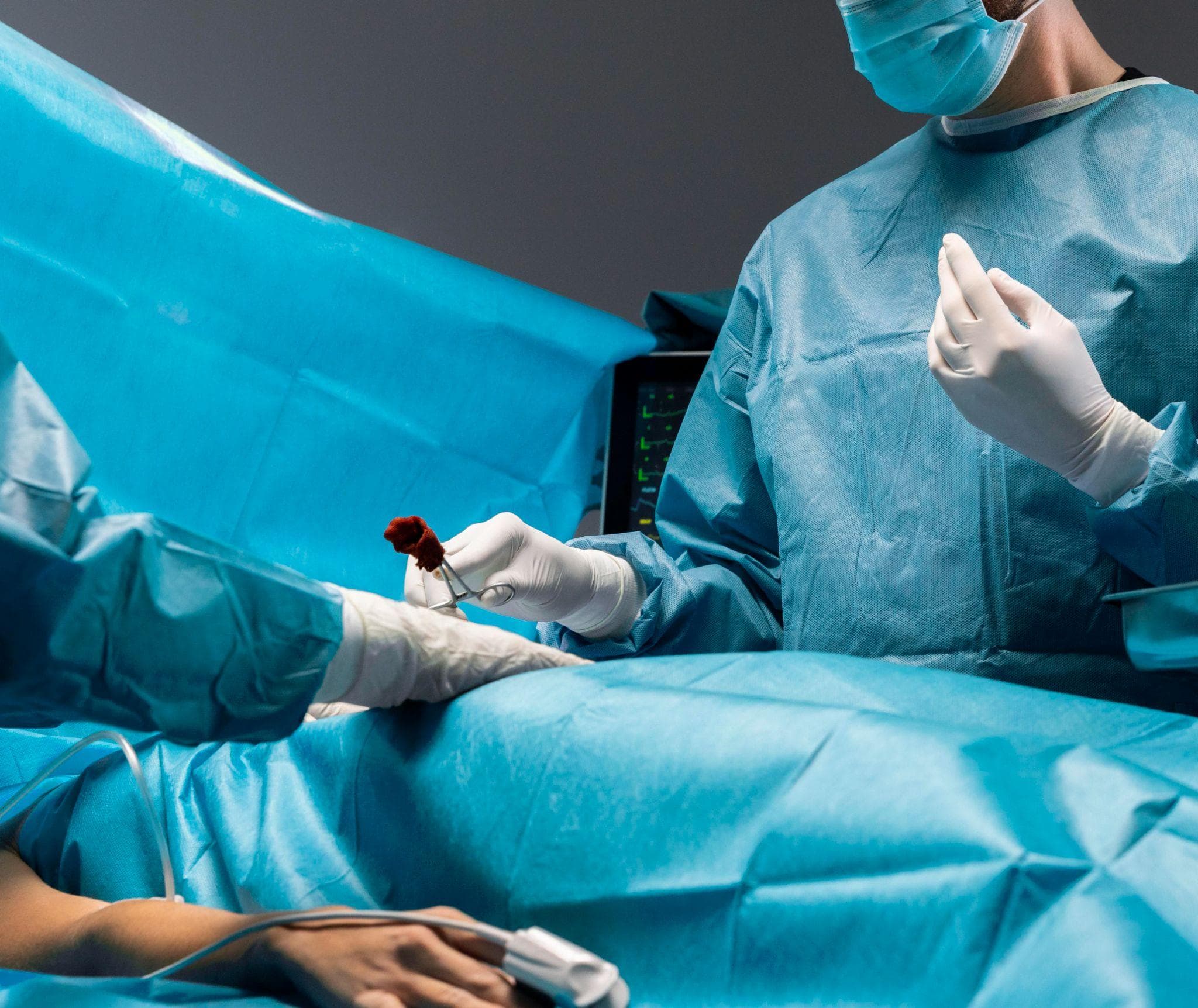
Arthroscopic surgery is performed through 2–3 small incisions (under 1 cm) using a camera and small instruments. The surgeon can directly see all structures in the knee and address the meniscal pathology as appropriate.
Meniscal Repair:
The torn edges are approximated and sutured using small implantable devices (all-inside repair) or sutures (inside-out or outside-in techniques, used for peripheral tears). The goal is to preserve the meniscal tissue and allow it to heal in its anatomical position.
Who is suitable for repair?
- Young patients (under 45 ideally)
- Acute tears (within 4–8 weeks of injury ideally — older chronic tears have less healing capacity)
- Peripheral tears in the vascular zone
- Longitudinal tears longer than 1 cm
- Bucket-handle tears
- Root tears
Recovery after repair: The repaired meniscus needs to heal — this takes 12–16 weeks. Weight-bearing is restricted initially, and return to sport takes 4–6 months.
Partial Meniscectomy:
The torn portion of the meniscus is removed, leaving as much healthy meniscal tissue as possible. Done when repair is not possible — the tear is in the avascular inner zone, it is too complex or long-standing to repair, or the patient is too old for reliable healing.
Recovery after partial meniscectomy: Significantly faster than repair — most patients bear full weight within days, return to daily activities in 2–4 weeks, and to sport in 6–8 weeks.
What not to do: Total meniscectomy (complete removal of the meniscus) is rarely performed now. The consequences — rapid onset of compartment arthritis — are well-documented and devastating. Every attempt is made to preserve as much meniscal tissue as possible.
What Happens If a Meniscus Tear Is Left Untreated?
For degenerative tears with minimal symptoms in older patients, careful monitoring and conservative management are reasonable. But for symptomatic acute tears — particularly in younger patients — leaving a significant meniscal tear untreated has consequences:
- Persistent mechanical symptoms — locking, catching, swelling
- Progressive cartilage damage as the unstable meniscal fragment abrades the femoral and tibial cartilage
- Accelerated onset of knee osteoarthritis — loss of meniscal tissue (even from an untreated tear) increases contact stress on the articular cartilage
- Associated instability if there is a concurrent ACL tear
The specific risk depends on the type of tear. A bucket-handle tear causing locking should be addressed promptly. A small degenerative horizontal tear in a 65-year-old with mild OA can be observed.
Meniscus Tear Treatment in Noida — Dr. Mayank Chauhan at Prakash Hospital
Dr. Mayank Chauhan, Senior Orthopedic Surgeon at Prakash Hospital, Sector 33, Noida, evaluates and treats meniscal injuries across the full spectrum — from conservative management of degenerative tears to arthroscopic meniscal repair for acute tears in young athletes.
The philosophy is preservation first. Where repair is technically feasible and clinically appropriate, it is preferred over removal — with full acknowledgment to the patient of the longer rehabilitation required.
For patients in Noida and Greater Noida with knee pain after a twist or injury, or with recurring swelling and mechanical symptoms, early evaluation with MRI imaging will determine the type of tear and the appropriate management path.
To book a consultation, call the number listed on the website.
The Bottom Line
Meniscus tears are common, well-treatable, and increasingly managed with joint-preserving approaches. The key decisions — repair versus partial removal, surgery versus conservative management — depend on the type and location of the tear, the patient's age and activity level, and whether there are significant mechanical symptoms.
What is definitely wrong is the "just remove it" approach that was standard practice until the evidence showed its long-term consequences. And equally wrong is ignoring a symptomatic tear in a young, active patient until the cartilage is damaged. Get the right diagnosis. Then make the right decision.
To consult Dr. Mayank Chauhan, Senior Orthopedic Surgeon in Noida, call the number listed on the website.