Ligament Repair Surgery In Noida - ACL, PCL, MCL, And When You Need It?
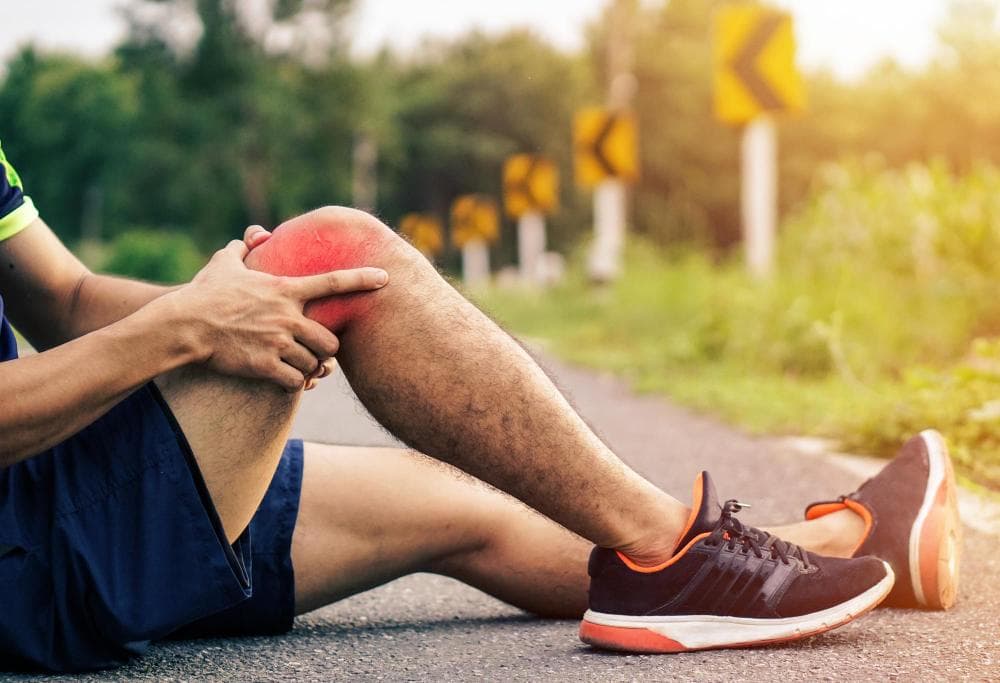
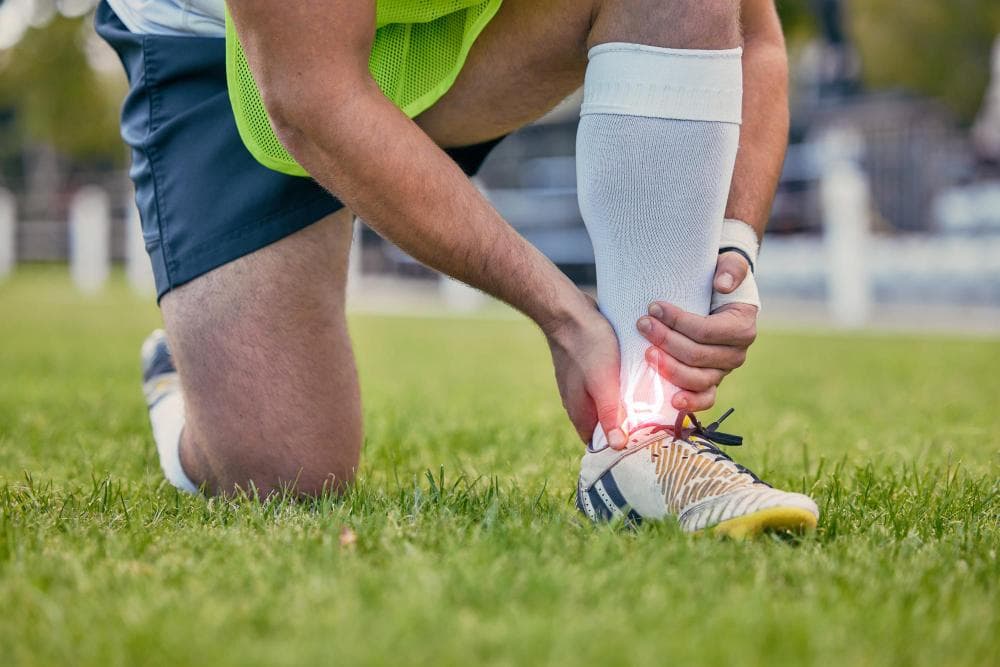
Man sitting on the roadside in agony, holding onto his knee, which shows bright redness and swelling. This suggests that he has acute knee pain or might have a ligament injury after some exercise or running.
Four major ligaments hold the knee together. Most people have heard of one of them, the ACL. Far fewer know what the other three do, what happens when they're injured, and what distinguishes a ligament that can be repaired from one that needs to be reconstructed.
This matters in clinical practice because not all knee ligament injuries are the same. An MCL sprain that needs 4 weeks of a brace is a fundamentally different situation from an ACL rupture that needs 6-9 months of recovery after reconstruction. A multi-ligament injury, which is more common in Delhi NCR's road accidents and high-impact sports than most people realise, requires a completely different surgical plan from a single ligament tear.
This guide provides a comprehensive overview of knee ligament injuries and their treatment, written specifically for patients in Noida, Greater Noida, and Delhi NCR.
The Knee's Four Ligaments - What Each One Does
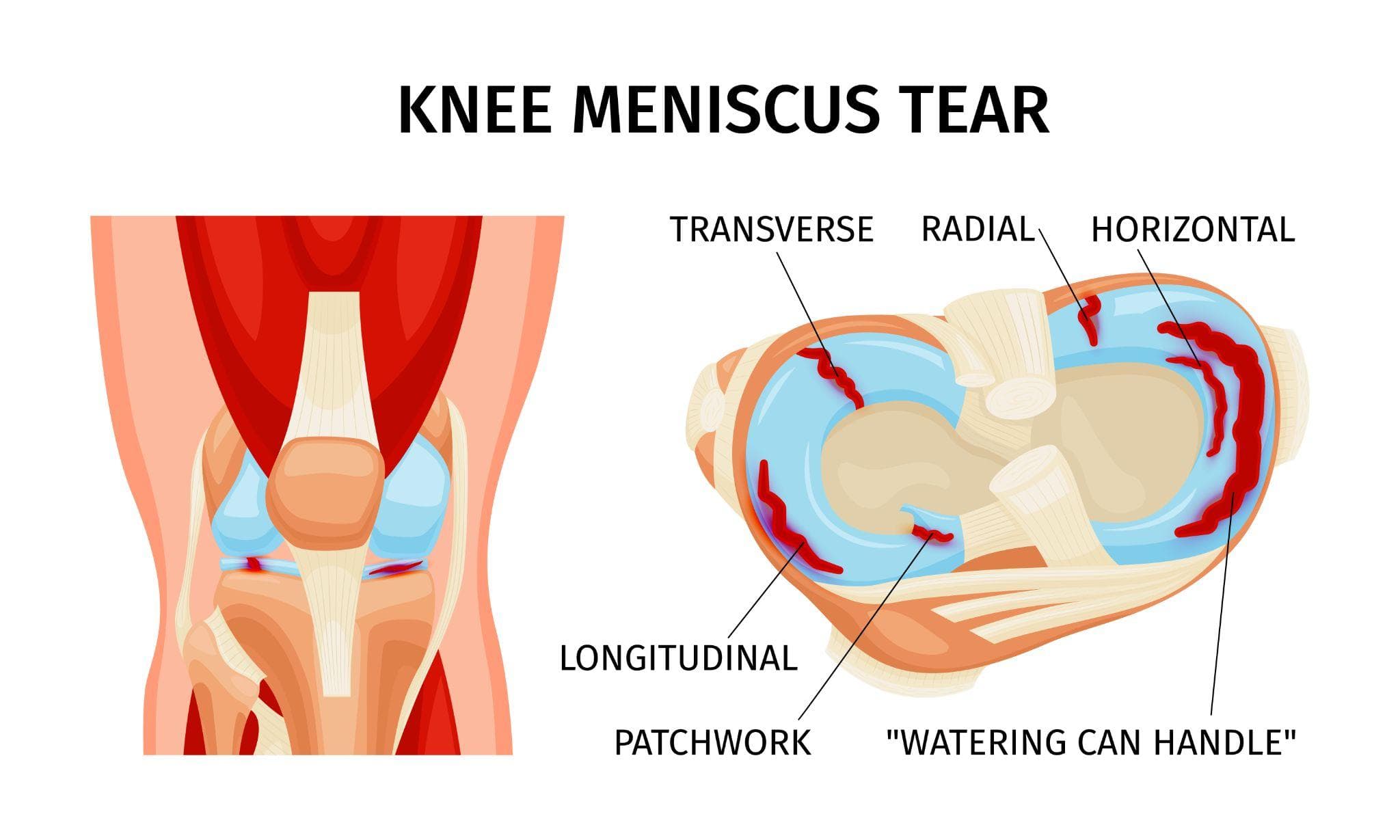
The knee joint is a hinge that also allows slight rotation. It connects three bones: the femur (thigh bone), tibia (shin bone), and patella (kneecap). Four major ligaments prevent the knee from moving in directions it shouldn't:
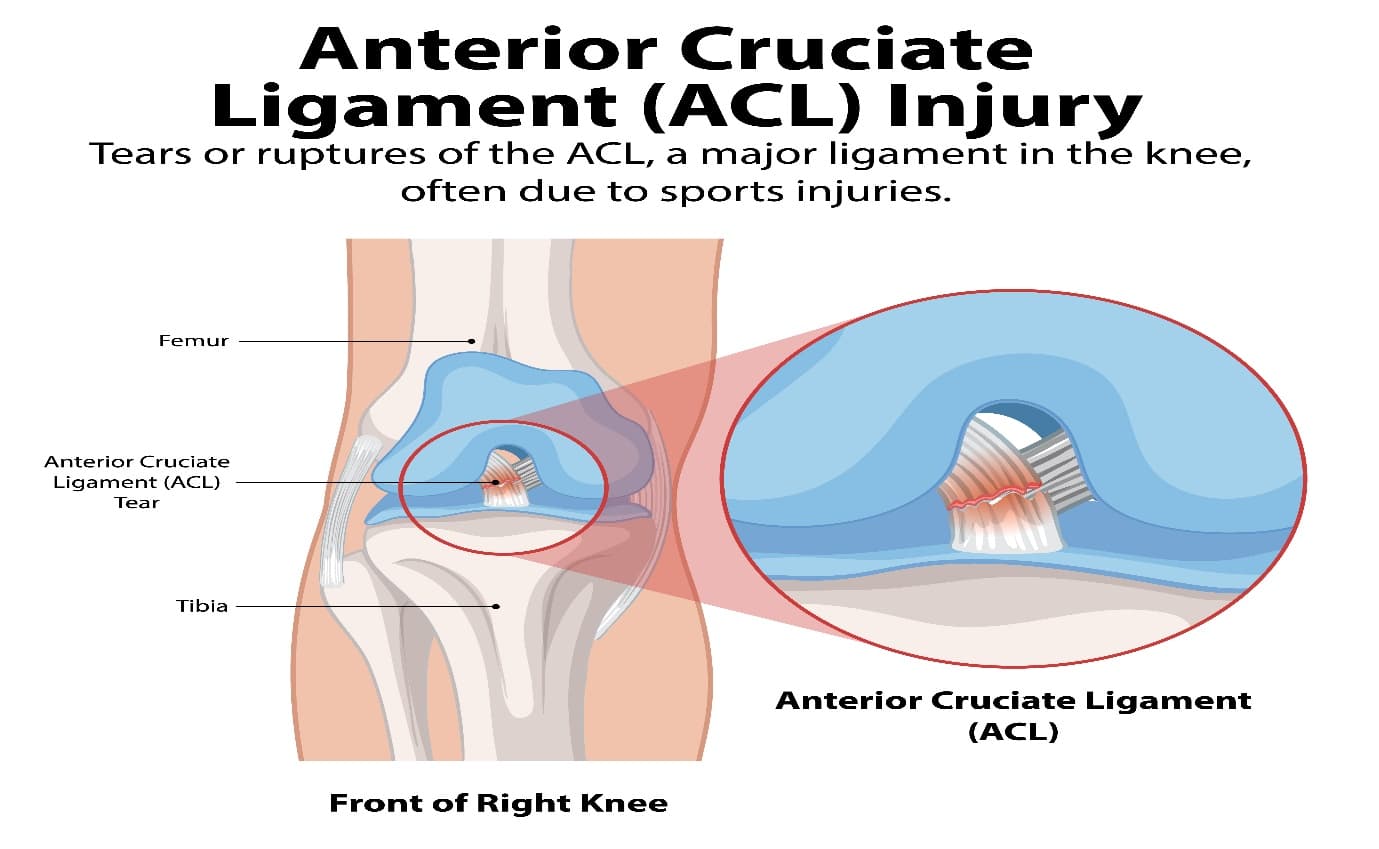
1. ACL - Anterior Cruciate Ligament
Runs diagonally from the back of the femur to the front of the tibia, passing through the centre of the knee. Its primary functions:
- Prevents the tibia from sliding forward on the femur (anterior translation).
- Controls rotational stability essential for cutting, pivoting, and direction changes.
The ACL is the most commonly injured knee ligament in sports. It is also the most surgically demanding to treat, because it cannot heal itself after a complete tear.
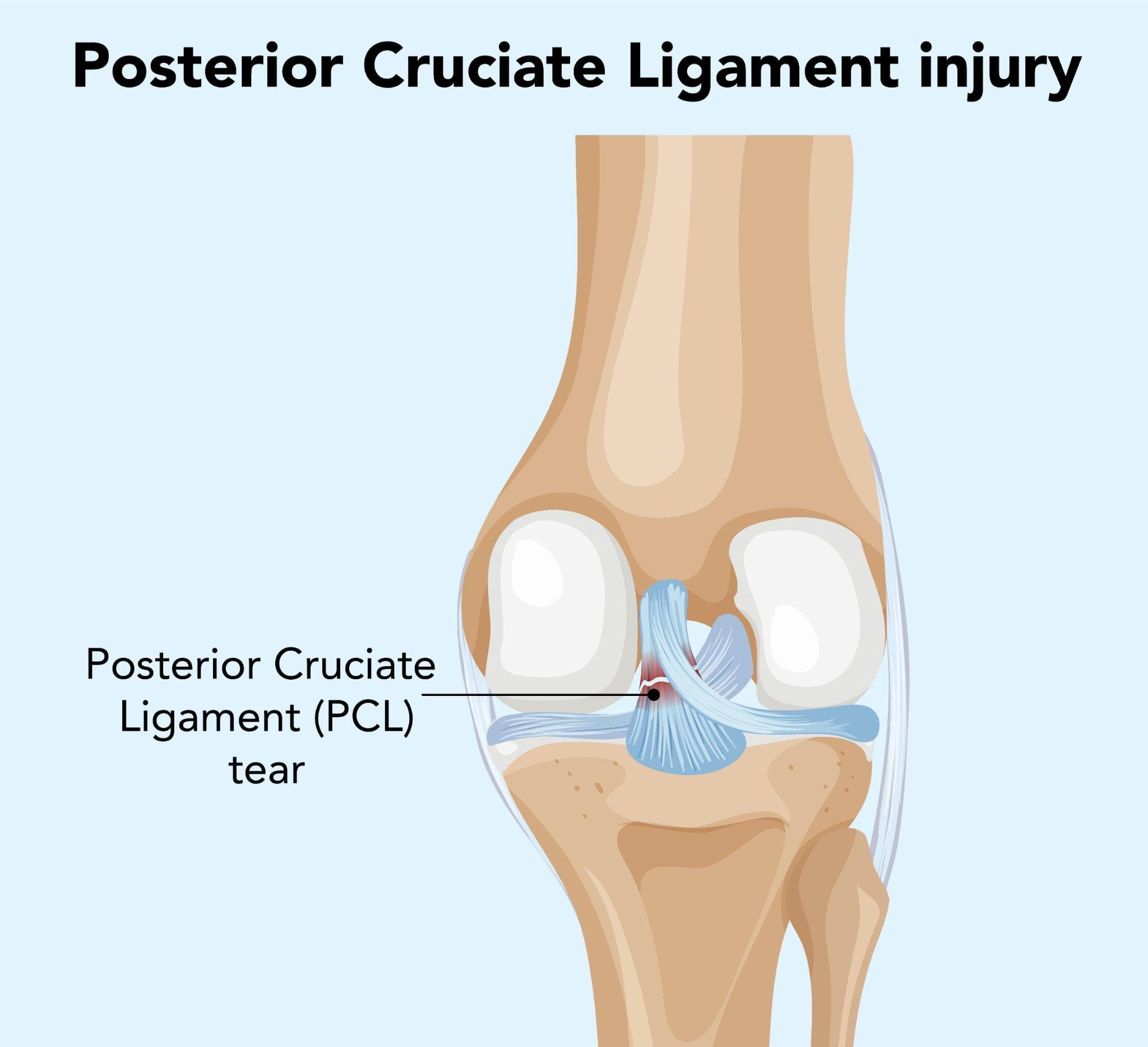
2. PCL - Posterior Cruciate Ligament
Also runs through the centre of the knee, but in the opposite direction from the ACL. Functions:
- Prevents the tibia from sliding backward on the femur (posterior translation).
- Provides stability during weight-bearing with the knee bent.
The PCL is twice as strong as the ACL and much less commonly injured. When it is injured, it is typically from a direct blow to the front of the tibia with the knee bent, a "dashboard injury" in car accidents, or a direct tackle in football.
3. MCL - Medial Collateral Ligament
Runs along the inner (medial) side of the knee, connecting the femur to the tibia. Functions:
- Resists valgus force, preventing the knee from collapsing inward.
- Provides medial stability during weight-bearing.
The MCL is the most commonly injured collateral ligament. The good news: it has an excellent blood supply and heals very well with conservative management in most cases. Surgery is rarely needed for isolated MCL injuries.
4. LCL - Lateral Collateral Ligament
Runs along the outer (lateral) side of the knee, connecting the femur to the fibula. Functions:
- Resists varus force, preventing the knee from buckling outward.
- Provides lateral stability
LCL injuries are the least common of the four. Isolated LCL tears sometimes heal conservatively, but posterolateral corner injuries (LCL + associated posterior structures) usually require surgical reconstruction.
Understanding Ligament Injury Grading
All ligament injuries, regardless of which ligament, are graded 1 through 3:
Grade 1 (Mild Sprain): The ligament fibres are stretched, but the structure is intact. Pain and localised tenderness, minimal swelling, and no instability. The knee is mechanically stable. Treatment: conservative.
Grade 2 (Partial Tear): A significant portion of the ligament fibres are torn, but some continuity remains. Moderate pain, swelling, and some instability on examination. Treatment depends on the specific ligament and the patient's activity level.
Grade 3 (Complete Tear): Total disruption of the ligament. Clear instability on examination. The specific treatment depends on which ligament is involved. An MCL Grade 3 often still heals conservatively; an ACL Grade 3 in an active patient almost always requires reconstruction.
ACL Injuries - Complete Tears Need Reconstruction
As covered in a dedicated blog, ACL tears are the most significant knee ligament injury for active patients. The key points:
Why the ACL cannot be repaired (usually): The ACL has very poor blood supply and healing capacity. When it tears, the ends retract and form scar tissue, not a functional ligament. This is why primary repair (stitching the torn ends back together) was abandoned decades ago in most cases, in favour of reconstruction.
The exception: Modern "primary ACL repair" techniques (InternalBrace, BEAR procedure) are being explored for specific tear patterns, particularly avulsion tears where the ACL comes off the femoral attachment with an intact ligament body. These are selected cases in specialised centres, not the standard approach.
ACL reconstruction: The torn ligament is replaced with a graft, most commonly the hamstring tendon or patellar tendon from the patient's own body. Arthroscopic surgery, 60–90 minutes, 1–2 day hospital stay. Return to pivoting sport: 6–9 months.
Who needs ACL reconstruction?
- Active patients who want to return to cutting, pivoting, or jumping sports.
- Patients with significant instability symptoms even in daily activities.
- Patients with associated meniscal injuries that cannot be protected without ACL stability.
Who can be managed conservatively?
- Elderly, sedentary patients who do not participate in pivoting sports.
- Patients with partial tears and no significant instability.
- Patients who accept permanent activity modification.
PCL Injuries - Often Overlooked, Usually Conservative First
The PCL is injured far less commonly than the ACL, and is frequently missed on initial evaluation. Patients with PCL injuries often present with posterior knee pain after a dashboard injury, a fall on a bent knee, or a direct blow to the front of the tibia.
Symptoms of PCL injury:
- Posterior knee pain, especially with the knee bent.
- Less dramatic instability than ACL tears, many patients with PCL injuries can continue walking reasonably well.
- A "sag" of the tibia backward compared to the other side (posterior sag sign).
- Posterior Drawer Test positive on examination.
Why PCL is different from ACL: The PCL has a better blood supply than the ACL and a greater capacity for healing. Isolated, low-to-moderate grade PCL injuries (Grade 1 and 2) often heal well with conservative management, a brace with a posterior support (to prevent the tibia from sagging backward), combined with physiotherapy. Most patients with isolated PCL tears do not need surgery.
When PCL surgery is needed:
- Grade 3 complete tears in active patients with significant posterior instability.
- Combined ligament injuries, PCL tears often occur alongside posterolateral corner injuries or ACL tears.
- Persistent functional instability after conservative treatment.
PCL reconstruction surgery: Similar principles to ACL reconstruction, a graft (typically hamstring or quadriceps tendon) replaces the torn PCL. Technically more demanding than ACL reconstruction. Recovery: 9–12 months to full return to sport.
MCL Injuries - The Good News Is They Usually Heal
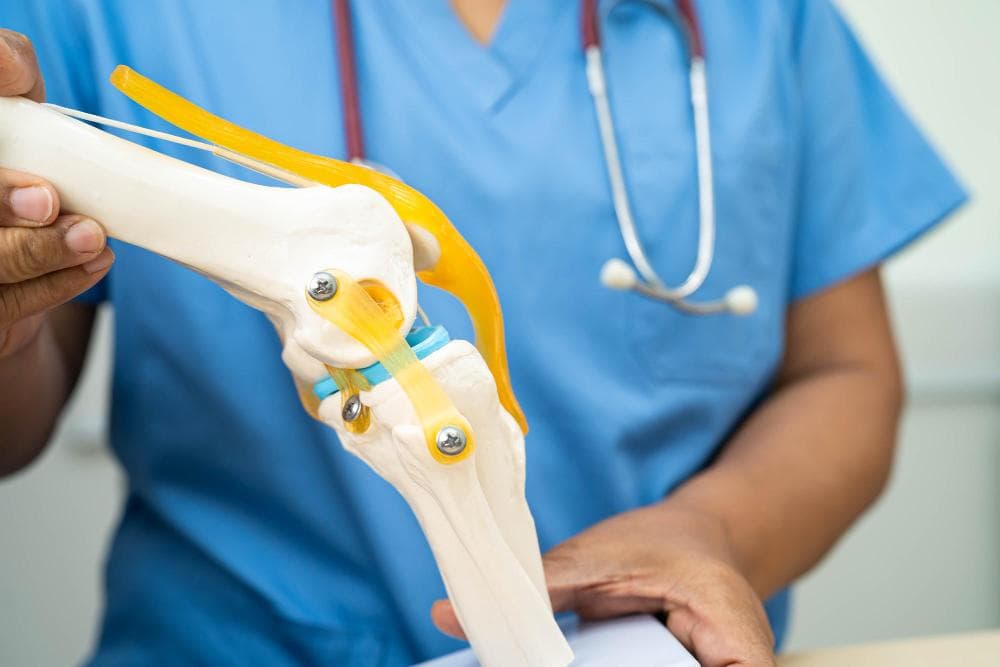
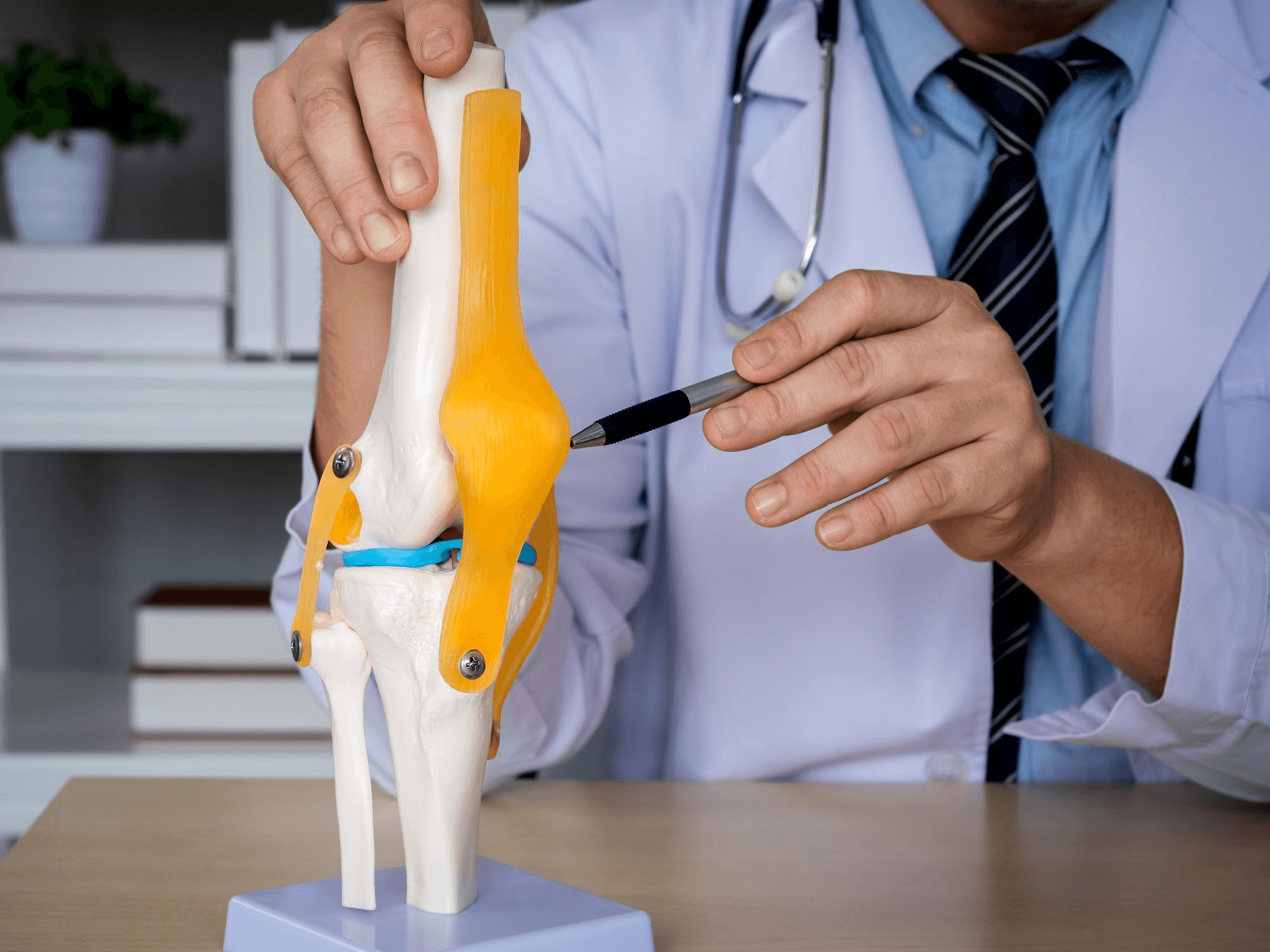
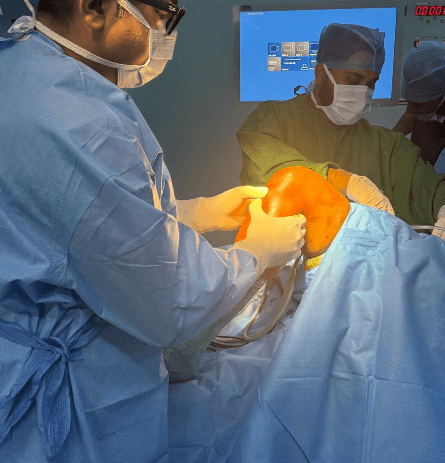
A healthcare professional in scrubs holding a knee joint model with ligaments and artificial parts moving, and great detail of the structure and ligament position.
The MCL has a robust blood supply and heals very reliably after tears, even Grade 3 complete tears, with conservative management in the large majority of cases. How MCL injuries happen:
A valgus force to the knee, something hits the outside of the knee and pushes it inward. Common in:
- Sports tackles (football, rugby, contact sports)
- Skiing falls with the skis catching in the snow.
- Side impacts in road accidents.
Symptoms:
- Pain and tenderness on the inner side of the knee.
- Swelling (typically less dramatic than ACL haemarthrosis).
- Pain with valgus stress (pushing the knee inward) on examination.
- Grade 3 tears produce clear medial instability.
Treatment:
- Grade 1: RICE, return to activity as symptoms allow. Typically 1–2 weeks.
- Grade 2: Hinged knee brace for 4–6 weeks, physiotherapy. Return to sport 6–8 weeks.
- Grade 3: Hinged brace for 6–8 weeks, physiotherapy, and careful follow-up. Most heal without surgery.
When MCL surgery is needed:
- Rare isolated MCL Grade 3 tears that fail to heal with conservative management.
- Bony avulsion injuries (where the MCL pulls off a bone fragment) may benefit from surgical fixation.
- Combined injuries, MCL + ACL (the dreaded "unhappy triad") often require surgical planning as a staged or combined procedure. In this scenario, the ACL is reconstructed (it won't heal conservatively) while the MCL is often managed in the brace first (it usually heals), with MCL surgery reserved for cases where it doesn't.
LCL And Posterolateral Corner Injuries
Isolated LCL injuries are uncommon. The LCL is typically injured as part of a posterolateral corner (PLC) injury involving the LCL, the popliteus tendon, the popliteofibular ligament, and sometimes the PCL. PLC injuries produce lateral-side knee pain, instability, and a tendency for the knee to hyperextend and varus thrust with walking (the outer knee "buckling outward" with each step).
Why PLC injuries are important to diagnose: If a PCL or ACL is reconstructed in the presence of an unrepaired PLC injury, the reconstructed ligament fails at higher rates. PLC injuries must be recognised and addressed, usually surgically, as part of any multi-ligament reconstruction plan.
Multi-Ligament Knee Injuries
When two or more knee ligaments are torn simultaneously, the management is significantly more complex. Multi-ligament injuries occur in:
- High-energy road traffic accidents.
- Contact sports with direct impact.
- Falls from height
- Knee dislocations (rare but serious, often involving all four ligaments)
Knee dislocations are orthopedic emergencies. Vascular injury to the popliteal artery occurs in a significant percentage and must be urgently excluded. Any patient with a suspected knee dislocation should be evaluated for vascular compromise before any other management. Multi-ligament reconstruction surgery, typically staged (one surgery, followed by another 6 weeks later) or combined, is complex, requiring a surgeon experienced in all aspects of knee ligament surgery.
Arthroscopic Ligament Surgery - The Modern Approach
For ACL and PCL reconstruction, arthroscopic (keyhole) surgery is the standard of care. Through 2–3 small incisions (under 1 cm each), a camera and surgical instruments are introduced into the joint. This approach:
- Allows direct visualisation of all intra-articular structures. Concurrent meniscal tears, cartilage damage, and other ligament injuries can be identified and addressed simultaneously.
- Minimises muscle and soft tissue disruption compared to open surgery.
- Results in faster recovery and less post-operative pain than open techniques.
- Is performed under general or spinal anaesthesia as a day case or 1–2 day admission.
Recovery After Ligament Surgery
Recovery timelines vary significantly by the ligament repaired and whether concurrent procedures were performed:
| Ligament | Conservative Recovery | Surgical Recovery |
|---|---|---|
| MCL Grade 1 | 1–2 weeks | N/A (usually not needed) |
| MCL Grade 2–3 | 6–8 weeks | 3–4 months if surgery required |
| ACL (Grade 3) | Not applicable (conservative rarely chosen for active patients) | 6–9 months to return to sport |
| PCL (Grade 3) | 3–4 months | 9–12 months |
| LCL/PLC | Variable | 9–12 months |
| Multi-ligament | N/A | 12–18 months |
All ligament surgery recovery requires dedicated physiotherapy from early range-of-motion exercises to progressive strengthening and sport-specific training. The rehabilitation is as important as the surgery itself.
Ligament Repair In Noida - Dr. Mayank Chauhan At Prakash Hospital
Dr. Mayank Chauhan, Senior Orthopedic Surgeon at Prakash Hospital, Sector 33, Noida, manages knee ligament injuries from initial evaluation through arthroscopic reconstruction and rehabilitation. For patients in Noida, Greater Noida, and Delhi NCR who have sustained a knee injury, particularly with swelling, instability, or a feeling that the knee "gives way," early evaluation with appropriate MRI imaging will identify exactly which structures are injured and what treatment is required.
What the consultation involves:
- Detailed history of the injury mechanism and current symptoms.
- Clinical examination, including specific ligament stress tests.
- Review of X-ray and MRI.
- Clear explanation of which ligaments are injured, the grade of injury, and whether surgery is indicated.
- A specific, personalised rehabilitation plan, whether or not surgery is recommended.
To book a ligament injury consultation with Dr. Mayank Chauhan at Prakash Hospital, Sector 33, Noida, call the number listed on the website.
The Bottom Line
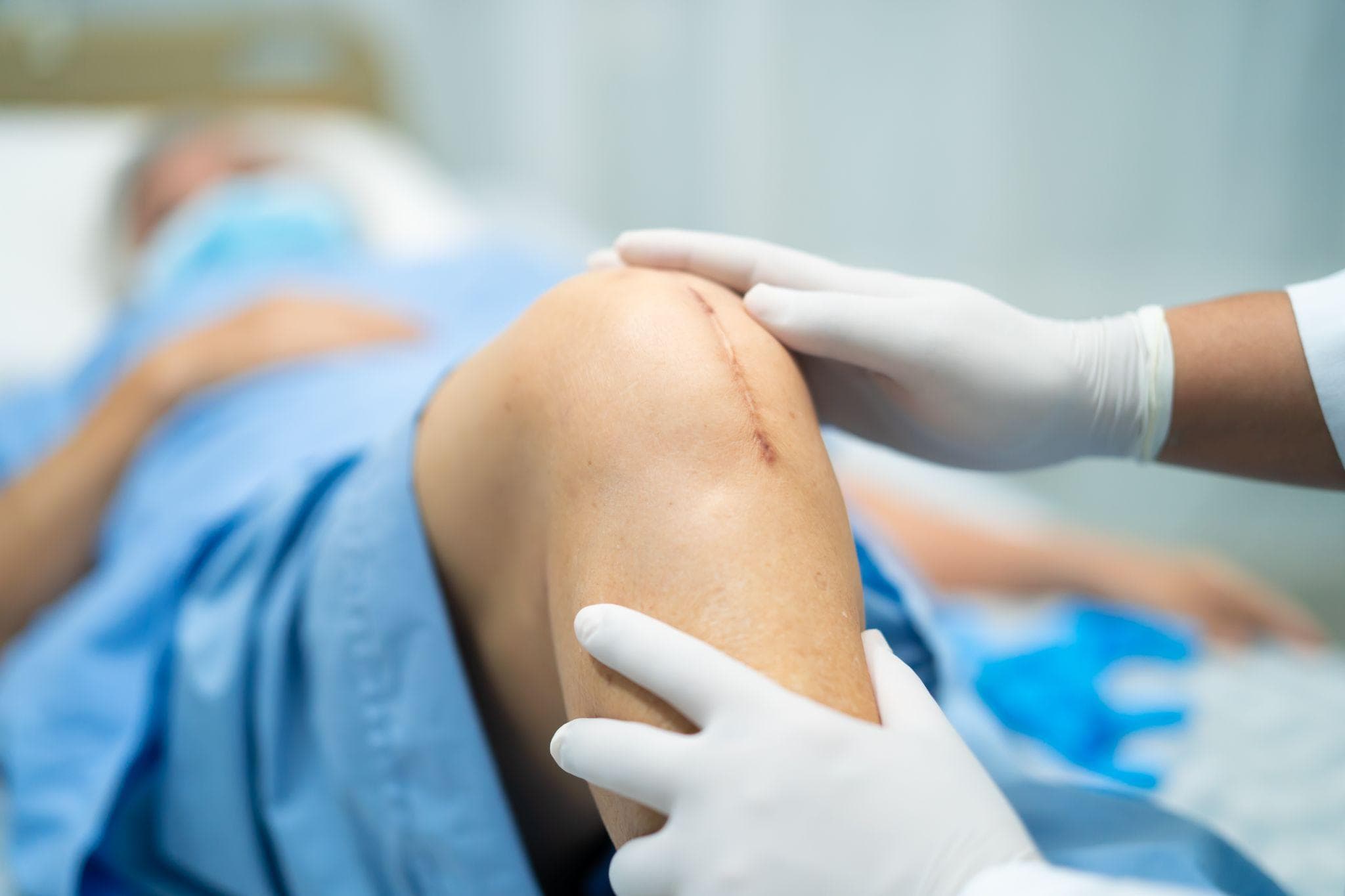
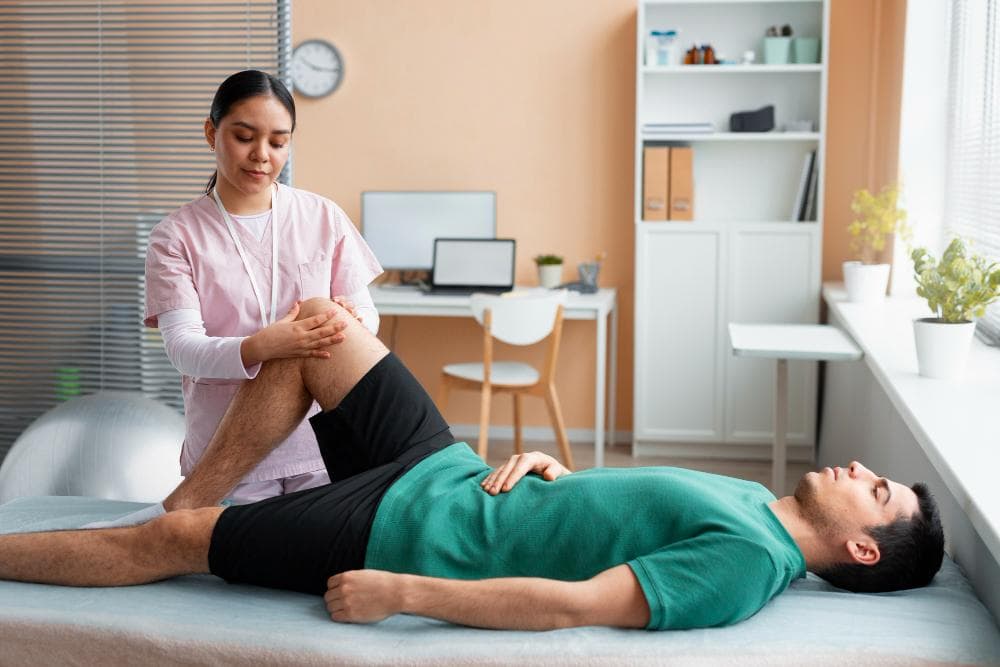
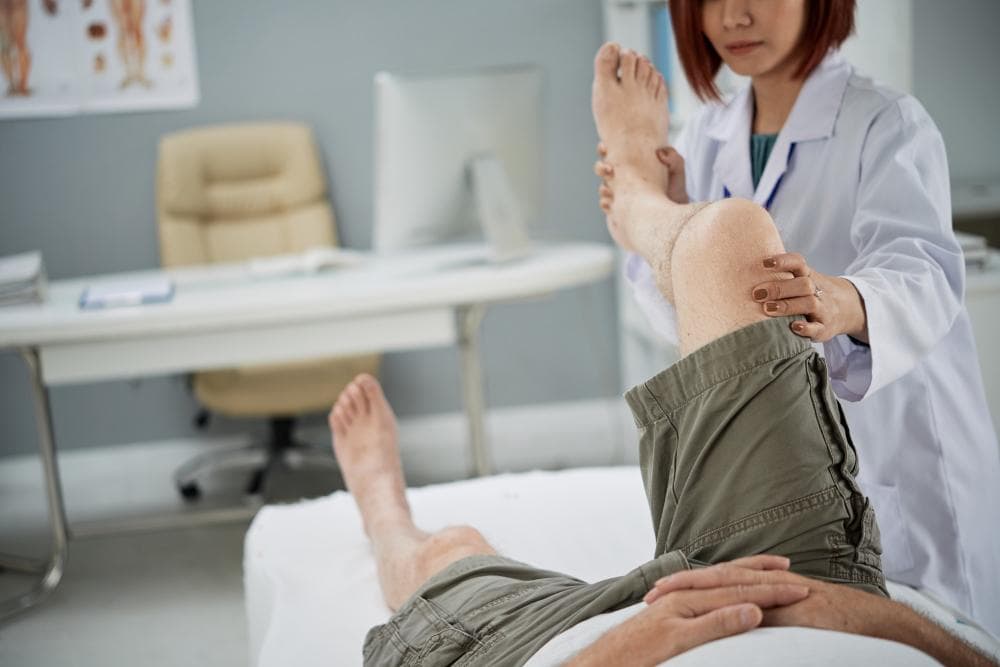
A healthcare professional examining a knee after total knee replacement surgery during recovery.
Knee ligament injuries range from minor sprains that resolve with a few weeks of conservative management to complex multi-ligament injuries requiring staged surgical reconstruction over 12–18 months. The treatment pathway is determined by which ligament, what grade, and what the patient's functional demands are.
The most common mistake is treating all knee ligament injuries the same. An MCL sprain does not need surgery. An ACL rupture in a 30-year-old cricketer almost certainly does. Getting that diagnosis right and matching the treatment to the specific injury makes all the difference to the outcome.
To consult Dr. Mayank Chauhan, Senior Orthopedic Surgeon in Noida, call the number listed on the website.