Reviewed by Dr. Mayank Chauhan
Cervical Disc Disease — When Neck Pain Needs an Orthopedic Specialist
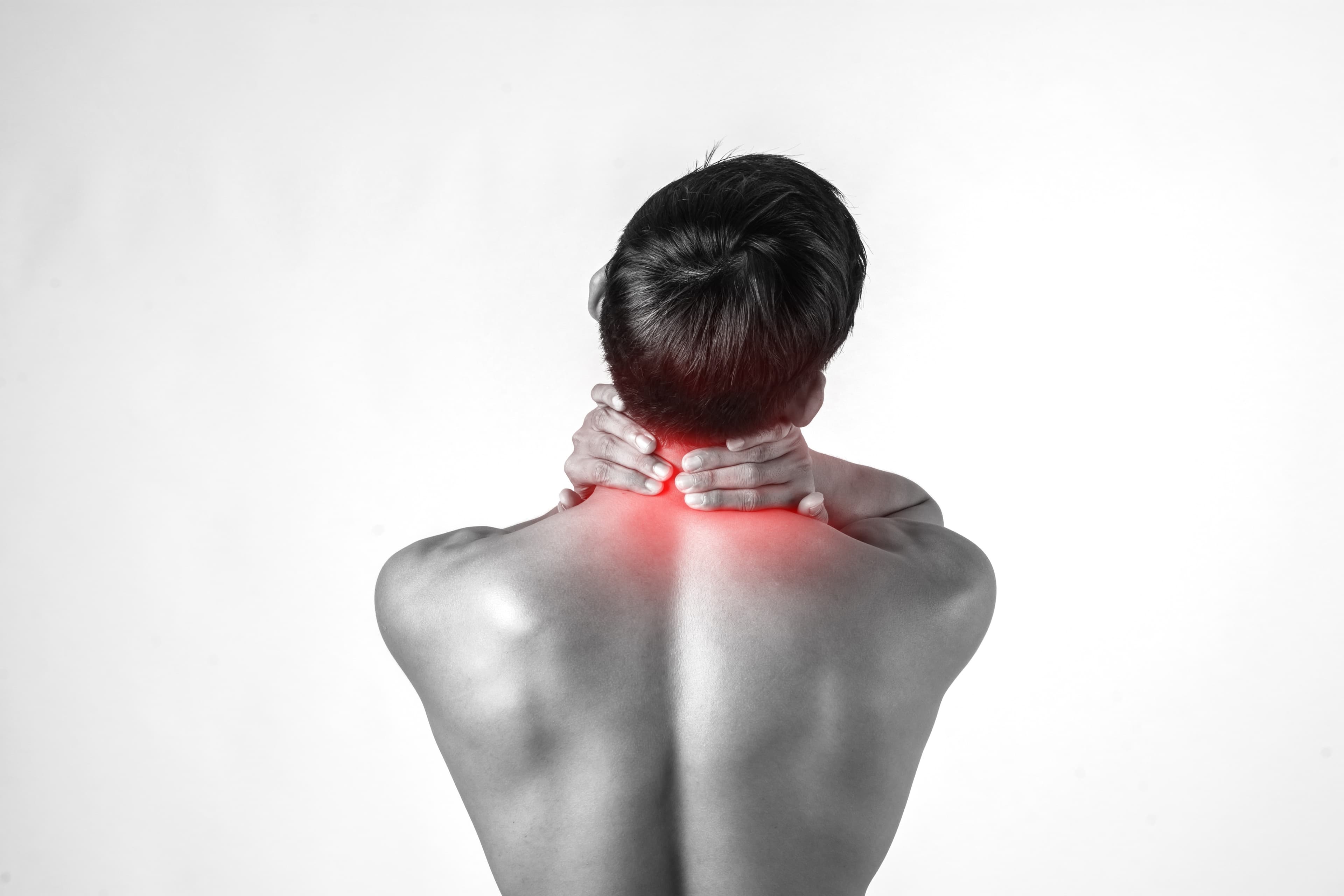
Man suffering from neck pain
Neck pain is the fourth most common cause of disability globally. In India, it has become particularly prevalent — the transition to desk-based work, long hours at computers and mobile phones, and sedentary lifestyles have made cervical spine problems one of the most common reasons adults in their 30s and 40s present to orthopedic clinics.
Most neck pain is benign. It resolves with physiotherapy, posture correction, and time. But some neck pain is the surface sign of something more significant: cervical disc disease that has compressed a nerve root (causing arm pain and weakness) or, in more advanced cases, the spinal cord itself (causing problems in both arms and legs).
Knowing which category your neck pain falls into is the difference between reassurance and treatment, between watchful waiting and urgent intervention.
The Cervical Spine: What Can Go Wrong
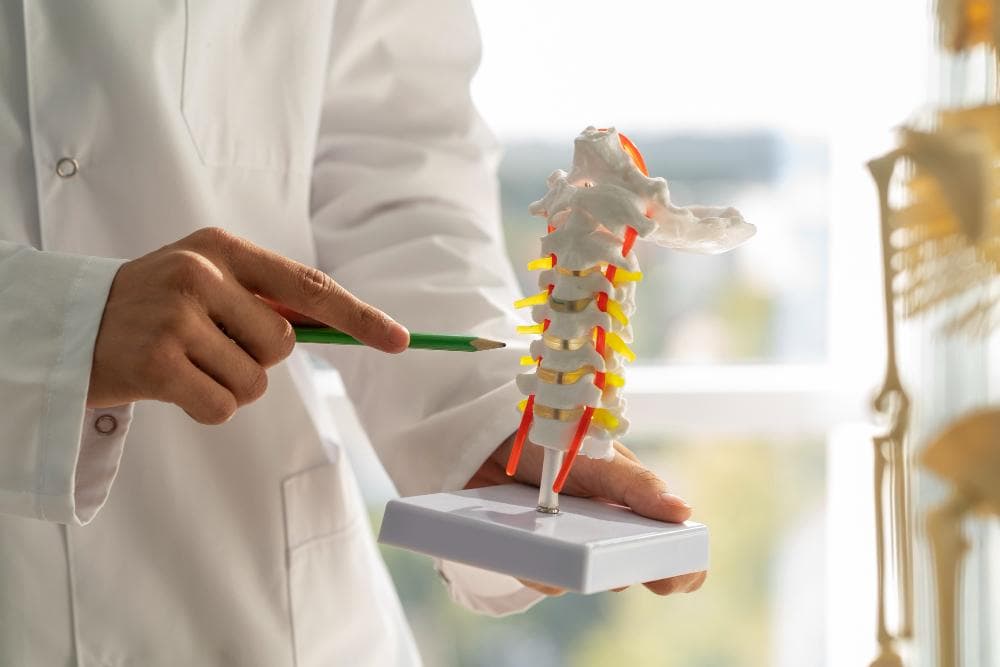
The cervical spine consists of seven vertebrae (C1 through C7) separated by intervertebral discs. These discs serve as cushions and shock absorbers between the vertebrae. Between each pair of vertebrae, nerve roots exit through openings called foramina on the left and right sides.
The spinal cord runs through the cervical spine inside a protective bony canal.
Two types of disc-related pathology cause most serious cervical spine symptoms:
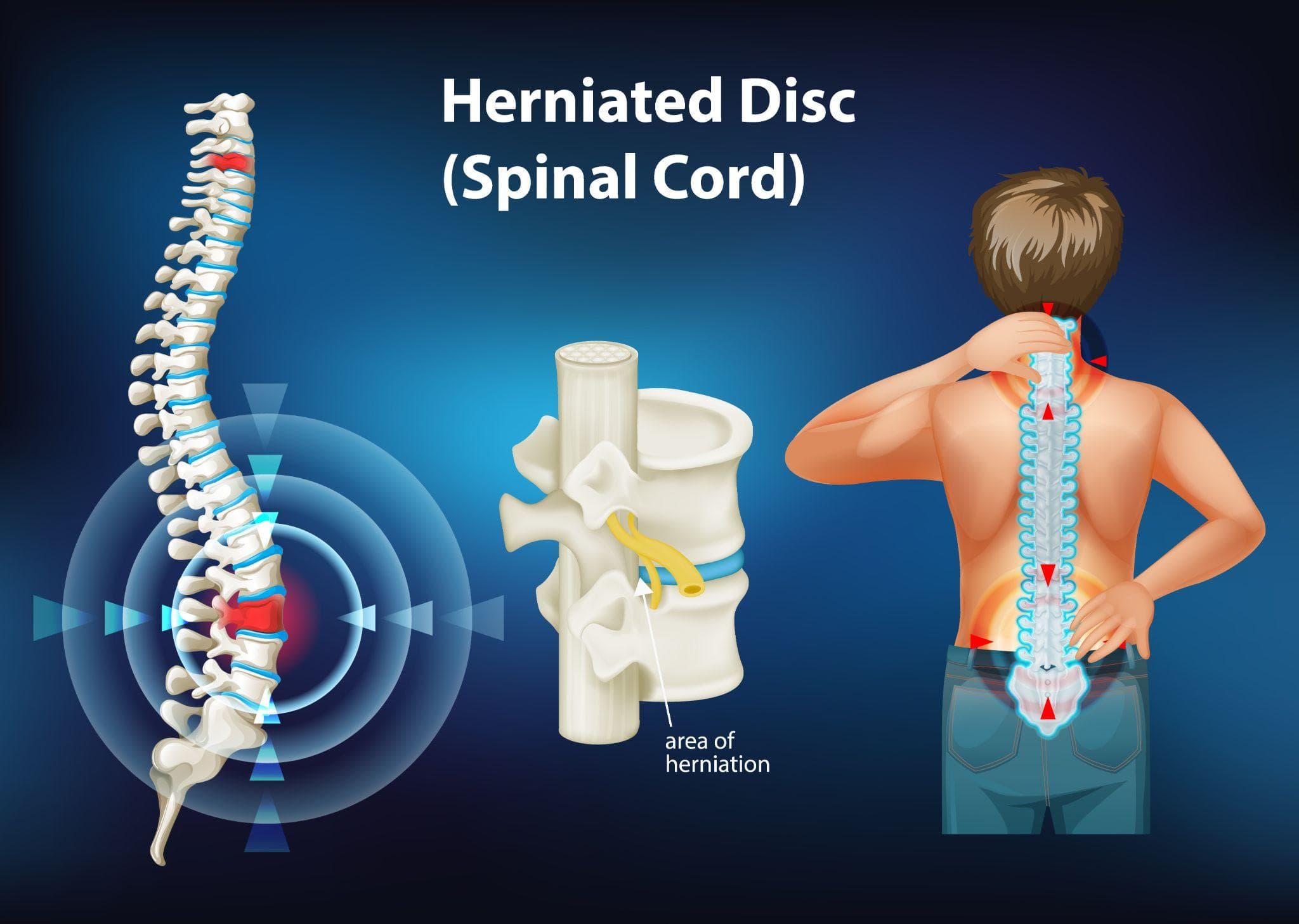
Cervical disc herniation: The soft inner material of the disc (nucleus pulposus) pushes through a tear in the outer ring (annulus fibrosus) and compresses the adjacent nerve root. This is analogous to what happens in lumbar disc herniation, but at the neck level. Typically causes unilateral arm pain.
Cervical spondylosis / degenerative disc disease: Age-related narrowing of disc spaces, formation of osteophytes (bony spurs), and ligament thickening. These changes gradually reduce the space available for nerve roots and, when severe, compress the spinal cord. More common in patients over 50.
Two Different Presentations: Radiculopathy vs Myelopathy
Cervical Radiculopathy (Nerve Root Compression)
When a disc herniation or osteophyte compresses a nerve root at the exit foramen, symptoms travel along the path that nerve supplies:
- C5 root: Pain and weakness at the outer shoulder and upper arm; weakness lifting the arm
- C6 root: Pain and tingling in the thumb and index finger; weakness with wrist extension; reduced biceps reflex
- C7 root: Pain and tingling in the middle finger; weakness straightening the elbow; reduced triceps reflex
- C8 root: Pain and tingling in the ring and little finger; hand weakness; grip impairment
The pattern of symptoms tells a neurologist or spine surgeon which level is affected before the MRI is even done.
Pain is typically unilateral — on the side of the compression. It may be sharp or burning, often aggravated by turning the head to the affected side or extending the neck. Many patients find relief holding the arm above the head (the shoulder abduction relief sign) — this reduces tension on the nerve root.
Cervical Myelopathy (Spinal Cord Compression)
This is a more serious diagnosis. When the spinal cord itself is compressed — rather than just a nerve root — the consequences are different and potentially more severe.
The spinal cord carries signals for the whole body below the neck. Compression doesn't just affect one arm — it affects both arms, both legs, bladder and bowel function, and balance.
Warning symptoms of myelopathy:
- Bilateral hand clumsiness — difficulty with fine motor tasks (buttoning shirts, handling small objects, writing)
- Gait disturbance — unsteadiness, feeling "heavy in the legs," difficulty walking on uneven surfaces
- Electric shock sensation down the spine with neck flexion (Lhermitte's sign)
- Bilateral arm and hand tingling or numbness
- Bladder urgency or difficulty
Myelopathy is a diagnosis that should not be missed and not delayed in treatment. Unlike radiculopathy, which often improves with time and conservative management, myelopathy from spinal cord compression typically does not reverse naturally and tends to progress. Surgery is often required.
Diagnosis
Clinical Examination
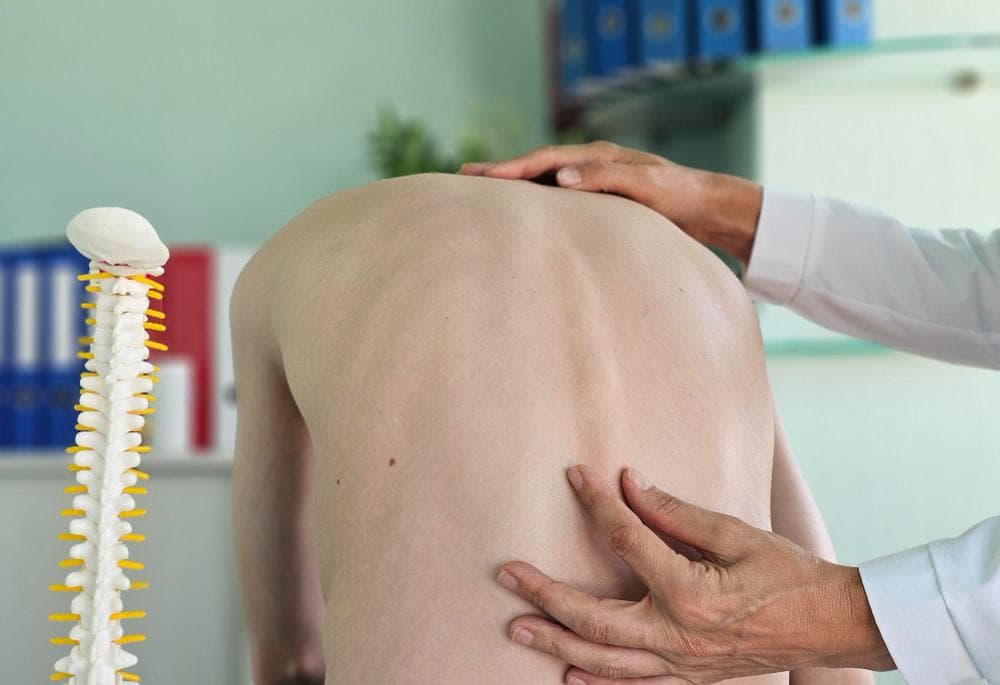
The Spurling test is a simple bedside manoeuvre: the examiner tilts the patient's head toward the symptomatic side and applies downward pressure. Reproduction of arm pain or tingling is a positive sign and suggests nerve root compression.
Neurological examination assesses reflexes (biceps, triceps, brachioradialis), motor strength in the arms and hands, and sensation. In myelopathy, hyperreflexia below the lesion, a positive Babinski sign, and difficulty with tandem gait (walking heel-to-toe) are characteristic.
Imaging
X-ray: Shows disc space narrowing, osteophytes, alignment, and any bony anomalies. A useful starting point but insufficient for diagnosis of soft tissue pathology.
MRI: The essential investigation for cervical disc disease. Shows disc herniations, osteophyte-disc complexes, the degree of neural foraminal stenosis (nerve root compression), central canal stenosis (spinal cord compression), and signal changes within the spinal cord (indicating myelopathic damage). MRI is required before any surgical planning.
CT myelogram: Sometimes used when MRI is contraindicated (pacemaker, severe claustrophobia) or when bony detail is insufficient on MRI.
Nerve conduction studies (NCS/EMG): Useful when the clinical picture is ambiguous — helps localise nerve root versus peripheral nerve pathology, and quantifies the degree of neurological dysfunction.
A retrospective Indian study of 2,667 patients who underwent cervical spine surgery at a tertiary centre between 2004 and 2025 found degenerative cervical myelopathy to be the most common indication — confirming that myelopathy, not just radiculopathy, is the leading driver of cervical surgery in India.
Treatment
Conservative (Non-Surgical)
For most cervical radiculopathy (without progressive neurological deficit), conservative management is appropriate first:
- Activity modification: Avoiding neck positions that provoke symptoms; reducing prolonged forward flexion (screen use, phone use)
- Physiotherapy: Cervical traction (manual or mechanical), neural mobilisation, neck stabilisation exercises, postural correction
- NSAIDs: Anti-inflammatory pain relief
- Gabapentin/pregabalin: Useful for neuropathic (shooting, burning) pain with radiculopathy
- Cervical epidural steroid injection: Guided injection of corticosteroid near the compressed nerve root, reducing local inflammation. Can provide significant relief in the short-to-medium term, bridging to natural resolution or surgery
- Cervical collar: Short-term use only — prevents proprioceptive atrophy and muscle weakening with prolonged use
Approximately 75–90% of cervical radiculopathy cases improve with conservative management within 6–12 weeks.
Surgery
Surgery is recommended when
- Progressive neurological deficit: Worsening weakness, expanding sensory loss
- Myelopathy: Spinal cord compression with functional decline — this should generally not be delayed
- Failure of conservative management: Persistent disabling radicular pain after 6–12 weeks of appropriate non-surgical treatment
- Severe initial presentation: Foot drop equivalent (severe arm weakness) or loss of bladder/bowel control
Anterior Cervical Discectomy and Fusion (ACDF): The most common cervical spine surgery in India. Through a small incision in the front of the neck, the diseased disc is removed, the nerve is decompressed, and the two adjacent vertebrae are fused using a bone graft or cage with a plate. Success rates exceeding 90–95% for radiculopathy and 80–85% for myelopathy.
Cervical Disc Replacement (arthroplasty): An artificial disc replaces the removed disc, preserving motion at that level. An alternative to fusion in suitable patients (single level, no significant deformity, adequate bone). Avoids adjacent level stress.
Posterior approaches (laminoplasty, laminectomy): For multi-level myelopathy where the canal needs to be enlarged from behind.
When to Seek Assessment
See a spine specialist if you have:
- Neck pain with arm pain, numbness, or tingling that has lasted more than 4–6 weeks
- Any weakness in the arms or hands
- Gait problems, hand clumsiness, or balance issues
- Bladder or bowel symptoms accompanying neck or arm pain
- Neck pain after trauma
Most neck pain doesn't need surgery. But identifying the cases that do — particularly myelopathy — before significant neurological damage accumulates is important.
Cervical Spine Care at Prakash Hospital, Noida
Dr. Mayank Chauhan at Prakash Hospital, Sector 33, Noida, evaluates cervical disc disease — from radiculopathy to myelopathy. He advises on the appropriate level of intervention: physiotherapy, injections, or surgical referral for complex myelopathy or radiculopathy failing conservative care.
To book a consultation, call the number listed on the website.