Hyaluronic Acid Injections for Knee Arthritis - What They Do, Who Benefits, and What to Expect
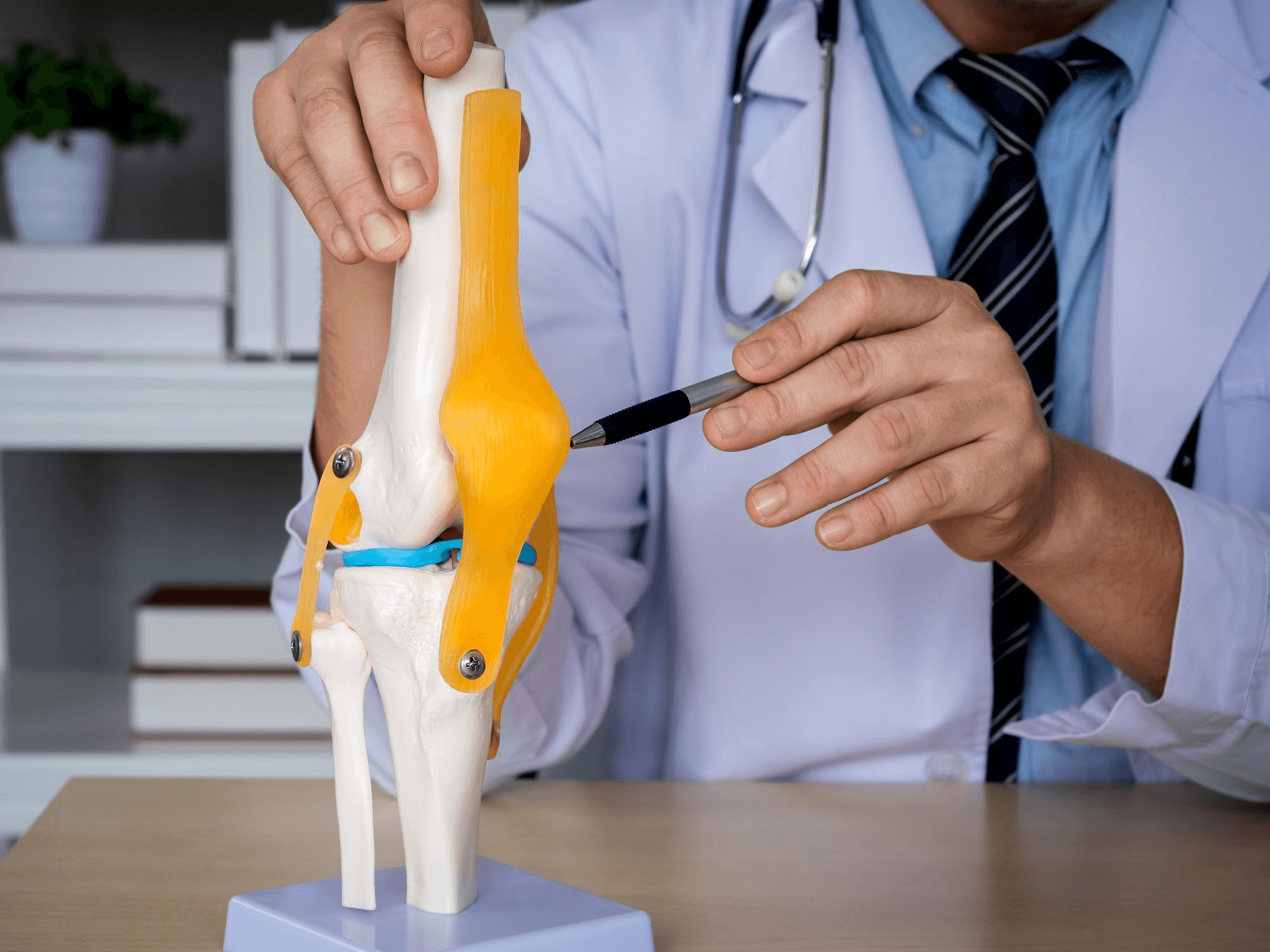
Orthopedic doctor explaining a knee joint model to a patient in clinic
Knee osteoarthritis management in India has changed significantly in the past decade. Where once the only two serious options were pain medication and eventual joint replacement, a growing range of biological and injection-based treatments has expanded the middle ground — giving patients real options for meaningful pain relief and functional improvement before surgery becomes appropriate.
Hyaluronic acid (HA) injection — also called viscosupplementation — is one of the most widely used injection treatments for knee OA. In India, an expert consensus document produced by 78 specialist orthopaedic surgeons has established specific recommendations for its use in the Indian patient context. And yet, many patients receiving HA injections have limited understanding of what they are, how they work, whether they will help specifically, and how they compare to other injection options.
This blog provides the complete picture — for patients in Noida who want to make an informed decision about whether hyaluronic acid injection is the right next step for their knee arthritis.
What Is Hyaluronic Acid and Why Does It Matter for the Knee?
Hyaluronic acid (HA) is a glycosaminoglycan — a large, complex sugar molecule — that is a natural component of the joint's synovial fluid. In a healthy knee joint, HA is present in high concentrations within the synovial fluid, giving it two critical properties:
Viscosity (thickness): HA molecules are long-chain polymers that give synovial fluid its thick, gel-like consistency — similar to egg white. This viscosity provides lubrication between the articular cartilage surfaces during slow movement.
Elasticity: At faster movement speeds (sports, quick direction changes), HA's elastic properties allow the synovial fluid to behave more like a shock absorber, distributing impact forces across the joint surface.
In osteoarthritis, two things happen to the synovial fluid's HA content:
- Concentration decreases: The inflamed synovium produces less HA
- Molecular weight decreases: The HA molecules are shorter (depolymerised) — reducing both viscosity and elasticity
The result is joint fluid that no longer adequately lubricates or cushions the articular surfaces — contributing to progressive cartilage wear and pain.
Viscosupplementation: The term for injecting exogenous (externally produced) hyaluronic acid into the joint to replace or supplement the depleted natural HA. The HA used in modern injections is either produced from rooster combs (avian-derived) or through bacterial fermentation (NASHA — Non-Animal Stabilised Hyaluronic Acid) — both producing the large-molecular-weight HA that most closely resembles the natural joint fluid in its rheological (flow) properties.
What Hyaluronic Acid Does in the Joint — Beyond Lubrication
The mechanism of HA injection benefit has historically been attributed to the viscosupplementation effect — replacing the depleted, lower-quality joint fluid with better-quality lubricant. While this is real, research has identified additional biological effects of exogenous HA that may be equally or more important for clinical benefit:
Anti-inflammatory effects: HA molecules interact with surface receptors on synovial cells and chondrocytes (cartilage cells), reducing the production of pro-inflammatory cytokines (particularly IL-1β and TNF-α). These are the same inflammatory mediators that drive cartilage breakdown in OA.
Anabolic effects on chondrocytes: High-molecular-weight HA stimulates chondrocytes to produce more of their own natural HA and collagen — potentially having a cartilage-protective (disease-modifying) effect. This is an area of active research and is not yet conclusively established, but the biological plausibility is strong.
Pain modulation: HA has been shown to reduce the sensitivity of pain-sensing nerve fibres within the joint — a direct analgesic effect beyond just lubrication.
Antioxidant effects: HA neutralises free radicals generated by inflammatory processes in the joint — reducing oxidative stress-related cartilage damage.
The combination of these effects explains why HA injections produce benefits that last 6–12 months — considerably longer than the 2–3 weeks a purely mechanical lubrication effect would predict.
What the Evidence Shows
A 2025 systematic umbrella review in the Journal of Clinical Medicine synthesised evidence from multiple systematic reviews and meta-analyses on intra-articular hyaluronic acid for OA. Key findings:
- HA shows moderate efficacy in pain relief and functional improvement, particularly in early-to-moderate OA (Kellgren-Lawrence Grade I–III)
- Benefits are sustained — most studies show meaningful improvement at 3–6 months, with some showing benefit at 12 months
- Higher molecular weight HA products are generally associated with better rheological properties and clinical outcomes than lower molecular weight products
- Safety profile is excellent — HA injection is associated with a very low rate of adverse events; the most common is a transient post-injection flare (knee swelling and pain for 1–3 days after injection, typically self-limiting)
- HA vs corticosteroids: Corticosteroids produce faster initial relief, but HA produces more durable benefit over 6–12 months — the two have complementary roles
An Indian-specific systematic review by the expert consensus group of 78 orthopaedic surgeons confirmed that HA injections are effective and appropriate for mild-to-moderate knee OA in the Indian patient context — particularly as a bridge between first-line physiotherapy/medication and surgical intervention.
Who Benefits Most from HA Injection — Patient Selection
HA injection is most appropriate for specific patients. Getting the selection right matters for achieving good outcomes.
Ideal Candidates
Grade I–III knee OA (mild to moderate):
The evidence is strongest for patients with early-to-moderate arthritis. Significant joint space remaining. Some cartilage is still present — providing a surface for the HA to lubricate and a cellular population to respond to HA's biological effects. These patients get real, meaningful, sustained benefit.
Patients who want to delay knee replacement:
A 55-year-old with Grade III OA who is not ready for replacement — either because of age (implant longevity concerns), work commitments during recovery, family circumstances, or personal preference — can achieve 6–12 months of meaningful pain reduction per injection course, potentially bridging several years before replacement becomes unavoidable.
Failed or frequently repeated steroid injection:
Steroid injections are most effective for acute flares — they work quickly, but the benefit is shorter-lived (3–6 months). There is also a concern that repeated steroid injections may accelerate cartilage breakdown with frequent use. HA is an appropriate alternative for patients who have had multiple steroid injections and want a more sustained, cartilage-neutral option.
Patients with diabetes or cardiovascular disease who need to avoid steroids:
Corticosteroid injections cause temporary blood sugar elevation — a clinically significant concern in diabetic patients. HA does not affect blood glucose — making it the preferred injection option for diabetic knee OA patients.
Less Appropriate Candidates
Grade IV (bone-on-bone) OA:
With no remaining cartilage and direct bone-to-bone contact, the HA has no articular surface to lubricate and no chondrocyte population to stimulate. Evidence for HA in Grade IV OA is weak. These patients are better served by evaluation for knee replacement.
Active infection or inflammatory flare:
HA injection into an actively infected or severely inflamed joint is contraindicated. Active inflammation must be controlled before injection.
Known hypersensitivity to HA or avian-derived products:
For avian-derived HA products, patients with bird/egg/feather allergy should use non-animal (NASHA) products.
Patients who have not tried physiotherapy:
HA is most appropriately used alongside physiotherapy, not as a replacement for it. Quadriceps strengthening and weight management are complementary to HA — without these, the duration of benefit is shorter and recurrence faster.
Types of HA Products Available in India
Not all HA products are identical — molecular weight, concentration, and cross-linking (which extends the residence time in the joint) vary significantly between products, affecting both viscosity and duration of benefit.
Single injection HA (high molecular weight, cross-linked):
Products like Synvisc-One, Durolane, and similar single-dose preparations contain cross-linked HA designed to remain in the joint for 6+ months from a single injection. The convenience of a single injection (versus a course of 3 injections) is a significant practical advantage for patients in Noida who have work or travel constraints.
3-injection course HA:
Lower molecular weight HA given as a course of 3 weekly injections (each separated by 7 days). The cumulative effect provides the clinical benefit. More commonly prescribed in India, given the lower per-injection cost.
5-injection course:
Some older protocols and products use 5 weekly injections — less commonly prescribed now that evidence favours shorter courses with high-molecular-weight products.
The Indian consensus recommendation:
The 78-surgeon Indian expert consensus concluded that high-molecular-weight, non-animal HA products provide the best outcomes — and that a single high-molecular-weight injection is at least as effective as multiple injections of lower-molecular-weight products, with better patient convenience.
The Injection Procedure — What to Expect
HA injection into the knee joint is a clinic-based procedure performed under sterile conditions.
Preparation:
- No specific fasting required
- Continue normal medications (unlike some other procedures, HA injection does not require stopping anticoagulants in most cases — discuss with your surgeon)
- Wear or bring loose clothing that allows easy access to the knee
The procedure:
- The skin over the injection site (typically the lateral aspect of the knee — the outer side) is cleaned with antiseptic
- Local anaesthetic is sometimes applied to the skin
- The needle is inserted into the knee joint — guided by anatomical landmarks (landmark-guided) or by ultrasound (ultrasound-guided)
- The HA solution is injected slowly into the joint space
- Duration: approximately 5–10 minutes including preparation
Ultrasound guidance:
Ultrasound guidance ensures accurate intra-articular needle placement — confirmed by real-time visualisation of the needle tip within the joint. It also allows the operator to aspirate any excess joint fluid (effusion) before injecting the HA, which is important when the knee is swollen — aspirating the effusion creates space and may itself reduce pain. Ultrasound guidance is strongly preferred for precise placement.
After the procedure:
- Mild discomfort or increased swelling for 1–3 days post-injection is normal (post-injection flare) — managed with ice and paracetamol
- Avoid strenuous knee loading (running, heavy squatting) for 48 hours
- Resume normal activity gradually from Day 2–3
- Maximum benefit is typically seen at 4–8 weeks and sustained through 6–12 months
HA vs Other Injection Options — The Choice
| Injection | Onset | Duration | Best For |
|---|---|---|---|
| Corticosteroid | Fast (days) | 3–6 months | Acute flares, rapid short-term relief |
| Hyaluronic Acid | Gradual (4–8 weeks) | 6–12 months | Mild-moderate OA, sustained relief, diabetic patients |
| PRP | Gradual (4–8 weeks) | 9–18 months | Mild-moderate OA, biological regenerative approach |
| Steroid + HA | Fast then sustained | 6–12 months | Patients needing quick flare control + sustained HA benefit |
For a patient with moderate knee OA who needs rapid relief from an acute flare, a steroid injection is appropriate. For a patient who wants sustained 6–12 months of benefit without the repeated steroid risk, HA is appropriate. For a patient in their 40s wanting the most biological, longest-lasting approach, PRP may be preferred. These are complementary options, not competing ones.
HA Injections in Noida — Dr. Mayank Chauhan at Prakash Hospital
Dr. Mayank Chauhan, Senior Orthopedic Surgeon at Prakash Hospital, Sector 33, Noida, offers hyaluronic acid injection as part of a comprehensive, staged approach to knee arthritis management — using high-molecular-weight HA products with ultrasound guidance when available, as part of a management plan that also includes physiotherapy and weight management guidance.
For patients in Noida and Greater Noida with knee arthritis who are looking for sustained injection-based treatment before consideration of replacement, a consultation will determine whether an HA injection is appropriate for their specific OA grade and clinical situation.
To book a consultation, call the number listed on the website.
The Bottom Line
Hyaluronic acid injection is an evidence-supported, safe treatment for mild-to-moderate knee OA — providing sustained pain relief and functional improvement over 6–12 months per course. It is not appropriate for every patient (Grade IV OA responds poorly), and it does not halt OA progression. But for the right patient — particularly younger adults with Grade I–III OA who want to delay replacement or are not surgical candidates — it is a genuinely valuable middle-ground treatment.
Used as part of a comprehensive management plan — alongside physiotherapy, weight management, and appropriate activity modification — HA injection produces its best results.
To consult Dr. Mayank Chauhan, Senior Orthopedic Surgeon in Noida, call the number listed on the website.