Spine Surgery In Noida - Types, When It's Needed And What To Expect
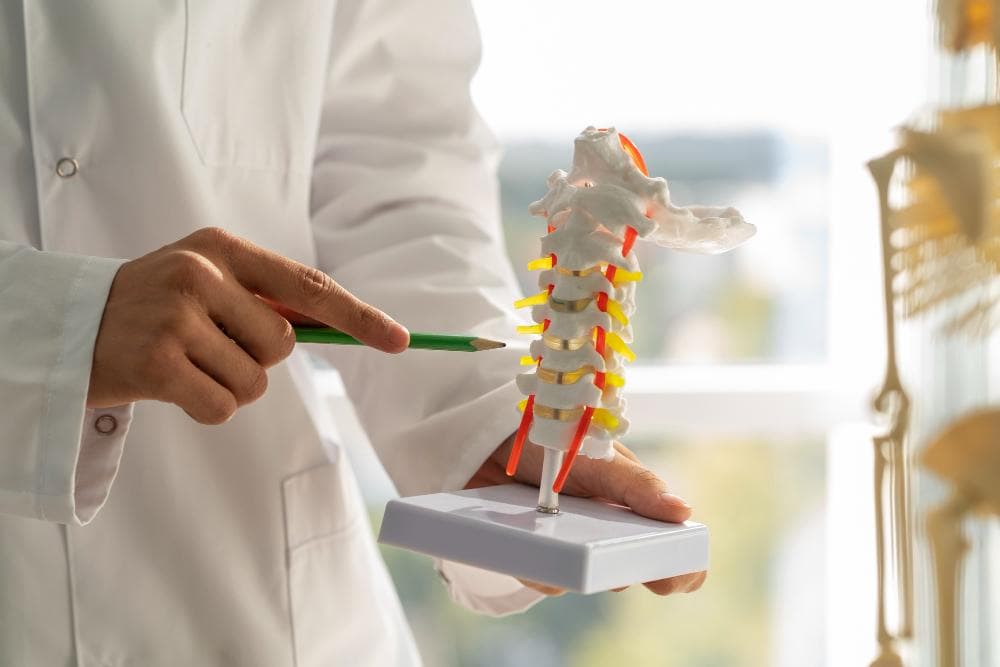
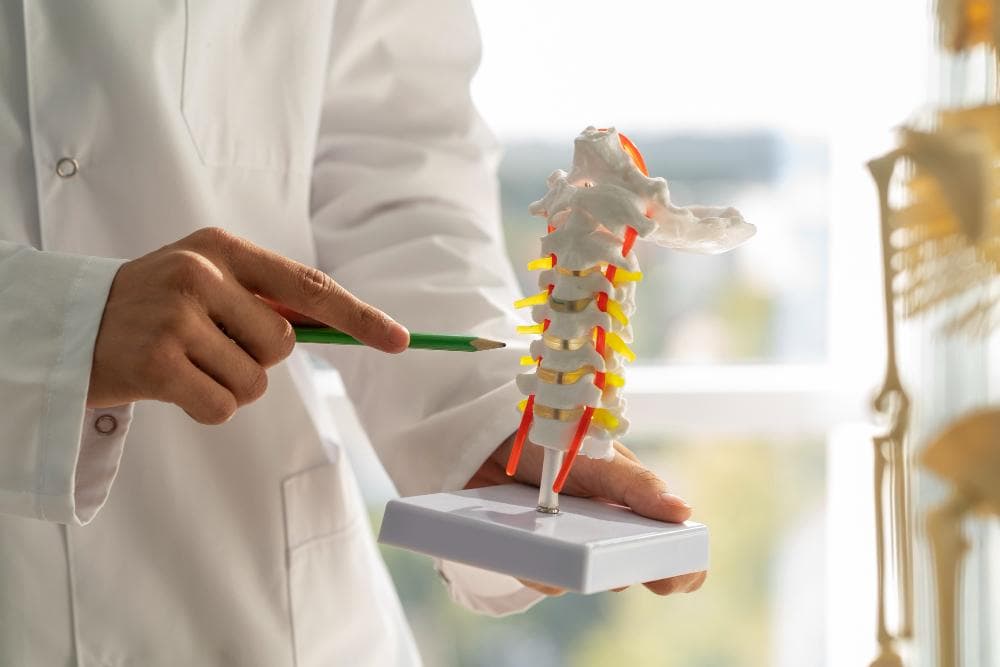
A close-up shot of a doctor’s hands explaining the anatomy of a spine through a model and holding a pencil in another hand.
Spine surgery is one of the most misunderstood areas of orthopedic medicine. Patients arrive at clinics in Noida with two opposite fears: one group convinced they need surgery when they don't, another group avoiding surgical evaluation for years because they're terrified of operating on the spine. Both groups deserve accurate information.
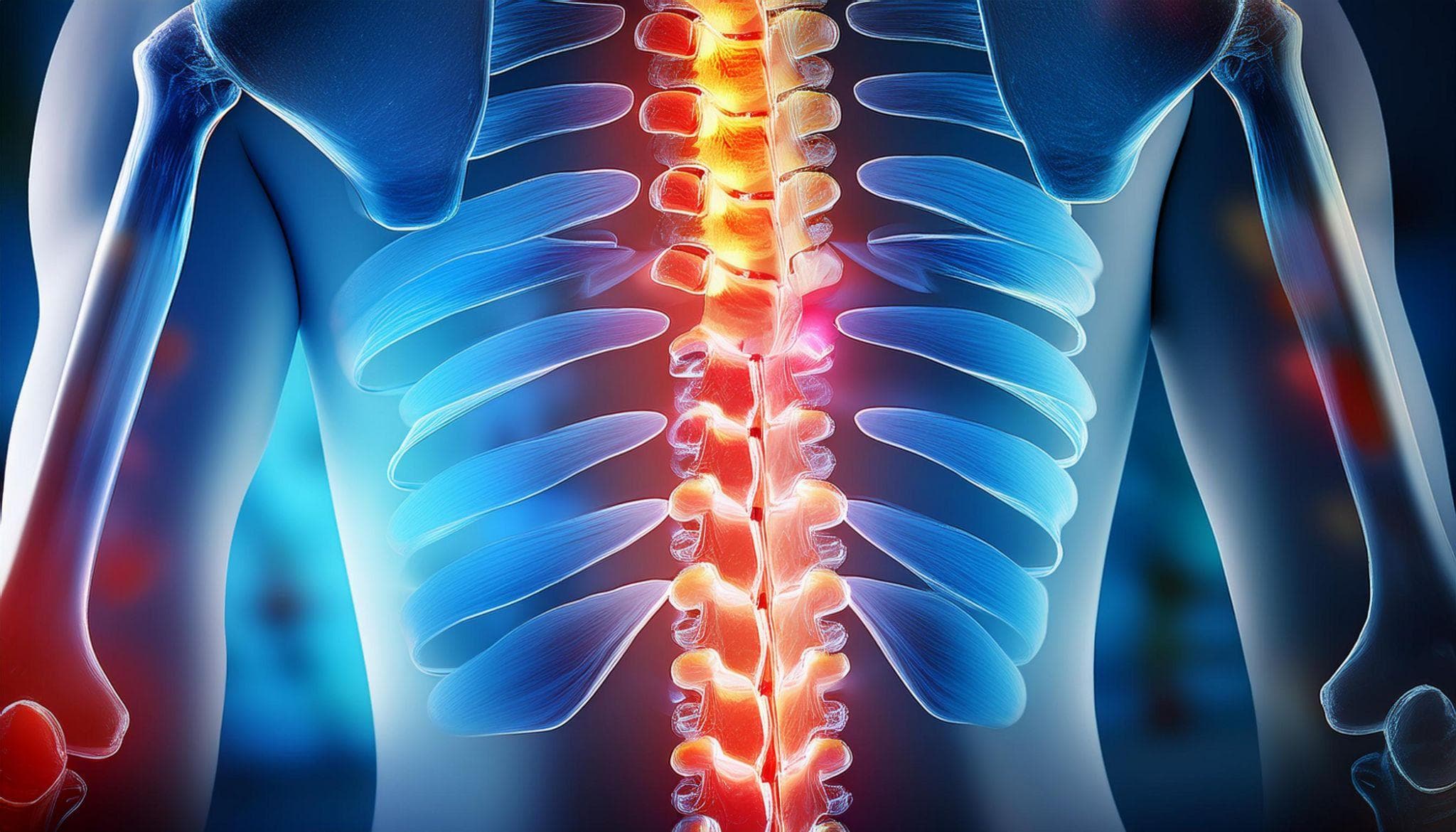
The spine is the central structural pillar of the body, 33 vertebrae stacked in a column, connected by discs, joints, ligaments, and surrounded by the spinal cord and its exiting nerve roots. When spine problems cause significant neurological symptoms or when structural instability creates unacceptable pain and disability that won't respond to non-surgical treatment, spine surgery can produce dramatic, life-changing improvement.
But the spine is also a structure that is frequently overtreated. Many spine surgeries performed globally are done on patients who would have done equally well or better with proper conservative management. The art of spine surgery is knowing when to operate and, equally importantly, when not to. This guide covers the full spectrum of spine surgery available in Noida, including what each procedure is, what condition it treats, who is a suitable candidate, and what recovery involves.
The Conservative Treatment Rule - Always First
Before any discussion of specific procedures, this principle deserves emphasis: no spine surgery should be recommended without adequate conservative treatment having been genuinely tried.
"Adequate conservative treatment" for most spine conditions means:
- A structured physiotherapy programme of 6–12 weeks.
- Appropriate medication (NSAIDs, nerve pain medication, short-course steroids where indicated).
- Epidural steroid injections were indicated.
- Activity modification and ergonomic correction.
The exception is emergencies, such as cauda equina syndrome (loss of bladder/bowel control from disc compression), progressive and rapid neurological deterioration, or spinal instability from trauma or tumour, which require urgent surgical evaluation regardless of prior treatment.
For everything else: Conservative treatment first, surgery when it genuinely fails or when clinical criteria for surgery are clearly met.
The Spine - A Quick Anatomy Overview
Cervical spine (C1–C7): The seven vertebrae of the neck. Cervical problems cause neck pain, arm pain, numbness and tingling in the hands and fingers, and in severe cases, spinal cord compression (myelopathy).
Thoracic spine (T1–T12): The twelve vertebrae of the mid-back are attached to the rib cage. Thoracic disc herniations are rare but can cause significant symptoms when they occur.
Lumbar spine (L1–L5): The five vertebrae of the lower back. The site of most disc herniations, most degenerative disease, and most spine surgery. L4-L5 and L5-S1 are the most commonly affected levels.
Sacrum and Coccyx: The fused vertebrae below the lumbar spine, forming the back of the pelvis.
Common Conditions That May Require Spine Surgery
Certain spinal conditions can cause persistent pain, nerve compression, or mobility problems that may eventually require surgical treatment when conservative methods no longer provide relief.
1. Lumbar Disc Herniation (Slipped Disc)
The most common reason for lumbar spine surgery. A herniated disc where the inner disc material pushes through the outer ring and compresses a nearby nerve root causes sciatica: radiating leg pain, often with numbness and tingling, following the path of the compressed nerve down through the buttock and leg. As detailed in a separate blog, 80–90% of disc herniations resolve with conservative treatment. Surgery is considered when:
- Conservative treatment (6+ weeks of physiotherapy, medication, epidural injections) has failed.
- There is progressive neurological weakness (worsening foot drop, leg weakness).
- Cauda equina syndrome (bladder/bowel involvement — emergency).
Surgical procedure: Microdiscectomy is the gold standard. Through a small incision in the back, the herniated disc fragment compressing the nerve is precisely removed using a microsurgical technique.
Hospital stay: 1–2 days. Return to desk work: 2–4 weeks.
2. Spinal Stenosis
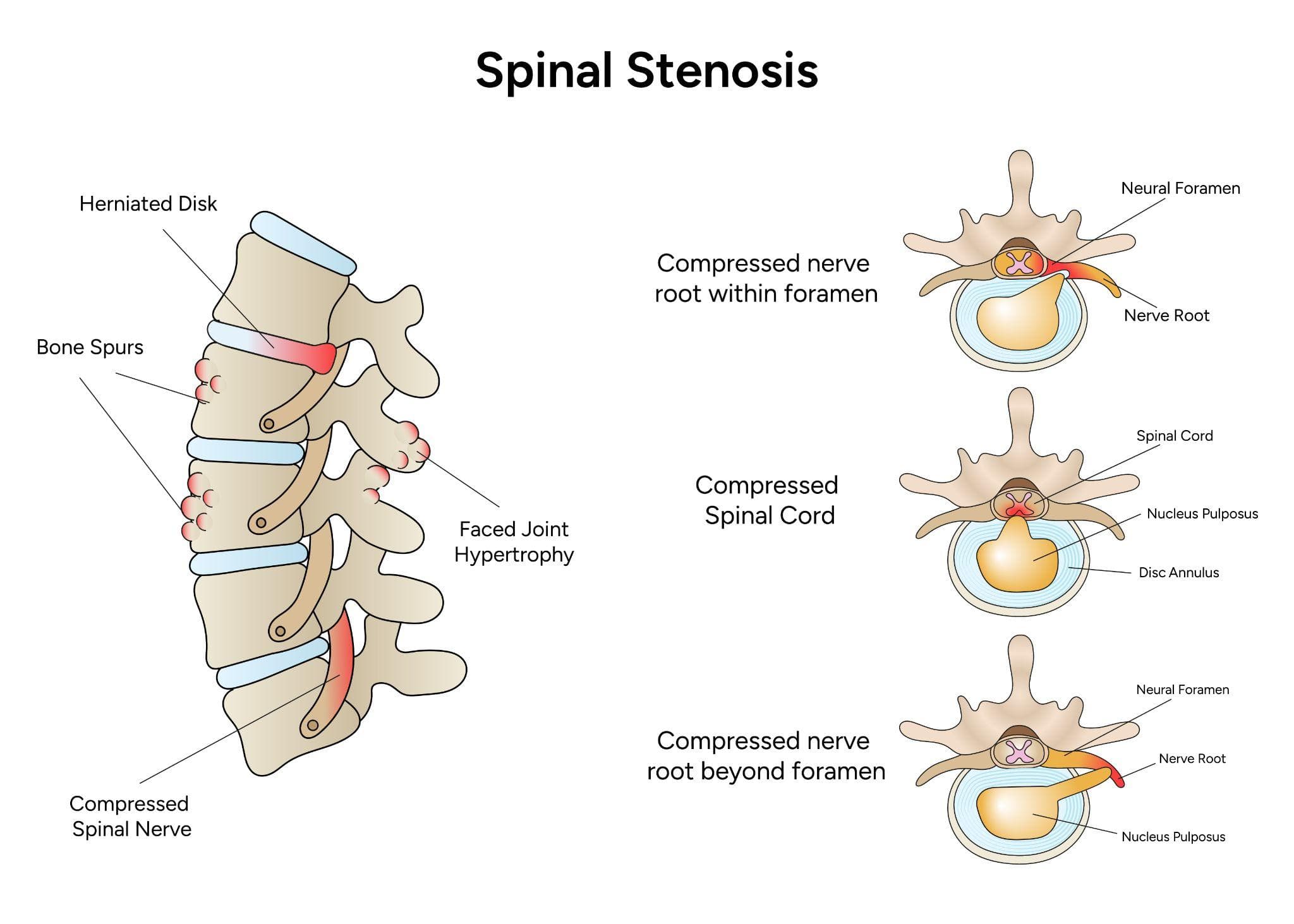
An anatomical illustration labeled Spinal Stenosis provides a visual overview of the spine's structural issues. The diagram features a side view of the vertebral column, clearly highlighting areas affected by herniated discs, bone spurs, and compressed nerves.
Spinal stenosis is the narrowing of the spinal canal, the space through which the spinal cord and nerves travel. In the lumbar spine, it typically develops from a combination of bulging discs, thickened ligaments, bone spurs, and facet joint enlargement, all changes associated with degenerative ageing.
The characteristic symptom is neurogenic claudication: Leg pain, weakness, or heaviness that comes on with walking and is relieved by sitting down or bending forward (both positions increase the spinal canal diameter). Patients describe being able to walk comfortably for a short distance before having to stop, and the pain returning when they start walking again.
This is distinct from vascular claudication (from poor arterial circulation), which is not relieved by bending forward. A trained clinician can distinguish these by examination; a vascular assessment confirms or excludes the arterial cause.
Non-surgical treatment: Physiotherapy (flexion-based exercises, the opposite of extension exercises for disc herniation), epidural steroid injections for pain management.
Surgical procedure: Laminectomy (decompression) of the back part of the vertebra (lamina) and hypertrophied ligament are removed to widen the spinal canal and decompress the nerves. If done with appropriate patient selection, success rates are very high.
Hospital stay: 2–4 days.
Return to light activities: 4–6 weeks.
3. Cervical Disc Herniation And Cervical Spondylosis
Cervical disc herniation causes arm pain, numbness, and tingling in a distribution matching the compressed nerve root. For example, C6 nerve root compression (from a C5-C6 disc herniation) causes lateral forearm and thumb numbness. Cervical spondylosis (degenerative changes in the cervical discs and facet joints) causes neck pain, stiffness, and headaches at the base of the skull extremely common in Noida's desk-working population from prolonged screen use and forward neck posture.
When cervical disc herniation compresses the spinal cord rather than just a nerve root, it causes cervical myelopathy, a more serious condition involving weakness in the hands, difficulty with fine motor tasks (buttoning shirts, typing), unsteady gait, and, in severe cases, lower limb involvement. Myelopathy is a surgical condition that typically leads to progressive and potentially irreversible spinal cord damage.
Surgical procedures:
ACDF (Anterior Cervical Discectomy and Fusion): The diseased disc is removed from the front of the neck. The adjacent vertebrae are fused using a bone graft and a titanium plate. Highly successful operation, typically 85–95% success for arm pain relief. Hospital stay: 1–2 days.
Cervical Disc Replacement (Arthroplasty): An alternative to fusion for appropriate patients, the diseased disc is replaced with an artificial disc that preserves movement at that level. Particularly suitable for younger, active patients where preserving neck mobility is important. Reduces the risk of adjacent segment degeneration compared to fusion.
PCDF (Posterior Cervical Decompression and Fusion): Used when multiple cervical levels need addressing, or when significant spinal cord compression (myelopathy) requires a posterior approach for decompression.
4. Lumbar Spondylolisthesis
Spondylolisthesis occurs when one vertebra slips forward on the vertebra below it. This can be degenerative (from facet joint arthritis, more common in adults over 50, particularly women) or from a stress fracture in the bony arch of the vertebra (more common in young athletes). Degenerative spondylolisthesis at L4-L5 commonly causes a combination of low back pain and neurogenic claudication symptoms very similar to spinal stenosis.
Non-surgical treatment: Physical therapy, core strengthening, activity modification, and epidural injections.
Surgical procedure: When conservative treatment fails, surgical treatment typically involves decompression plus fusion, removing the pressure on the nerves (laminectomy) and stabilising the slipped vertebra with pedicle screws and a rod construct, often with an interbody fusion cage (TLIF, PLIF, or XLIF depending on the approach).
Hospital stay: 3–5 days.
Recovery: 6–12 weeks to return to most activities; full recovery 3–6 months.
5. Degenerative Disc Disease (DDD) with Chronic Low Back Pain
This is the most common and most controversial indication for spine surgery and the one where patient selection matters most. Degenerative disc disease refers to the age-related wear of intervertebral discs, which dehydrate, lose height, may develop small tears in the outer ring, and produce pain. On MRI, disc degeneration is extremely common and present to some degree in most adults over 40. The challenge is that degenerative disc disease on MRI doesn't always correspond to the source of pain, and surgery for "back pain alone" without significant nerve compression or neurological symptoms has a much more variable outcome than surgery for disc herniation or stenosis.
The procedure occasionally considered for refractory DDD is spinal fusion, which permanently joins two or more vertebrae together to eliminate movement at the painful level. Spinal fusion for DDD is only appropriate when:
- Disc degeneration is confirmed as the specific pain source (through clinical assessment and sometimes a diagnostic discography).
- Conservative treatment has been comprehensively tried for at least 6 months without improvement.
- The patient does not have significant psychological factors contributing to their pain perception.
- The pattern and level of degeneration are appropriate for surgical stabilisation.
Patient selection for lumbar fusion is the most critical determinant of outcome. Well-selected patients do well; poorly-selected patients may not improve or may worsen. This is a decision that requires very careful, honest evaluation.
6. Vertebral Compression Fractures
In elderly patients with osteoporosis, the weakened vertebral bodies can fracture, sometimes from something as minor as a sneeze or a minor stumble. These fractures cause sudden, severe back pain, often with significant height loss. For fractures that remain stable and respond to pain management and activity restriction, conservative treatment (bracing, pain medication) is appropriate. For fractures that don't respond to conservative treatment or that continue to progress, two minimally invasive procedures are available:
Vertebroplasty: Bone cement is injected directly into the fractured vertebra to stabilise it.
Kyphoplasty: A balloon is first inflated inside the vertebra to restore height before cement is injected. This is the preferred procedure as it attempts to correct the deformity as well as stabilise the fracture.
Both procedures are done percutaneously (through the skin) under imaging guidance, with minimal recovery time.
7. Minimally Invasive Spine Surgery (MISS)
Across all the procedures described above, minimally invasive techniques, when available and appropriate, offer significant advantages over open surgery:
- Smaller incisions (1–3 cm versus 6–15 cm for open surgery)
- Less muscle disruption, the key muscles of the back are retracted or split rather than cut.
- Less blood loss
- Shorter hospital stay
- Faster recovery
Procedures now available as minimally invasive techniques include microdiscectomy, laminectomy, TLIF (transforaminal lumbar interbody fusion), and vertebroplasty/kyphoplasty. Not all patients are candidates for minimally invasive techniques complexity, anatomy, and the specific procedure determine suitability.
Spine Surgery In Noida - What To Expect At Prakash Hospital
Dr. Mayank Chauhan, Senior Orthopedic Surgeon at Prakash Hospital, Sector 33, Noida, manages the full spectrum of spine conditions from acute disc herniation through to complex degenerative disease requiring surgical decompression or stabilisation. His approach reflects the principle that conservative treatment comes first. Patients arriving with a recent MRI showing disc changes and back pain are not sent directly to surgery; they receive a structured evaluation, appropriate conservative management where indicated, and surgical discussion only when clinical criteria for surgery are clearly met.
For patients referred from other clinicians with a surgical recommendation already made, Dr. Chauhan provides an independent evaluation of whether the recommendation is appropriate for that specific patient's condition and circumstances.
Conditions commonly treated at Prakash Hospital, Noida:
- Lumbar disc herniation (slipped disc) - Conservative and surgical
- Cervical disc herniation and spondylosis - ACDF, disc replacement
- Lumbar spinal stenosis - Decompression surgery
- Spondylolisthesis - Decompression and fusion
- Vertebral compression fractures - Vertebroplasty/kyphoplasty
- Degenerative disc disease - Conservative management and selected surgical cases
Consultation is available Monday to Saturday, 10 AM to 8 PM | Sunday, 10 AM to 2 PM.
To book a spine consultation with Dr. Mayank Chauhan, call the number listed on the website.
Key Questions To Ask Before Any Spine Surgery
If spine surgery is recommended to you by any surgeon in Noida or elsewhere, these are the questions worth asking before agreeing:
- What specifically is being compressed or unstable, and how does it explain my symptoms?
- Have I completed adequate conservative treatment (6+ weeks of proper physiotherapy, appropriate injections)?
- What are the realistic expected outcomes? What percentage of patients with my condition improve with this surgery?
- What are the risks specific to this procedure at this level?
- What happens if I choose not to have surgery? Is there a risk of permanent nerve damage from waiting?
- What is the recovery timeline, and what will I be able to do at each stage?
A surgeon who provides clear, honest answers to all of these questions is one worth trusting.
The Bottom Line

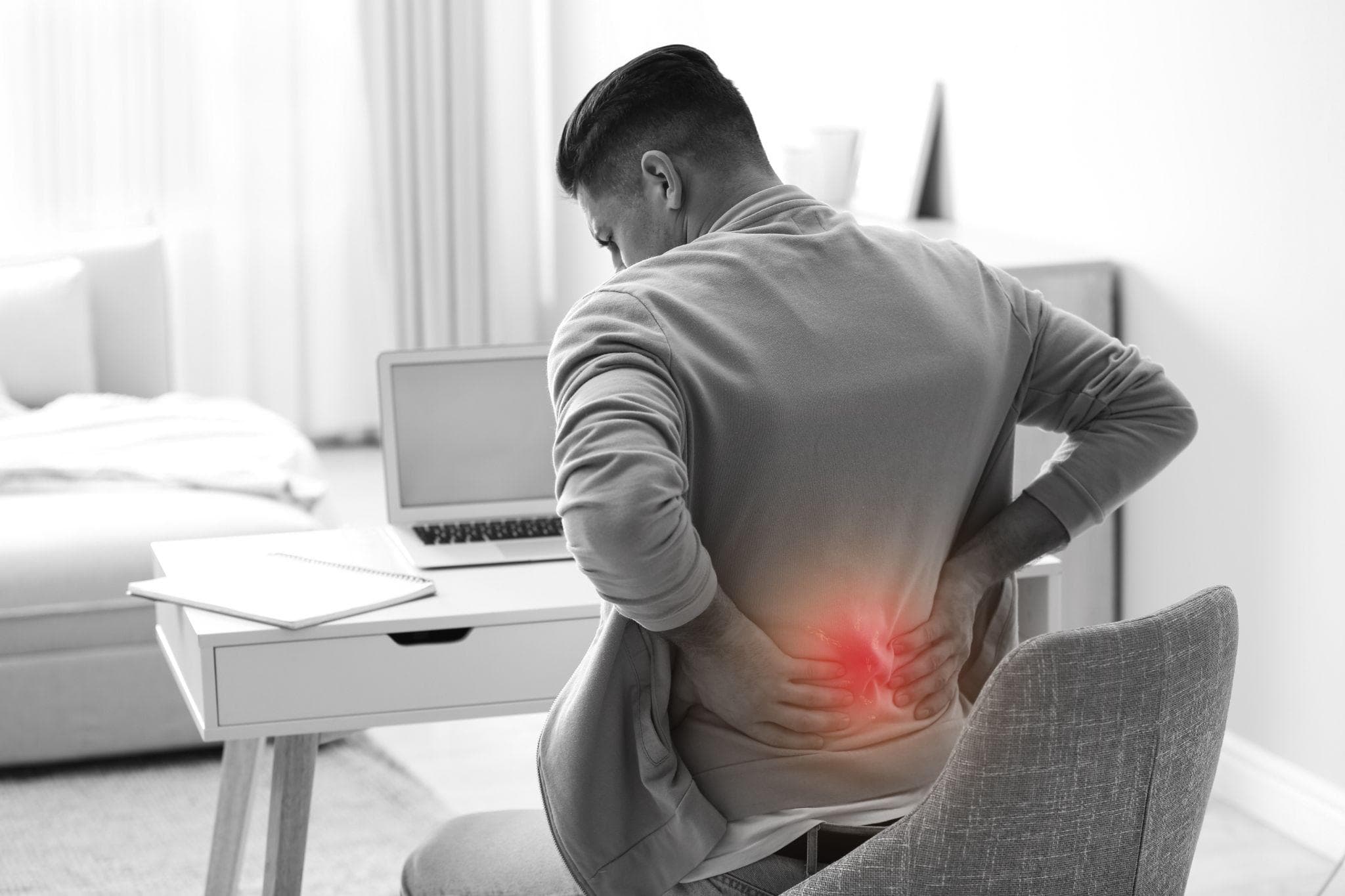
Man holding his lower back in pain after improper lifting.
Spine surgery, done at the right time on the right patient for the right condition, produces some of the most dramatic outcomes in orthopedic medicine. Patients with severe sciatica from a disc herniation who undergo microdiscectomy often describe the relief as immediate and transformative. Patients with cervical myelopathy who receive ACDF at the right time can prevent significant permanent neurological damage.
But spine surgery done on the wrong patient, for the wrong reason, or before adequate conservative treatment has been tried, can produce poor outcomes and sometimes make things worse. The key is an accurate diagnosis, a complete trial of appropriate conservative treatment, and an honest conversation with a surgeon who tells you what you need to hear, not what you want to hear.
For spine consultations in Noida and Greater Noida, contact Dr. Mayank Chauhan at Prakash Hospital, Sector 33, Noida, call the number listed on the website.