Knee Pain Treatment In Noida - When To See A Doctor Vs. When To Wait
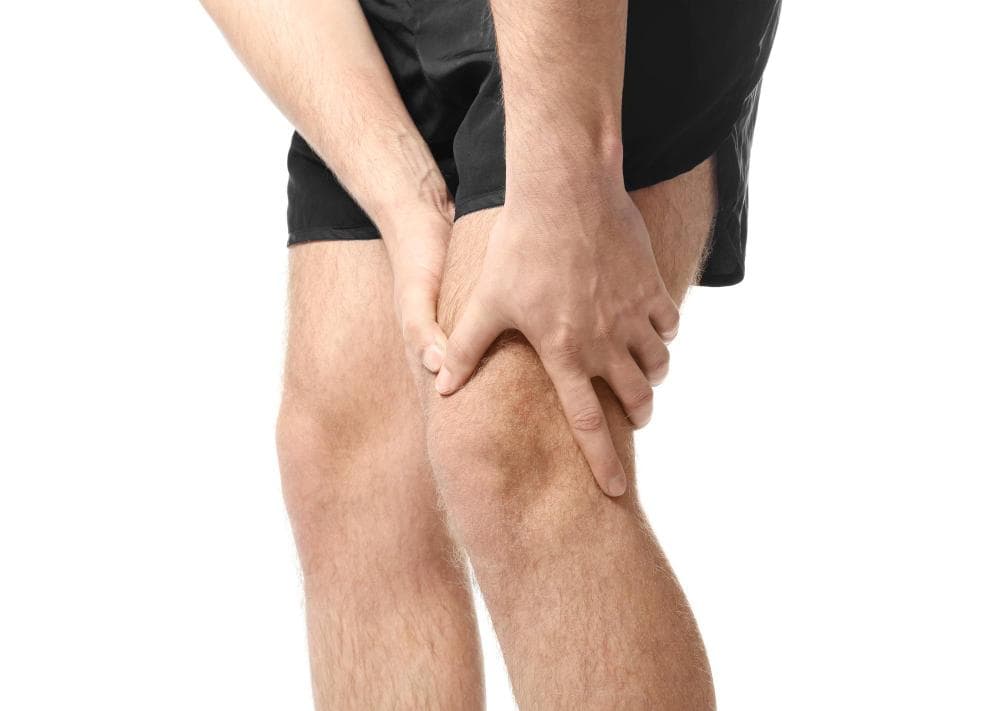
A picture of a young man standing and holding his right knee with both hands as if he were in pain. The man is wearing black shorts, and the background is plain white.
Knee pain is one of the most common complaints that brings people to an orthopedic clinic in Noida. And it's one of the most variable because "knee pain" describes everything from a minor overuse soreness that resolves in two days to a severely arthritic joint that has been deteriorating for a decade.
Most people with knee pain don't know where their situation falls on that spectrum. They don't know whether they should rest and wait, go to a physiotherapist, or book an appointment with an orthopedic specialist. They also don't know which symptoms are genuinely concerning and which ones, while uncomfortable, are not medically urgent. This guide answers those questions directly. It's for people in Noida, Greater Noida, and Delhi NCR who are dealing with knee pain and trying to figure out the right next step.
Understanding The Knee - Why It Hurts So Easily
The knee is the largest and most load-bearing joint in the body. Every time you take a step, the knee absorbs a force roughly equal to 1.5 times your body weight. Going up stairs? That's about 3.5 times your body weight. Squatting or getting up from a low seat? Up to 7–8 times.
This is why knee problems are so common, and why knee pain is so often linked to conditions that involve long-term load and wear, like arthritis, cartilage damage, and ligament problems, rather than single dramatic injuries alone. The knee is also a complex structure. Pain in the knee can originate from:
- The cartilage covering the bone ends (damaged in arthritis).
- The menisci, the C-shaped cartilage pads, act as shock absorbers.
- The four ligaments (ACL, PCL, MCL, LCL) provide stability.
- The tendons connecting muscles to the joint (patellar tendon, quadriceps tendon).
- The bursae are fluid-filled sacs that cushion the joint.
- The joint lining (synovium) is inflamed in rheumatoid arthritis and gout.
- The bone itself is damaged in fractures or avascular necrosis.
- Or not in the knee at all, referred pain from the hip or lower back frequently presents as knee pain.
This complexity is exactly why self-diagnosing knee pain from a web search or from a family member's advice usually doesn't work well.
When You Can Wait And Manage At Home
Not every knee pain requires an immediate trip to an orthopedic surgeon. Some presentations genuinely respond well to basic self-care, and jumping straight to specialist consultation may not be necessary. You can reasonably wait and manage at home if:
- The pain started after unusual physical activity, a long walk, a new exercise, or a day spent more on your feet than usual, and there was no injury.
- The pain is mild and doesn't significantly limit what you can do.
- There is no swelling, locking, giving way, or inability to bear weight.
- The pain is improving within 3–5 days with rest, ice, and simple over-the-counter pain relief (paracetamol or ibuprofen).
- You've had this exact pattern of pain before, and it's resolved on its own without treatment.
Basic home management for mild knee pain:
- Rest: Reduce activity that specifically triggers the pain. This doesn't mean complete bed rest; gentle walking is fine.
- Ice: Apply an ice pack wrapped in a cloth for 15–20 minutes, 3–4 times a day. Do this in the first 48–72 hours if there's any swelling.
- Elevation: When resting, keep the leg elevated above the level of your heart.
- Compression: A knee compression sleeve (available at any medical store in Noida) can reduce swelling and provide support.
- Gentle movement: Complete immobility is not helpful. Gentle range-of-motion movements keep fluid moving and prevent stiffness.
If pain with these measures is improving steadily over 5–7 days, continuing this approach is reasonable.
When You Should See A Physiotherapist
If the pain hasn't resolved with basic home management after 7–10 days, or if the cause is suspected to be a chronic condition (stiffness that's been building for months, recurring pain with certain activities, early arthritis), a physiotherapy assessment is an excellent first step. A good physiotherapist will:
- Assess your gait, muscle strength, and knee range of motion.
- Identify which structure is likely causing the pain.
- Prescribe specific strengthening and stretching exercises targeting the exact problem.
- Provide manual therapy (joint mobilisation, soft tissue work) where appropriate.
- Advise on activity modification, footwear, and bracing if relevant.
Physiotherapy alone resolves a significant proportion of knee pain cases, particularly those caused by muscle imbalance, overuse, patellofemoral syndrome, and early-stage arthritis.
When You Should Book An Orthopedic Appointment
There's a category of knee pain that shouldn't wait for home management to "work itself out," as it needs proper medical evaluation. Here are the specific indicators:
1. After A Specific Injury
If your knee pain started during or immediately after a specific event, a fall, a twist, a collision, or a sudden change of direction while playing a sport, see an orthopedic surgeon promptly.
Ligament injuries (especially ACL tears) often cause sudden swelling and instability. Meniscus tears cause localised pain, sometimes a popping sensation, and often a catching or locking sensation. Fractures that can occur even with seemingly modest impact in older patients with weakened bone need urgent imaging. None of these should be managed at home on the assumption that "it'll settle down."
2. Pain That Has Lasted More Than 4–6 Weeks
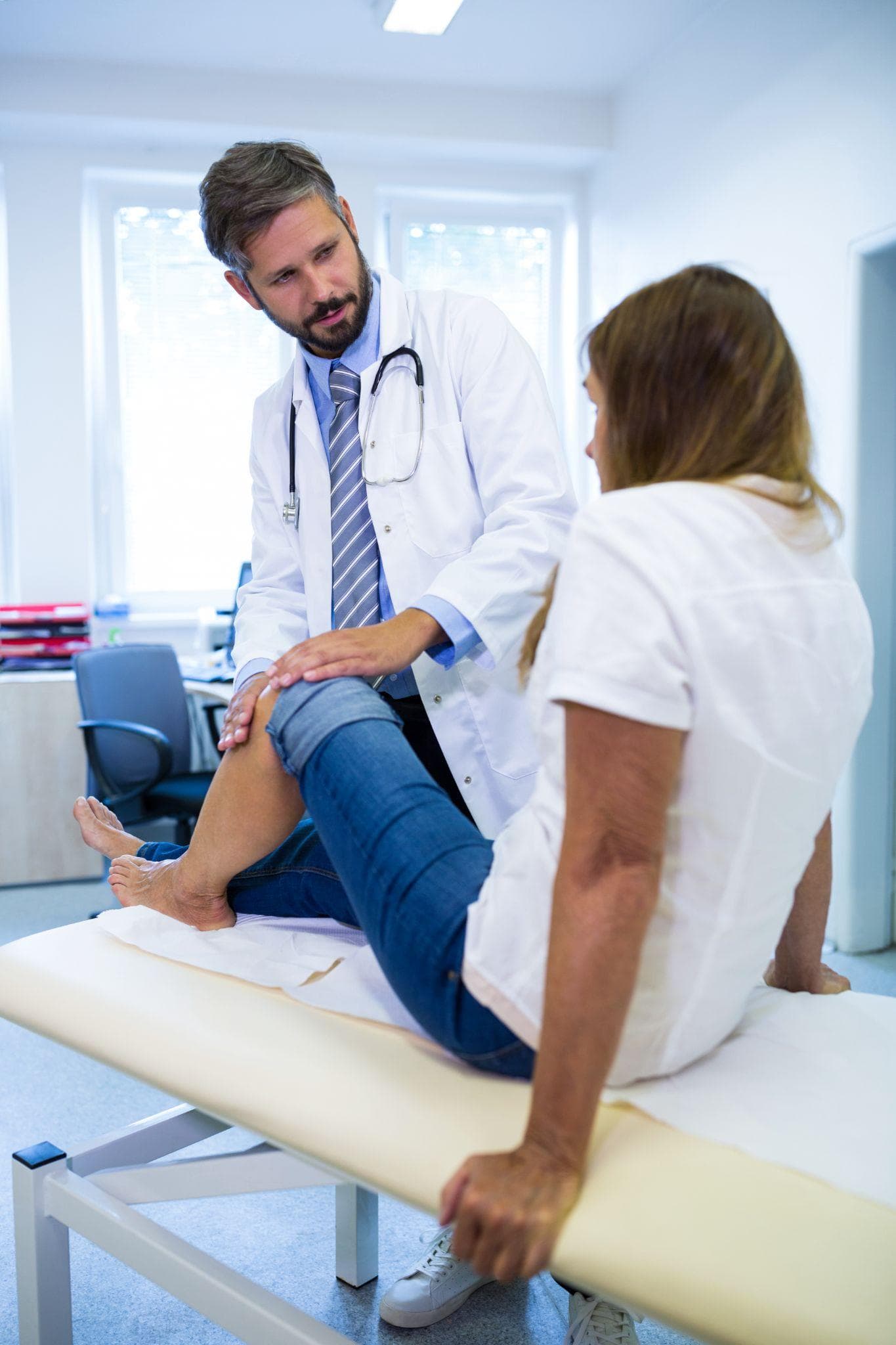
An orthopedic specialist assessing knee joint movement to identify the cause of persistent pain.
Knee pain that has been present for more than a month without significant improvement, even if it started gradually and without a specific injury, needs evaluation. Chronic pain that doesn't respond to basic self-care almost always has a diagnosable cause, and that cause needs to be identified to be treated effectively.
3. Pain That Is Worsening Over Time
If your knee pain has been gradually getting worse over weeks or months, requiring more medication to control, limiting progressively more of your activities, waking you at night, this is a pattern consistent with a progressive condition (usually arthritis) that warrants orthopedic assessment.
4. Knee Swelling
Any knee swelling that is moderate to significant, that appeared suddenly after minimal provocation, or that keeps coming back, warrants assessment. Swelling inside the knee joint (effusion), which makes the knee look puffy and feel heavy, indicates that something is wrong within the joint. It could be an arthritis flare, a meniscus tear, early infection, or gout. Without examination and imaging, it's impossible to know which.
5. Locking Or Giving Way
If your knee locks (gets stuck and won't straighten or bend fully) or gives way (suddenly buckles under you), see an orthopedic surgeon. Locking usually indicates a loose body in the joint or a significant meniscus tear. Giving way indicates ligament instability. Both need proper evaluation and, often, surgical correction.
6. Pain At Night Or At Rest
Arthritis typically causes pain with activity. Pain that is present at rest or that wakes you from sleep suggests more advanced joint disease or, in rare cases, other pathology that needs exclusion.
7. Inability To Bear Full Weight
If you cannot put full weight on the knee or if walking is severely impaired by pain, see a doctor. Don't assume time will fix it.
What Happens At An Orthopedic Consultation For Knee Pain
For patients in Noida seeing Dr. Mayank Chauhan at Prakash Hospital, Sector 33, here's what a first consultation for knee pain typically involves:
History: A detailed discussion of when the pain started, what triggered it, what makes it better or worse, what treatments you've tried, and how it affects your daily function.
Physical examination: Assessment of gait, range of motion, alignment, joint tenderness (specific points in the knee correspond to specific structures), swelling, muscle strength, and ligament stability tests. A good clinical examination often narrows the diagnosis significantly before any imaging is needed.
Imaging:
- X-ray is usually the first investigation ordered. Weight-bearing X-rays of both knees show joint space narrowing, bone spurs, alignment, and deformity.
- MRI is ordered when soft tissue detail is needed for meniscus tears, cartilage damage, ligament injuries, or soft tissue masses.
- Blood tests are recommended when inflammatory or autoimmune arthritis is suspected, or to check for gout (serum uric acid).
Treatment plan based on examination and investigation findings, the surgeon recommends a management plan, which almost always starts with the most conservative appropriate option and escalates only if needed.
Knee Pain Treatment Options In Noida - What The Options Actually Look Like
Knee pain treatment in Noida ranges from physiotherapy and medications to advanced minimally invasive procedures, depending on the cause, severity, and lifestyle needs of the patient.
1. Conservative (Non-Surgical) Treatment
Physiotherapy: The backbone of non-surgical knee pain management. Targeted strengthening of the quadriceps, hamstrings, and hip muscles reduces load on the knee joint itself. For most knee conditions, a consistent physiotherapy programme of 6–12 weeks produces measurable improvement.
Medications:
- Paracetamol and NSAIDs (ibuprofen, diclofenac, etoricoxib) for pain and inflammation.
- Topical NSAIDs (diclofenac gel) applied directly to the knee are effective and less systemic than oral tablets.
- Supplements (glucosamine, chondroitin) evidence is mixed, but safe, and some patients report genuine benefit.
Knee braces:
- A simple compression sleeve reduces swelling and provides proprioceptive support.
- An "unloader brace" is specifically designed for medial compartment osteoarthritis; it shifts load away from the damaged side of the knee.
Weight management: For overweight patients, losing even 5–10% of body weight produces a significant reduction in knee pain. Combined with physiotherapy, it's one of the most effective interventions for knee OA.
2. Injection Therapy
Corticosteroid injection: A steroid is injected directly into the knee joint under sterile conditions. Fast-acting and highly effective for reducing inflammation typically provides relief for 3–6 months. Useful for acute flares and for patients who need pain control to participate effectively in physiotherapy.
Hyaluronic acid (viscosupplementation): Injections of synthetic joint fluid into the knee. Acts as a lubricant and cushion. Particularly useful for elderly patients with moderate-to-advanced OA who want to delay or avoid surgery. Relief typically lasts 6–12 months.
PRP (Platelet-Rich Plasma): Growing rapidly in popularity in Noida and Delhi NCR. Uses the patient's own blood-derived growth factors to reduce inflammation and slow cartilage breakdown. The best evidence is in early-to-moderate OA and in younger patients, where the goal is delaying disease progression.
3. Surgical Options
Arthroscopy: A minimally invasive keyhole procedure useful for specific indications, such as meniscus tears, loose bodies in the joint, and cartilage defects. Not useful for treating established osteoarthritis (arthroscopic washout for OA has been shown not to add benefit beyond placebo in controlled trials).
High Tibial Osteotomy (HTO): Cuts and realigns the shin bone to shift load away from the arthritic medial compartment. Appropriate for younger, active patients with isolated medial compartment OA and good overall joint health. Buys time and preserves the joint for years before replacement becomes necessary.
Partial Knee Replacement: Appropriate when arthritis is confined to one compartment. Preserves more healthy tissue than total replacement, with faster recovery.
Total Knee Replacement: For end-stage osteoarthritis affecting multiple compartments. The most studied and most successful orthopedic procedure in terms of long-term outcomes and patient satisfaction.
Specific Knee Conditions Common In Noida Patients
Patellofemoral Pain (Anterior Knee Pain): Aching pain at the front of the knee, behind or around the kneecap, usually worsened by stairs, squatting, and prolonged sitting. Extremely common in young desk workers. Typically responds very well to physiotherapy targeting the quadriceps and hip abductors.
Runner's Knee (IT Band Syndrome): Lateral knee pain from tightness of the iliotibial band. Common in those who have recently increased exercise, particularly running. Responds to stretching, foam rolling, and physiotherapy.
Jumper's Knee (Patellar Tendinitis): Localised pain and tenderness just below the kneecap. Common in those who play cricket, basketball, or badminton. Responds to eccentric strengthening exercises and physiotherapy.
Knee Osteoarthritis: The most common reason for adult knee pain in Noida. Gradual onset, progressive, affects one or both knees. Treatment depends on severity it ranges from physiotherapy to joint replacement.
Post-Traumatic Conditions: ACL tears, meniscus injuries, and fractures sustained years earlier that were inadequately treated now present with secondary arthritis or instability.
The Bottom Line
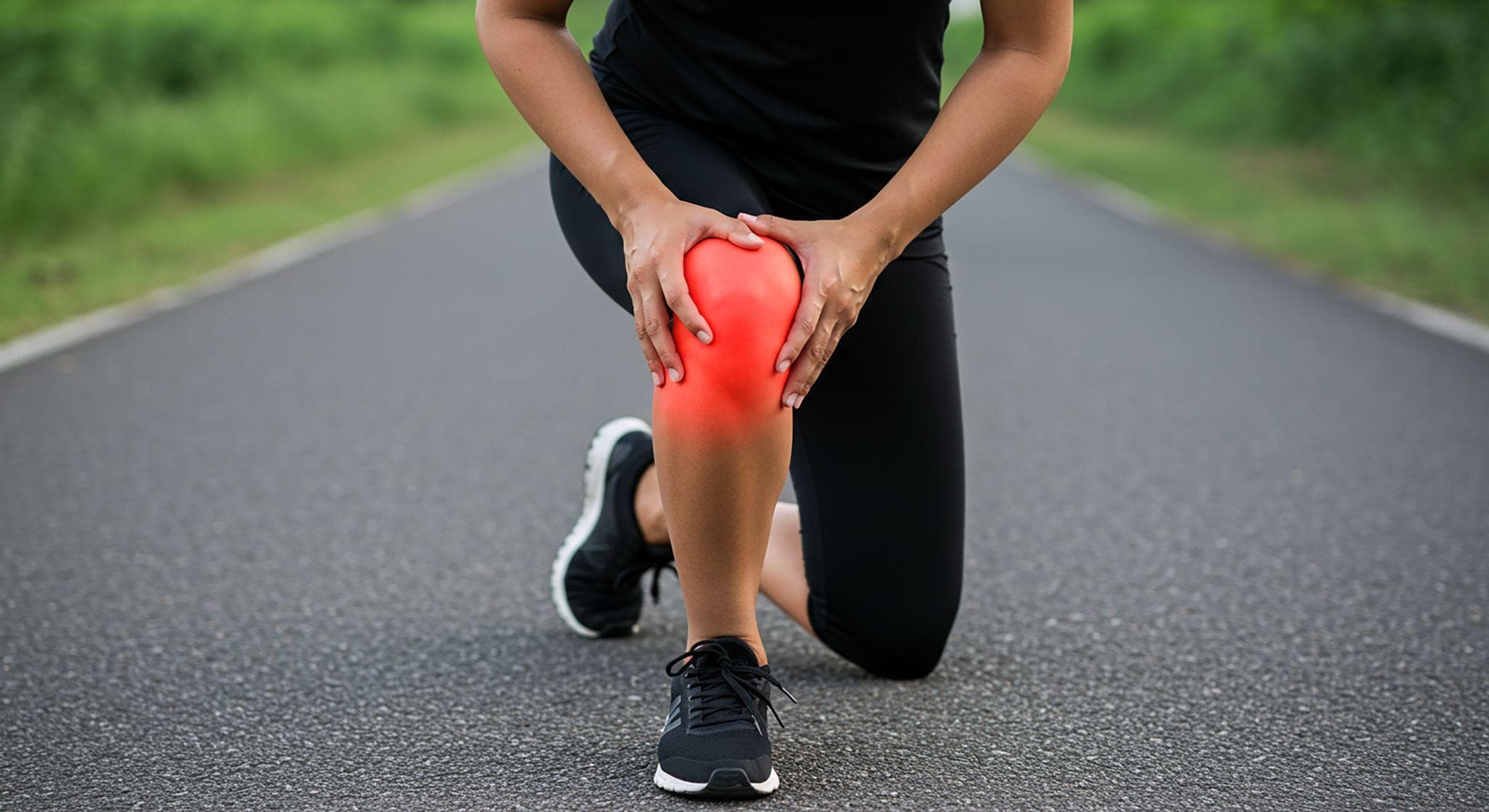
A person holding their knee while running, indicating pain or strain during physical activity.
Most knee pain does not need surgery. Most knee pain does need proper evaluation. The mistake isn't going to an orthopedic surgeon; it's going without enough information to understand what you're dealing with and what your options actually are. If you're in Noida or Greater Noida and have knee pain that's been going on for more than 4–6 weeks, that came on after an injury, or that's affecting your ability to walk, sleep, or carry out daily activities, book a proper evaluation.
Dr. Mayank Chauhan, Senior Orthopedic Surgeon at Prakash Hospital, Sector 33, Noida, consults on the full spectrum of knee conditions from overuse injuries and early arthritis through to knee replacement surgery. The starting point is always the most conservative appropriate treatment for your specific condition. To book a consultation, call the number listed on the website.