Shoulder Pain at Night - Why It Happens and What Actually Helps

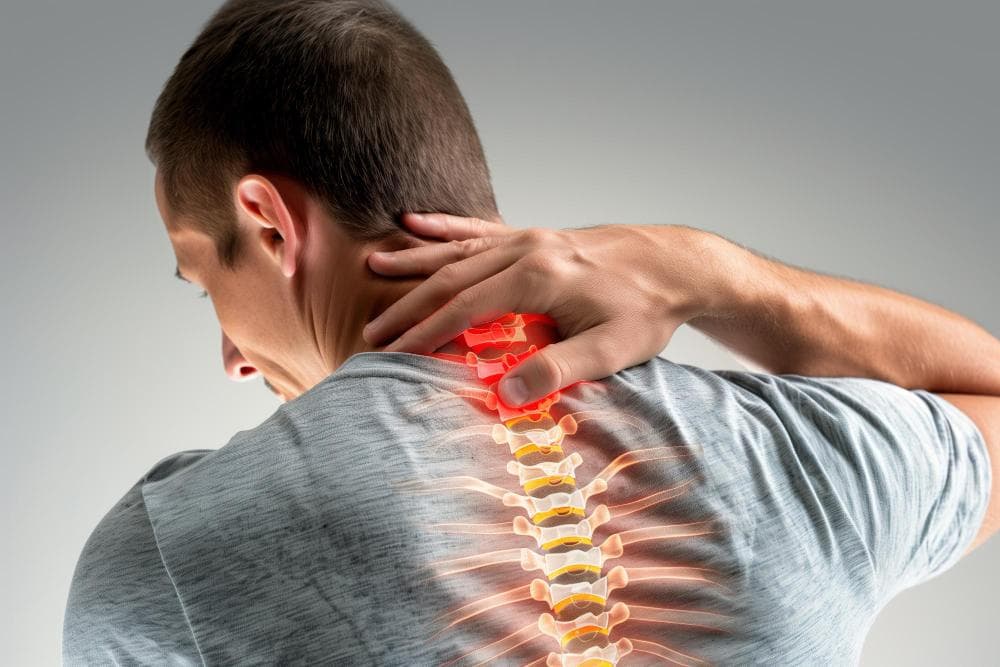
A black-and-white image showing a man holding his shoulder due to pain, highlighting common shoulder discomfort.
There is a particular misery to shoulder pain at night. Unlike daytime pain — which can be managed by avoiding painful positions and activities — nighttime shoulder pain disrupts sleep, leaves patients exhausted the next day, and creates a cycle where pain causes poor sleep, poor sleep reduces pain tolerance, and reduced pain tolerance makes the pain feel worse.
For many patients in Noida, nighttime shoulder pain is the symptom that finally drives them to seek specialist assessment — after weeks or months of managing daytime pain and assuming it would resolve on its own.
Understanding why shoulder pain consistently worsens at night is the starting point for addressing it. And the answer is not the same for all shoulder conditions — which means the treatment is not the same either.
Why Shoulder Pain Gets Worse at Night — The Physiology
Several mechanisms cause shoulder pain to intensify during sleep
1. Reduced blood flow to already-inflamed tissue:
When you lie down, blood flow generally slows. In a shoulder with active tendon inflammation (tendinitis, bursitis) or early rotator cuff pathology, the reduced circulation allows inflammatory mediators to accumulate locally — increasing tissue tension and pain sensitivity. This is the same mechanism that makes other inflammatory conditions (rheumatoid arthritis, frozen shoulder) worse in the early morning hours.
2. Position-related compression:
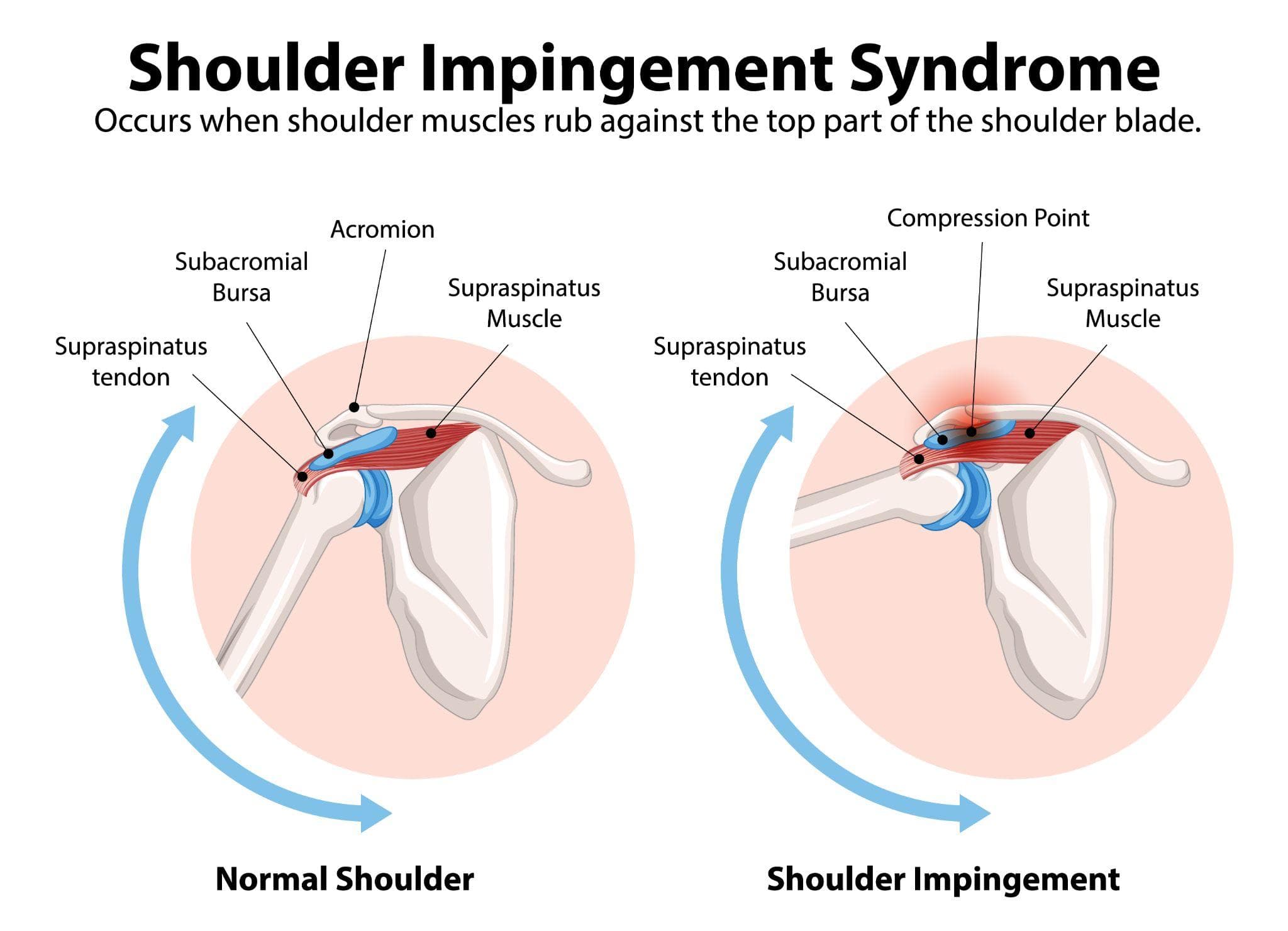
Lying on the affected shoulder directly compresses the already-irritated subacromial space — the gap through which the rotator cuff tendons pass. Compression of an already inflamed space intensifies pain. Even lying on the opposite shoulder causes the affected shoulder to roll forward internally, narrowing the subacromial space on that side.
3. Loss of the "distraction" effect:
During the day, daytime activity — concentration at work, conversation, routine tasks — provides cognitive distraction from pain. At night, in the silence and stillness, pain signals that were masked during the day become fully conscious. This is not imaginary — it is a real neurological phenomenon of pain perception.
4. Gravity eliminated:
During the day, gravity pulls the arm downward — slightly distracting the glenohumeral joint and reducing compressive forces on the subacromial space. In lying, this distraction is absent, and compressive forces in the subacromial space may increase.
5. The arm "resting" in a harmful position:
During sleep, patients unconsciously place the arm in positions they would avoid while awake — under the head, stretched overhead, or behind the back. These positions stress already-painful structures throughout the night.
The Most Common Causes of Night Shoulder Pain — and What Each Needs
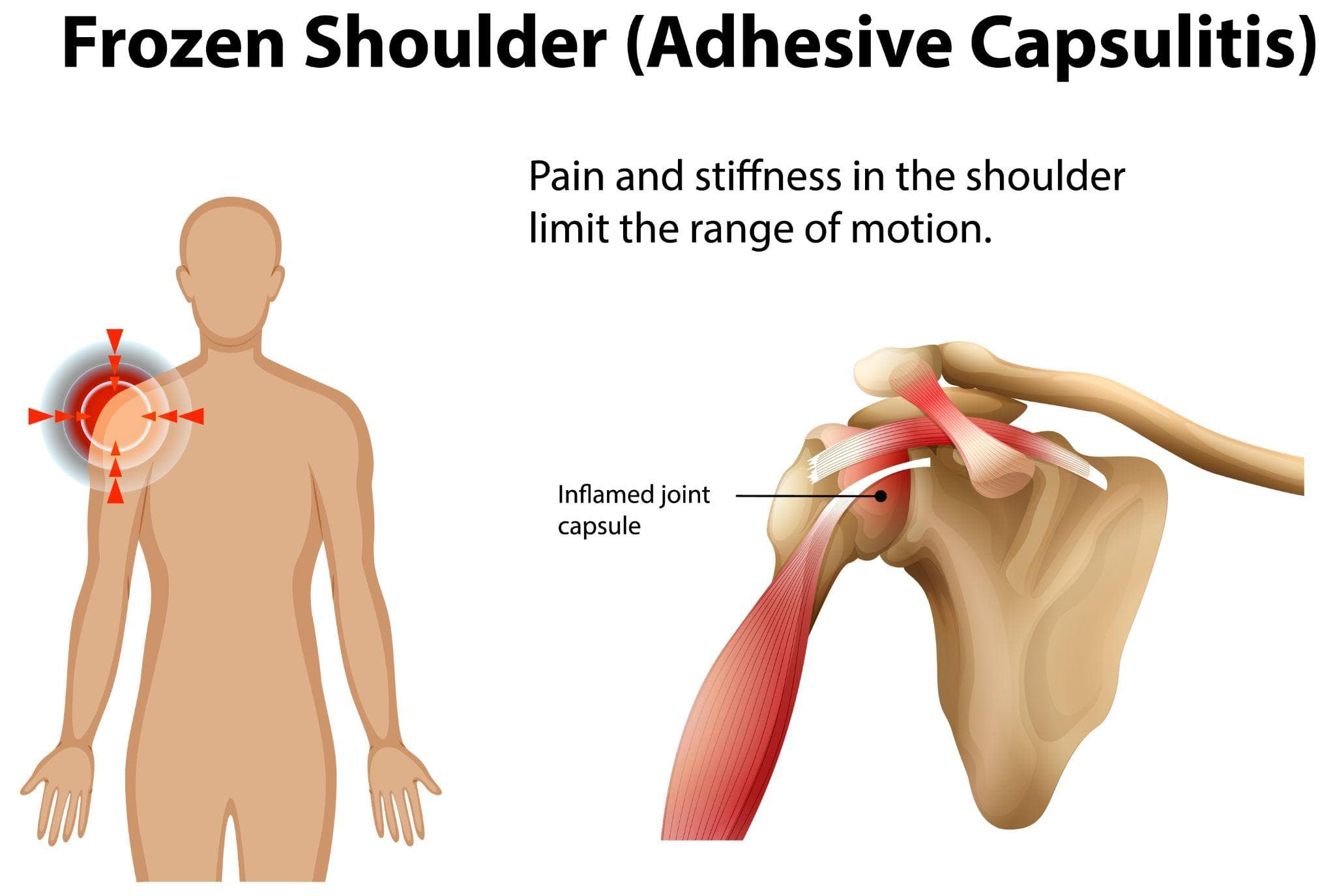
Frozen Shoulder (Adhesive Capsulitis)
Why night pain is a hallmark:
Night pain is so characteristic of frozen shoulder — particularly in the "freezing" (early) stage — that its presence alongside progressive stiffness is nearly diagnostic. The thickened, inflamed shoulder capsule is under continuous tension regardless of position. When the patient lies down and the shoulder settles, the capsular tightness produces a deep, aching pain that is severe enough to wake patients from deep sleep.
What it feels like:
A deep, diffuse aching at the shoulder and upper arm. Not well-localised. The patient cannot find a comfortable sleeping position. The pain is accompanied by progressive loss of all shoulder movements — particularly external rotation and forward flexion.
What helps with sleep:
- Sleep positioning: Sleep on the opposite (unaffected) side with a pillow supporting the affected arm in a slightly forward position — reducing internal rotation of the affected shoulder. Alternatively, sleep semi-reclined (in a recliner chair), which many frozen shoulder patients find more comfortable than flat.
- Avoid lying on the affected side — this directly compresses the inflamed capsule.
- A corticosteroid injection into the glenohumeral joint — most effective in the early freezing stage — dramatically reduces night pain within days. This is one of the most important reasons not to delay treatment of suspected frozen shoulder.
- NSAIDs taken in the evening reduce the overnight inflammatory cycle.
Timeline:
Frozen shoulder naturally passes through three stages over 12–24 months. The freezing stage (dominant pain) transitions to the frozen stage (dominant stiffness, less pain) and then the thawing stage (gradual recovery). Appropriate treatment shortens the painful freezing stage.
Rotator Cuff Tendinitis and Subacromial Bursitis
Why night pain occurs:
The supraspinatus tendon — the most commonly inflamed rotator cuff tendon — passes through the subacromial space. In the lying position, particularly side-lying on the affected shoulder, this space narrows and compresses the already-inflamed tendon. The lying position also eliminates the gravity-related distraction of the glenohumeral joint.
What it feels like:
Pain at the outer shoulder — over the deltoid — and sometimes radiating down the upper arm. Worsens when lying on the affected side. May wake the patient multiple times per night.
What helps with sleep:
- Sleep on the unaffected side or on the back — never on the affected side.
- A pillow under the affected arm (placed across the chest) reduces the internal rotation that narrows the subacromial space.
- Ice applied for 15–20 minutes before bed — reduces the inflammatory load before lying down.
- NSAIDs taken with evening meal — effective for overnight pain reduction.
- A subacromial corticosteroid injection: one of the most effective interventions for breaking the cycle of tendinitis and bursitis that is disrupting sleep. Many patients report dramatic improvement in sleep quality within 48–72 hours of a well-placed injection.
Longer-term:
Addressing the underlying cause of impingement — physiotherapy to strengthen the rotator cuff and periscapular muscles, improve posture, and restore subacromial space geometry — prevents recurrence.
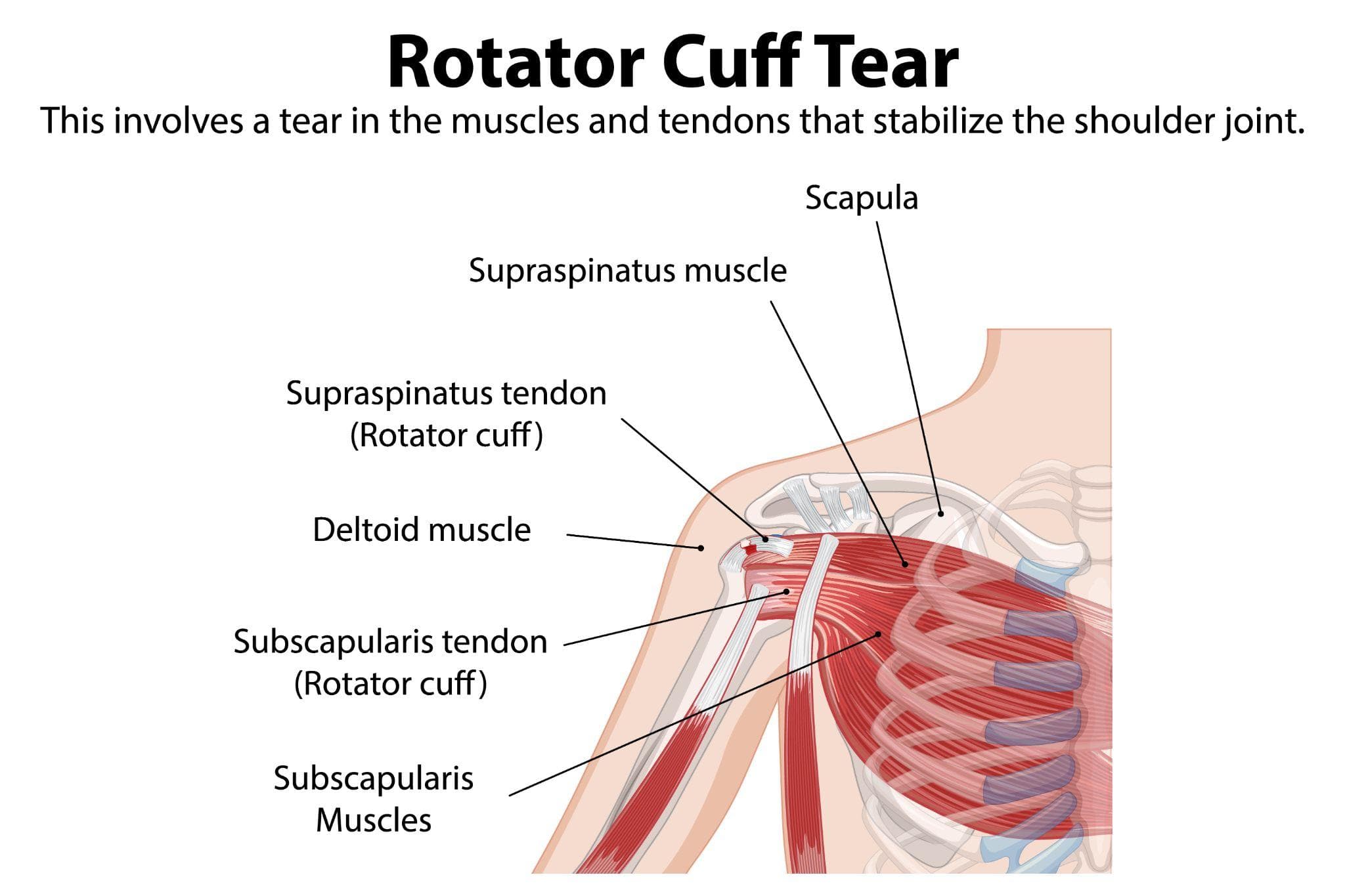
Rotator Cuff Tears
Why night pain occurs:
Research specifically examining rotator cuff tears found that only 11% of patients with symptomatic full-thickness rotator cuff tears reported normal sleep. The tear itself disrupts normal shoulder mechanics, creating abnormal loading patterns throughout the day that are amplified at night through the same mechanisms as tendinitis. Additionally, when tears are large or complete, the instability of the shoulder increases — producing pain with any position change during sleep.
What it feels like:
Deep, aching shoulder pain. Often associated with arm weakness — difficulty lifting the arm with the same strength as before. The pain may be constant at its worst stages, without a comfortable sleeping position.
Partial tears: Most respond to conservative management — physiotherapy, NSAIDs, and subacromial injection. PRP injections are increasingly used for partial rotator cuff tears to promote tendon healing.
Complete (full-thickness) tears in active patients: Arthroscopic surgical repair is often indicated — restoring the tendon integrity eliminates the source of the pain rather than just managing its symptoms.
What helps with sleep pending treatment:
Similar positioning strategies to tendinitis — unaffected side or back, supported arm. The key message: if rotator cuff tear is suspected, seek specialist evaluation rather than indefinitely managing the sleep disruption with painkillers.
Calcific Tendinitis
One of the most acutely severe causes of shoulder pain — including nighttime pain. During the "resorptive phase" of calcific deposits within the supraspinatus tendon, pain can be sudden and excruciating — patients present at emergency departments describing the worst pain of their lives.
What it feels like:
Often sudden onset or rapid escalation. Severe — proportionally worse than the usual shoulder tendinitis. Visible on plain X-ray (calcium deposit within the tendon). The acute phase typically passes in days to weeks as the calcium is resorbed.
What helps:
Subacromial steroid injection is dramatically effective in the acute phase — rapidly reducing pain within hours. Ultrasound-guided needling (barbotage) of the calcium deposit may be performed at the same time, aspirating the chalky material and accelerating resolution.
Shoulder Arthritis (Glenohumeral OA)
Advanced shoulder OA produces constant pain — at rest, with movement, and at night. The pattern is similar to hip or knee OA at a late stage — the inflammatory activity in the arthritic joint doesn't switch off during sleep.
Night pain in the shoulder OA suggests the disease has progressed to a stage where conservative management is becoming inadequate. This is worth communicating to the treating surgeon — it is one of the clinical markers that helps determine when shoulder replacement becomes appropriate.
Referred Pain from the Cervical Spine
A significant proportion of apparent "shoulder" pain at night is actually referred pain from the cervical spine — facet arthritis, disc herniation, or cervical spondylosis producing pain referred to the shoulder and upper arm.
Key distinguishing features:
- Cervical spine pain is often associated with neck stiffness or neck pain as well
- The arm may have tingling or numbness (nerve root pattern)
- The shoulder examination (specific rotator cuff and impingement tests) is often normal
- The pain pattern follows a nerve root distribution rather than the diffuse deltoid pattern of subacromial pathology
Cervical referred pain does not respond to shoulder injections — the appropriate treatment is directed at the cervical spine (physiotherapy, cervical epidural injection if radiculopathy is present).
Sleeping Positions and Practical Tips
Regardless of the specific cause, these practical measures help all shoulder pain patients sleep better while treatment is pursued:
Side sleeping on the unaffected side:
The most consistently comfortable position. Place a pillow in front of the chest and rest the affected arm on it — this keeps the shoulder in a neutral, slightly forward position rather than internally rotated.
Back sleeping:
Comfortable for many patients. Place a pillow or folded towel under the upper arm on the affected side — slightly elevating and supporting the arm reduces internal rotation of the shoulder during sleep.
Semi-reclined sleeping:
Many frozen shoulder and advanced tendinitis patients find a recliner chair or semi-reclined position (pillows propped behind the back) significantly more comfortable than lying flat. The slight upright angle changes the position of the shoulder relative to gravity.
Avoiding the affected side:
This is critical. Lying directly on an inflamed or torn rotator cuff compresses the very structures causing pain. Even a brief period on the affected side at night can set off a cycle of pain that keeps the patient awake for hours.
Evening routine:
- Ice for 15 minutes before bed
- NSAIDs taken with evening meal (not on an empty stomach)
- Gentle shoulder pendulum exercises before bed (leaning forward, letting the arm hang loosely by gravity — this decompresses the subacromial space and reduces overnight stiffness)
When to See a Specialist
Night shoulder pain is a clinical signal that the condition has crossed a threshold of severity. Seek specialist assessment when:
- Shoulder pain is waking you from sleep more than 2–3 times a week
- Pain has been present for more than 6 weeks
- There is progressive weakness of the arm alongside pain
- Night pain is present even when not lying on the affected side
- Any neurological symptoms (tingling, numbness) accompany the pain
Shoulder Pain at Night — Assessment in Noida
Dr. Mayank Chauhan, Senior Orthopedic Surgeon at Prakash Hospital, Sector 33, Noida, evaluates patients with shoulder pain — including the night pain pattern that is often the most distressing symptom — with clinical examination and appropriate imaging (X-ray, ultrasound, or MRI as indicated).
For patients in Noida and Greater Noida with shoulder pain disrupting sleep, a thorough assessment will identify the specific cause and determine the most effective treatment — whether physiotherapy, targeted injection, or surgical assessment. To book a consultation, call the number listed on the website.
The Bottom Line
Night shoulder pain is caused by specific, treatable conditions — not just "age" or "something you have to live with." The treatment differs significantly by diagnosis:
Frozen shoulder → injection and physiotherapy. Rotator cuff tendinitis/bursitis → subacromial injection and physiotherapy. Rotator cuff tears → conservative or surgical depending on tear size and patient profile. Calcific tendinitis → injection ± barbotage. Shoulder OA → staged management toward replacement.
Getting the diagnosis right is the essential first step. Sleep is too important to sacrifice to an untreated shoulder condition.
To consult Dr. Mayank Chauhan, Senior Orthopedic Surgeon in Noida, call the number listed on the website.