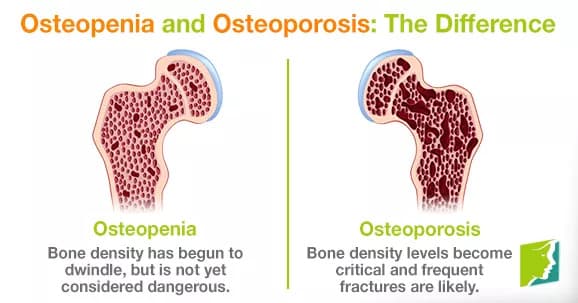
Shoulder Replacement Surgery In Noida - Types, Procedure, And Recovery
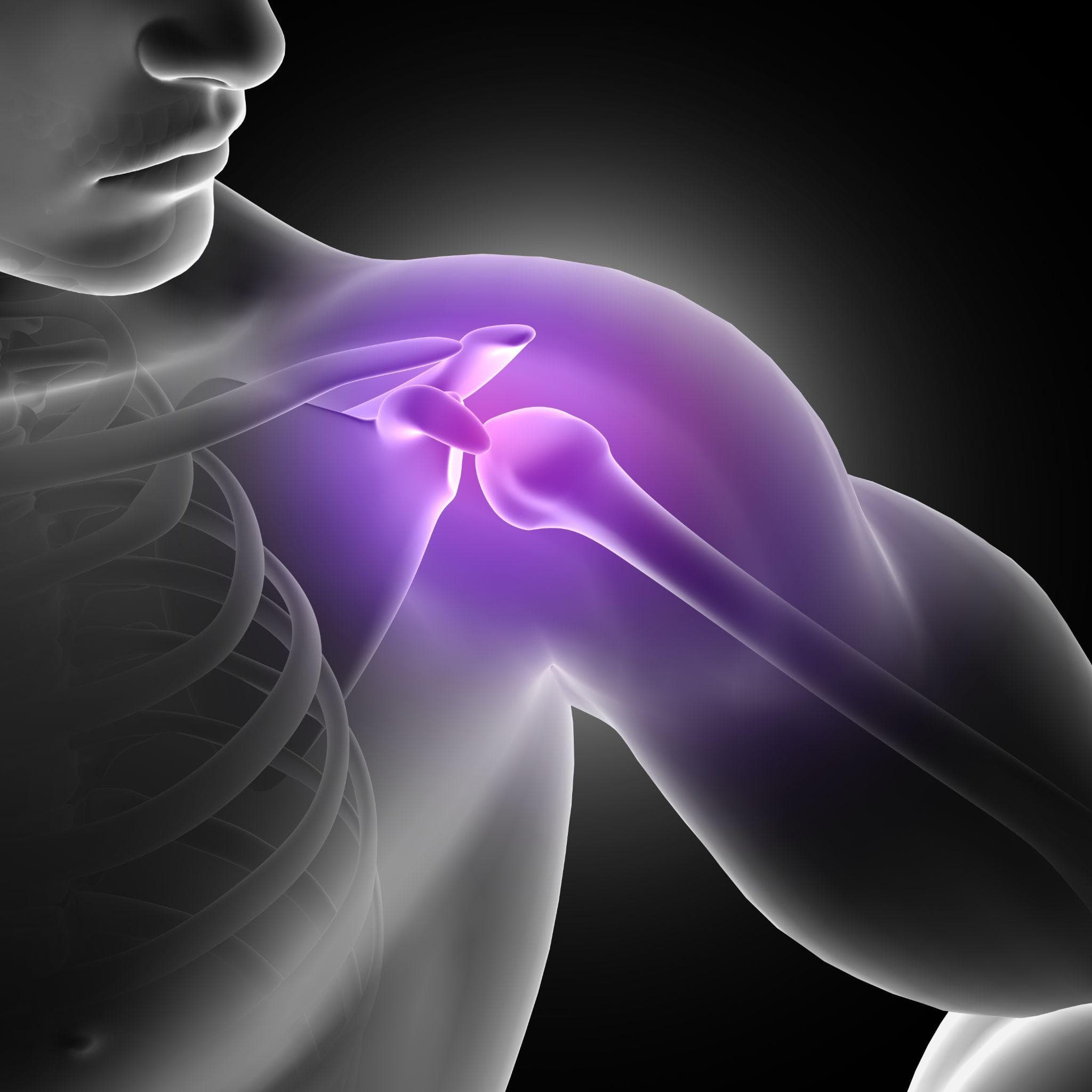
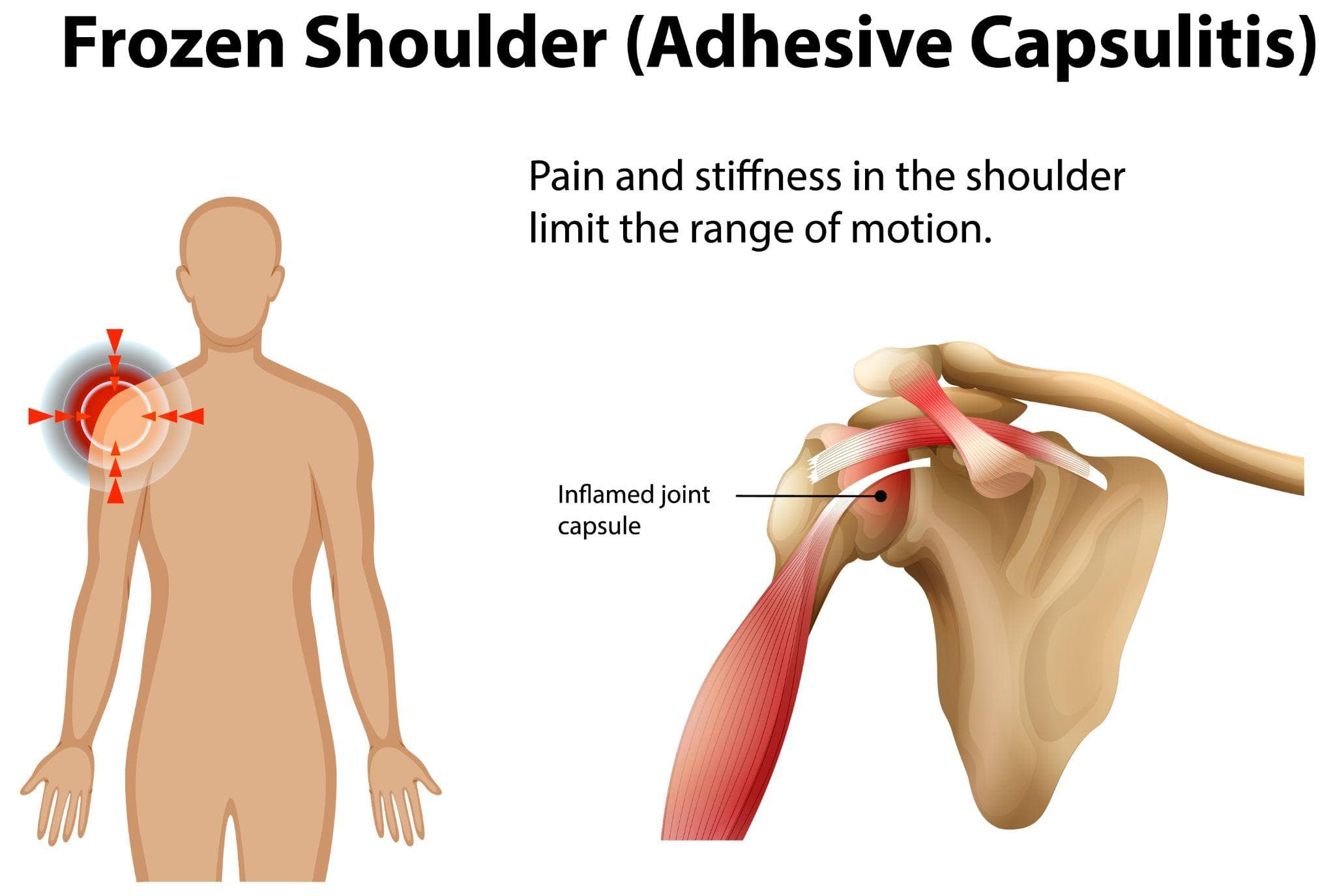
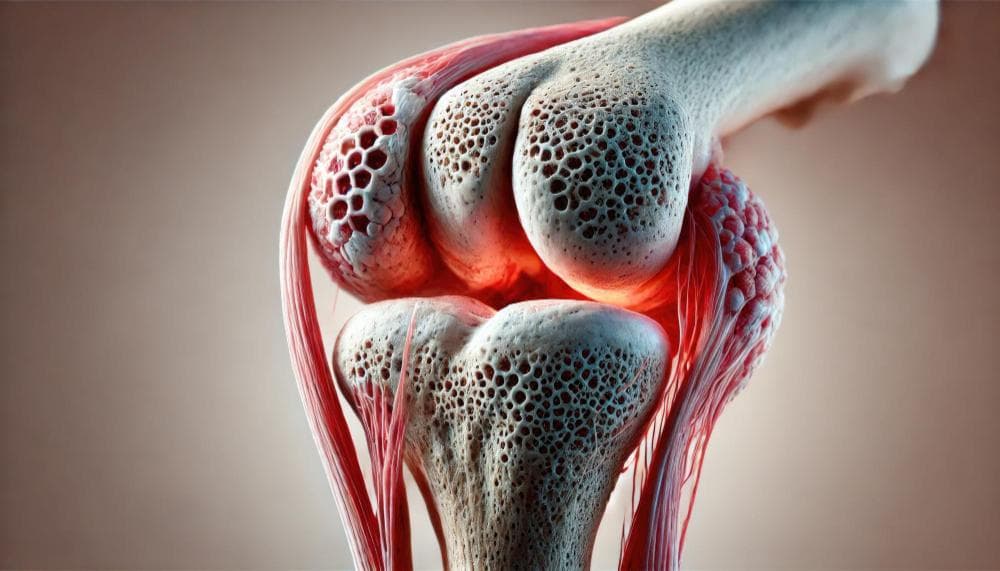
3D illustration showing shoulder joint pain and inflammation
The shoulder is the most mobile joint in the human body. It allows you to reach overhead, rotate your arm in nearly a full circle, and perform almost everything that requires arm movement, from combing your hair to throwing a ball to reaching for a glass of water.
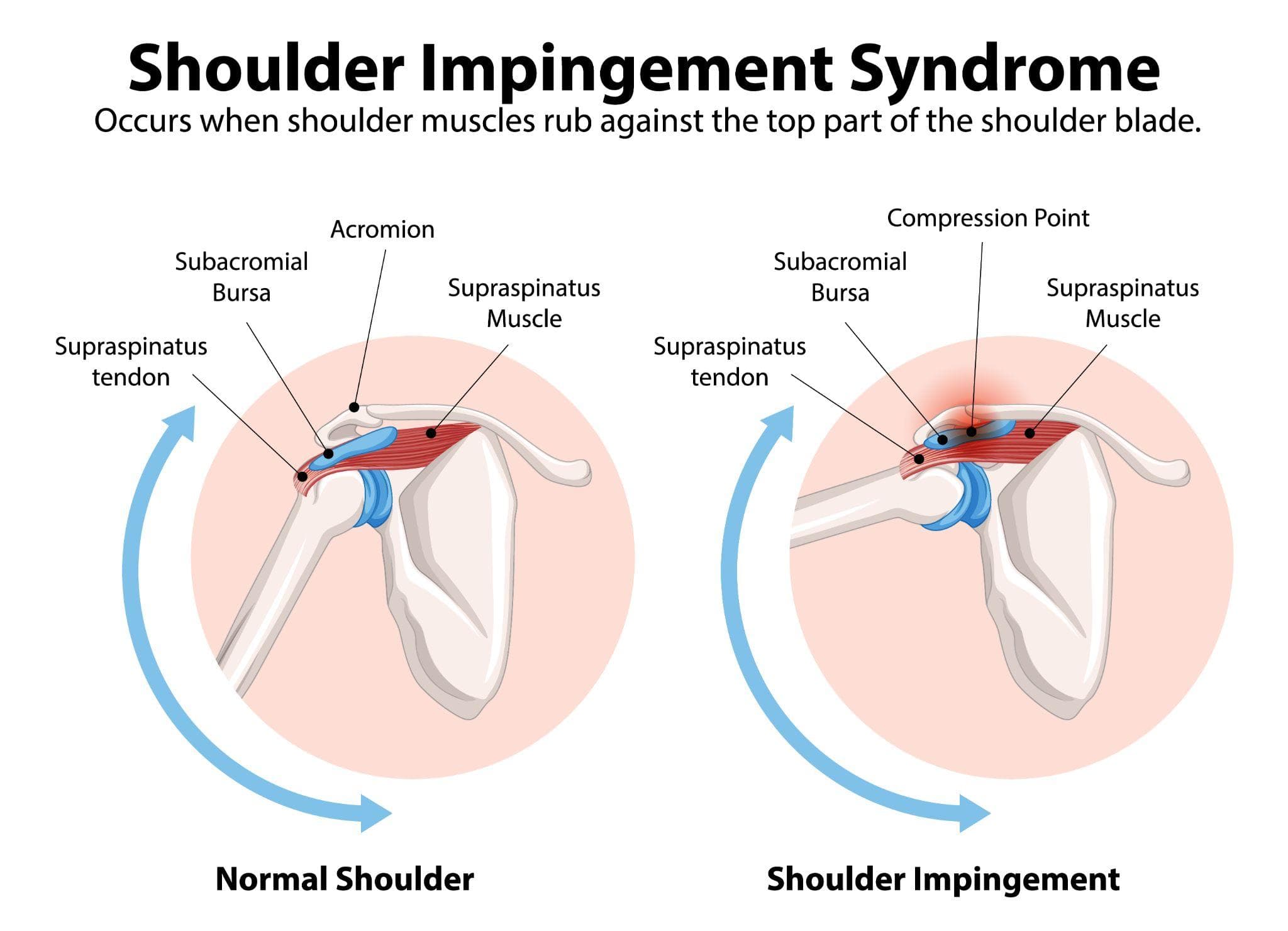
When the shoulder joint is severely damaged by arthritis, by a fracture, by a massive rotator cuff tear, or by avascular necrosis, that mobility is lost. The pain can be severe and constant, including at night. The stiffness can be so pronounced that basic daily activities become impossible.
Shoulder replacement surgery restores pain relief and function for these patients. It's performed far less frequently than knee or hip replacement in India, partly because shoulder conditions are diagnosed less promptly, and partly because many patients (and their families) don't know that shoulder replacement is an option. This guide covers everything a patient in Noida needs to know.
When Is Shoulder Replacement Considered?
Shoulder replacement is recommended when shoulder joint disease is severe enough that:
- Pain is persistent, significant, and not adequately controlled with conservative measures.
- Function is significantly impaired, with difficulty lifting the arm, dressing, sleeping, or performing overhead activities.
- Non-surgical treatment has been adequately tried and has failed.
Conditions that may require shoulder replacement:
Osteoarthritis of the Shoulder: Gradual cartilage wear is the same process as knee OA, occurring in the shoulder joint (glenohumeral joint). Less common than knee OA, but it produces significant disability. Patients describe grinding pain with movement, severe restriction of rotation, and difficulty sleeping on the affected side.
Rheumatoid Arthritis: RA can severely damage the shoulder joint, eroding cartilage and bone. In advanced RA, shoulder replacement is sometimes necessary as part of the overall management plan coordinated with the rheumatologist.
Avascular Necrosis (AVN) of the Humeral Head: Blood supply to the humeral head is disrupted from trauma, steroid use, alcohol use, or other causes, causing the bone to die and collapse. When the head collapses, the joint surface is destroyed, and replacement is necessary.
Post-Traumatic Arthritis: Arthritis developing years after a shoulder fracture or dislocation that was not ideally managed.
Severe Proximal Humerus Fractures: Complex fractures of the humeral head that cannot be reconstructed with hemiarthroplasty or reverse total shoulder replacement (in elderly patients with rotator cuff compromise) may be the treatment of choice.
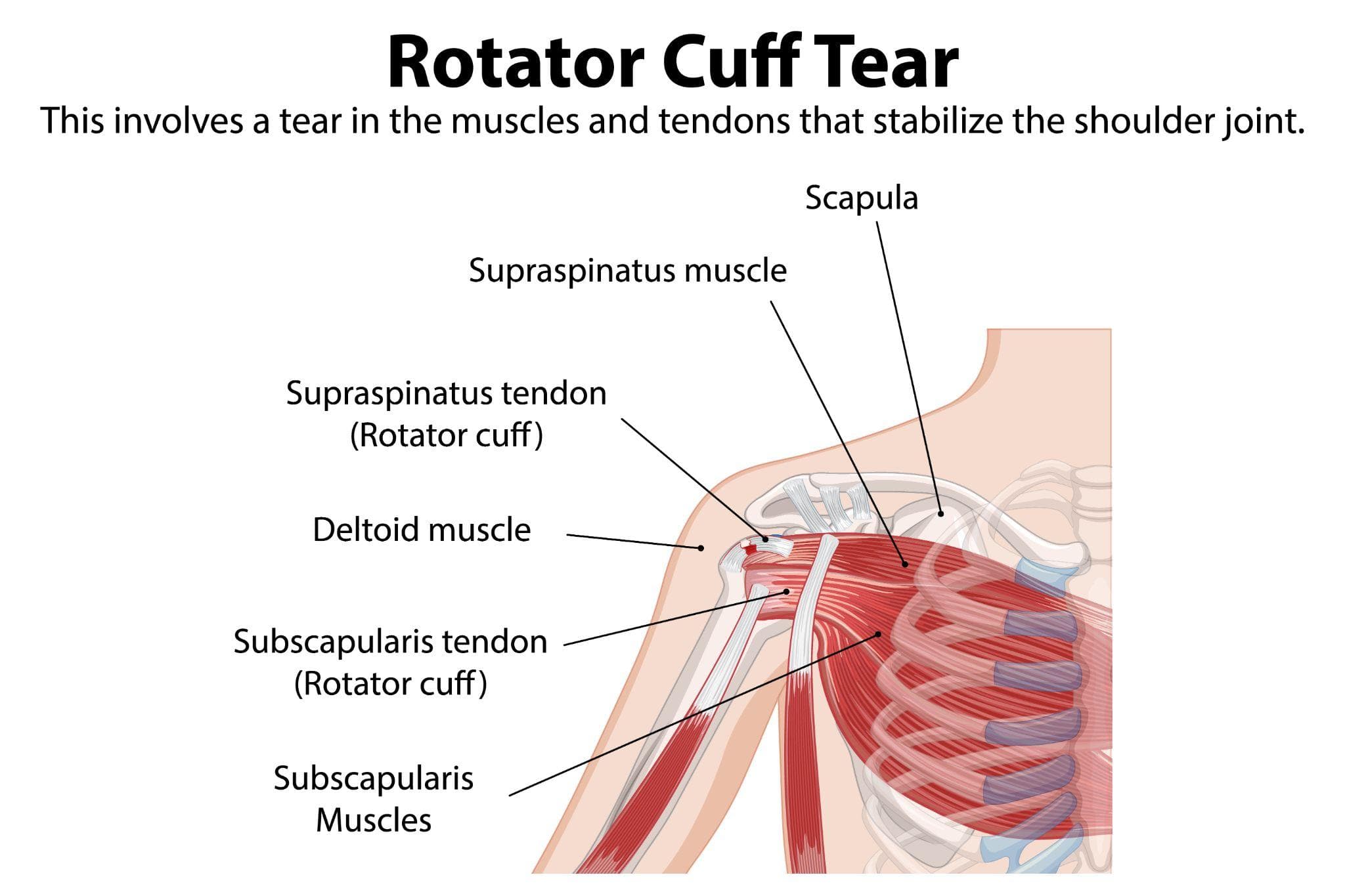
Rotator Cuff Arthropathy: When the rotator cuff muscles are irreparably torn, the humeral head migrates upward and damages the overlying acromion. Over time, this produces a specific pattern of arthritis rotator cuff arthropathy. This requires reverse shoulder replacement rather than standard (anatomic) replacement.
Types Of Shoulder Replacement
Unlike knee replacement (where total vs. partial is the primary distinction), shoulder replacement has three meaningfully different types, each indicated for different patient conditions.
1. Total Shoulder Replacement (Anatomic Shoulder Arthroplasty - TSA)
The "standard" shoulder replacement. Both the humeral head (ball) and the glenoid socket are replaced:
- The humeral head is removed and replaced with a metal ball on a stem that sits in the humeral canal.
- The glenoid (shoulder socket in the shoulder blade) is resurfaced with a plastic (polyethylene) component.
Who is suitable: Patients with shoulder osteoarthritis or other forms of glenohumeral arthritis who have an intact or reparable rotator cuff. The rotator cuff is crucial for standard total shoulder replacement; without it, the mechanics don't work correctly, and the glenoid component is at high risk of loosening.
Outcomes: Excellent pain relief, good restoration of range of motion. Patient satisfaction rates are very high, comparable to those of knee and hip replacement.
2. Reverse Total Shoulder Replacement (Reverse Shoulder Arthroplasty - RSA)
A fundamentally different design where the anatomy is reversed:
- A metal ball (glenosphere) is fixed to the shoulder blade (where the natural socket was)
- A socket is placed on the humeral side (where the natural ball was)
This reversal changes the biomechanics of the joint; instead of relying on the rotator cuff muscles for shoulder elevation, the deltoid muscle takes over. The deltoid is intact in most patients, even when the rotator cuff is destroyed.
Who is suitable:
- Patients with rotator cuff arthropathy (irreparable rotator cuff tear combined with arthritis) are the most important indication.
- Elderly patients with complex proximal humerus fractures.
- Patients who have failed a previous standard shoulder replacement.
- Some patients with inflammatory arthritis and poor bone stock.
Outcomes: Reverse shoulder replacement has been one of the great success stories of modern shoulder surgery. Patients who previously could not lift their arm above their waist because their rotator cuff was completely gone, gain the ability to use the arm in daily activities after RSA. Pain relief is consistent and durable.
The key limitation: RSA typically does not restore full rotational strength the way a standard replacement does. Forward elevation improves dramatically; rotation is more variable.
3. Hemiarthroplasty (Partial Shoulder Replacement)
Only the humeral head (ball) is replaced; the natural glenoid socket is left intact. When is hemiarthroplasty used?
- Complex proximal humerus fractures where the humeral head cannot be reconstructed (particularly in younger patients where bone preservation is a priority).
- Avascular necrosis of the humeral head, where the glenoid cartilage is still healthy.
- Some cases where the glenoid bone stock is too poor to accept a glenoid component.
Outcomes: Generally less satisfactory for pain relief than total shoulder replacement in arthritic patients, because the arthritic glenoid remains. However, for fractures and AVN with a healthy glenoid, outcomes are good.
4. Shoulder Resurfacing
A bone-preserving alternative to hemiarthroplasty, a metal cap is placed over the existing humeral head without removing the head itself. Suitable for younger patients with arthritis where bone preservation is the priority. Easier to revise to total replacement later if needed.
The Surgical Procedure
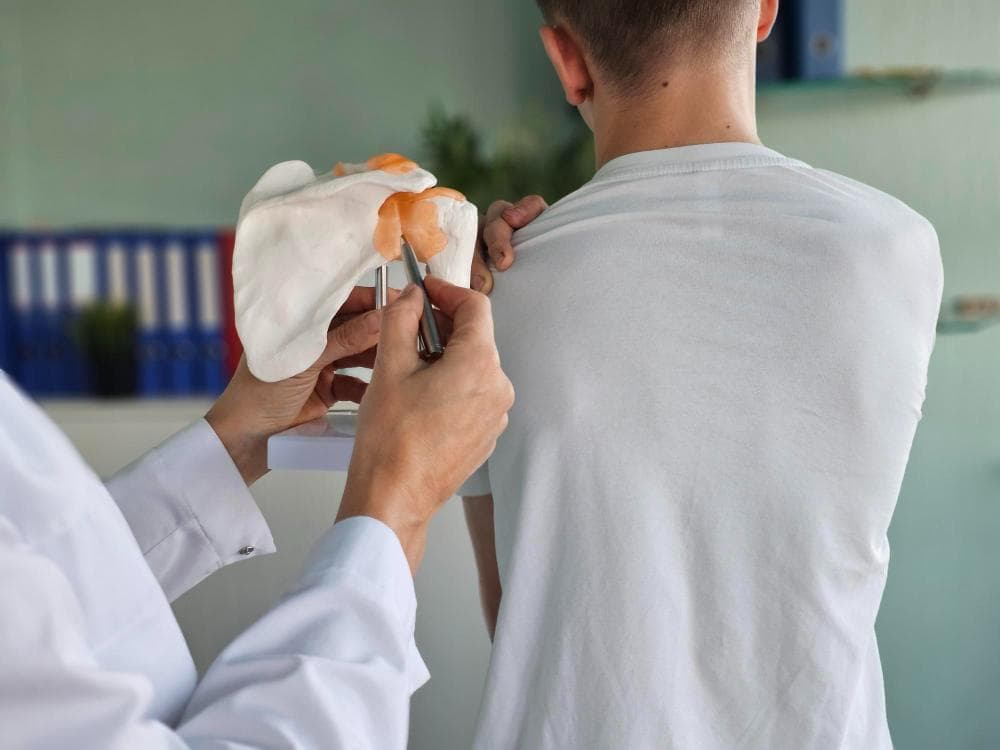
A healthcare professional is demonstrating the anatomy of the shoulder using a 3D model. The model highlights the rotator cuff area while a patient stands in front of it, facing away. The background is a well-lit clinic.
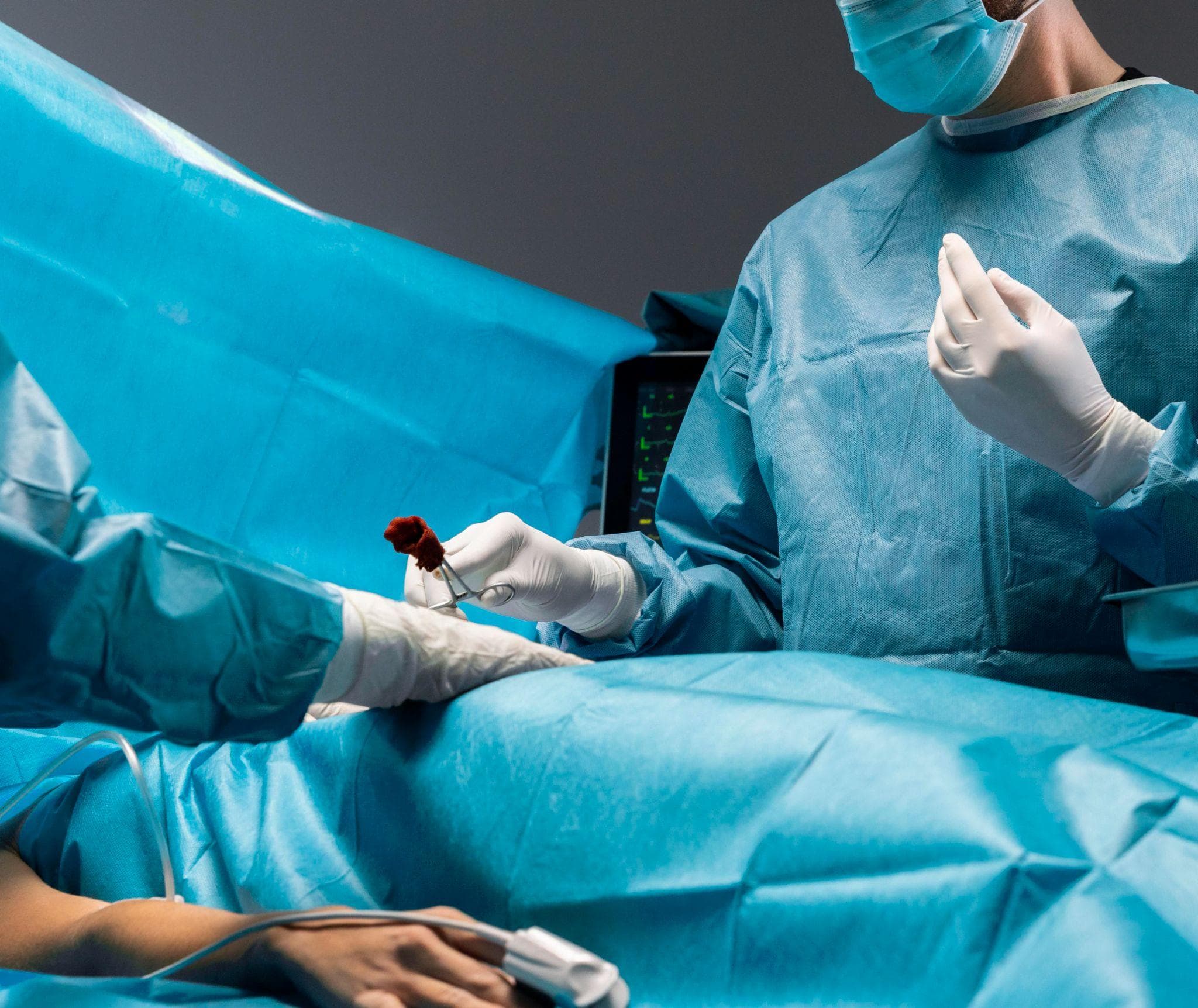
Shoulder replacement is performed under general anaesthesia, often combined with a nerve block (interscalene block) for post-operative pain control, which allows most patients to have minimal pain in the first 12–24 hours after surgery.
Approach: The deltopectoral approach is an incision along the front of the shoulder, between the deltoid and pectoralis major muscles. This is a muscle-splitting rather than muscle-cutting approach, which preserves the deltoid and allows faster recovery.
The subscapularis muscle (the front rotator cuff muscle) is carefully divided, the joint is opened, and the procedure is performed in a methodical sequence, preparing the humeral canal, preparing the glenoid, sizing the components, and trialling them for stability and range of motion before final fixation.
Duration: Approximately 90 minutes to 2 hours.
Hospital stay: Typically 2–3 days.
Recovery After Shoulder Replacement
Recovery from shoulder replacement is different from knee or hip replacement in one important way: the arm must be protected during the initial healing phase, particularly to allow the subscapularis muscle (divided during surgery) to heal.
Week 1–2 (Hospital and Home):
- The arm is in a sling, typically for 4–6 weeks, though the specific sling protocol depends on the type of replacement.
- Physiotherapy begins early — pendulum exercises (gentle gravity-assisted shoulder movement), elbow, wrist, and hand movement.
- Pain is managed with medication.
Week 2–6:
- Passive range-of-motion exercises progress as the physiotherapist moves the arm through increasing ranges. Active movement (you moving the arm yourself against gravity) is delayed until the subscapularis has healed.
- The sling is discontinued around week 4–6 for most patients.
Week 6–12:
- Active-assisted and then active shoulder exercises begin.
- Strengthening starts initially very gently, progressing over weeks.
Month 3–6:
- Progressive strengthening. Return to activities.
- Most patients are driving, cooking, and managing daily activities independently by 3 months.
Month 6–12:
- Most patients have reached their functional ceiling and maximum recovery.
- For RSA: forward elevation often continues improving for up to 12–18 months.
Important: The recovery from shoulder replacement is slower and more demanding than many patients expect, particularly in the first 6 weeks, when the arm is in a sling. Committed physiotherapy throughout the recovery period is essential for good outcomes.
Activities After Shoulder Replacement - What To Expect
What most patients can do:
- Daily activities, dressing, eating, and personal hygiene
- Driving (typically from 6–8 weeks)
- Swimming (usually from 3–4 months)
- Golf, tennis (light), cycling
What most patients should avoid:
- Heavy lifting (> 5–10 kg)
- Overhead work with heavy loads
- High-impact contact sports
- Repeated heavy pushing/pulling
The goal of shoulder replacement is pain-free daily function, not a return to heavy manual work or contact sport. Most patients achieve this goal.
Shoulder Replacement In Noida - Dr. Mayank Chauhan At Prakash Hospital
Dr. Mayank Chauhan, Senior Orthopedic Surgeon at Prakash Hospital, Sector 33, Noida, performs all types of shoulder replacement, anatomic total shoulder replacement, reverse shoulder replacement, and hemiarthroplasty, selecting the appropriate procedure based on a thorough evaluation of the patient's condition, rotator cuff integrity, bone quality, and functional goals.
Many patients in Noida with shoulder arthritis or AVN have been managing with pain medication alone, without knowing that a definitive surgical solution exists. A proper shoulder evaluation examination, X-ray, and MRI, where indicated, will determine whether shoulder replacement is appropriate for your specific situation.
To book a consultation, call the number listed on the website.
The Bottom Line
A young man is seen from the back, holding his right shoulder with his left hand. He has dark hair and is wearing a black t-shirt. The background is light gray, highlighting the area of his discomfort, which is subtly marked in red to indicate pain.
Shoulder replacement surgery is an underutilised but highly effective procedure. For patients with severe shoulder arthritis, AVN, or rotator cuff arthropathy who have exhausted conservative options, it offers dramatic pain relief and meaningful restoration of arm function. The key is choosing the right type of replacement for the specific diagnosis and ensuring the recovery commitment is understood before surgery.
To consult Dr. Mayank Chauhan, Senior Orthopedic Surgeon in Noida, call the number listed on the website.