Frozen Shoulder - Causes, 3 Stages, Treatment, And When Surgery Is Needed
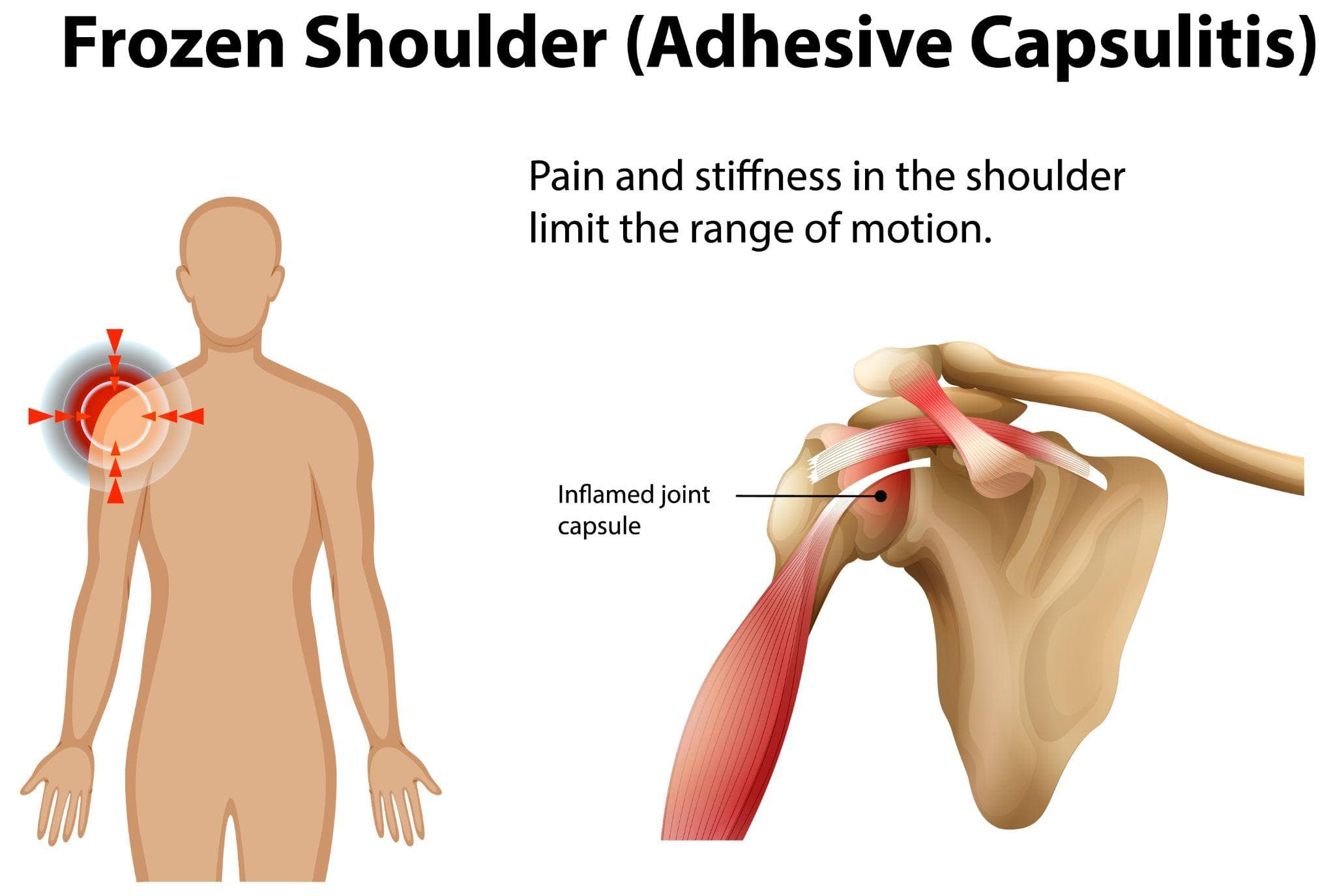
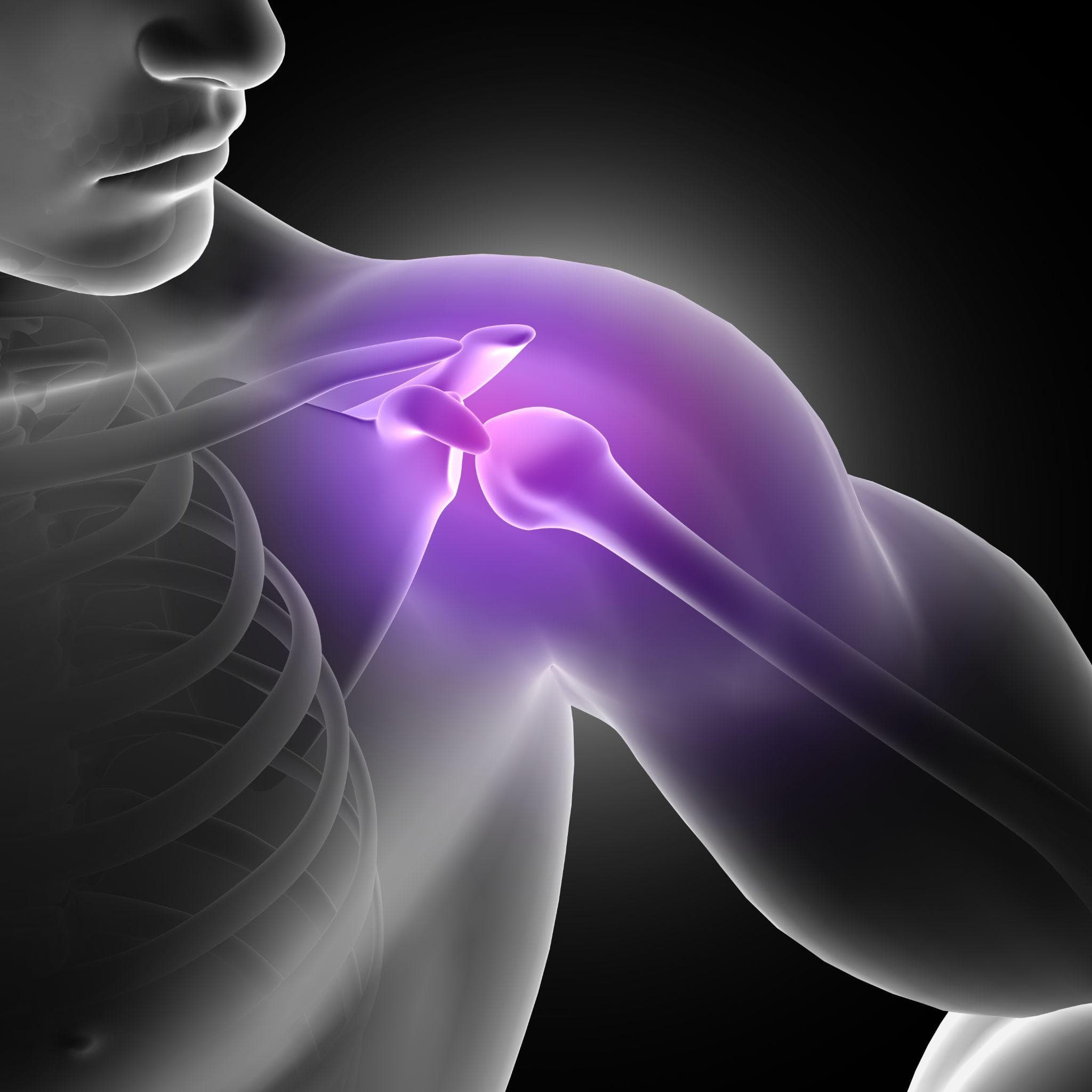
The diagram shows the anatomy of a frozen shoulder.
It starts with a vague ache. You notice your shoulder is a little stiff in the morning, or that reaching for something on a high shelf has become uncomfortable. You put it down to muscle strain or sleeping in an awkward position. Weeks pass. The pain is getting worse, not better. By now, you can't lift your arm fully, and certain positions, particularly behind the back or across the body, are almost impossible. At night, lying on the affected shoulder is out of the question.
This is frozen shoulder, medically called adhesive capsulitis, and it is one of the most misdiagnosed, most mismanaged, and most underestimated conditions in orthopedic medicine. In India, where diabetes rates are among the highest in the world, frozen shoulder is particularly prevalent. And yet many patients spend months being treated for "shoulder muscle pain" or "cervical problems" without getting the right diagnosis.
This guide explains what frozen shoulder actually is, why it happens, how to recognise it at each stage, and what the evidence says about treatment.
What Is Frozen Shoulder?
Frozen shoulder (adhesive capsulitis) is a condition where the shoulder joint capsule, the connective tissue envelope that surrounds and stabilises the shoulder, becomes inflamed, thickened, and contracted. As the capsule tightens, it restricts movement in all directions. The joint becomes progressively stiffer, more painful, and then, in later stages, stiff without significant pain as the acute inflammation subsides.
The shoulder is a ball-and-socket joint, the most mobile joint in the body, capable of moving in three planes. Its extraordinary range of motion depends on the flexibility of the surrounding capsule. When that capsule contracts by 30–50% of its normal volume, the consequences are severe.
Key facts:
- Affects approximately 2–5% of the general population.
- Most common in adults aged 40–60.
- Women are affected slightly more frequently than men.
- 10–20% of patients develop frozen shoulder in the other shoulder within 5 years.
- Diabetic patients are 3–5 times more likely to develop frozen shoulder than non-diabetics and tend to have more severe and prolonged disease.
- Thyroid disorders (both hypo and hyperthyroidism) are also associated with risk factors.
The 3 Stages Of Frozen Shoulder
This is the defining feature of the condition; unlike most orthopedic problems, frozen shoulder follows a predictable three-stage natural history. Understanding which stage a patient is in determines what treatment is appropriate.
Stage 1 - The Freezing Stage (Painful Phase)
Duration: 6 weeks to 9 months
What happens: Inflammation begins in the shoulder capsule and surrounding structures. The synovial lining of the capsule becomes thickened and inflamed, producing pain.
What it feels like:
- Gradual onset of shoulder pain, often dull and aching at rest, sharp with movement.
- Pain is often worse at night, particularly when lying on the affected shoulder.
- The arm cannot be raised fully; both active movement (you moving it yourself) and passive movement (someone else moving it) are restricted.
- Pain is the dominant symptom at this stage; stiffness is present but secondary to pain.
- Movement loss at this stage is typically in all planes, elevation, rotation (internal and external), and horizontal adduction.
This is the most painful stage. Patients are often desperate for relief and may be confused about why a "shoulder problem" is so severe.
2. Stage 2 - The Frozen Stage (Stiffness Phase)
Duration: 4 to 12 months
What happens: The acute inflammation begins to settle, but the capsule has now thickened significantly and developed collagen adhesions throughout. The capsule is physically smaller, and the joint space is severely restricted.
What it feels like:
- Pain reduces significantly, and patients often report this as a welcome development.
- Stiffness becomes the dominant problem; the shoulder simply will not move.
- Daily tasks that require shoulder elevation or rotation become significantly impaired: combing hair, fastening a bra, reaching for a seatbelt, tucking in a shirt.
- Sleep is less disturbed than in Stage 1, but the functional disability is often at its worst.
Stage 3 - The Thawing Stage (Resolution Phase)
Duration: 6 months to 2 years
What happens: The inflammatory process gradually resolves. The capsule slowly regains its normal volume and flexibility. Shoulder movement progressively returns.
What it feels like:
- Gradual, unpredictable improvement in range of motion.
- Pain minimal
- Function slowly returns, patients notice that movements they couldn't do 3 months ago are now possible.
- Resolution is rarely complete without treatment. Most patients regain a near-complete range of motion with appropriate physiotherapy, but some residual stiffness may persist.
Total natural history without treatment: 2–3 years from onset to near-complete resolution in most patients. This is the untreated timeline. Appropriate treatment significantly compresses this, particularly by addressing the Freezing and early Frozen stages.
Who Develops Frozen Shoulder? Risk Factors
Diabetes: The single strongest risk factor. Diabetic frozen shoulder tends to be bilateral (both shoulders), more severe, more resistant to treatment, and slower to resolve. The exact mechanism is not fully understood, but it relates to glycation of collagen in the joint capsule. Patients with poorly controlled diabetes are particularly affected.
Previous shoulder injury or surgery: Immobilising the shoulder following a fracture, rotator cuff repair, or any shoulder surgery dramatically increases frozen shoulder risk. This is why post-surgical shoulder rehabilitation starts early to prevent capsular contracture.
Thyroid disease: Both hypothyroidism and hyperthyroidism are associated.
Prolonged immobility: Anything that keeps the shoulder still for an extended period, such as a sling after an injury, a stroke causing arm weakness, or Parkinson's disease tremor, causing the patient to avoid using the arm.
Cervical disc disease: Neck pain referring to the shoulder sometimes causes patients to restrict shoulder use, inadvertently promoting capsular contracture.
Cardiovascular disease and cardiac surgery: Associated risk factors, though the mechanism is less clear.
Women aged 40–60: The demographic most commonly affected by hormonal changes around menopause is a suspected contributing factor.
How Is Frozen Shoulder Diagnosed?

A woman is standing in front of a white background, holding her shoulder in pain.
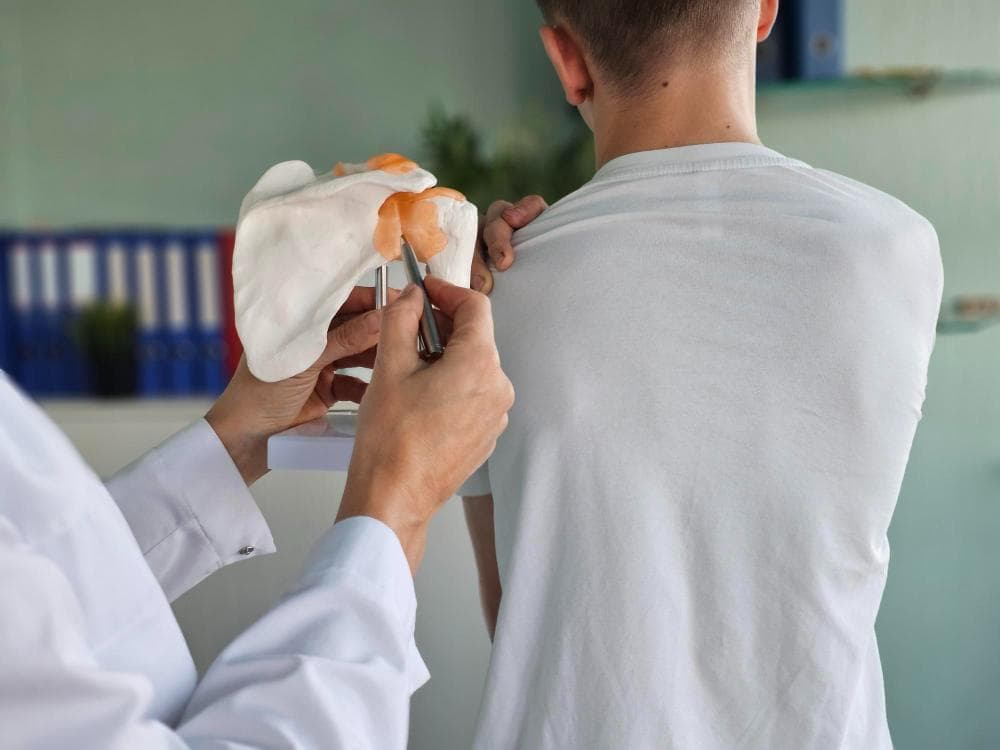
The diagnosis is primarily clinical, made on the basis of the characteristic history and examination findings.
Clinical examination findings:
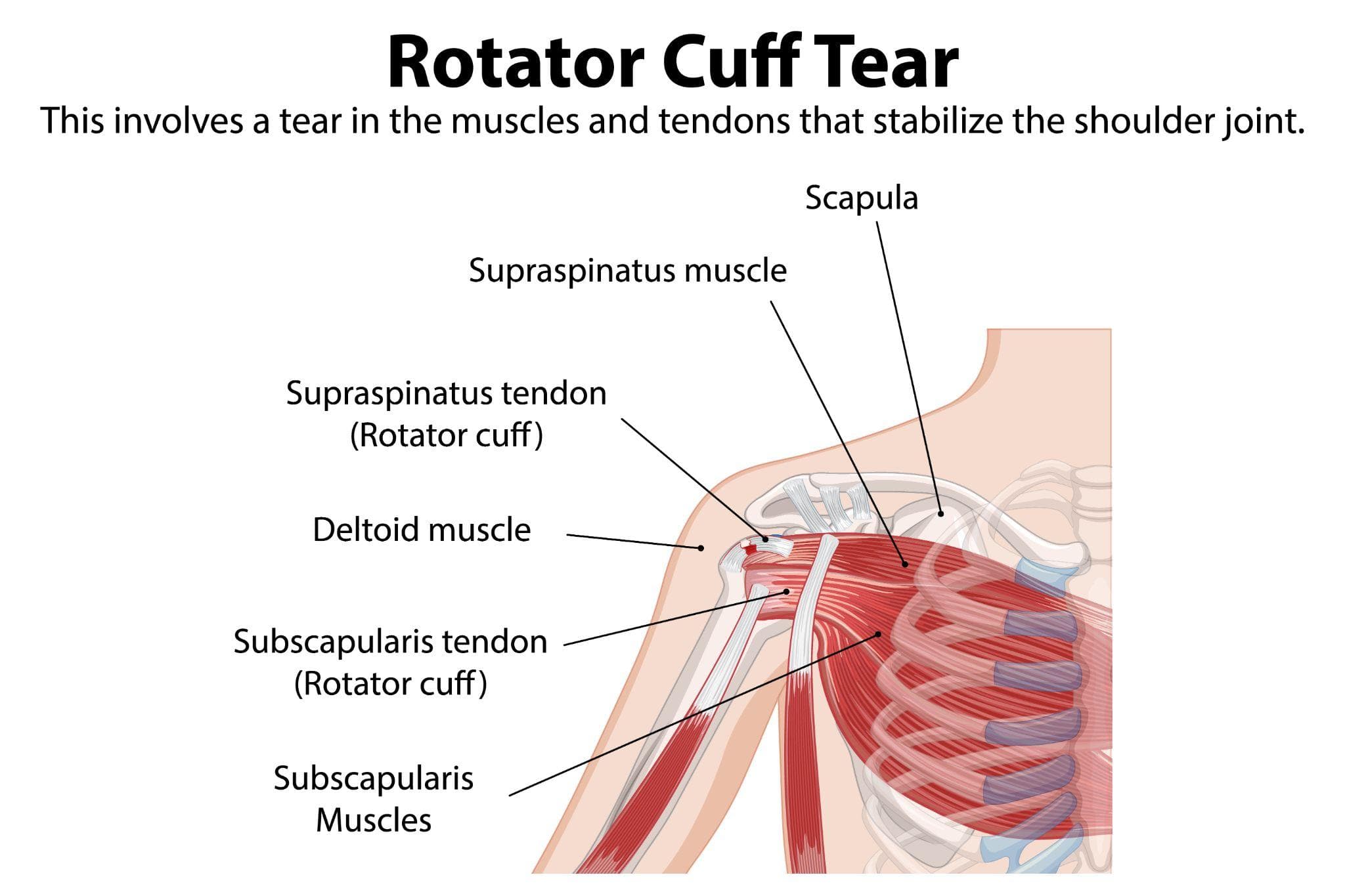
- Reduced active AND passive range of motion in all planes, this is the key distinguishing feature. In rotator cuff tears, passive movement is preserved; in frozen shoulder, the examiner also cannot move the arm past the restricted range.
- External rotation is typically the most restricted movement. This is the earliest and most reliable sign.
- Elevation and internal rotation are also restricted.
- Pain at the end of the available range when the examiner gently pushes beyond it.
Investigations:
- X-ray: Usually normal. Rules out other causes (fracture, OA, tumour). May show disuse osteopenia in long-standing cases.
- MRI: Helpful in uncertain cases, shows capsular thickening, reduced joint capsule volume, and rules out concurrent rotator cuff pathology. Gadolinium-enhanced MRI is more sensitive for the inflammatory changes of early frozen shoulder.
- Ultrasound: Useful for assessing the joint capsule and ruling out rotator cuff tears.
- Blood tests: Particularly important to check HbA1c (glycosylated haemoglobin) to screen for undiagnosed or poorly controlled diabetes. Thyroid function tests were relevant.
Treatment - Matched To The Stage
Treatment of frozen shoulder should be tailored to the stage. What works in Stage 1 (Freezing) is different from what's needed in Stage 2 (Frozen).
Stage 1 (Freezing) - Priority: Pain Control
Corticosteroid injections: The most effective intervention for Stage 1 frozen shoulder. An intra-articular steroid injection (methylprednisolone or triamcinolone) directly into the shoulder joint produces rapid and significant pain reduction, typically within 1–2 weeks. Multiple studies confirm that early steroid injection significantly reduces the duration of the Freezing stage and allows physiotherapy to begin. For maximum effect, the injection should be image-guided (ultrasound-guided) to confirm accurate placement.
How many injections? Typically 1–3 over 3–6 months. Beyond 3 injections in the same joint, the benefit-to-risk ratio declines.
Oral anti-inflammatories: NSAIDs (ibuprofen, etoricoxib) for background pain management. Short course of oral steroids in some cases.
Physiotherapy in Stage 1: The emphasis is on maintaining whatever range of motion exists, not on aggressive stretching. Aggressive stretching in the Freezing stage worsens inflammation and pain. Range-of-motion exercises, pendulum exercises, and pain-free stretches within the available range.
Managing the underlying condition: If diabetes is poorly controlled, working with a physician to optimise blood sugar control is critical, as it directly affects the course of the frozen shoulder.
Stage 2 (Frozen) - Priority: Regaining Range Of Motion
Physiotherapy: Now becomes the cornerstone. With pain reduced (spontaneously or following injection), the focus shifts to stretching the contracted capsule:
- Pendulum exercises
- External rotation stretches (the most important)
- Cross-body stretch for the posterior capsule
- Towel stretches for internal rotation
- Overhead elevation stretching
- Daily consistency is more important than intensity 2–3 short physiotherapy sessions daily, every day, produce better results than 3 sessions per week.
Hydrodilatation (Distension Arthrography): An excellent and underused procedure for Stage 2. Under imaging guidance, saline, local anaesthetic, and corticosteroid are injected into the shoulder joint in sufficient volume to physically stretch and dilate the contracted capsule. The procedure ruptures adhesions mechanically and delivers anti-inflammatory medication simultaneously. Most patients experience a significantly improved range of motion immediately after and over the following weeks. One to two sessions, combined with intensive physiotherapy immediately after.
Manipulation Under Anaesthesia (MUA): The shoulder is manually stretched under general anaesthesia to break the adhesions. Effective, but carries a small risk of fracture (particularly in osteoporotic patients), rotator cuff tear, and neurovascular injury. Now somewhat superseded by hydrodilatation and arthroscopic release, which are safer alternatives.
Stage 3 (Thawing) - Priority: Consolidating Recovery
Physiotherapy: Continues to restore the full range of motion and rebuild shoulder strength. At this stage, strengthening exercises are added alongside range-of-motion work. Most patients in Stage 3 achieve good functional recovery with consistent physiotherapy alone.
When Is Surgery Needed?
Surgery is reserved for patients who have failed adequate conservative management, typically those who have had 6+ months of physiotherapy and corticosteroid injections without sufficient improvement.
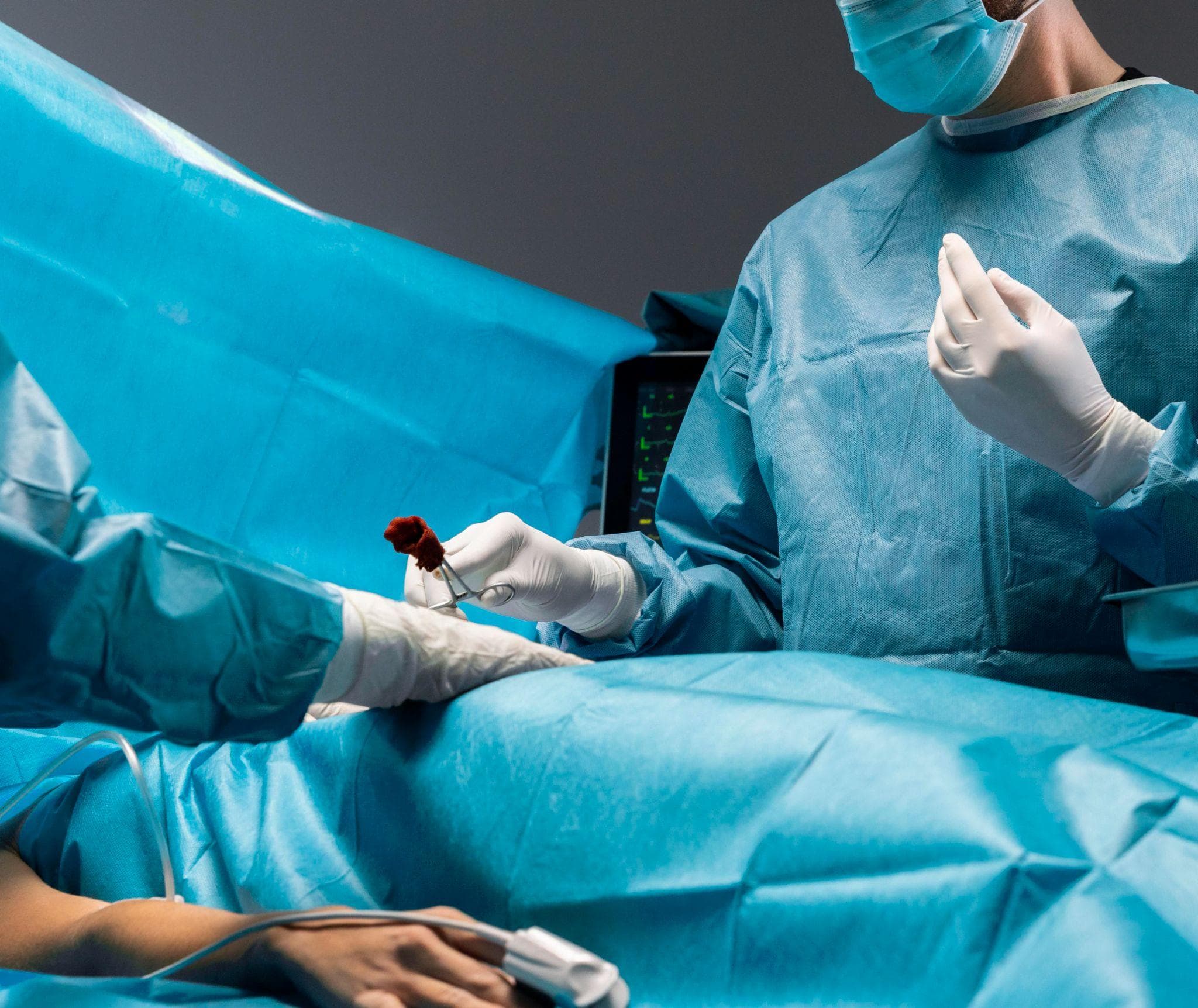
Arthroscopic Capsular Release: The gold standard surgical treatment for refractory frozen shoulder. Under general anaesthesia, the contracted capsule is released using an arthroscopic knife, dividing the thickened tissue that is restricting movement. The procedure is done through 2–3 keyhole incisions.
Outcomes: Excellent. Most patients gain a significant range of motion immediately after surgery, with continued improvement over 3–6 months of post-operative physiotherapy. Overall success rate: 85–95%.
Immediately after arthroscopic release, intensive physiotherapy must begin within the first 24–48 hours to maintain the gained range of motion before scar tissue reforms.
Hospital stay: Usually a same-day or overnight procedure.
Practical Advice For Frozen Shoulder Patients In Noida
Act early: Don't wait until you're in Stage 2 before seeking treatment. Stage 1 corticosteroid injections combined with early physiotherapy significantly shorten the overall disease course.
Get your diabetes checked: If you haven't had a recent HbA1c and you develop frozen shoulder, get it checked. Undiagnosed diabetes is a common finding in frozen shoulder patients. Optimising blood sugar control changes the prognosis.
Daily physiotherapy is non-negotiable: Doing your exercises 6 days a week produces better results than 2 days a week dramatically. The capsule needs daily gentle stretching to remain supple.
Warmth helps: A warm shower or heat pack before exercises reduces stiffness and makes stretching more effective. This is a simple but genuinely useful adjunct.
Be patient: Frozen shoulder is a condition that takes months, not weeks. Even with the best treatment, full recovery is measured in months to a year. Patients who understand this upfront manage the process better psychologically.
Frozen Shoulder Treatment In Noida - Dr. Mayank Chauhan At Prakash Hospital
Dr. Mayank Chauhan, Senior Orthopedic Surgeon at Prakash Hospital, Sector 33, Noida, evaluates and treats frozen shoulder at every stage from early corticosteroid injections and physiotherapy guidance to hydrodilatation and arthroscopic capsular release for refractory cases. For patients in Noida, Greater Noida, and Delhi NCR who have been managing shoulder stiffness or pain without a clear diagnosis, a proper shoulder evaluation will determine the stage and guide treatment accordingly. To book a consultation, call the number listed on the website.
The Bottom Line

X-ray image showing the shoulder joint, including the humeral head and socket, typically used by doctors to assess joint structure.
Frozen shoulder is not a minor shoulder ache. It is a condition with a defined natural history, painful freezing, stiff frozen, slow thawing that takes 2–3 years to resolve untreated. With appropriate treatment at each stage, that timeline is significantly compressed, pain is substantially reduced, and functional recovery is much more complete. The key is getting the diagnosis right, matching treatment to the stage, and being consistent, particularly with daily physiotherapy.
To consult Dr. Mayank Chauhan, Senior Orthopedic Surgeon in Noida, call the number listed on the website.