Hip Replacement Surgery In Noida - Everything You Need To Know
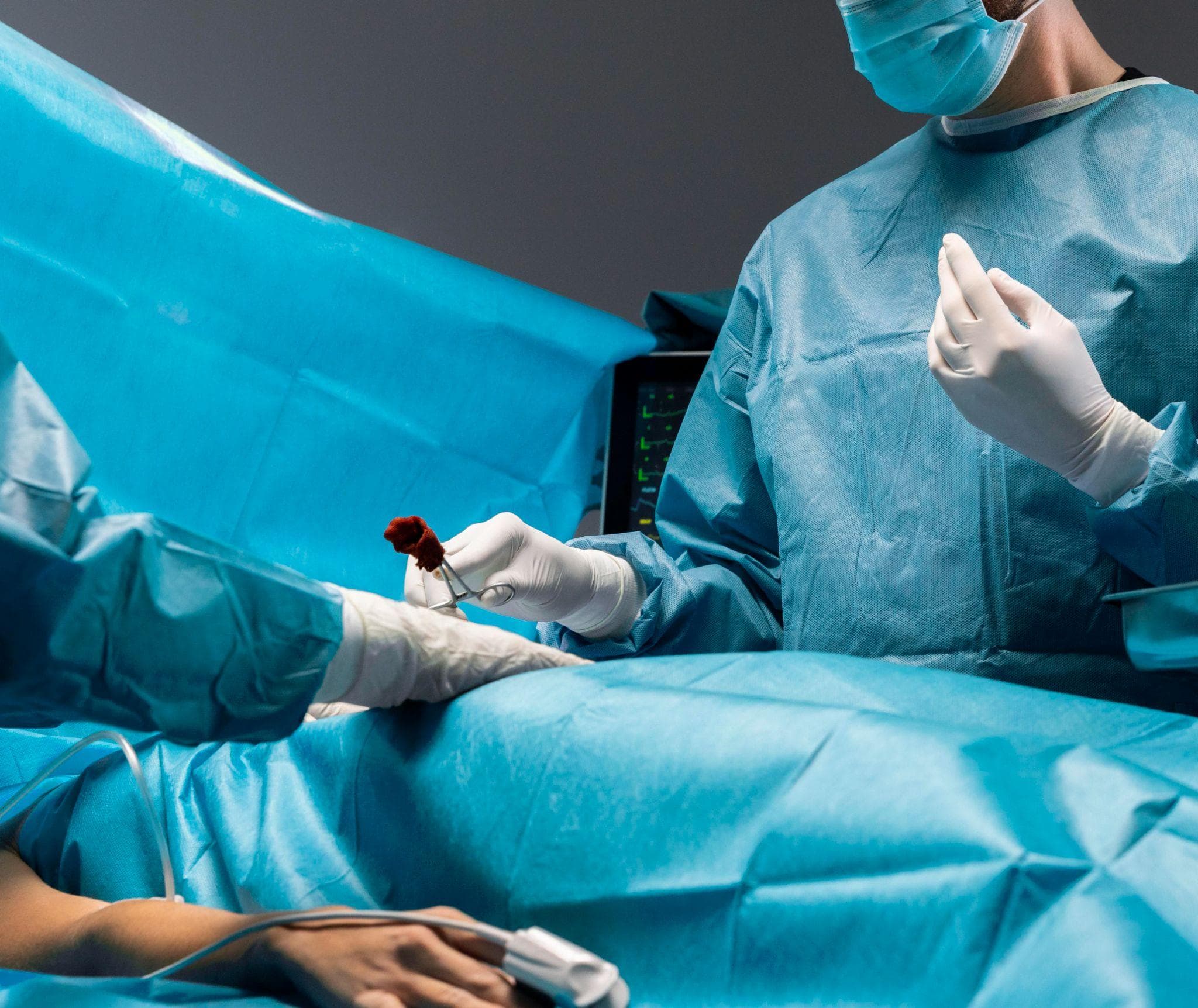
Orthopedic surgeons performing a hip replacement procedure.
Hip pain behaves differently from knee pain. It's quieter at first, a dull ache deep in the groin that people dismiss for months, sometimes years. Then it starts limiting things gradually: first running, then walking long distances, then getting in and out of cars, then climbing stairs. By the time most patients in Noida reach an orthopedic surgeon, they've been managing it with painkillers and willpower for far longer than they should have.
Hip replacement surgery, one of the most successful and most studied procedures in modern orthopedics, has transformed the lives of millions of patients worldwide. Yet in India, hip replacement remains underutilised compared to knee replacement, largely because patients don't recognise the symptoms early enough, and because families often accept hip pain in the elderly as an unavoidable consequence of age.
This guide is for patients in Noida, Greater Noida, and Delhi NCR who are dealing with hip pain and want to understand their options clearly, from what the surgery involves to who needs it to what recovery actually looks like.
Understanding The Hip Joint
The hip is a ball-and-socket joint, the largest joint in the body. The ball is the rounded head of the femur (thigh bone). The socket is a cup-shaped depression in the pelvis called the acetabulum. Both surfaces are covered with articular cartilage, the smooth, low-friction material that allows the joint to glide through its full range of motion effortlessly.
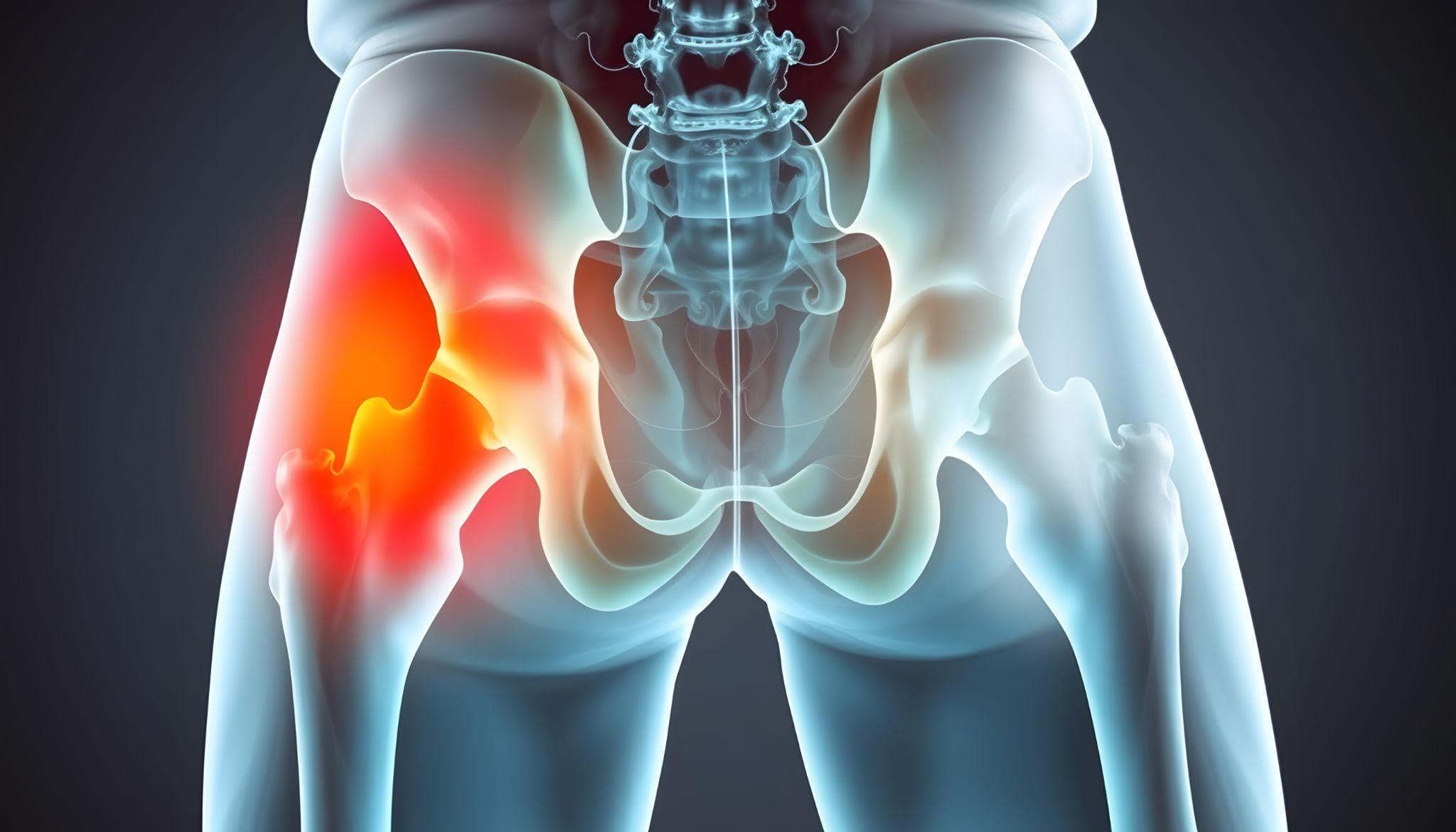
When that cartilage is destroyed by arthritis, by injury, by avascular necrosis (bone death from disrupted blood supply), or by fracture, the ball and socket begin to grind together. The pain is typically felt in the groin (not, as many patients expect, in the outer hip), often radiating into the front of the thigh and sometimes into the knee. The joint becomes stiff, rotation is lost, and walking becomes progressively more difficult and painful.
Who Needs Hip Replacement Surgery?
Hip replacement is recommended when pain and loss of function from hip joint disease cannot be adequately managed with non-surgical treatment. The conditions most commonly requiring hip replacement in Noida include:
Osteoarthritis (OA): The most common cause globally. The cartilage wears down over decades, and eventually, bone grinds on bone. More common in patients over 55, in those with a history of heavy physical work, and in those who are overweight.
Avascular Necrosis (AVN): In India, AVN is a particularly important cause, accounting for a very high proportion of hip replacements compared to Western countries. AVN occurs when the blood supply to the femoral head is disrupted, causing the bone tissue to die and collapse. Causes in the Indian population include long-term corticosteroid use (for various medical conditions), alcohol use, trauma, and, in some cases, no identifiable cause (idiopathic AVN). AVN often affects younger patients, people in their 30s, 40s, and 50s.
Rheumatoid Arthritis: When RA severely damages the hip joint, replacement may be necessary, coordinated between the orthopedic surgeon and the rheumatologist.
Hip Fracture: A fractured neck of femur (hip fracture), particularly common in elderly patients after falls, is often treated with partial hip replacement (hemiarthroplasty) as an emergency procedure, particularly in patients over 75 who have limited mobility demands.
Post-Traumatic Arthritis: Arthritis that develops years after a hip fracture or hip dislocation that was never fully rehabilitated.
Hip Dysplasia: A developmental condition where the hip socket is abnormally shallow or misshapen can be treated with replacement in adults who develop secondary arthritis.
The surgical decision is based on:
- Severity of pain and its impact on daily function.
- Degree of disability: how much the hip limits walking, sleep, and independence.
- X-ray and imaging findings showing the extent of joint damage.
- Response (or lack of it) to non-surgical treatment.
- The patient's age, general health, and activity goals.
Types Of Hip Replacement Surgery
Different types of hip replacement surgery are available to address varying levels of joint damage, helping improve mobility, reduce pain, and restore daily function.
1. Total Hip Replacement (THR)
The most commonly performed procedure. Both the femoral head (ball) and the acetabular socket are replaced with prosthetic components. The femoral component consists of a metal stem inserted into the thigh bone, topped with a ball (made of metal or ceramic). The acetabular component consists of a metal shell fitted into the socket, with a plastic (polyethylene) or ceramic liner. THR is the appropriate choice when both components of the hip joint are damaged, the standard presentation in osteoarthritis and most forms of AVN, where the joint has collapsed.
2. Partial Hip Replacement (Hemiarthroplasty)
Only the femoral head (ball) is replaced; the natural socket is left intact. This is most commonly performed for:
- Hip fractures in elderly patients where the priority is restoring walking ability as safely and quickly as possible.
- Cases where the socket is in good condition and only the ball is damaged.
3. Hip Resurfacing
Rather than removing the femoral head entirely, the surgeon trims and caps it with a smooth metal surface, which articulates with a metal cup in the socket. This preserves more bone and allows a larger-diameter articulation, which may reduce dislocation risk. Hip resurfacing is typically considered for younger, more active patients (usually men under 55) who have adequate bone quality and whose anatomy is suitable. It requires precise surgical technique and is not appropriate for all patients.
4. Revision Hip Replacement
When a previous hip replacement has worn out, become loose, or failed due to infection, revision surgery replaces or modifies the existing components. This is a more complex operation than primary hip replacement.
Implant Materials - What Your Hip Is Made Of
Modern hip implants use several combinations of materials, each with different characteristics:
Metal-on-Polyethylene: The most widely used combination. Metal ball on a plastic socket liner. Excellent long-term track record.
Ceramic-on-Polyethylene: A ceramic ball against a plastic liner. Lower wear rates than metal-on-poly. Good choice for younger, more active patients.
Ceramic-on-Ceramic: Both ball and liner are ceramic. Extremely low wear rates, excellent for younger patients. Rarely may produce a high-pitched squeaking sound worth discussing with your surgeon.
Metal-on-Metal: Previously used but now largely abandoned due to concerns about metal ion release into the bloodstream.
Your surgeon will recommend the implant combination most appropriate for your age, activity level, bone quality, and anatomy.
Cemented vs. Uncemented:
- Cemented implants are fixed using bone cement (polymethylmethacrylate). Better for elderly patients with softer bone.
- Uncemented implants have a porous surface that bone grows into over time. More appropriate for younger patients with good bone quality.
- Hybrid approaches (one cemented component, one uncemented) are also used.
The Surgical Procedure - What Happens In The OT

Orthopedic surgeons performing hip replacement surgery in a modern operation theatre.
Hip replacement surgery takes approximately 1.5 to 2 hours. It is performed under spinal or general anaesthesia. The surgeon accesses the hip joint through one of several approaches:
Posterior approach: The traditional approach accesses the joint from the back of the hip. Excellent visibility, widely practised. Requires brief "hip precautions" post-operatively to protect the repair while soft tissues heal.
Anterior approach: Accessing the joint from the front, between the muscles rather than cutting through them. Potentially faster early recovery and fewer hip precautions, but technically demanding and requires specific training and equipment.
Lateral approach: Less commonly used, accessing from the side.
During surgery:
- The damaged femoral head is dislocated and removed.
- The acetabulum (socket) is reamed and prepared to receive the prosthetic cup.
- The femoral canal is prepared, and the stem is inserted.
- Trial components are tested for stability, leg length, and range of motion.
- Final components are fixed, the joint is reduced (the ball is placed into the socket), and the wound is closed.
Post-operatively, a drain may be placed for 24–48 hours. Blood-thinning medication is started to prevent DVT.
Recovery: What To Realistically Expect
Hip replacement recovery is often faster than knee replacement recovery, a fact that surprises many patients who expect hip surgery to be more difficult.
1. Hospital Phase (Day 1–4)
Physiotherapy begins within 12–24 hours of surgery. Most patients stand and take their first steps with a walker on Day 1. The goals during hospital stay:
- Safely walking with a walker.
- Managing stairs with support.
- Understanding hip precautions (if posterior approach).
- Learning the home exercise programme.
Hip precautions after posterior approach:
- Do not bend the hip past 90 degrees (crossing the leg, deep chairs, low toilets).
- Do not cross the legs.
- Do not twist the foot inward.
These precautions are typically maintained for 6 weeks while the repaired soft tissues heal. Many anterior approach surgeons do not require these restrictions.
2. Week 1–2 At Home
Walking with a walker, doing exercises prescribed in the hospital, managing wound care, and using a raised toilet seat. Pain managed with oral medication.
3. Weeks 3–6
Transition from walker to walking stick. Walking distances increase significantly. Most patients begin returning to light household activities. Outpatient physiotherapy typically continues.
4. 6 Weeks
Most patients transition to walking without support. Driving can be discussed with a surgeon (varies by approach and operated side). Hip precautions typically cease.
5. 3 Months
Full recovery for most patients. Most low-impact activities resumed swimming, cycling, walking, and light gardening.
6. 6–12 Months
The new hip continues to "settle in." Patients often report continued improvement in comfort and confidence up to a year.
Hip Replacement Outcomes And Implant Longevity
Hip replacement has among the best outcomes of any surgical procedure in medicine:
- Over 95% of patients experience significant or complete relief of hip pain.
- Most patients return to daily activities they had given up due to hip pain.
- Modern implants are designed to last 15–25 years, with some lasting longer.
Younger, more active patients may need revision surgery later in life, but modern implants and techniques have significantly extended survivorship.
Hip Replacement In Noida - Dr. Mayank Chauhan At Prakash Hospital
Dr. Mayank Chauhan, Senior Orthopedic Surgeon at Prakash Hospital, Sector 33, Noida, performs total hip replacement, hemiarthroplasty (partial replacement for fractures), and hip resurfacing for appropriate patients. His clinical focus includes AVN of the hip, a condition with particularly high prevalence in the Indian population, as well as hip OA and post-traumatic hip arthritis.
Every patient is evaluated individually: Medical fitness, imaging (X-ray and MRI for AVN cases), implant selection, and surgical approach are all tailored to the specific patient rather than applied by protocol.
Patients from across Noida, Greater Noida, Ghaziabad, and Delhi NCR consult Dr. Chauhan for hip pain evaluation. Initial consultations are available Monday to Saturday, 10 AM to 8 PM | Sunday, 10 AM to 2 PM.
To book a consultation, call the number listed on the website.
Frequently Asked Questions
1. How do I know if my hip pain warrants seeing an orthopedic surgeon?
If hip pain has been present for more than 6–8 weeks, is affecting your ability to walk, sleep, or carry out daily activities, or is worsening progressively, see a specialist. A proper examination and X-ray will tell you where things stand.
2. Is hip replacement safe for elderly patients?
Yes, when properly evaluated and medically optimised. Elderly patients with well-controlled chronic conditions are good candidates. The risk of not treating severe hip pain, deconditioning, falls, and loss of independence is often greater than the surgical risk.
3. Can I sit cross-legged after hip replacement?
After posterior approach surgery, this is restricted for 6 weeks. Beyond that, and for anterior approach surgeries, it depends on the range of motion and your surgeon's specific guidance. Modern high-flex implants allow reasonable flexion for Indian lifestyle requirements. This should be discussed specifically with your surgeon before surgery.
4. How long will I need a walking aid after hip replacement?
Typically, a walker for the first 2 weeks and a walking stick from weeks 2–6. Many patients walk independently by 6 weeks.
5. What activities can I return to after recovery?
Swimming, cycling, walking, light hiking, and most daily activities. High-impact sports (running, football, heavy gym work) are generally avoided to protect implant longevity.
The Bottom Line

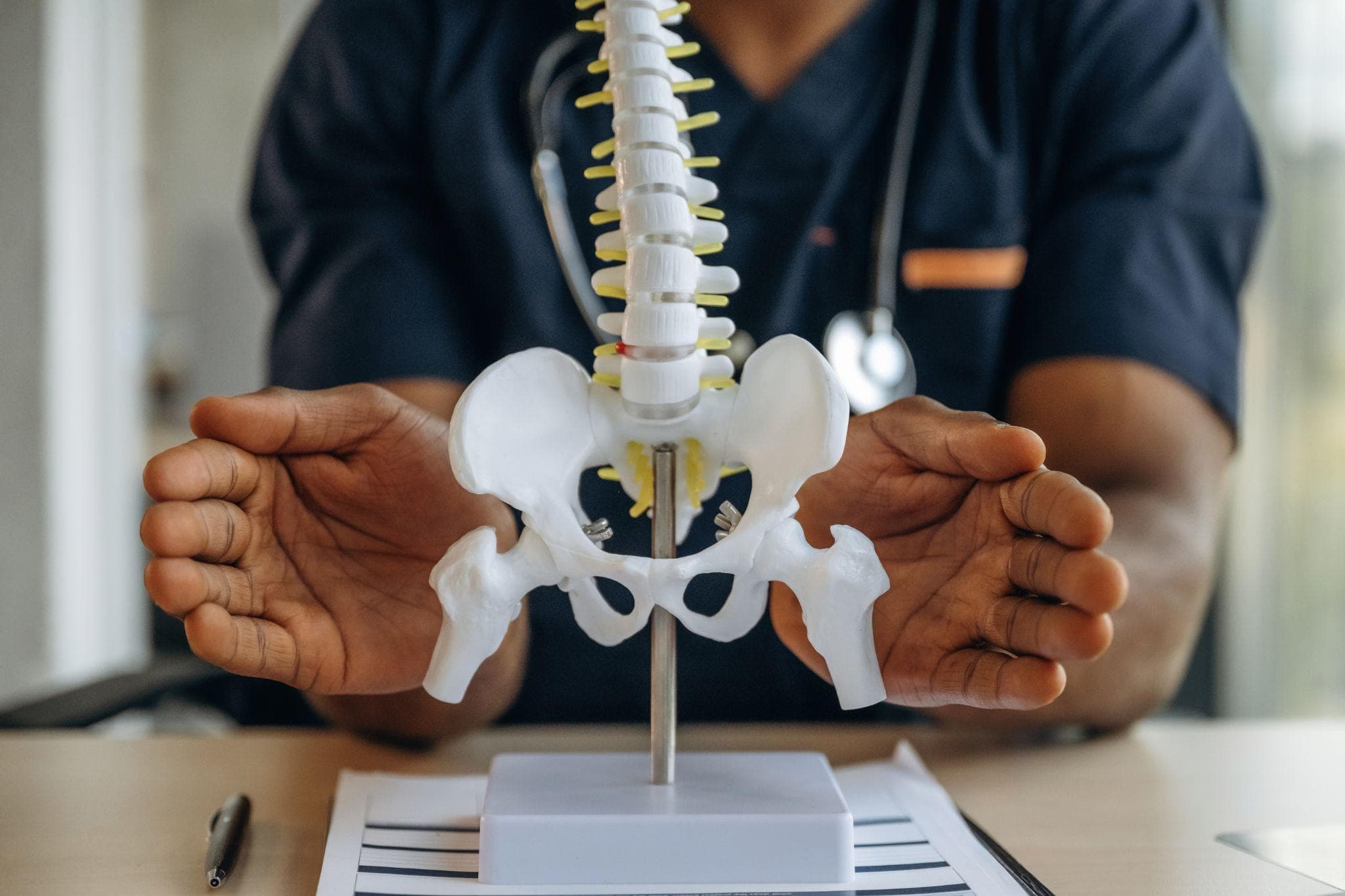
anatomical model of a hip bone.
Hip replacement surgery is transformative for patients with severe hip joint disease, producing dramatic pain relief and functional restoration that nothing else achieves for end-stage hip pathology. If you're in Noida or Greater Noida and have been managing hip pain with medication alone, or if a family member is struggling with hip pain that's limiting their independence, a proper orthopedic evaluation is the right next step.
To book a consultation with Dr. Mayank Chauhan, Senior Orthopedic Surgeon at Prakash Hospital, Sector 33, Noida, call the number listed on the website.