Hip Pain in Young Adults - Why It's Rising in India and What's Behind It
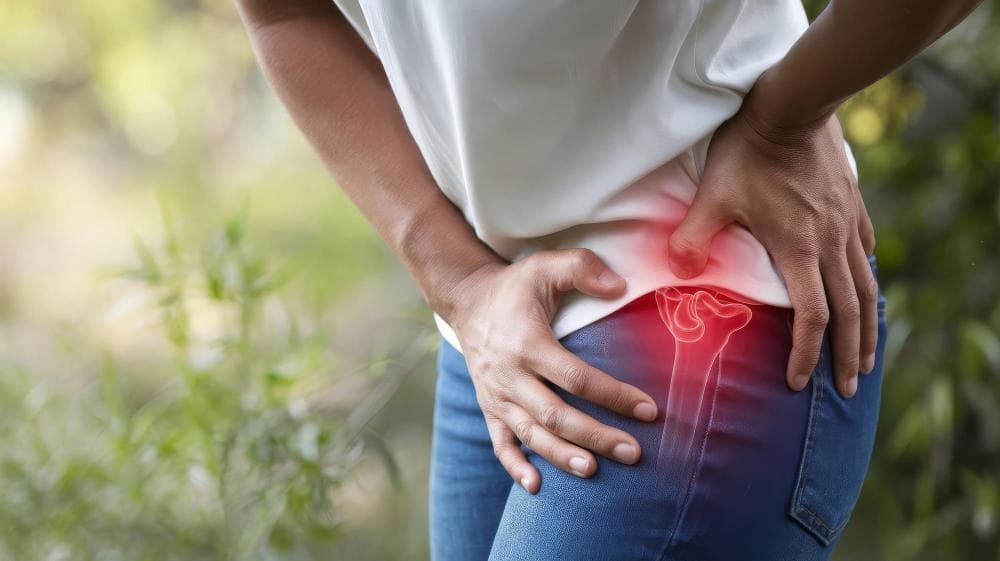
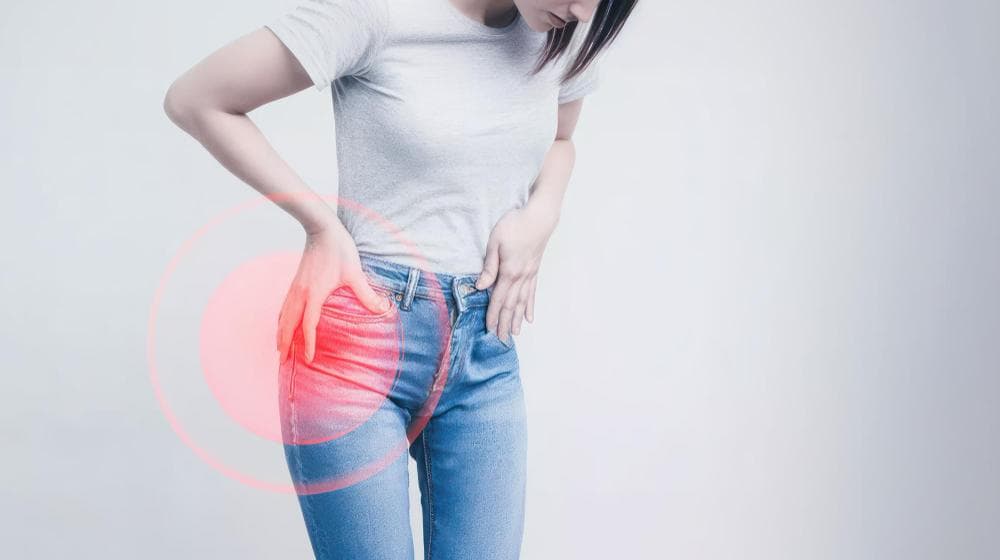
A close-up of a person grasping their hip with both hands, with the hip area indicated by a highlighted red region showing the location of pain or discomfort in the hip.
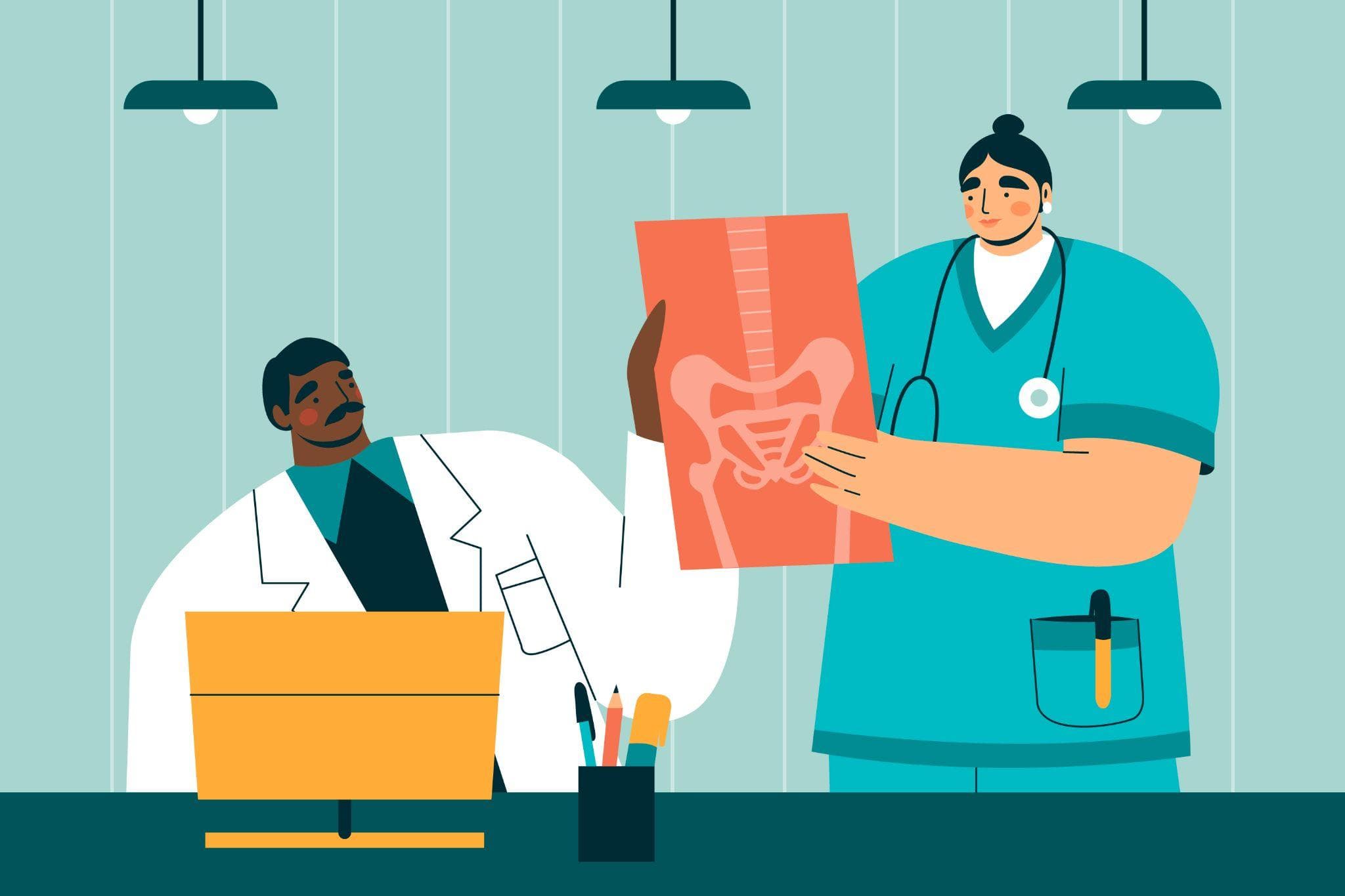
A 26-year-old gym enthusiast in Noida presents with progressive right hip pain over four months. He assumed it was a muscle pull from squats. His physiotherapist treated it as hip flexor tightness. When the pain persisted and began disturbing his sleep, he finally had an MRI. The result: Stage 3 avascular necrosis of the femoral head. The femoral head — the ball of his hip joint — was collapsing from lack of blood supply.
This scenario is being repeated with alarming frequency across Delhi NCR. In May 2025, at the Delhi Hip 360 conference, senior orthopaedic specialists from across India reported a sharp rise in serious hip conditions among young adults — patients in their 20s and early 30s — conditions that were previously almost exclusively seen in patients over 50. The warning was specific: over 70% of hip damage cases in youth were linked to anabolic steroid misuse and unverified protein supplements, many of which are laced with hidden steroids.
This blog covers the complete picture of hip pain in young adults in India — the common causes, the less obvious but increasingly frequent serious ones, and what to do when hip pain in someone under 40 doesn't resolve the way muscle injuries should.
Why Hip Pain in Young Adults Is Different
The causes of hip pain shift significantly with age. In adults over 60, osteoarthritis is by far the most common cause — gradual wear over decades. In adults aged 20–45, the causes are fundamentally different:
- Previous trauma and post-traumatic conditions
- Structural problems present since birth or childhood
- Overuse sports injuries
- Inflammatory arthritis
- Avascular necrosis (AVN) — increasingly the most important diagnosis in young Indians
Each of these requires a different management approach, and the implications for the patient's future — particularly their future ability to have successful hip surgery if needed — are determined significantly by how early the correct diagnosis is made.
Common Causes of Hip Pain in Young Adults
1. Avascular Necrosis (AVN) of the Femoral Head — The Most Urgent Diagnosis
What it is:
Avascular necrosis (also called osteonecrosis) is the death of bone tissue due to interruption of blood supply to the femoral head. Without blood supply, the bone cells die, the structural integrity of the femoral head fails, and it progressively collapses — ultimately destroying the hip joint surface.
Why it is an emergency in young patients:
In a 70-year-old, femoral head collapse leads to arthritis and eventually to hip replacement — unfortunate but manageable. In a 25-year-old, it leads to hip replacement before age 30, with the certainty of multiple revision surgeries over a lifetime. Early-stage AVN (Stages 1–2), before collapse has occurred, can sometimes be treated with bone-preserving procedures (core decompression, bone grafting) that may prevent or significantly delay collapse. Once collapse has occurred (Stage 3+), joint-preserving surgery becomes far less reliable, and replacement eventually becomes unavoidable.
This is why early diagnosis of AVN matters enormously. Every month of delay after the onset of pain in an AVN patient represents further progression toward collapse.
The Indian AVN crisis among young people:
At the Delhi Hip 360 conference in May 2025, orthopaedic specialists reported seeing 2–3 patients under age 30 per week in their outpatient clinics with AVN — a dramatic increase from even 10 years ago. The drivers:
Anabolic steroid use: The most significant contributor. Steroids — whether medically prescribed (corticosteroids for asthma, eczema, COVID treatment, autoimmune conditions) or illicitly used (anabolic steroids for muscle building) — disrupt fat metabolism, causing fat to accumulate in the small blood vessels supplying the femoral head. This fat occludes the vessels and cuts off the blood supply.
Unverified protein supplements with hidden steroids: Many products sold online and in gym supplement stores in India are laced with anabolic steroids or their precursors — without disclosure on the label. Gym-goers who believe they are taking clean protein supplements may be unknowingly consuming steroids, with AVN as a consequence.
Alcohol: Heavy alcohol use (multiple drinks daily for years) causes the same fat deposition in femoral head blood vessels as steroids. India's rising alcohol consumption rates — particularly in young urban males — contribute directly.
** COVID-19-associated AVN:** Since 2021, a wave of post-COVID AVN cases has been documented in India — attributed to both the high-dose steroids used during severe COVID treatment and possibly direct vascular effects of the SARS-CoV-2 virus. Studies from Indian hospitals documented significant AVN incidence in patients treated for severe COVID.
What AVN feels like in early stages:
- Deep groin pain, often described as a dull ache
- Pain worse with weight-bearing and activity, better with rest (early)
- Stiffness with internal rotation of the hip
- In early stages (Stage 1–2), pain may be mild and easily dismissed
The diagnostic trap:
X-rays are normal in Stage 1 AVN. The MRI is the only investigation that detects early AVN reliably. Many young patients with early-stage AVN are initially diagnosed with hip flexor strain or "muscle pull" and treated for months without the correct diagnosis. By the time the X-ray becomes abnormal (indicating collapse has begun), the opportunity for joint-preserving treatment may have passed.
Bottom line: Any young adult with persistent, unexplained hip or groin pain lasting more than 4–6 weeks — particularly one with any history of steroid use, alcohol use, or recent COVID infection — should have an MRI of the hip to exclude AVN.
2. Femoroacetabular Impingement (FAI)
FAI is a condition where abnormal contact occurs between the femoral head and the acetabular socket during hip movement — caused by a bony prominence on the femoral head (cam impingement), an overly deep socket (pincer impingement), or a combination.
Who gets it:
FAI is particularly common in:
- Young male athletes (25–40 years) — particularly those who played sports with significant hip loading in adolescence
- People engaged in activities requiring deep hip flexion — weightlifters, cyclists, martial arts practitioners
- Patients with a naturally shallow hip socket or an excessively rounded femoral head (cam deformity)
What it feels like:
- Pain at the front of the hip/groin — worse with sitting for prolonged periods, deep hip flexion, and getting in and out of cars
- A clicking or catching sensation in the hip with certain movements
- Loss of hip internal rotation — difficulty crossing the legs or squatting
- In athletes, pain with sprinting or kicking
Why it matters:
FAI causes labral tears (damage to the cartilage ring of the hip socket) and, over time, early OA of the hip. Untreated FAI in a 25-year-old is a significant risk factor for hip OA by age 40–45.
Treatment:
Physiotherapy — specific hip strengthening and movement retraining — is the first-line treatment for FAI without significant labral damage. Arthroscopic surgery (hip arthroscopy) addresses the bony cam or pincer deformity and repairs the labral tear — ideally before significant cartilage damage has occurred.
3. Hip Labral Tears
The labrum — the cartilage ring that deepens the hip socket and seals the joint — can tear from FAI, acute trauma (dislocation, sports injury), or repetitive loading. Labral tears produce:
- A deep groin pain that occurs with certain movements
- Clicking, locking, or catching sensations
- Variable Pain — sometimes sharp, sometimes dull
Diagnosed on MRI with gadolinium contrast (which outlines the labrum). Treated arthroscopically with labral repair or debridement depending on tear type.
4. Snapping Hip Syndrome (Coxa Saltans)
A snapping sensation at the hip — felt or heard with certain movements. Three types:
- Internal snapping: The iliopsoas tendon flicking over the iliopectineal eminence — snapping felt at the front of the hip
- External snapping: The iliotibial band flicking over the greater trochanter — snapping felt at the outer hip
- Intra-articular snapping: Loose bodies or labral tears within the joint
Most cases of external and internal snapping hip are benign and managed with physiotherapy (stretching and strengthening). Intra-articular snapping with pain requires imaging and may need arthroscopic treatment.
5. Trochanteric Bursitis (Lateral Hip Pain)
Pain on the outer hip — over the greater trochanter (the bony prominence at the outer thigh) — from inflammation of the trochanteric bursa. This is the most common cause of lateral hip pain and is frequently confused with hip joint disease.
Key distinguishing feature: Trochanteric bursitis pain is on the outer hip, not in the groin. Hip joint pain (OA, FAI, AVN) is predominantly in the groin and anterior hip. Pressing on the greater trochanter reproduces the pain of bursitis.
Treatment: Stretching of the IT band and hip abductors, physiotherapy, corticosteroid injection into the bursa (highly effective), and activity modification. Rarely requires surgery.
6. Stress Fractures of the Femoral Neck
Covered in the stress fractures blog. The femoral neck is a high-risk stress fracture location — dangerous because displacement can cause avascular necrosis of the femoral head. Young runners who have rapidly increased mileage, military recruits, and patients with Vitamin D deficiency and low bone density are at risk.
Any young runner with groin or anterior hip pain that worsens with running should have this excluded — with MRI if X-ray is negative, which it is in early stress fractures.
What the Evaluation Involves
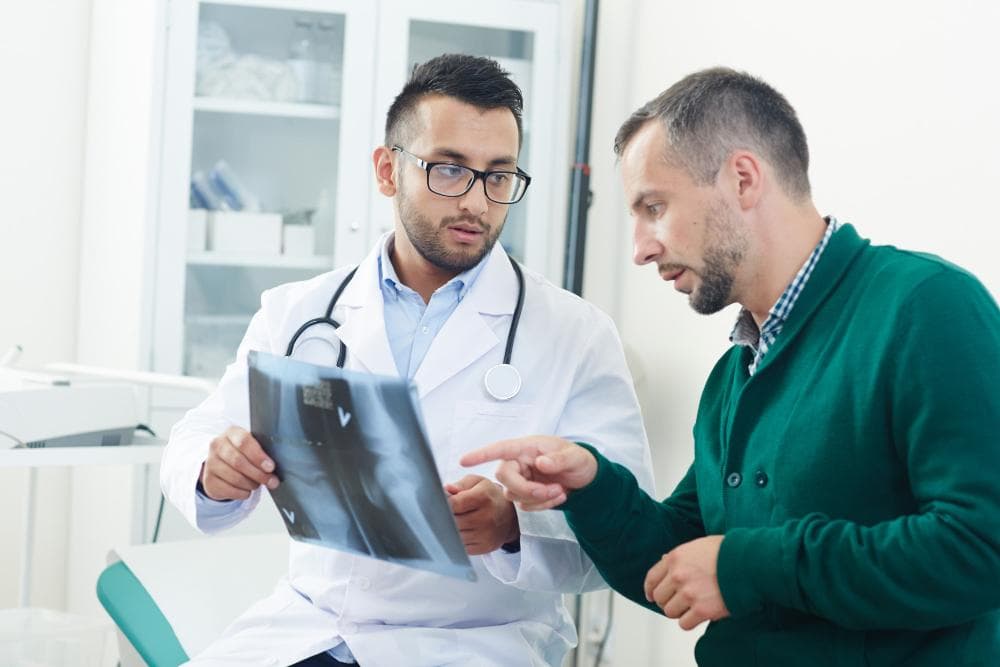
When a young adult presents with hip pain, the assessment includes
History:
- Onset and character of pain
- Location (groin = hip joint; outer hip = trochanteric; buttock = referred from spine or SI joint)
- Sport and activity history
- Any history of steroid use (medical or otherwise) — asked specifically and sensitively
- Alcohol use
- History of COVID and treatment
Examination:
- Range of motion — reduced internal rotation is an early sign of both FAI and AVN
- FADIR test (Flexion Adduction Internal Rotation) — positive in FAI and labral tears
- Stinchfield test (resisted hip flexion against examiner resistance) — positive in hip joint pathology
- Palpation of the greater trochanter — tenderness here suggests bursitis
Imaging:
- X-ray first: Normal in early AVN (Stage 1) and some FAI. May show cam deformity in FAI, joint space narrowing in late AVN, or femoral head collapse.
- MRI — essential for young patients with unexplained hip pain: Shows AVN (bone marrow oedema in Stage 1, before collapse), labral tears, FAI anatomy, stress fractures.
Hip Pain in Young Adults — Noida and Greater Noida
Dr. Mayank Chauhan, Senior Orthopedic Surgeon at Prakash Hospital, Sector 33, Noida, specifically evaluates young adults with hip pain — with the understanding that early diagnosis is critical in conditions like AVN, FAI, and labral tears, where the window for joint-preserving treatment closes if diagnosis is delayed.
For young patients in Noida and Greater Noida with hip or groin pain that has persisted beyond 4–6 weeks — particularly those with any history of steroid use, alcohol use, or post-COVID period — an urgent MRI evaluation is appropriate. To book a consultation, call the number listed on the website.
The Bottom Line
Hip pain in a young adult in India — particularly in someone under 40 — should never be dismissed as muscle strain without proper evaluation. AVN, FAI, labral tears, and stress fractures are treatable conditions where early diagnosis makes the difference between joint preservation and irreversible damage.
The rise of steroid-associated AVN among India's gym-going population is an alarming public health trend. Any young person with groin pain and any risk factor for AVN deserves an MRI.
To consult Dr. Mayank Chauhan, Senior Orthopedic Surgeon in Noida, call the number listed on the website.