Hip Replacement Surgery in Greater Noida - Expert Care at Prakash Hospital Noida
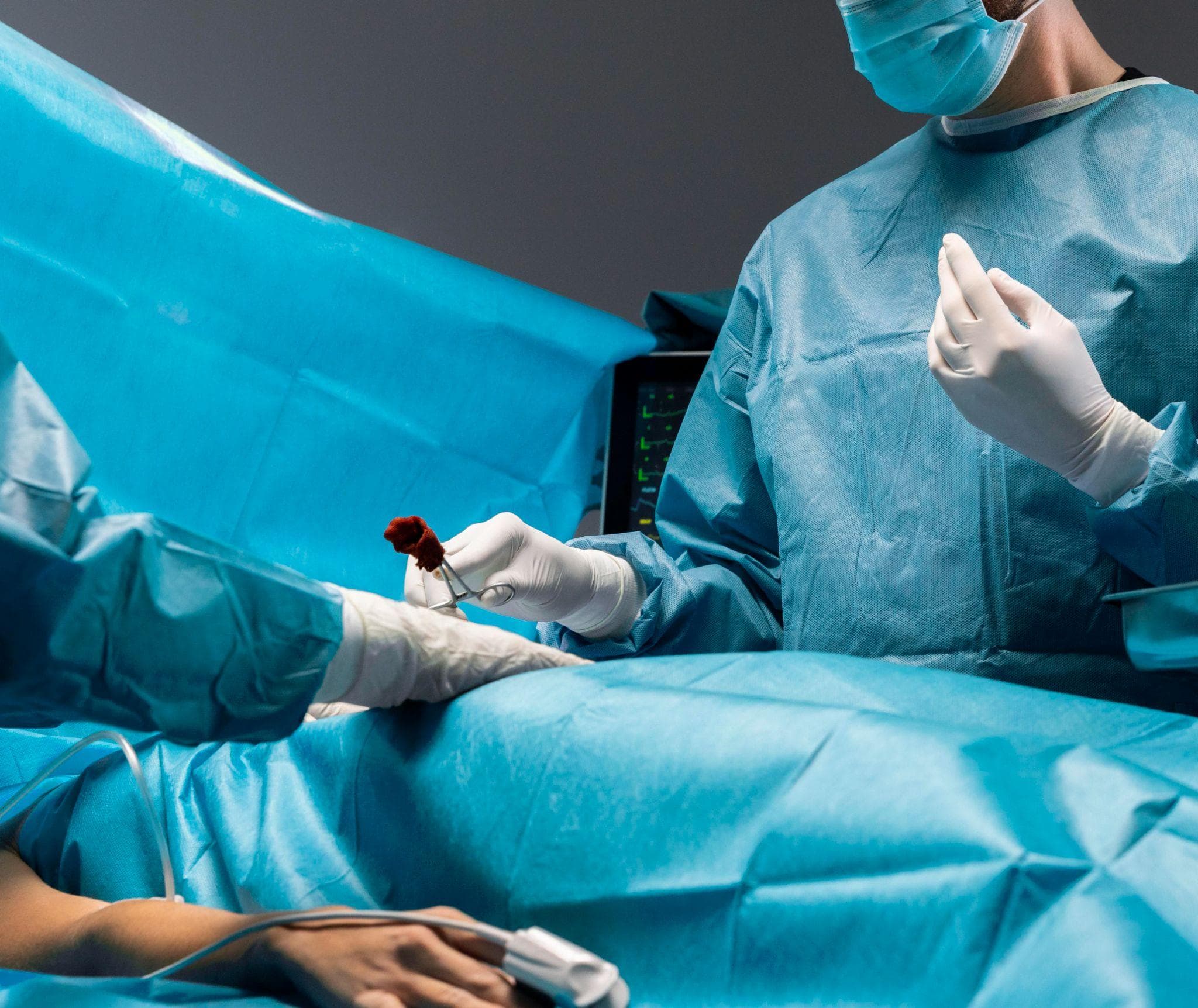
Orthopedic surgeons performing a hip replacement procedure.
Greater Noida has grown into one of the most significant residential and institutional areas in the Delhi NCR — home to hundreds of thousands of residents in areas like Knowledge Park, Sector Alpha and Beta, Pari Chowk, Kasna, Surajpur, and the sprawling residential townships of Greater Noida West. Yet despite this growth, access to specialist orthopedic surgical care — particularly for major procedures like total hip replacement — often requires patients to travel into Noida proper or to central Delhi.
**Dr. Mayank Chauhan, Senior Orthopedic Surgeon at Prakash Hospital, Sector 33, Noida, provides the full spectrum of hip care — from conservative management of early hip disease through to total hip replacement, hip resurfacing, and avascular necrosis management — within straightforward reach of Greater Noida via the Noida-Greater Noida Expressway.
Why Greater Noida Patients Choose Prakash Hospital for Hip Care
Accessibility from Greater Noida
Prakash Hospital, Sector 33, Noida, is accessible from Greater Noida in approximately 20–35 minutes, depending on the specific location:
From Greater Noida core (Pari Chowk, Knowledge Park, Alpha 1 and 2, Beta, Gamma, Delta, Sector 1/2/3): Take the Noida-Greater Noida Expressway toward Noida. Sector 33 is easily accessible from the expressway, approximately 20–25 minutes from central Greater Noida areas.
From Greater Noida West / Noida Extension (Gaur City, Supertech, Amrapali, ATS): Travel via the Greater Noida West Expressway to the Noida-Greater Noida Expressway, then toward Noida city. Approximately 25–35 minutes depending on traffic.
Via Metro (Aqua Line): The Greater Noida Metro connects Greater Noida with Noida. Patients can take the Aqua Line to the Noida City Centre station, then connect to the Blue Line for the Sector 32 station — a short auto or cab ride from Prakash Hospital.
Landmark: Prakash Hospital is near the ISKCON Temple, Sector 33, Noida — one of the most recognisable landmarks in central Noida. Provide this to any auto or cab driver, and the hospital is immediately identified.
Hip Conditions Treated at Prakash Hospital for Greater Noida Patients
Total Hip Replacement — When Is It Needed?
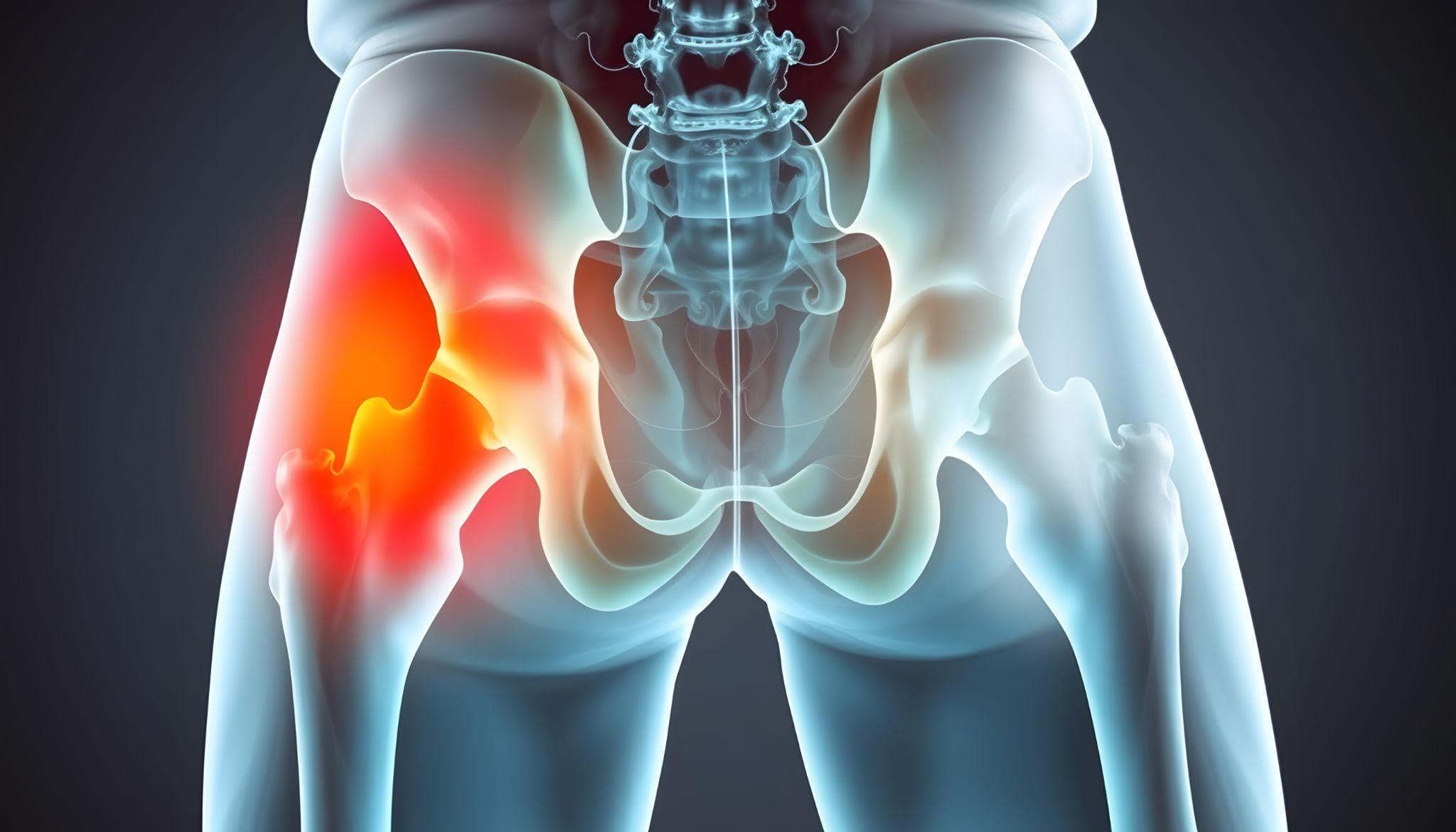
Total hip replacement (THR) is the definitive surgical treatment for hip joints where arthritis, avascular necrosis, or other conditions have destroyed the articular surface to the point where conservative management no longer provides acceptable pain control or function.
The most common conditions requiring THR in the Greater Noida population:
Osteoarthritis: The gradual wear of hip cartilage — more common in patients over 55–60. Progressive groin pain with walking, stiffness with internal rotation, and eventually pain at rest characterise the later stages. When X-rays confirm Grade 3–4 OA and conservative management has been adequately tried, THR provides the definitive solution.
Avascular Necrosis (AVN): Particularly relevant for Greater Noida's younger and middle-aged population — AVN is driven by steroid use (medical and illicit), alcohol use, and post-COVID steroid treatment. Stage 3–4 AVN with femoral head collapse requiring hip replacement is being seen with increasing frequency in patients in their 30s and 40s across Delhi NCR. Early AVN (Stage 1–2) is evaluated for joint-preserving procedures first.
Hip Fractures in Elderly Patients: A fall in an elderly patient living in a Greater Noida home or with a younger family — resulting in a neck of femur fracture — is a surgical emergency. Hemiarthroplasty (partial hip replacement) is the standard surgical treatment for displaced femoral neck fractures in elderly patients and should be performed as soon as the patient is medically fit for surgery (ideally within 24–48 hours of fracture).
Rheumatoid Arthritis Hip Involvement: When RA destroys the hip joint — requiring replacement in coordination with rheumatology.
Post-Traumatic Arthritis: Following pelvic or acetabular fractures, road accidents can leave hip joint damage.
The Hip Replacement Procedure at Prakash Hospital
Consultation and Pre-operative Planning
The hip replacement journey begins with a thorough clinical consultation
- Clinical examination: Range of motion assessment, specific clinical tests for hip pathology, leg length assessment
- X-ray review: Weight-bearing X-rays of both hips — assessing the degree of joint space narrowing, bone quality, alignment, and planning the implant size
- Medical fitness evaluation: Blood tests, ECG, and, where indicated, cardiology clearance and diabetologist review
- Pre-operative templating: Using digital X-ray templating software, the surgeon plans the exact size and position of the implant — improving the precision of the reconstruction
The Surgery Itself
Total hip replacement is performed under spinal anaesthesia (with sedation for comfort) or general anaesthesia, taking approximately 60–90 minutes.
The femoral head (the damaged ball) is removed and replaced with a metal femoral stem and ball. The acetabular socket is prepared and fitted with a metal cup and bearing insert — using either ceramic-on-polyethylene or ceramic-on-ceramic bearing surfaces (both producing significantly less wear debris than older metal-on-polyethylene designs).
Modern fixation is primarily cementless (press-fit, bone-ingrowth fixation) for patients with good bone quality — providing long-term stability through biological bone ingrowth into the porous implant surface. Cemented fixation is used where bone quality requires it.
Post-Operative Care
Walking begins within 24 hours of surgery — the physiotherapist assists the patient to stand and take their first steps on Day 1.
Hospital stay: 3–5 days.
Detailed discharge instructions include hip precautions, home physiotherapy programme, DVT prevention, wound care, and activity guidance specific to the Indian home environment — including guidance on squat toilet alternatives, low furniture management, and activity progression appropriate for the patient's specific home situation.
Hip Preservation — For Patients Not Yet Needing Replacement
Not every Greater Noida patient with hip pain needs replacement. For appropriate patients — younger adults, early-stage disease, or those with specific conditions amenable to preservation — non-replacement options are evaluated:
Core Decompression for Early AVN: For Stage 1–2 AVN (before collapse), core decompression — drilling into the femoral head to reduce intraosseous pressure and stimulate revascularisation — may delay or prevent progression to collapse. Success rates vary by stage; best results in Stage 1.
PRP and Biological Injections: For early OA and FAI-related pain — PRP injections within the hip joint to reduce inflammation and slow cartilage breakdown. Appropriate for patients with Grade 1–2 OA who are not yet at the replacement stage.
Hip Arthroscopy: For labral tears, FAI, and early cartilage damage in young active patients — arthroscopic hip procedures address the specific structural problem without the recovery burden of replacement.
Physiotherapy and Activity Modification: For trochanteric bursitis, early OA, and FAI-related symptoms — structured physiotherapy with hip strengthening and selective corticosteroid injections for the bursa or hip joint.
Frequently Asked Questions from Greater Noida Hip Patients
"My X-ray shows severe arthritis of both hips. Should I do both at the same time?"
Bilateral simultaneous hip replacement is technically possible and performed in selected patients — typically healthy, younger patients with significant bilateral disease. It has the advantage of a single hospital stay and a single recovery period. The disadvantages are longer operating time, higher blood loss, and a more challenging early recovery (both hips operated simultaneously). Most surgeons perform sequential bilateral replacement — one hip at a time with 3–6 months between procedures. This should be discussed in the specific clinical context.
"My father had a hip fracture. How quickly does he need surgery?"
For a displaced femoral neck fracture in an elderly patient, surgery should happen as quickly as the patient's medical condition allows — ideally within 24–48 hours of the fracture. Delays in surgery significantly increase mortality in elderly hip fracture patients. Please call the hospital emergency line or come directly to the emergency department rather than waiting for an outpatient appointment.
"I have been told I need a hip replacement, but I am 48. Is this too young?"
48 is young for conventional total hip replacement — the implant would need to last potentially 30+ years in an active patient. Before proceeding with replacement, the evaluation should specifically assess whether hip-preserving alternatives (core decompression for AVN if stage allows, high tibial osteotomy-type procedures, or conservative management continuation) are appropriate. This is a discussion worth having with a surgeon who specifically evaluates joint-preserving options.
Consultation Timings for Greater Noida Patients
Dr. Mayank Chauhan at Prakash Hospital, Sector 33, Noida:
- Monday to Saturday: 10 AM to 8 PM
- Sunday: 10 AM to 2 PM
The extended evening hours (until 8 PM on weekdays) accommodate Greater Noida's working population who cannot attend during standard daytime clinic hours. To book a hip consultation, call the number listed on the website. For urgent fracture situations, call immediately.
The Bottom Line
For patients in Greater Noida requiring hip evaluation — whether for early hip pain, established OA, avascular necrosis, or a hip fracture — Prakash Hospital, Sector 33, Noida, provides specialist care that is accessible from across the Greater Noida region.
Dr. Mayank Chauhan brings the full range of hip expertise — conservative management, hip preservation procedures, and total hip replacement — with a clinical approach that prioritises the right treatment at the right time.
To consult Dr. Mayank Chauhan, Senior Orthopedic Surgeon in Noida, call the number listed on the website.