Top Causes Of Hip Pain In Adults Under 40
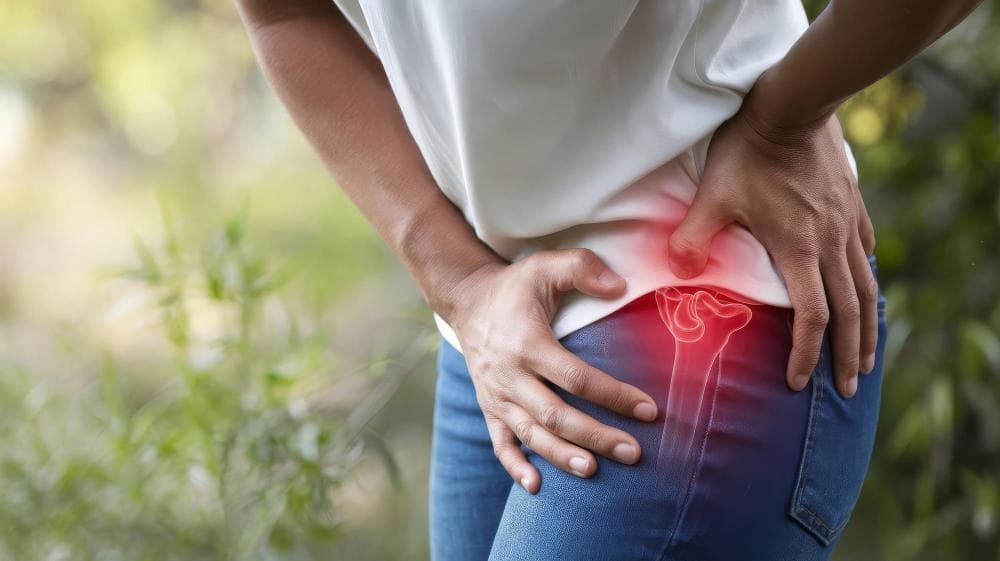
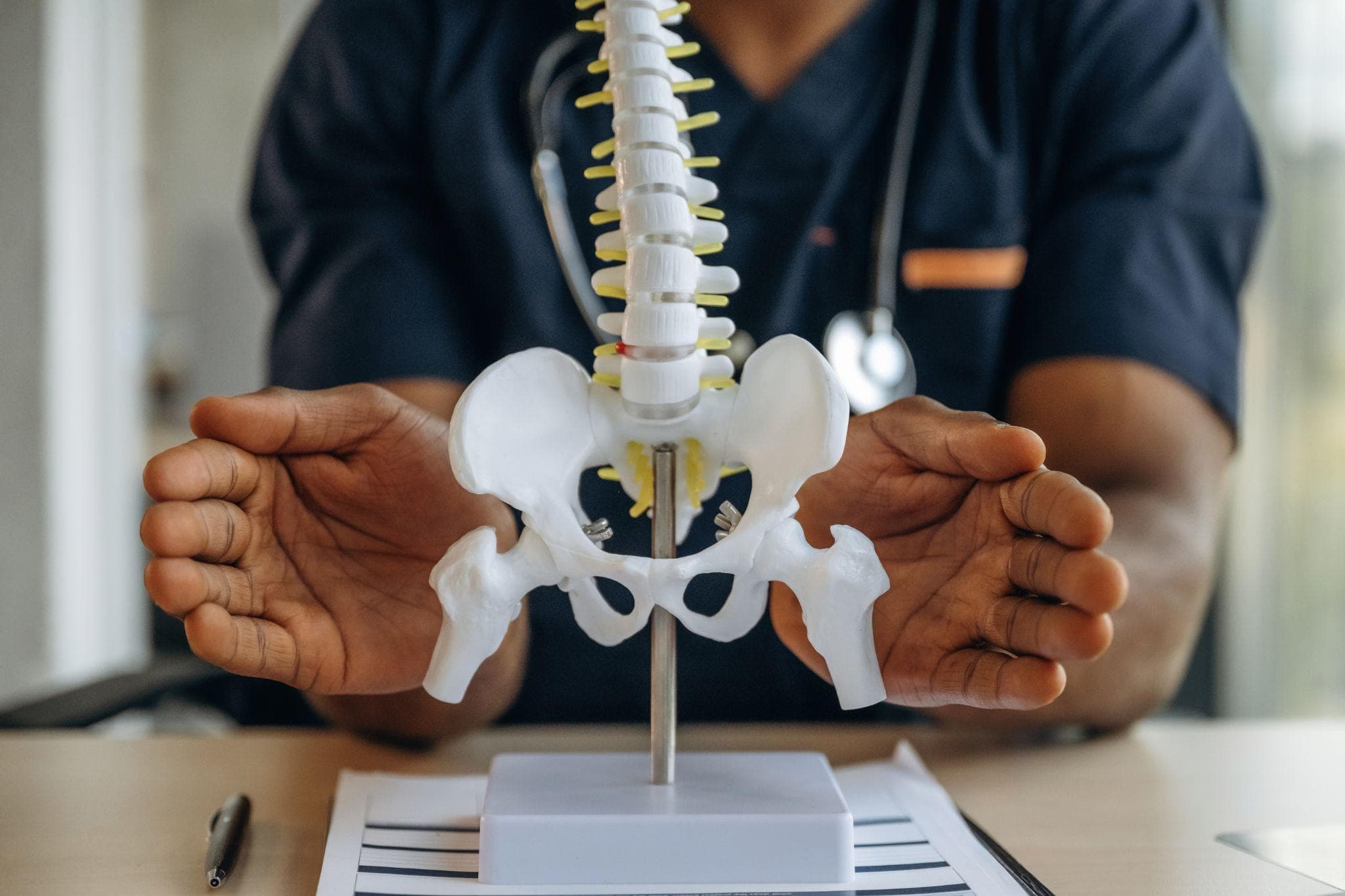
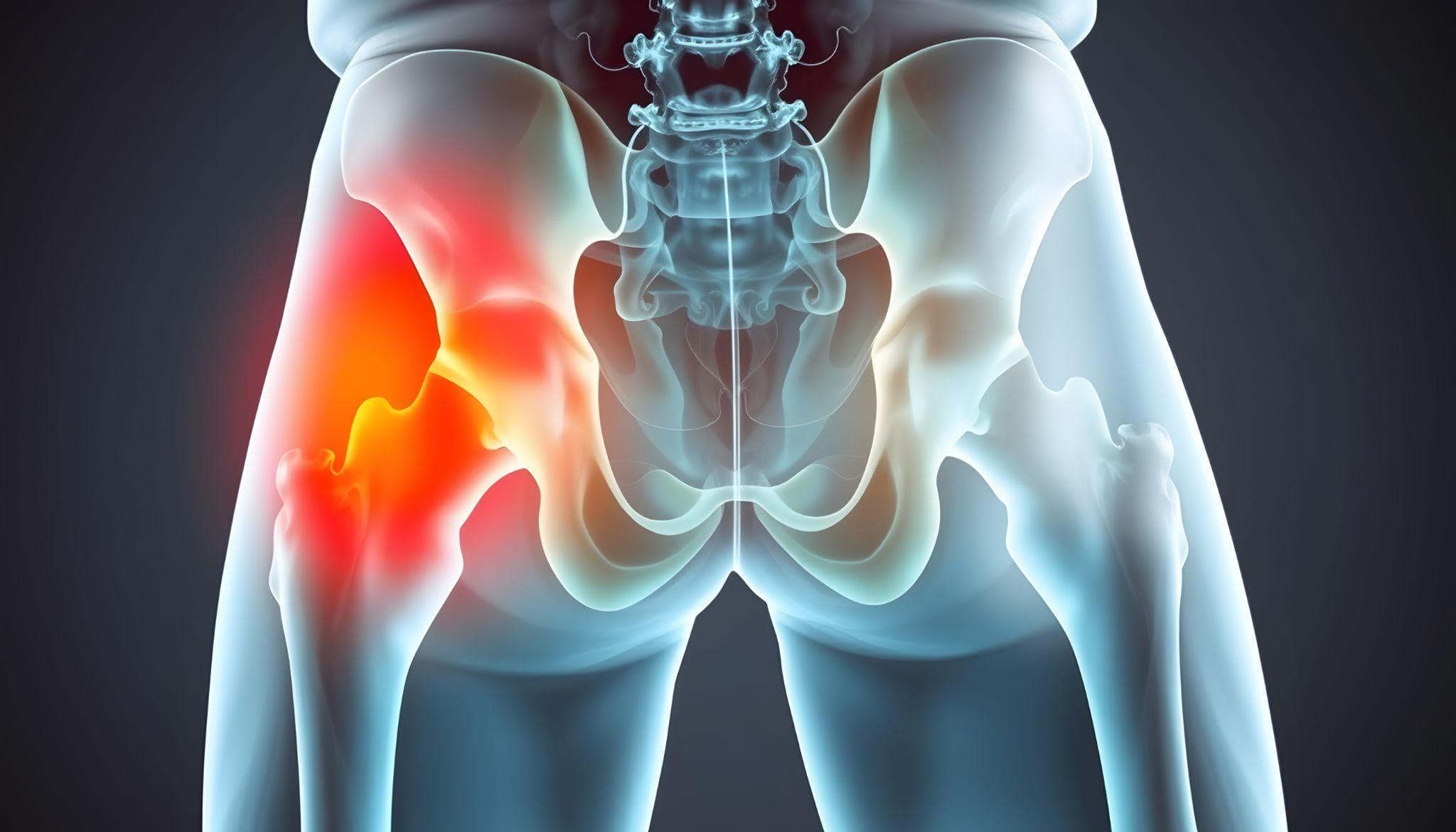
A person's hip is held in both hands; the area where pain is being experienced is highlighted.
Achy hips are more commonly associated with age, but it is not always true. Numerous adults under the age of forty suffer from hip pain, usually from lifestyle issues, an accident, or even underlying health conditions. While this can be due to sitting at a desk for too long, heavy exercising, or just unnoticeable strain, this can greatly affect everyday mobility and quality of life.
In younger adults, hip pain and its causes differ markedly from those in a broader age range. It's usually caused by something different, rather than just wear and tear. The causes are more often related to underlying structural problems or an overstrain on specific muscles. Long-term consequences are the issue when you ignore early symptoms.
It is important to discover the cause of your hip pain to control the symptoms more efficiently and prevent them from escalating to the next stage. In this guide, we are going to investigate some of the most common causes of adult hip pain in adults under forty, and when you might need professional help.
What Causes Hip Pain In Younger Adults?
The cause of hip pain in people younger than 40 is normally associated with body mechanics, the environment, or an injury, instead of degenerative issues. The hip joint, being a complicated mechanism, is protected and assisted by muscles, cartilages and ligaments.
Problems with any part of this mechanism cause pain or discomfort in the hip joint.
The hip joint may become stressed for various reasons, like athletic injuries or sitting for too long, and the early identification of these stresses allows you to be treated efficiently.
Types Of Hip Pain
Hip pain can be divided into certain types by location and cause. Having a sense of what category your pain falls into will help you address your particular issue and to find an effective solution.
1. Location
- Anterior Hip Pain: This is when your pain is felt in the front part of the hip or the groin region. The causes of anterior hip pain are typically in the hip joint itself (such as labral tears, impingement, and osteoarthritis).
- Lateral Hip Pain: This is when pain is felt on the side of the hip, usually caused by problems in the soft tissue surrounding the hip joint (such as bursitis, ITB syndrome, or tendonitis).
- Posterior Hip Pain: The patient typically experiences the pain in the buttock region. It is more often related to a problem in the lower back (such as mechanical low back pain or radiculopathy) or the sciatic nerve, and causes Sciatica.
2. Cause And Duration
- Acute Hip Pain: A short-term, sudden pain that results from trauma or injury.
- Chronic Hip Pain: Long-term hip pain caused over time for one reason or another, such as a condition within the hip or repetitive stress on certain tissues.
- Referred Hip Pain: Pain which is felt in the hip joint but does not actually originate in the hip, and commonly the cause is from the lumbar spine.
All types of hip pain have particular causes behind them, and the understanding and differentiation between these causes is the very first step to solving the problem.
Common Causes Of Hip Pain In Adults Under 40
In adults under the age of 40, hip pain is commonly caused by a muscle strain, injury, or issues relating to your lifestyle, which affects the muscles, the joint, or the surrounding structures.
1. Muscle Strains And Tendon Injuries
This occurs from stretching the muscles and tendons of the hip too far or suddenly when they are tight. Athletes participating in high-impact activities, or those who begin a new form of exercise or physical activity without a proper warm-up, may commonly suffer these issues.
2. Hip Labral Tears
The labrum is a rim of cartilage that acts like a seal around the hip socket. It can tear due to sudden trauma or as a result of repetitive movement over a prolonged period of time. Common signs may be stiffness, pain in the hip, or a clicking or catching sensation.
3. Femoroacetabular Impingement (FAI)
This is a condition in which the bones of the hip do not fit correctly, and friction between them will occur. This may lead to damage to the joint itself and result in chronic hip pain.
4. Bursitis
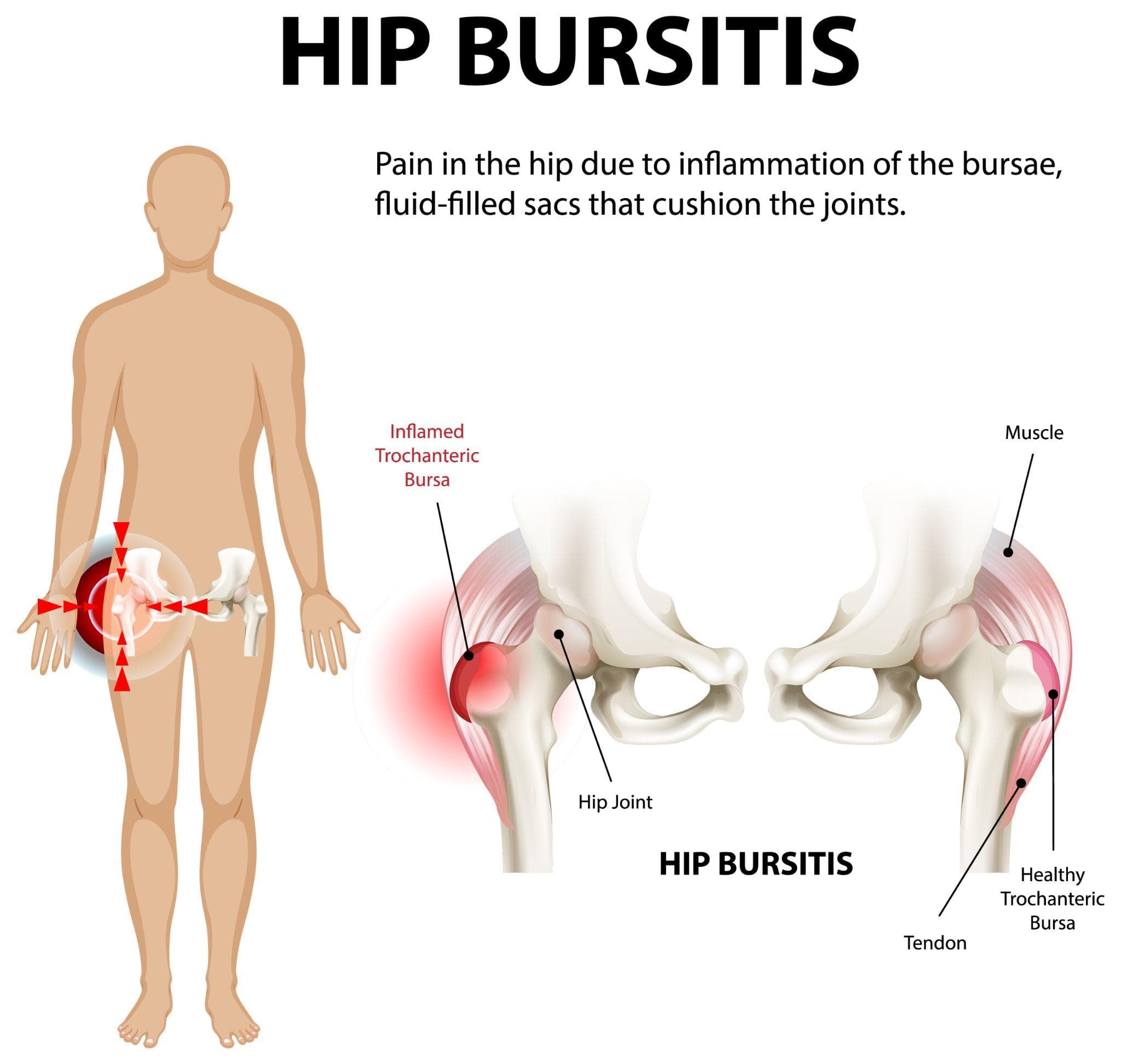
A diagram explaining hip bursitis.
This is where one or more small fluid-filled sacs are irritated around the hip socket, and a sharp pain may occur on the outside of the hip during movement and when lying on that hip during sleep.
5. Tendinitis
Inflammation of tendons due to overuse is common in runners and cyclist and those who spend a long time performing movements that require consistent repetition.
6. Stress Fractures
Small cracks can occur in the hip bone through excessive force on high-impact activities or overtraining. The pain in the hip at first may be small but is aggravated by continued activity and movement.
7. Bad Posture And Sedentary Lifestyle
Spending long hours in a sitting position will contribute to muscle weakness around the hip, and the surrounding structures will shorten. In the long term, the stiffness will then continue.
8. Referred Hip Pain From Lower Back
The pain felt in the hip can often originate from the lower back, for example, from slipped discs and pinched nerves.
Risk Factors That Increase Hip Pain
Risk factors that make young adults more susceptible to hip pain are:
- Lack of physical activity or sitting for extended periods.
- Abrupt rise in training intensity.
- Bad postures while going about normal daily activities.
- Weak core and hip musculature.
- Old injuries that were left untreated.
While it may take time for these risk factors to become symptomatic, it is important to address and modify any identified risks as much as possible.
Symptoms To Watch Out For
Depending on what has caused your hip pain, there will be varying symptoms, which may include:
- Sharp or dull ache around the hip joint.
- The hip may be stiff and have a limited range of movement.
- You will experience pain when walking, running, or sitting down.
- You will be able to hear or feel your hip clicking and locking.
- Pain radiating down your thigh or lower back.
Early recognition of symptoms may avoid further damage to the joint.
When Should You Visit An Orthopedic Doctor?
Hip pain often resolves on its own, in cases where there is consistent pain can mean a condition that needs proper treatment.
- Hip pain is long-lasting. The pain lasts longer than a couple of weeks.
- Difficulty walking, bending, and sitting.
- Hip pain occurred after an injury or accident. E.g. Fall.
- Pain is getting progressively worse, and not better.
Visit an orthopedician, such as Dr. Mayank Chauhan at Noida, to get proper medical care and an accurate diagnosis.
Treatment & Management
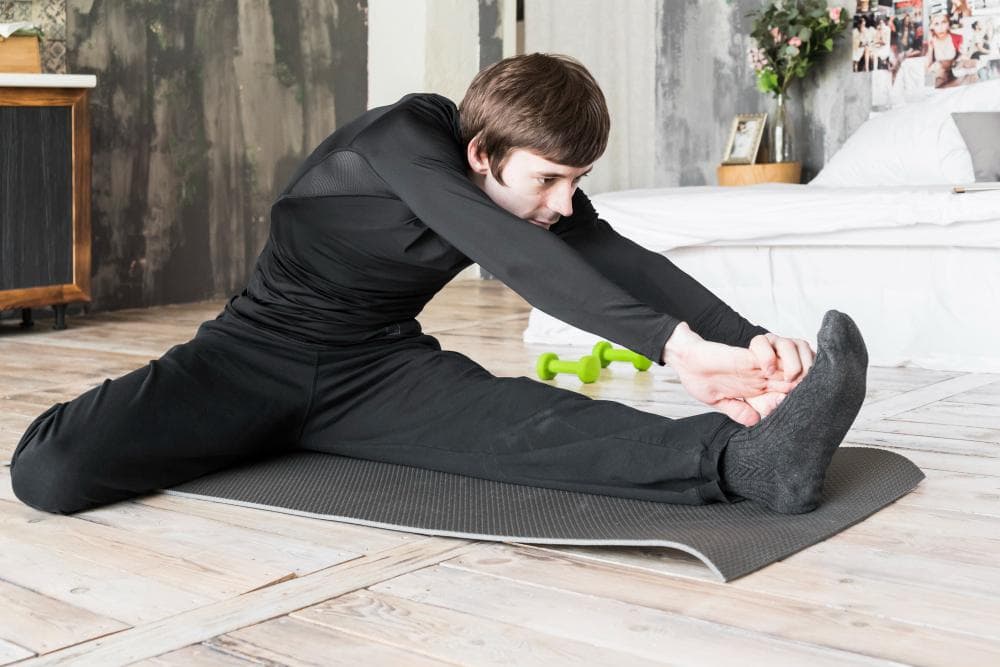
A man stretching his legs and hips on a mat.
Depending on the causes of hip pain, however, the following treatments are usually used:
- Change activities and get good rest from the source that is giving you hip pain.
- Hip muscles can be strengthened, and flexibility increased with exercise and stretching of the muscles surrounding the hip.
- Hip pain can be treated with either ice packs or with prescribed oral medication that can help reduce the pain and inflammation.
- Good sitting, walking position, and staying active will have effects on the hip condition.
- If it is a severe condition, the labral tear or impingement will require surgery.
Final Thoughts
Pain in the hip in under 40 is an increasingly frequent condition and can be attributed to many different problems, ranging from lifestyle, injury, or even an underlying abnormality. It shouldn't be ignored as it will not only lead to the condition and further pain but also to further limitations. As such, the actual condition needs to be treated to obtain much better long-term results.
Most hip problems can be treated successfully if given correct care and treatment, and following a set course of exercises. Dr. Mayank Chauhan in Noida is readily available for expert medical diagnosis and treatment for your individual circumstances.
Frequently Asked Questions (FAQs)
1. In young adults under the age of 40, what is the most frequent reason for pain in the hip?
Muscle and tendon strains from overuse or rapid movements are the most common.
2. Is it possible to cause hip pain from sitting for an extended period of time?
Yes, a sedentary lifestyle can result in muscles that are too weak to adequately support the hip, which results in pain over a period of time.
3. How can I tell if hip pain is severe?
A hip injury may be more serious if it has been present for several weeks, continues to get worse, or does not permit motion.
4. Will a young person's hip pain go away without treatment?
Mild hip pain often remedies itself, but persistent pain generally requires assessment and appropriate medical attention.