Life After Hip Replacement - What to Expect at 3, 6 and 12 Months
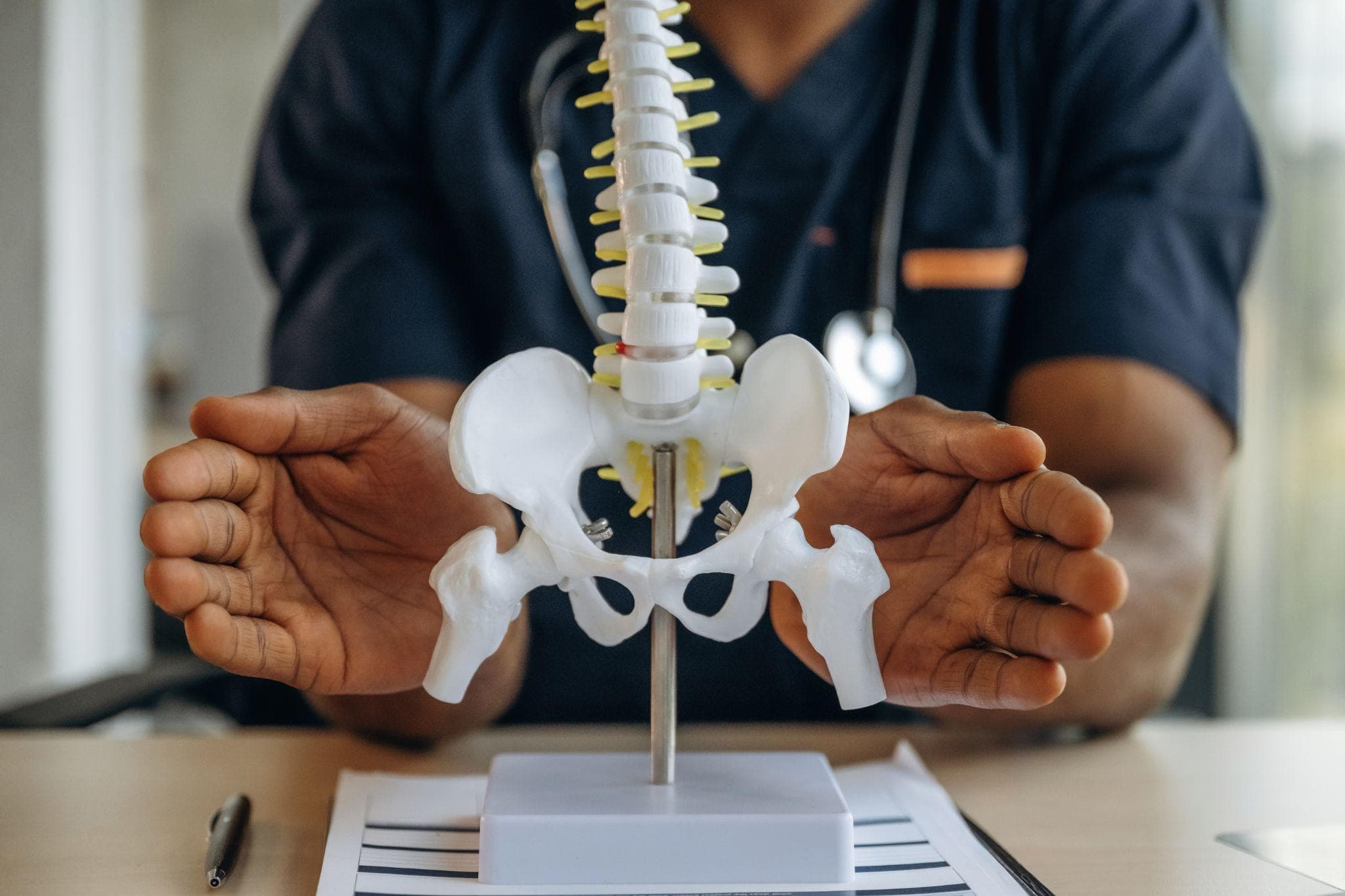
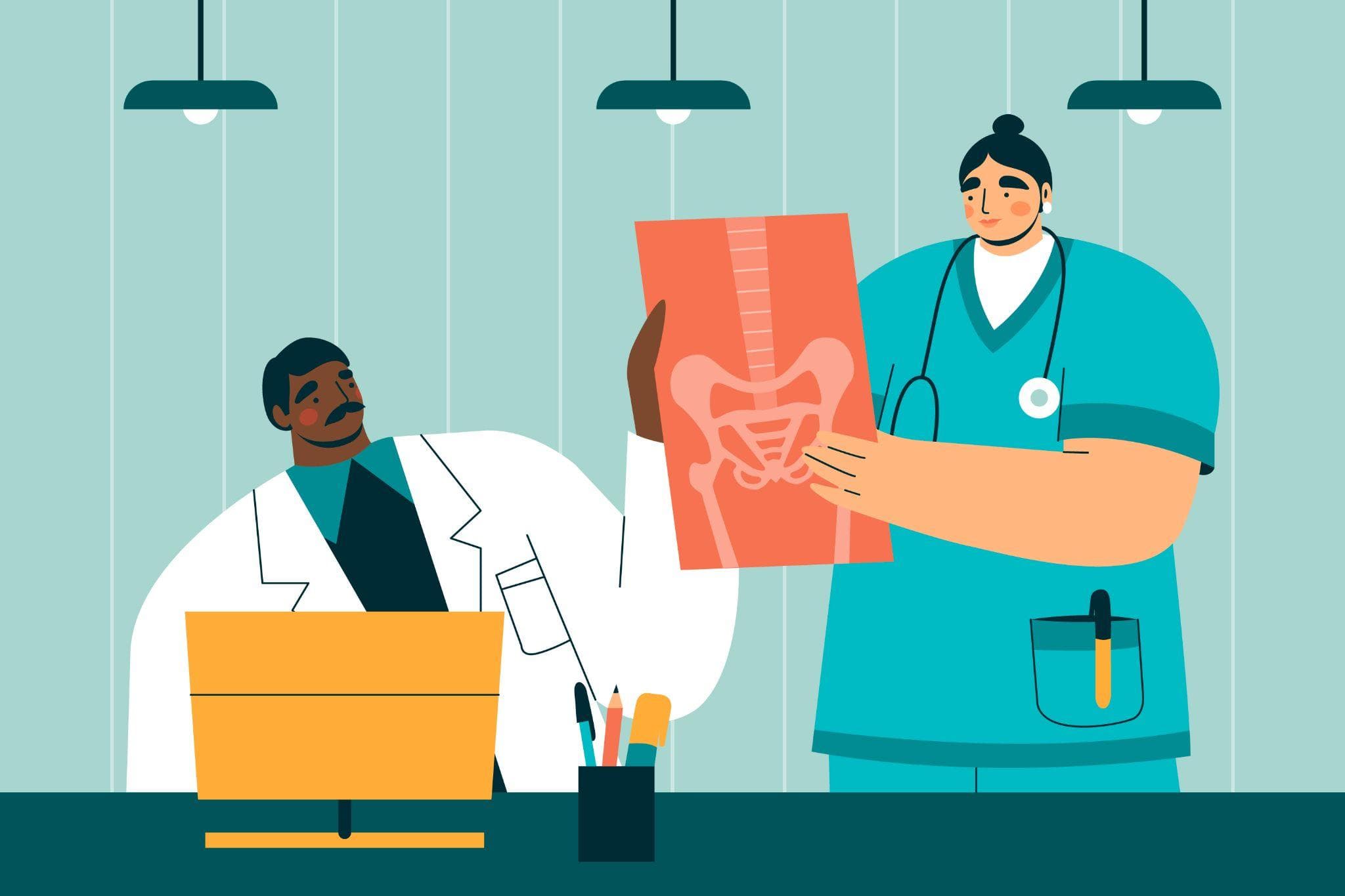
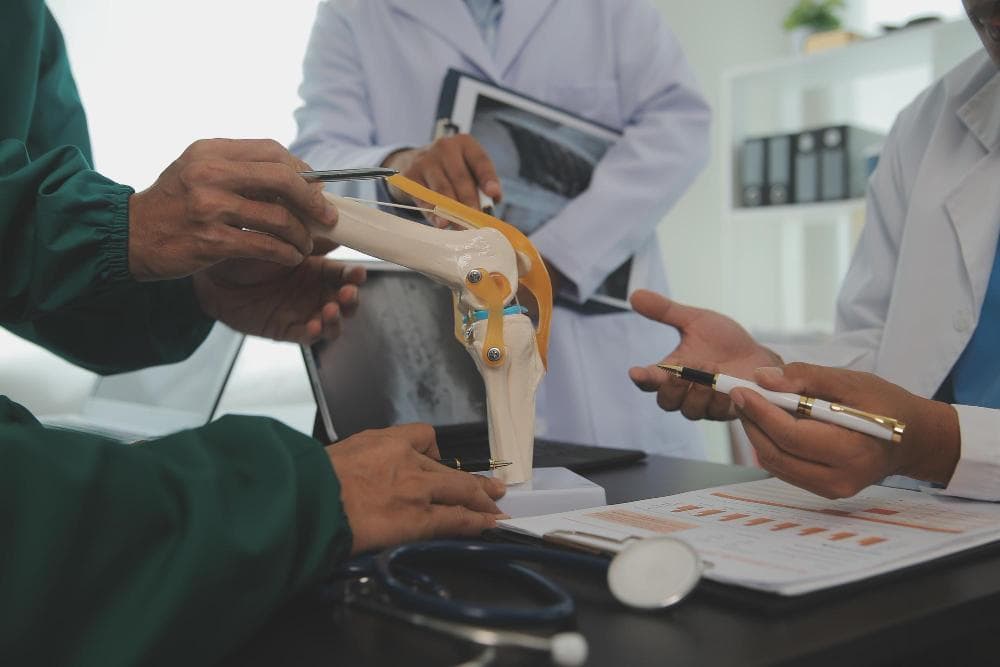
A doctor is presenting a mini model of the spine and hip bones of the body in the clinic.
Hip replacement surgery is, for the vast majority of patients, profoundly life-changing. The pain that had been building for years — the groin ache, the night pain, the limp, the inability to walk across a room without stopping — is typically gone within weeks of surgery. Ninety to ninety-five percent of hip replacement patients report significant pain relief, and most describe it as one of the best decisions they have ever made.
But the journey from surgery to that outcome is not instantaneous. It unfolds over 6–12 months, with specific milestones at each stage. Understanding what those milestones are — what you should be able to do at 3 months, 6 months, and a year — prepares patients and their families for a realistic, achievable recovery and makes the occasional plateau or slow week feel like part of the process rather than a sign that something has gone wrong.
First 48 Hours — Standing Before You Think You Can
Most patients are helped to stand and take their first steps within 24 hours of hip replacement surgery — often on the day of surgery itself, in the late afternoon or evening. This early mobilisation is not optional; it is clinically essential for preventing blood clots, reducing pain through movement, and beginning the neurological retraining that the new hip requires.
What those first steps feel like:
Strange. The hip feels different from any sensation the patient has experienced. The new joint is swollen, the muscles are weak from surgery, and the brain has not yet integrated the new joint's position sense (proprioception). But the pain from the pre-surgical arthritis — the deep groin ache that drove the patient to surgery — is typically already gone.
Hospital stay:
3–5 days in most Indian hospitals. Before discharge, patients are expected to:
- Walk 50–100 metres independently with a frame
- Manage a short flight of stairs (with assistance)
- Know and practise the hip precautions (see below)
- Have their wound in acceptable condition and pain controlled with oral medication
Hip Precautions — The Rules That Protect the New Joint
After hip replacement through the posterior surgical approach (the most common approach in India), specific movement precautions are followed for 6–12 weeks to prevent dislocation while the soft tissue envelope heals and stabilises around the new joint.
The three precautions:
1. Do not flex the hip beyond 90 degrees: The new ball can dislocate if the hip is bent too deeply. Practically: do not sit on low chairs, sofas, or the floor. Do not bend forward to pick objects off the floor. Do not sit cross-legged. Use a raised toilet seat. When putting on footwear, use a long-handled shoehorn — do not bend the hip forward.
2. Do not cross the legs (adduction): The new ball can dislocate if the operated leg crosses the midline. Sleep with a pillow between the knees. When getting out of bed, swing both legs together. Avoid crossing the legs at any time.
3. Do not rotate the foot inward (internal rotation): The operated hip should not be rotated inward — keep the foot pointing straight or slightly outward at all times.
These precautions are mandatory for 6–12 weeks after surgery. After this period, as the hip capsule has healed and soft tissue tension has normalised, the restrictions are progressively lifted based on the surgeon's assessment.
Note: The anterior approach to hip replacement does not require these precautions — the capsule is preserved from a different angle. Ask your surgeon which approach was used and what your specific precautions are.
Weeks 1–6 — Building the Foundation
The Walking Progression
Week 1: Walking with a frame (walker), 5–10 minutes at a time, 3–4 times daily. Focus on the heel-toe pattern — heel lands first, the step rolls through, the toe pushes off. This correct pattern prevents limping habits from becoming permanent.
Week 2: Walking distances increase to 15–20 minutes. Most patients begin the transition from frame to a walking stick (held in the hand opposite the operated hip) around Week 2–3.
Week 3–4: Stick only, walking 20–30 minutes at a stretch. Managing stairs independently with the correct technique (up with the good leg, down with the operated leg).
Week 4–6: Most patients are walking without any aid for indoor activities, using a stick only for outdoor or prolonged walking. Walking 30+ minutes becomes comfortable.
Key Exercises in Weeks 1–6
The physiotherapy programme in this phase builds hip strength progressively:
- Ankle pumps: Every waking hour — prevents DVT
- Quad sets and straight leg raises: Maintain thigh muscle activity
- Heel slides: Gentle hip flexion in lying — within precaution limits
- Hip abduction: Lying on back, sliding operated leg outward — strengthens gluteus medius (essential for gait stability)
- Standing hip exercises: Gentle hip extension and abduction in standing — progressed as strength improves
DVT Prevention
Blood-thinning medication (injections or tablets) continues for 2–4 weeks after discharge. Compression stockings are worn during waking hours. Ankle pumps are performed every 30–60 minutes when resting. Any calf pain, swelling, or redness should be reported immediately.
Swelling
Hip swelling is expected and peaks around Days 7–14. Ice (wrapped in cloth) applied for 15–20 minutes after exercise sessions significantly reduces swelling and pain. Elevating the leg — sitting or lying with the leg raised above heart level — when resting helps drain excess fluid.
At 3 Months — The Functional Threshold
Three months is the milestone that most patients look forward to, and in most cases, it genuinely delivers.
What most patients can do at 3 months:
- Walk 30–45 minutes on flat surfaces without stopping and without a walking aid
- Climb stairs normally (alternating feet), using a handrail for confidence rather than necessity
- Drive (confirmed with surgeon — typically cleared 4–6 weeks post-operatively for right hip, sooner for left hip with automatic transmission)
- Return to desk work (most desk workers return at 4–6 weeks; by 3 months, this is well-established)
- Shop, cook, attend social functions, travel by car
- Sleep without significant hip pain disturbing rest — night pain from the arthritis is gone; residual surgical discomfort settles within 6–8 weeks
- Sit comfortably on standard chairs for prolonged periods
What the hip feels like at 3 months:
Significantly better than before surgery — most patients report that the pre-surgical groin pain is gone. However, the hip does not yet feel completely natural. There is still some sensation of the new joint, occasional stiffness with prolonged sitting, and sometimes awareness of the implant with certain movements. This is normal — the brain is still integrating the new joint, and the surrounding muscles are still strengthening.
Pain scores at 3 months:
Studies consistently show that 90–95% of patients report significant pain relief from their pre-surgical baseline by 3 months. Functional recovery reaches 70–80% of eventual maximum at this stage.
Hip precautions:
Most surgeons lift the formal hip precautions at 6–12 weeks — confirmed at the 3-month review. This allows patients to return to sitting on lower surfaces, bending more freely, and gradually resuming activities that require greater hip flexion.
At 6 Months — Near-Complete Recovery
By 6 months, most patients have crossed into full functional recovery for the vast majority of daily activities.
What most patients can do at 6 months:
- Walk any distance they desire on flat surfaces, comfortably and without any walking aid
- Climb hills and inclines with confidence
- Travel — including air travel (most surgeons advise avoiding long-haul flights for 12 weeks due to DVT risk; by 6 months, this restriction is lifted)
- Return to social exercise: swimming (cleared from approximately Month 3), outdoor cycling (Month 3–4), gentle yoga, golf
- Resume light sports and recreational activities with low impact
- Sleep in any comfortable position — including (for many patients) on the operated side, though this may take longer to feel comfortable
- Sit on standard Indian furniture, including low sofas, with the hip precautions now lifted
Swelling:
By Month 4–5, swelling is minimal during routine activities. By Month 6, most patients report the hip feels comfortable after a full day of activity.
Muscle strength:
The hip abductors (gluteus medius and minimus) and extensors (gluteus maximus) have significantly recovered, eliminating the Trendelenburg gait (the pelvic dip during walking that characterises hip muscle weakness). Walking pattern has normalised for most patients.
The Indian lifestyle question:
One of the most common questions from patients in Noida is about activities specific to Indian daily life — sitting cross-legged on the floor, using a squat (Indian-style) toilet, performing namaz (prayer positions), and sitting on low charpoys or chatais.
Honest guidance:
Sitting cross-legged (padmasana/sukhasana) and using Indian-style squat toilets require hip flexion beyond 90 degrees combined with external rotation — movements that place the new hip in positions associated with dislocation risk, particularly in the first 6 months. After 6–12 months, with full soft tissue healing and surgeon confirmation, many patients gradually return to these positions. However, the degree to which this is comfortable and safe varies with the specific implant design, surgical approach, and individual anatomy. This discussion should happen specifically with your surgeon at the 3-month and 6-month review appointments.
At 12 Months — Maximum Recovery Achieved
By 12 months, 95% of patients have achieved their maximum functional outcome from hip replacement. Further improvement from 12 months onwards is minimal — the recovery is essentially complete.
What life looks like at 12 months:
- The new hip functions as a natural part of the body — patients report moving without thinking about the hip
- Walking any distance, climbing stairs, getting in and out of cars, and sitting in various positions are all unconsidered activities
- The pre-surgical pain is gone — completely, in most cases
- Energy levels have recovered — the chronic pain and sleep disruption of advanced hip arthritis take a significant toll on energy, and its resolution is felt globally
What doesn't change — permanent activity considerations:
- High-impact activities (running on hard surfaces, contact sports, jumping) are permanently avoided to protect the implant from wear and loosening
- Running is not recommended after most conventional hip replacement designs
- Low-impact activities (swimming, cycling, walking, golf, doubles tennis, yoga) are appropriate lifelong activities
- Annual follow-up appointments should continue indefinitely — X-rays assess implant position and wear over time
Implant longevity:
Modern hip replacement implants are expected to function for 15–25 years in most patients. For a 65-year-old patient, this likely means the implant lasts for the rest of their life. For a 50-year-old, revision surgery in the late 60s or 70s is a realistic possibility — which is why the bone-preserving approach of hip resurfacing (for appropriate candidates) is relevant.
Hip Replacement Recovery in Noida — Dr. Mayank Chauhan at Prakash Hospital
Dr. Mayank Chauhan, Senior Orthopedic Surgeon at Prakash Hospital, Sector 33, Noida, performs total hip replacement and guides every patient through a structured recovery pathway — from the first postoperative day through to the 12-month review and beyond.
Follow-up appointments are structured according to the recovery milestones: 2 weeks (wound review), 6 weeks (hip precaution review), 3 months (functional assessment), 6 months (return to full activity clearance), and 12 months (annual review).
For patients in Noida and Greater Noida who are in recovery and uncertain about their progress, or considering hip replacement and wanting to understand the full recovery commitment, a consultation provides specific, personalised guidance. To book a consultation, call the number listed on the website.
The Bottom Line
Hip replacement recovery follows a predictable trajectory: walking from Day 1, independence at 4–6 weeks, full daily function at 3 months, near-complete recovery at 6 months, and maximum outcome by 12 months.
The surgery takes 1–2 hours. The recovery takes 6–12 months. The relief — from the pain that may have been building for years — typically lasts 15–25 years.
For most patients, it is one of the best decisions they have ever made. To consult Dr. Mayank Chauhan, Senior Orthopedic Surgeon in Noida, call the number listed on the website.