What Is Hip Replacement Surgery? A Complete Patient Guide
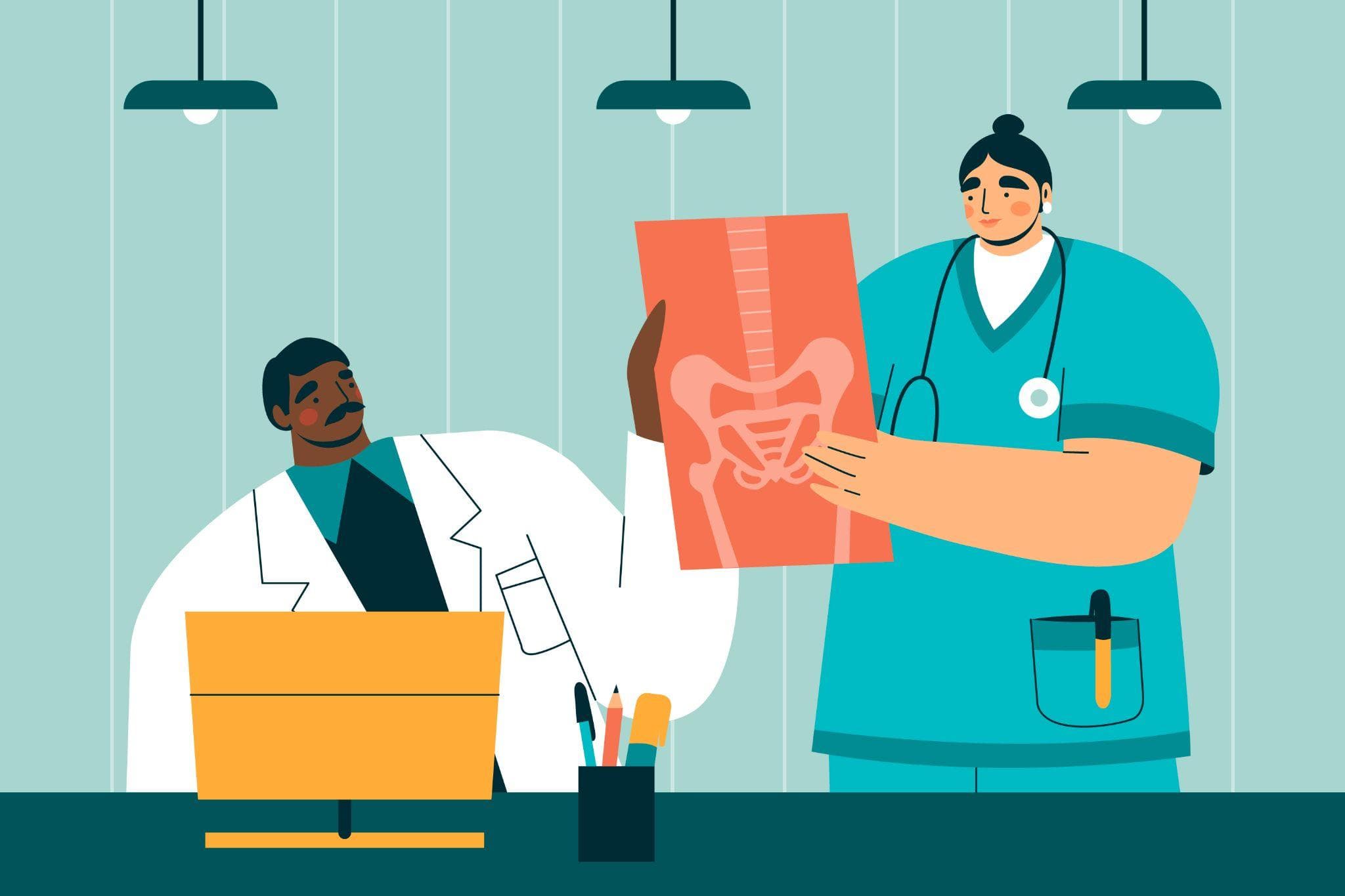
An illustration showing a doctor and a nurse holding a hip X-ray.
Hip pain can sneak up on you and throw your whole routine off. Walking feels like a chore, stairs become this huge hurdle, and even sitting gets uncomfortable after a while. When painkillers, physio, and those little adjustments stop helping, hip replacement surgery starts to make sense.
The surgeon takes out your damaged hip joint and puts in a new one, usually made of metal, ceramic, or strong plastic. The goal’s pretty simple: less pain, easier movement, and a better shot at getting your life back on track. Doctors usually recommend it if you’re dealing with serious arthritis, major joint damage, or a fracture that just refuses to heal.
You don’t have to just deal with the pain forever. With the right treatment, you can move the way you want again and actually enjoy the things you love. This guide walks you through what causes hip problems, what hip replacement surgery involves, what recovery looks like, and when it’s time to talk to an orthopedic specialist.
What Is Hip Replacement Surgery?
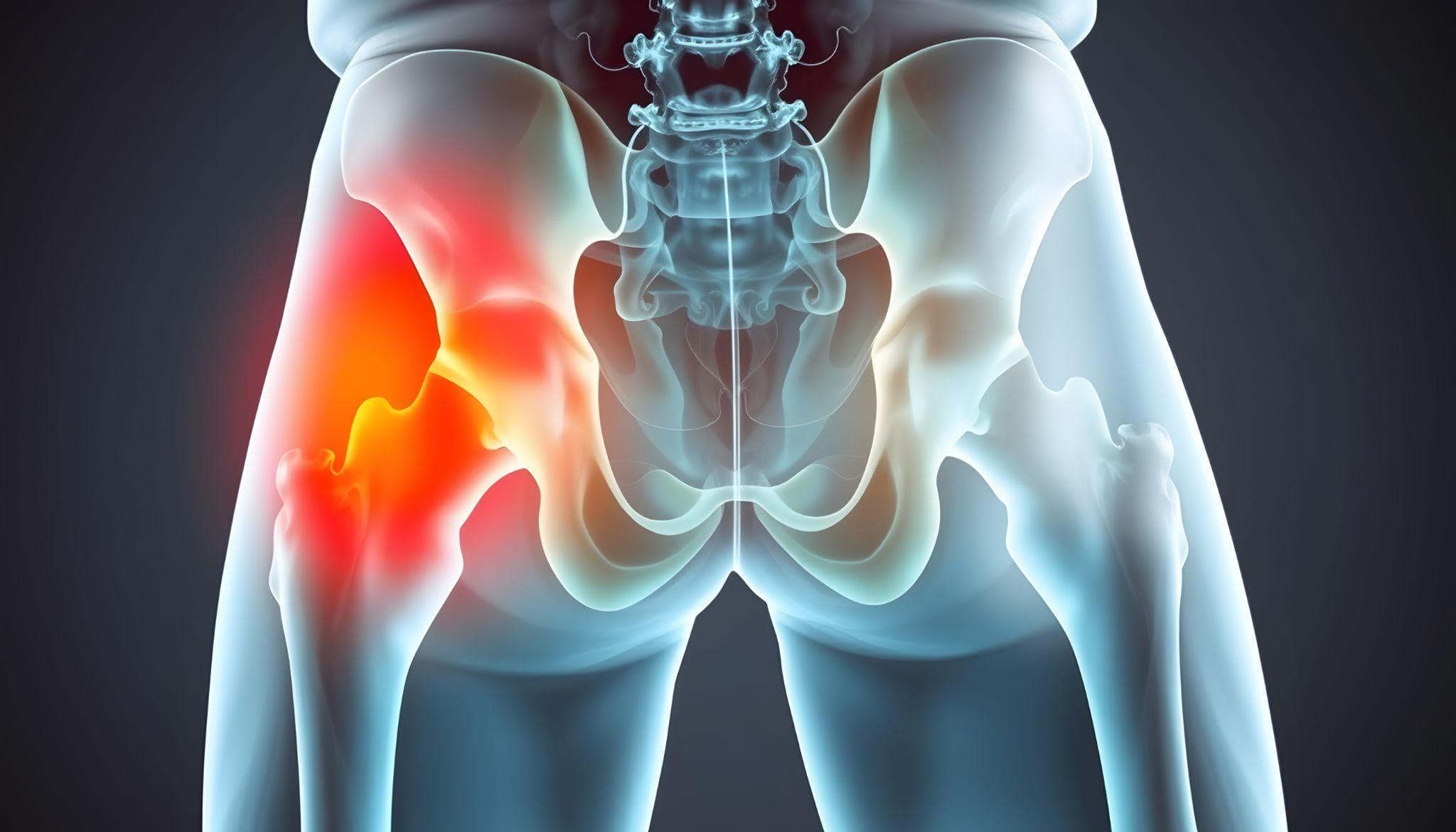
Basically, doctors remove the worn-out or damaged parts of your hip and swap them out for new ones. Your hip’s a ball-and-socket joint: the “ball” is the top of your thigh bone (the femur), and the “socket” is part of your pelvis.
Over time, stuff like arthritis or injuries can wear that joint down. The smooth cartilage that’s supposed to help everything glide breaks down, and suddenly, you’re stuck with pain, stiffness, and way less movement than before.
During hip replacement, the surgeon gets rid of the bad bone and cartilage and fits you with artificial parts that work together smoothly. You get back the ability to move, you lose a lot of the pain that’s been holding you back.
Why Do People Need Hip Replacements?
Doctors usually suggest hip replacement when
- The hip pain gets so bad that it starts to mess with everyday life.
- You notice it won’t let up, even when you’re resting.
- You’re feeling more stiff than usual, like you just can’t move the way you used to.
- Medications stop working, and even physiotherapy doesn’t do the trick anymore.
Conditions Leading To Hip Replacement
Here’s what’s behind most hip replacements:
1. Osteoarthritis
This is the big one. Over time, it wears away the cartilage in your hip, leaving bone rubbing on bone.
2. Rheumatoid Arthritis
Here, your immune system attacks your joints, causing damage and pain.
3. Hip Fracture
A really bad fracture can make replacing the whole joint the best option.
4. Avascular Necrosis
When your hip doesn’t get enough blood, the bone starts to die off. That’s when doctors step in with a replacement.
In short, when pain and stiffness take over, and nothing else helps, hip replacement offers people a way to get their lives back.
Types Of Hip Replacement Surgery
Hip replacement surgery isn’t a single solution for everyone. Surgeons pick the best approach based on how much damage your joint has and your general health.
1. Total Hip Replacement (Total Hip Arthroplasty)
In a total hip replacement, the surgeon takes out both the bad parts of your hip joint, the ball at the top of your thigh bone, and the socket in your pelvis. They get rid of the damaged bone and cartilage, then put in new artificial pieces. These replacements are usually made from metal, ceramic, or sturdy plastic.
This is the most common hip replacement. Doctors usually recommend it if you’ve got severe:
- Osteoarthritis
- Rheumatoid arthritis
- Advanced joint damage
- If you’re dealing with constant pain and stiffness.
Total hip replacement is the standard for pain relief. Most people move better, feel less pain, and get back to their normal lives pretty quickly. These new joints usually last 15 to 20 years, sometimes even longer, especially if you take care of your bones and stay active.
2. Partial Hip Replacement (Hemiarthroplasty)
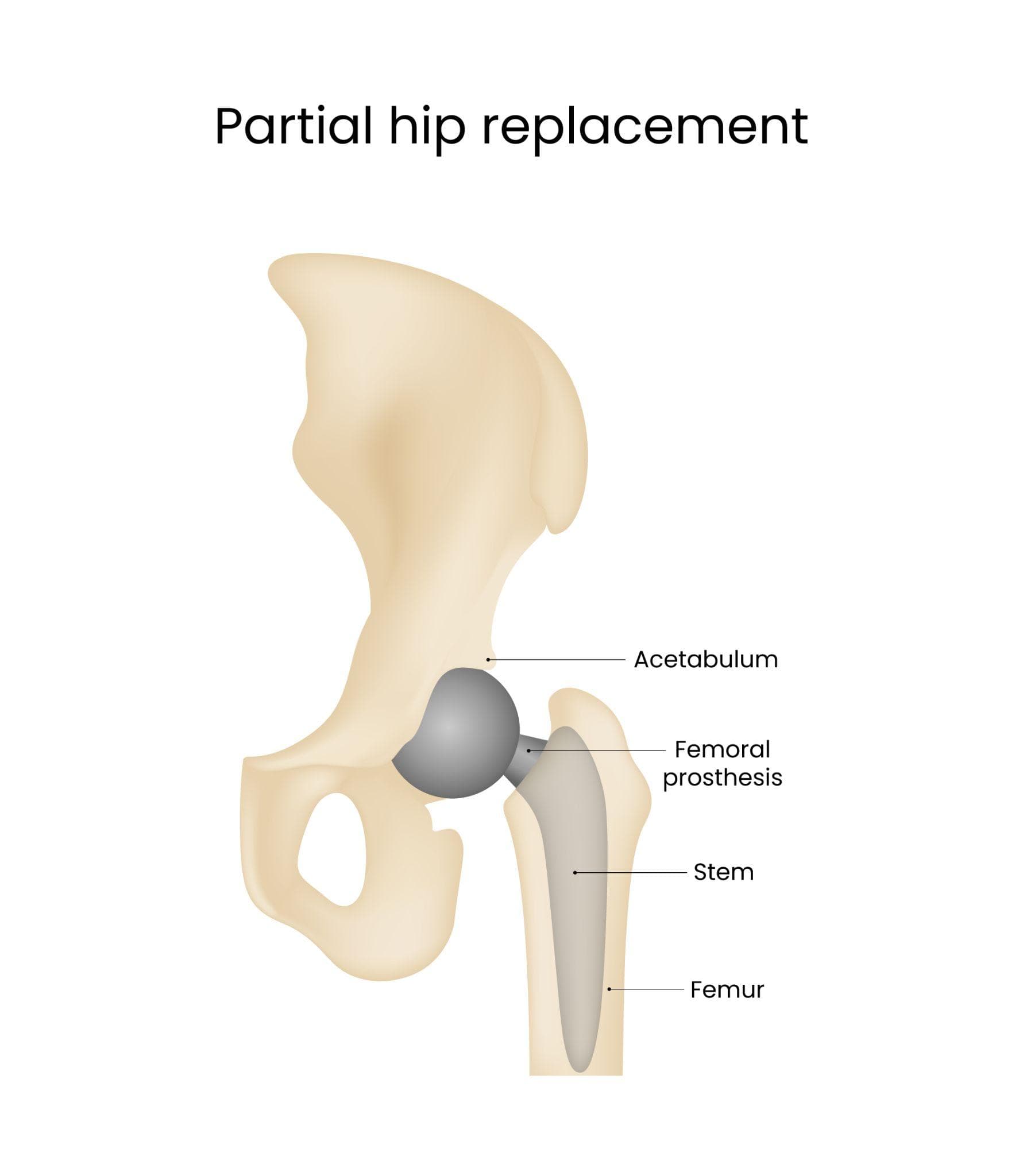
An anatomy of partial hip replacement.
Partial hip replacement is a bit different. The surgeon only replaces the ball part of the joint and leaves your natural socket alone. Doctors often suggest this for certain.
- Hip fractures, especially in older adults.
- When the socket is still in good shape.
- The damage is limited to the ball.
Partial replacement is a simpler surgery and usually takes less time. Still, it’s not an option if the socket has arthritis. Leaving a damaged socket behind just keeps the pain going.
3. Hip Resurfacing
Hip resurfacing is all about saving bone. Instead of removing the whole femoral head, the surgeon trims and caps it with a smooth metal cover and adds a metal cup to the socket.
This approach usually fits.
- Younger and active people.
- People with strong, healthy bones.
- If someone needs another surgery later on.
Because it preserves more bone, hip resurfacing can boost joint stability and lower the risk of dislocation for the right patients. But it’s not for everyone. If you have weak bones or osteoporosis, this isn’t the best route.
Picking the best surgery depends on a few things: your age, bone strength, how much joint damage you have, your activity level, and your overall health. An orthopedic specialist will weigh all these factors, do a physical exam, look at your scans, and help you decide which option fits you best.
If you want advice that fits your situation, reach out to Dr. Mayank Chauhan in Noida. It’s a great way to take charge of your recovery and long-term joint health.
How Hip Replacement Surgery Is Performed
First, you'll get either spinal or general anesthesia. The whole thing usually takes around one to two hours.
- The surgeon starts by making a cut near your hip.
- Then, they take out any damaged bone and cartilage.
- After that, they get the hip socket ready and fit it with a new artificial cup.
- Next, they put a metal stem into your thigh bone, and a new ball goes on top of that stem.
- The surgeon moves your hip around a bit to make sure everything works smoothly.
- When they're happy with the movement, they close up the incision.
With today’s techniques, the cuts are smaller, and you bounce back faster than people did in the past.
Key Benefits Of Hip Replacement Surgery
Hip replacement surgery turns things around. Suddenly, the pain that used to follow you everywhere is gone. You start moving like yourself again, and daily life just feels easier.
1. Pain Relief
The real game-changer? No more nagging pain. You can finally relax.
2. Improved Mobility
Walking, climbing stairs, taking care of things around the house—it all feels doable again.
3. Better Quality Of Life
You sleep through the night, you’re more independent, and every day moves don’t feel like a struggle.
4. Long-Lasting Results
Take care of your new hip, and it’ll keep up with you for 15 or even 20 years, sometimes longer.
Recovery After Hip Replacement
Everyone bounces back at their own pace, but most people are up and walking with some help in a day or two.
1. Hospital Stay
Plan on spending about 2 to 4 days in the hospital.
2. Physiotherapy
Physical therapy matters a lot. The exercises get your strength and movement back, plus they keep your joints from getting stiff and lower the risk of blood clots.
3. Getting Back To Normal
You’ll probably start light activities in about 3 to 6 weeks. Driving comes a little later, usually 4 to 6 weeks, once your doctor says it’s safe. Full recovery takes longer, anywhere from 3 to 6 months.
Stick to your rehab plan. It really makes a difference.
Risks And Complications
Every surgery comes with some risks, and hip replacement is no different. You can face:
- Infection
- Blood clots
- Issues like the implant loosening or popping out of place.
- Nerve injuries are rare, but they do happen sometimes.
The good news? With a skilled surgeon and the right rehab, most people don’t run into serious problems.
When To See An Orthopedic Specialist
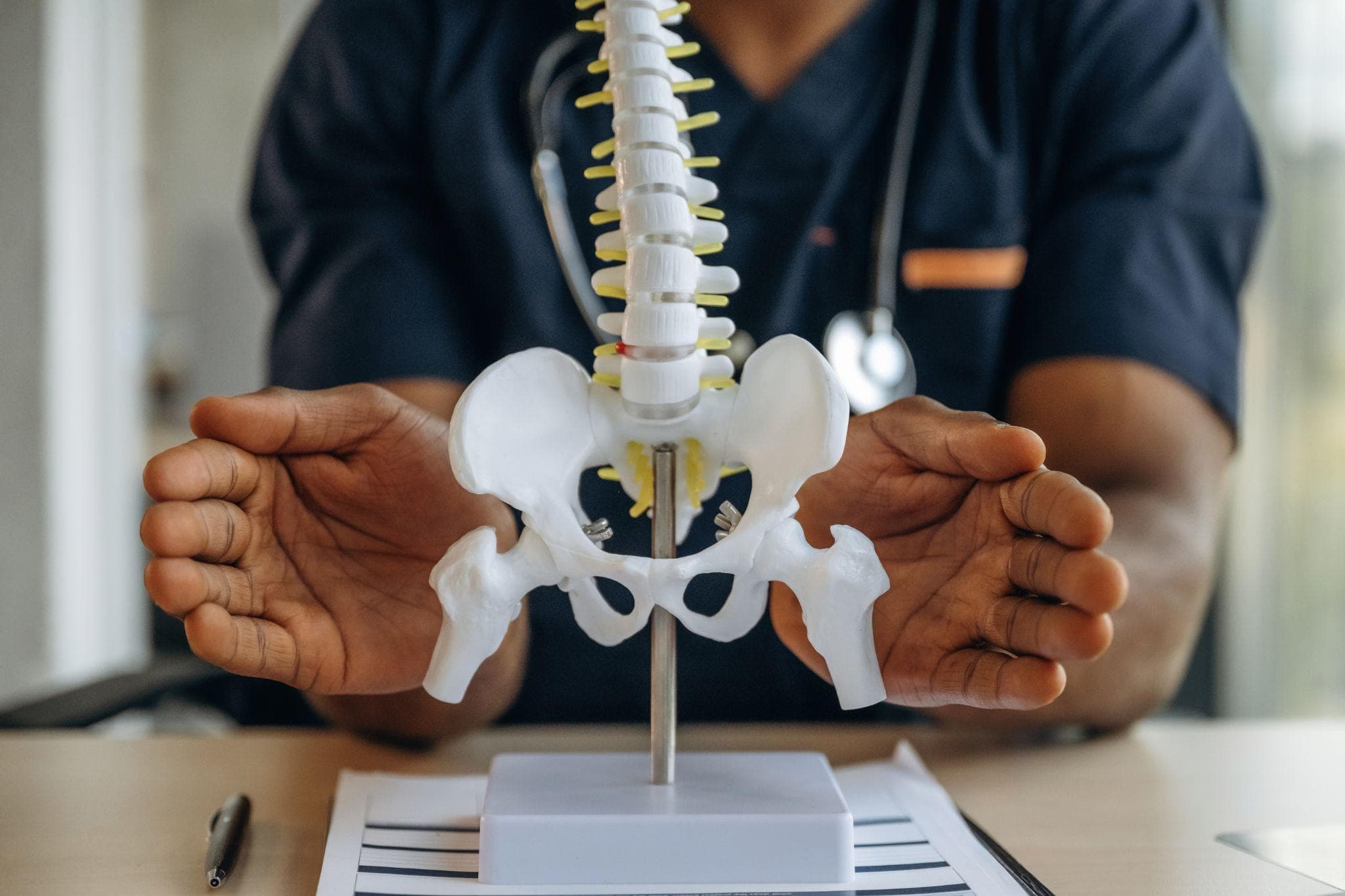
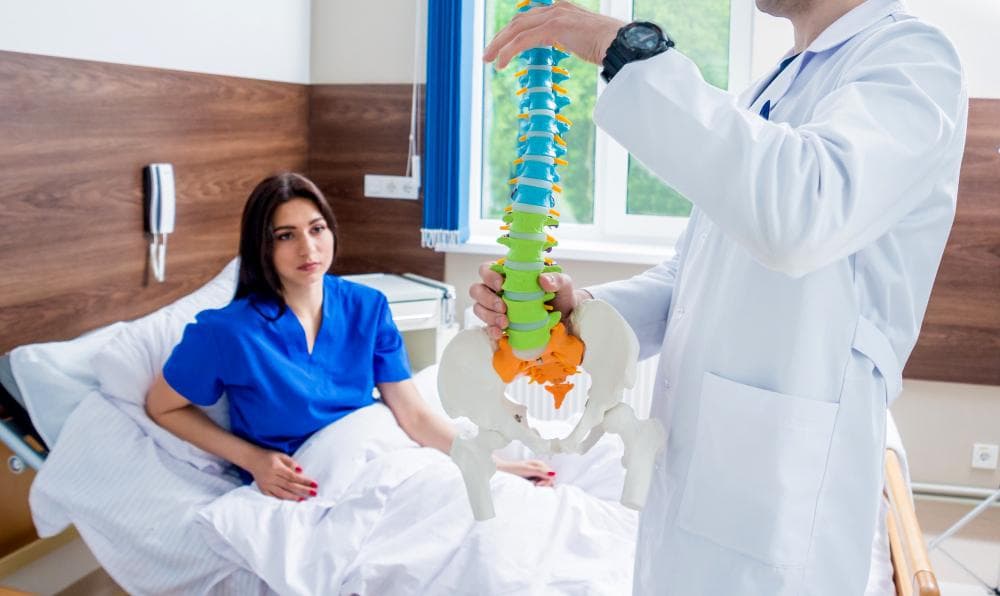
A doctor is showing a mini model of the spine and hip bones.
Don’t wait too long to get checked out. If your hip pain hangs around for weeks, makes walking tough, keeps you up at night, or you feel stiff just getting through your day, it’s time to see an orthopedic doctor. If things like medicine or physical therapy just aren’t working anymore, don’t put it off. Getting help early can stop your joints from getting worse.
Final Thoughts
It’s about getting your life back, walking without thinking, feeling steady, and doing what you love again. When you push through serious hip pain, you’re not just being tough; you’re missing out on the stuff that matters, those simple, everyday moments.
If you’re in Noida and looking for real solutions, Dr. Mayank Chauhan offers more than just surgery. He takes the time to understand your needs, plans your treatment with care, and focuses on every step from the operation to rehab and beyond, so you stay healthy for the long haul.
Catching hip problems early, picking the right surgical plan, and sticking with proper care after surgery are the keys. That’s how people get back on their feet, active, and living without pain.
Frequently Asked Questions (FAQs)
1. Who needs hip replacement surgery?
If your hip pain, arthritis, or a bad fracture makes daily life a struggle and nothing else helps, hip replacement could be what you need.
2. How long does recovery take?
You’ll probably be on your feet in a day or two. Getting all your strength and movement back usually takes three to six months.
3. How long do hip implants last?
Take care of your new hip, and it’ll last 15 to 20 years, sometimes even more.
4. Is hip replacement surgery safe?
Yes, it’s a safe and common procedure. Most people do really well.
5. Is physiotherapy required after surgery?
Definitely. Physiotherapy gets your strength back and helps you move right again.