Cervical Spondylosis - Neck Pain, Arm Tingling, And What An Orthopedic Surgeon Does About It?

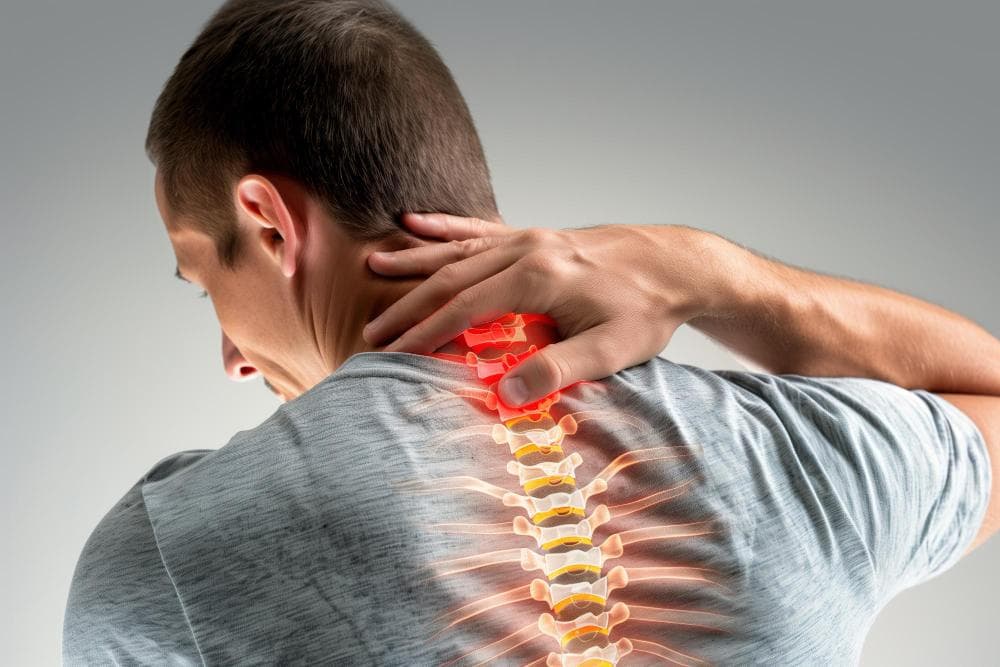
Man sitting at a desk holding his neck, showing discomfort from cervical neck pain.
Noida is a city of desks and screens. The IT parks of Sectors 62, 63, and 125. The call centres run through the night. The co-working spaces in Noida Extension. The home offices, the laptop on the sofa, the tablet propped on a pillow, and the phone held for hours with the neck bent forward.
Cervical spondylosis, arthritis of the neck, is the price the cervical spine pays for all of that. It is one of the most common conditions presenting to orthopedic clinics across Noida and Delhi NCR, and it is becoming more common in younger age groups as screen use increases.
More than 85% of adults over 60 have some degree of cervical spondylosis on imaging. But increasingly, patients in their 30s and 40s are presenting with symptoms, the timeline accelerated by the combination of prolonged desk work, forward head posture, and physical inactivity. This guide explains what cervical spondylosis is, why it happens in Noida's working population, what the symptoms are (including when arm tingling and weakness mean something more serious), and what the full treatment pathway looks like.
What Is Cervical Spondylosis?
The cervical spine consists of seven vertebrae (C1–C7) in the neck, connected by intervertebral discs, facet joints, and ligaments. This structure must be simultaneously stable (supporting the weight of the head, approximately 5 kg) and highly mobile (allowing the head to turn, tilt, and bend through a wide range of motion). Cervical spondylosis is the umbrella term for age-related degenerative changes in this structure:
Disc degeneration: The discs between cervical vertebrae lose water content and height over time; they dehydrate and become less effective as shock absorbers. As height is lost, the disc space narrows.
Osteophyte formation: As discs degenerate and space is lost, the body attempts to compensate by forming bone spurs (osteophytes) around the disc margins. These are visible on X-ray as bony projections and can narrow the space available for exiting nerve roots or, in severe cases, compress the spinal cord itself.
Facet joint arthritis: The small joints at the back of the cervical vertebrae develop osteoarthritis, cartilage breaks down, the joint surfaces roughen, and the joints stiffen and become painful.
Ligament thickening: The ligamentum flavum (a ligament running along the back of the spinal canal) can thicken with degeneration, further reducing the space available within the canal.
All of these changes happen gradually; most people develop them to some degree by their 50s and 60s. The question is whether these changes produce symptoms, and how severe those symptoms are.
Why Noida's Desk Workers Are Getting It Earlier?
The natural degenerative process of cervical disc and joint ageing is significantly accelerated by:
Forward head posture: For every inch that the head moves forward of its neutral position (directly above the shoulders), the effective weight it places on the cervical spine increases dramatically. At a 45-degree forward tilt, roughly the angle at which people look at a smartphone in their lap, the cervical spine is bearing approximately 22 kg of effective load. Hours of this, daily, over years, accelerate disc degeneration.
Prolonged static posture: The cervical spine functions best with regular movement. Sitting in the same position for hours without moving, no neck rotation, no position change, causes the muscles to fatigue and the joints to stiffen. The discs, which receive their nutrition through movement and load variation, are deprived of adequate circulation.
Sedentary lifestyles: Weak cervical muscles provide less support to the spine, placing more load on the discs and joints. Core and cervical muscle strengthening significantly reduces this mechanical vulnerability.
Improper workstation setup: A monitor that is too low forces the neck to flex. One that is too high forces hyperextension. Screens positioned off to one side force sustained rotation. These are mechanical stresses that accumulate.
Symptoms - From Simple Neck Ache To Something More Serious
Cervical spondylosis produces a spectrum of symptoms depending on the degree of degeneration and what structures are being affected.
1. Axial Neck Pain (Most Common)
The most straightforward presentation: pain in the neck itself, often with stiffness and reduced range of motion. Typically:
- Dull, aching quality sometimes described as pressure or tightness.
- Worse with prolonged static posture (long screen sessions), first thing in the morning, and after looking down for extended periods.
- Better with movement, warmth, and changing position.
- Often associated with headaches at the base of the skull (cervicogenic headache) caused by irritation of the upper cervical facet joints.
- Cracking or grinding sounds (crepitus) when turning the head from facet joint arthritis.
2. Cervical Radiculopathy (Nerve Root Compression)
When osteophytes or disc herniation narrow the foramen (the opening through which nerve roots exit the spinal canal), the exiting nerve root is compressed. This produces arm symptoms in the distribution of that specific nerve. Each cervical level has a characteristic pattern:
- C5 nerve root (C4-C5 level): Deltoid weakness, shoulder pain, lateral upper arm numbness.
- C6 nerve root (C5-C6 level): Lateral forearm numbness, thumb and index finger tingling, bicep weakness, reduced brachioradialis reflex (the most common cervical radiculopathy).
- C7 nerve root (C6-C7 level): Middle finger tingling, tricep weakness, reduced tricep reflex.
- C8 nerve root (C7-T1 level): Ring and little finger numbness, intrinsic hand muscle weakness, grip problems.
The symptoms of radiculopathy, such as shooting arm pain, tingling, numbness, and weakness, are often more distressing than the neck pain itself. The arm pain characteristically follows a specific path from the neck to the fingertips.
3. Cervical Myelopathy (Spinal Cord Compression - The Most Serious Presentation)
When the spinal canal narrows enough to compress the spinal cord itself from combined osteophyte formation, disc protrusion, and ligament thickening, the result is cervical myelopathy. This is the most serious manifestation of cervical spondylosis. Symptoms of cervical myelopathy:
- Clumsy hands: Difficulty with fine motor tasks, buttoning shirts, typing, picking up small objects, and using a pen.
- Gait disturbance: A wide-based, unsteady walk. Patients describe difficulty navigating uneven ground or feeling "unsteady on their feet."
- Grip weakness: Dropping objects, difficulty opening jars.
- Lower limb symptoms: Heavy legs, foot drop, difficulty with balance.
- Lhermitte's sign: An electric shock-like sensation shooting down the spine or into the arms when the neck is flexed forward.
- Bladder symptoms in severe cases: Urgency or difficulty urinating.
Cervical myelopathy is a surgical condition. Unlike radiculopathy, which often resolves with conservative treatment, myelopathy does not improve on its own; it tends to progress. The longer the spinal cord is compressed, the more permanent the neurological damage. Surgical decompression (ACDF, laminoplasty, or PCDF, depending on the pattern) is required.
Diagnosis
1. Clinical Examination

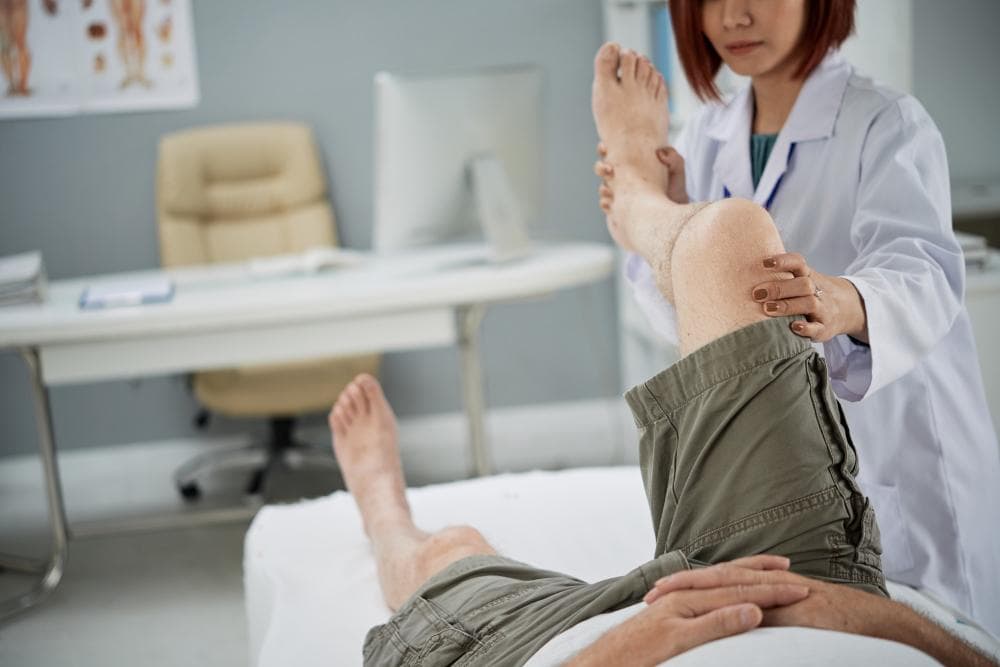
Man consulting a doctor for evaluation and treatment of cervical neck pain.
The orthopedic surgeon assesses:
- Neck range of motion
- Upper limb neurological assessment: reflexes, sensation pattern, muscle strength
- Specific tests: Spurling's test (axial loading + lateral neck tilt reproduces arm symptoms = positive = nerve root compression), Lhermitte's sign, upper and lower limb assessment for myelopathy signs
2. Imaging
X-ray (cervical spine, AP and lateral): Shows disc space narrowing, osteophyte formation, facet joint changes, and overall alignment. Good first-line investigation. Does not show soft tissue detail.
MRI (cervical spine): The most important investigation for cervical spondylosis with neurological symptoms. Shows disc degeneration, disc herniation, degree of neural foraminal narrowing (where nerve roots exit), and most critically, whether the spinal cord is being compressed and whether there are cord signal changes (indicating myelopathy).
CT Myelogram: Occasionally used when MRI is contraindicated (pacemaker, claustrophobia) or when fine bony detail is needed.
Nerve Conduction Studies (NCS) and EMG: Electrophysiology studies that confirm which nerves are involved and distinguish cervical radiculopathy from other causes of arm symptoms (peripheral neuropathy, carpal tunnel syndrome, cubital tunnel syndrome).
Treatment
1. Conservative Management (Most Patients)
Most patients with cervical spondylosis, including many with radiculopathy, improve significantly with conservative management. Physiotherapy:
- Posture correction and ergonomic education - Addressing the workplace setup and movement habits is essential for lasting improvement.
- Cervical muscle strengthening - Deep cervical flexor strengthening (the muscles that hold the head above the spine) is the most important therapeutic exercise, well-supported by evidence.
- Range of motion exercises - Gentle neck rotation, lateral flexion, and retraction.
- Neural mobilisation - Nerve gliding exercises for radiculopathy.
- Manual therapy - Mobilisation and soft tissue work by a trained physiotherapist reduces acute pain and improves function.
Medications:
- NSAIDs for pain and inflammation.
- Muscle relaxants for acute muscle spasm.
- Nerve pain medications (pregabalin, gabapentin) for radiculopathy-type arm pain.
- Short courses of oral steroids in acute severe cases.
Soft Cervical Collar: A soft cervical collar reduces neck movement and provides some support useful for short-term use during acute flares. Not recommended for prolonged use as it causes cervical muscle deconditioning.
Cervical Traction: Mechanical traction gently pulls the cervical spine apart, increasing foraminal diameter and reducing nerve root pressure. Most effective for radiculopathy in the C5-C6 and C6-C7 levels. Available as a physiotherapy clinic procedure or as home traction devices.
Injections:
- Cervical epidural steroid injection - Steroid injected around the compressed nerve root. Very effective for radiculopathy pain control, allowing physiotherapy to progress.
- Cervical facet joint injection - For primarily axial neck pain from facet arthritis.
2. Surgical Management (Selected Patients)
Surgery is considered for:
- Cervical myelopathy: Early surgical intervention prevents progressive permanent spinal cord damage. This is the clearest surgical indication.
- Severe radiculopathy not responding to conservative treatment: 6+ weeks of adequate conservative management without improvement, or progressive neurological weakness.
- Progressive neurological deficit: Worsening weakness or increasing numbness despite conservative treatment.
Surgical Options:
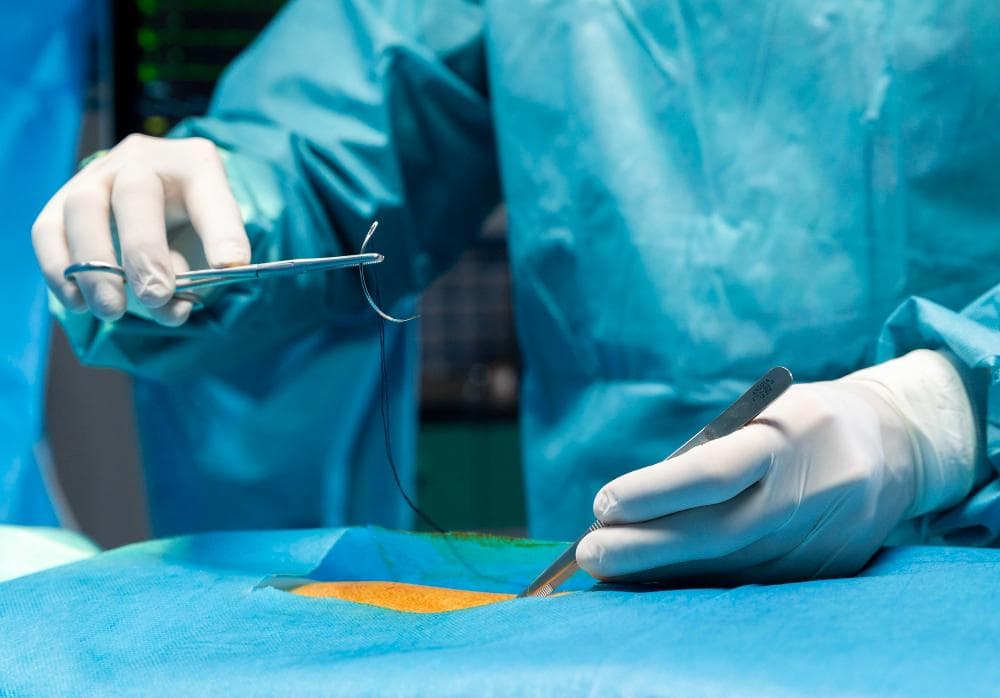
ACDF (Anterior Cervical Discectomy and Fusion): The most commonly performed cervical spine surgery. Through an incision in the front of the neck (2-4 cm), the diseased disc is removed, the nerve root is decompressed, and the adjacent vertebrae are fused using a bone graft and titanium plate. Excellent outcomes for radiculopathy and myelopathy. Hospital stay: 1–2 days.
Cervical Disc Replacement (Arthroplasty): An alternative to fusion, the diseased disc is replaced with an artificial disc that preserves movement. Appropriate for one or two-level disease in younger patients where preserving cervical mobility is important. Reduces adjacent segment degeneration compared to fusion.
Posterior Cervical Laminoplasty: Enlarges the spinal canal from behind by creating a door-like opening in the lamina. Preferred for multi-level cervical myelopathy, particularly when the pattern of compression is behind the spinal cord.
Practical Home Ergonomics For Noida's Desk Workers
For the significant proportion of cervical spondylosis patients who work at desks in Noida's corporate sector, ergonomic modification is not optional; it is part of treatment.
Monitor height: The top of the screen should be at eye level or just below. Looking down at a laptop screen for 8 hours is one of the strongest drivers of cervical degeneration.
Screen distance: Arm's length from the monitor, approximately 50–70 cm.
Chair support: Use a chair with proper lumbar support. Sit with the back against the support, hips slightly higher than knees.
Phone use: Hold the phone at eye level, not in your lap, not with it propped on your shoulder. Neck down at the phone is 20–30 minutes per day of damaging posture for many patients.
Movement breaks: Get up from the desk every 45–60 minutes. Do 2 minutes of gentle neck rotation, retraction, and shoulder rolls. This is not optional wellness advice; it is clinical management.
Laptop stand: If using a laptop primarily, a stand to raise the screen to eye level, used with a separate keyboard, makes a significant difference.
Cervical Spondylosis Treatment In Noida - Dr. Mayank Chauhan At Prakash Hospital
Dr. Mayank Chauhan, Senior Orthopedic Surgeon at Prakash Hospital, Sector 33, Noida, evaluates and manages cervical spondylosis across its full spectrum from early degenerative changes in young desk workers through to cervical myelopathy requiring surgical decompression.
For patients in Noida and Greater Noida presenting with neck pain, arm tingling, or hand clumsiness, a proper cervical evaluation examination, X-ray, and, where indicated, MRI will accurately identify the cause and the appropriate treatment path. To book a consultation, call the number listed on the website.
The Bottom Line
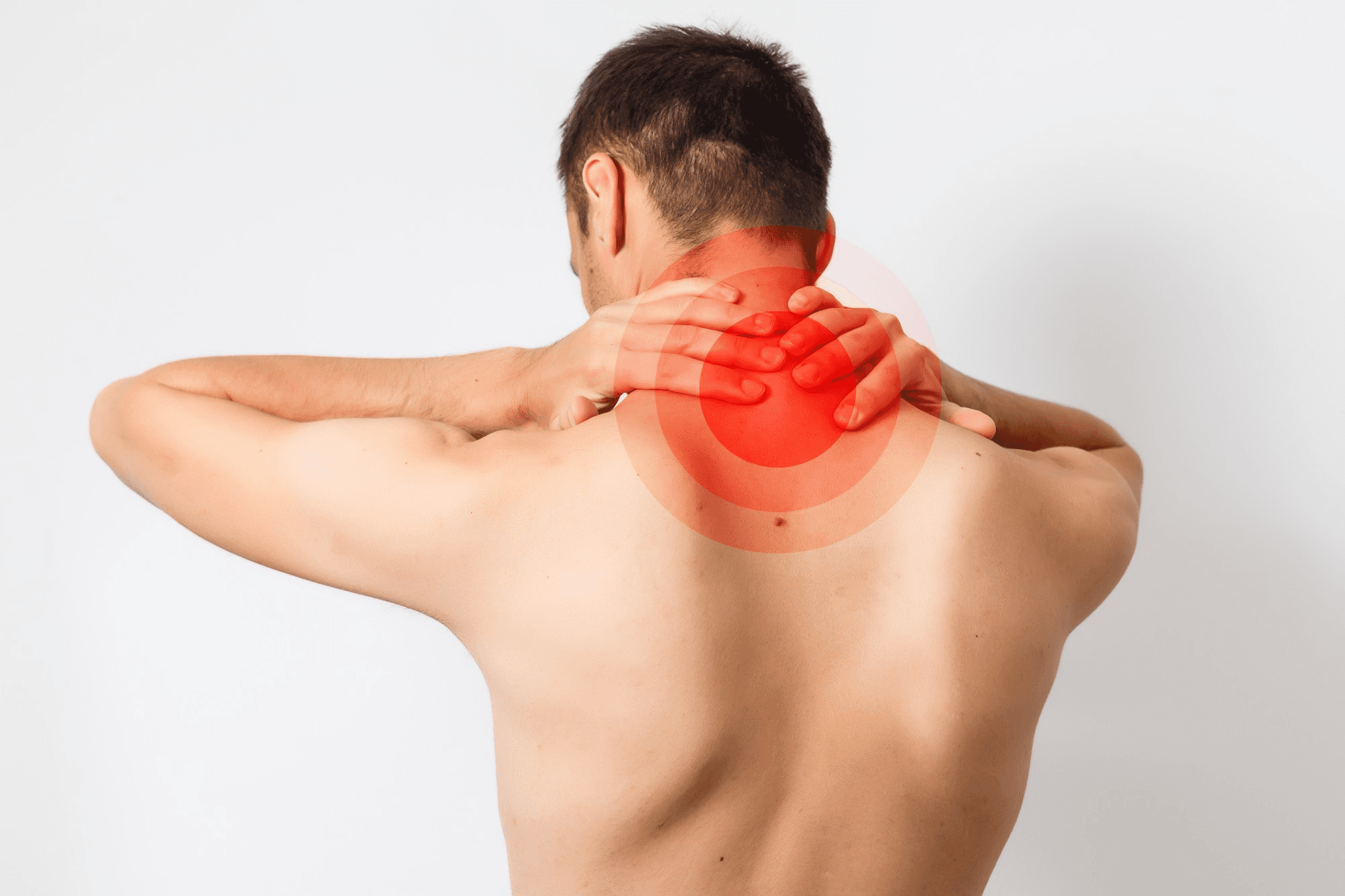
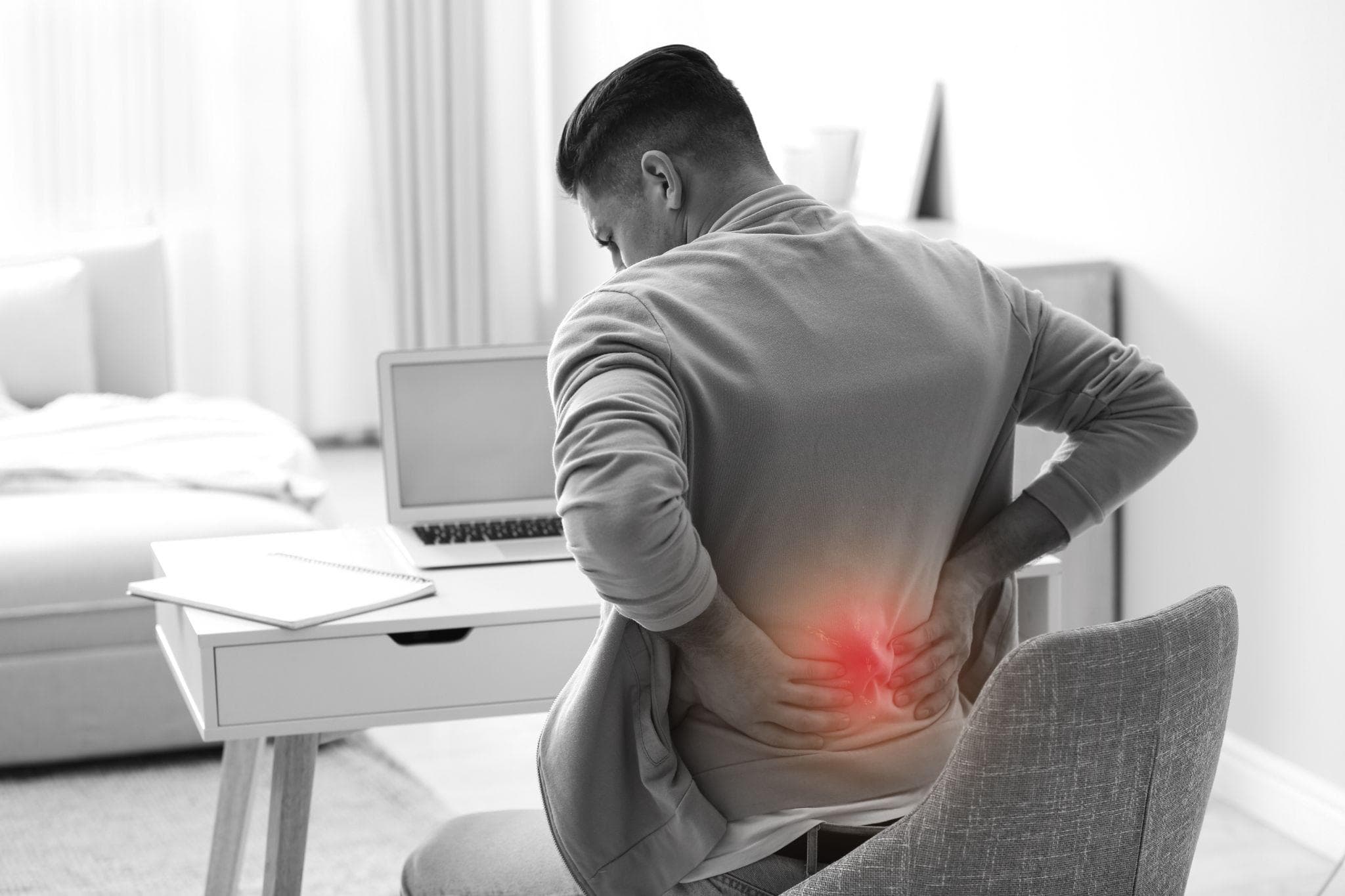
Man experiencing cervical neck pain with associated shoulder and upper back discomfort.
Cervical spondylosis is not just "old-age neck pain." In Noida's working population, it is increasingly a lifestyle-driven condition driven by screen posture, desk hours, and physical inactivity that affects people in their 30s, 40s, and 50s, not just the elderly.
Most patients do very well with the right combination of physiotherapy, ergonomic correction, and appropriate medication. The minority with neurological symptoms, particularly myelopathy, need timely surgical evaluation. The key is getting an accurate diagnosis, understanding what structure is causing your symptoms, and committing to the ergonomic changes that are as important as any medication.
To consult Dr. Mayank Chauhan, Senior Orthopedic Surgeon in Noida, call the number listed on the website.