Rheumatoid Arthritis and Joint Replacement — When Surgery Becomes the Answer
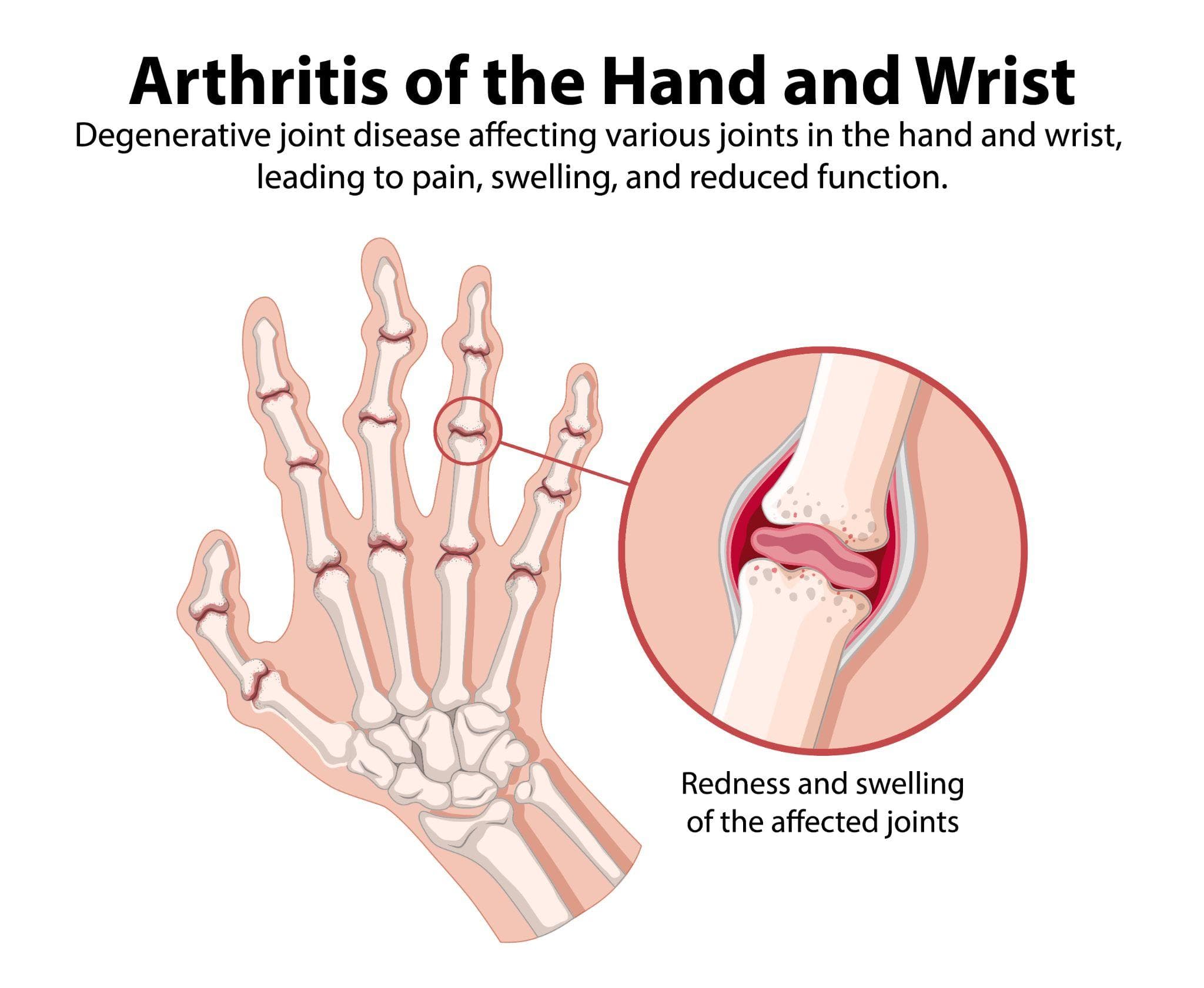
Visual representation of joint inflammation commonly seen in rheumatoid arthritis affecting the hands and wrists.
Rheumatoid arthritis and osteoarthritis are often lumped together in casual conversation under the umbrella of "arthritis" — but they are fundamentally different diseases. Their causes are different, the joints they affect are different, their systemic effects are different, and the management of joint replacement surgery in each is different in important ways.
In India, the burden of rheumatoid arthritis is rising. Data from the Global Burden of Disease 2021 database published in 2025 shows that RA incidence, prevalence, and disability-adjusted life years have all increased in India from 1990 to 2021, with projections indicating continued increase through 2036. Across India, women are disproportionately affected — the age-standardised rates are significantly higher in females than males in all parameters.
For patients with RA whose disease has damaged joints beyond what medication and physiotherapy can manage, joint replacement surgery offers meaningful relief. But the path to surgery in RA requires more care than in osteoarthritis.
What RA Does to Joints
Osteoarthritis is primarily mechanical — wear of cartilage from load, age, and biomechanics. The joint damage in osteoarthritis develops over decades.
Rheumatoid arthritis is autoimmune. The immune system attacks the synovium — the lining of the joint — causing chronic inflammation. This inflamed synovium (called a pannus) secretes enzymes and inflammatory mediators that erode cartilage, damage bone, and destroy ligaments. The damage can be rapid, asymmetric, and involve multiple joints simultaneously.
RA also causes systemic effects: fatigue, anaemia, cardiovascular effects, lung involvement, and the effects of the medications used to treat it (corticosteroids cause osteoporosis; methotrexate and biologics affect infection risk and wound healing).
These systemic effects are directly relevant to surgical planning.
Which Joints Does RA Affect?
Unlike osteoarthritis, which most commonly affects the knee, hip, and hands, RA has a different joint distribution:
- Hands and wrists: Most commonly affected — MCP joints (knuckles), PIP joints (finger middle joints), wrists
- Feet: MTP joints (toe knuckles), subtalar joint, midfoot
- Knees: Frequently involved, causing significant disability
- Hips: Less commonly than osteoarthritis, but significant when affected
- Cervical spine (upper neck): C1-C2 involvement (atlantoaxial instability) is a specific and serious concern in RA patients going for surgery under general anaesthesia — requires pre-operative cervical spine X-ray or MRI and specific anaesthetic precautions
- Shoulders, elbows, ankles: All potentially involved
When Does RA Require Surgery?
Joint replacement is typically considered when
The RA is well-controlled medically (DMARDs/biologics) but the joint damage is too extensive to benefit further from medication alone. This is the most common scenario — modern biologics have transformed RA management, but cannot regenerate destroyed cartilage or remodel deformed bone.
Persistent joint pain and functional limitation despite optimal medical therapy and physiotherapy.
Progressive joint destruction on imaging — bone erosion, joint space loss, or deformity worsening despite disease control.
Significant disability affecting work, activities of daily living, or quality of life.
The goal of surgery in RA is the same as in osteoarthritis: relieve pain and restore function. The outcomes are good — a 2025 review showed average WOMAC pain scores dropped by 62% after knee replacement in RA patients, and Knee Society scores increased significantly.
One important caveat: because RA is a systemic disease involving multiple joints, the quality of life improvement from one joint replacement may be more limited than in osteoarthritis if other painful joints remain undertreated. Surgical prioritisation — which joint to address first, which next — requires coordination between the rheumatologist and the orthopedic surgeon.
What Makes Joint Replacement Different in RA
Medication Management Before Surgery
This is the most critical pre-operative decision in RA joint replacement.
DMARDs (methotrexate, hydroxychloroquine, leflunomide): Current evidence supports continuing methotrexate through surgery without interruption. Stopping methotrexate increases RA flare risk post-operatively without meaningfully reducing infection risk. The same applies to hydroxychloroquine.
Biologics (TNF inhibitors like etanercept, adalimumab; IL-6 inhibitors like tocilizumab; anti-CD20 agents like rituximab): These immunosuppressants meaningfully increase infection risk. The 2022 American College of Rheumatology/AAHKS guidelines recommend withholding biologic agents for one dosing interval before surgery (varying by agent — typically 1–4 weeks) and resuming them after wound healing is established (minimum 2 weeks post-operatively, no infection or complications).
This timing must be coordinated between the rheumatologist and surgeon. Stopping biologics at the wrong time increases RA flare risk; not stopping them enough increases infection risk.
Corticosteroids: Many RA patients are on low-dose oral corticosteroids. These cannot simply be stopped before surgery (adrenal suppression risk), but must be managed with stress-dose steroids peri-operatively.
Infection Risk
RA patients face genuinely higher surgical infection risk than osteoarthritis patients — due to the combination of immunosuppressive medication, chronic inflammation, and often nutritional deficits from chronic illness. This is not a reason to avoid necessary surgery, but it requires:
- Meticulous wound care
- Strict antibiotic prophylaxis protocols
- Careful attention to skin integrity (RA skin can be fragile and slow to heal)
- Dental clearance before surgery
- Optimal nutritional status
Bone Quality
Long-term corticosteroid use — common in RA — accelerates osteoporosis. Operating on osteoporotic bone requires specific implant strategies (longer stems, cemented fixation preferred, potentially augments). Pre-operative bone density assessment is appropriate for RA patients with prolonged steroid exposure.
Cervical Spine Assessment
RA can cause atlantoaxial instability (C1-C2 junction looseness) in patients with longstanding disease. During general anaesthesia, intubation involves neck extension and manipulation — in a patient with atlantoaxial instability, this risks spinal cord injury.
Pre-operative cervical spine X-rays in flexion and extension are indicated for RA patients undergoing general anaesthesia. If instability is identified, anaesthetic technique must be modified (awake fibreoptic intubation, careful positioning).
Ligamentous Laxity
RA-related erosion of ligaments can cause significant ligamentous instability in the knee — the collateral ligaments may be functionally incompetent. This typically requires a more constrained knee replacement implant than would be used for osteoarthritis, which has different surgical planning implications.
Which Joints Are Most Commonly Replaced in RA?
Knee: Most commonly replaced. Total knee replacement in RA follows the same general technique as in osteoarthritis, with the considerations above.
Hip: Total hip replacement is effective and commonly performed. RA patients have equivalent pain relief outcomes to osteoarthritis patients at long-term follow-up.
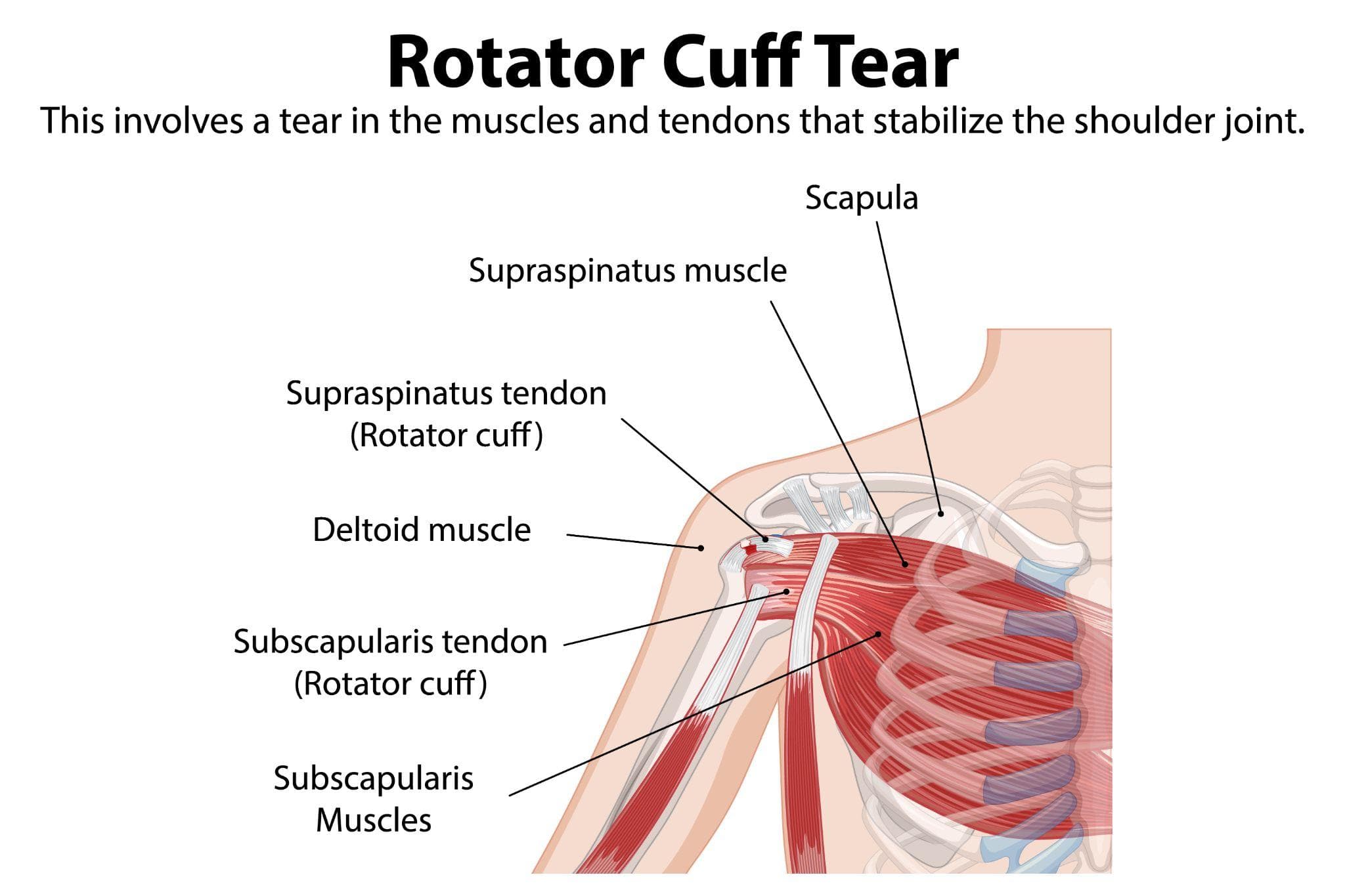
Shoulder: Reverse shoulder replacement is often preferred over anatomic replacement in RA because rotator cuff involvement is common in RA, making the muscle-independent mechanics of reverse design more reliable.
Wrist, small hand joints, feet: Wrist arthrodesis (fusion) is more commonly performed than wrist replacement in RA. MTP joint surgery — resection arthroplasty for forefoot deformity — is common and provides good symptom relief.
Results of Joint Replacement in RA
The overall outcomes of joint replacement in RA are good, with studies showing significant improvements in pain and function. However, outcomes are slightly less uniform than in osteoarthritis, for two main reasons:
-
Multiple joint involvement: Replacing one joint improves function for that joint, but if multiple other joints remain painful, overall quality of life improvement may be limited. A coordinated surgical plan addressing the most disabling joints sequentially is needed.
-
Ongoing systemic disease: RA is not cured by joint replacement. The underlying inflammatory disease continues, potentially affecting the replaced joint indirectly and certainly affecting unreplaced joints. Continued rheumatologic management post-operatively is essential.
When surgery is well-planned, medication management is optimal, and rehabilitation is thorough, RA patients achieve substantial long-term benefit from joint replacement.
Coordination of Care at Prakash Hospital, Noida
Dr. Mayank Chauhan manages joint replacement for RA patients at Prakash Hospital, Sector 33, Noida, in coordination with rheumatology review to ensure medication timing, infection risk management, and appropriate implant selection.
Patients with RA considering joint replacement are welcome to discuss their specific situation at a dedicated consultation.
To book a consultation, call the number listed on the website.