Can You Have Knee Replacement Twice? What Revision Surgery Involves

Doctor applying a bandage to a patient’s leg after knee replacement surgery.
One of the most common questions from younger patients considering knee replacement is: "What happens if it wears out? Can it be done again?"
It can. Revision knee replacement — removing the original implant and replacing it with a new one — is performed routinely in India and worldwide. But it carries important caveats that patients deserve to understand before the original surgery, not afterward.
Revision surgery is more complex, involves greater technical challenge, has a longer recovery, and produces less predictable results than the original procedure. This reality is part of why surgeons think carefully before recommending knee replacement to younger patients — the potential need for revision is a real consideration.
Here is an honest overview of what revision surgery is, when it becomes necessary, what it involves, and what outcomes patients can realistically expect.
Why Does a Knee Replacement Sometimes Need to Be Redone?
Implants don't last forever. They are mechanical devices subjected to millions of loading cycles per year. Even with the best materials, surgical technique, and patient compliance, some implants eventually fail. Understanding the specific reasons for failure helps explain what revision surgery is trying to correct.
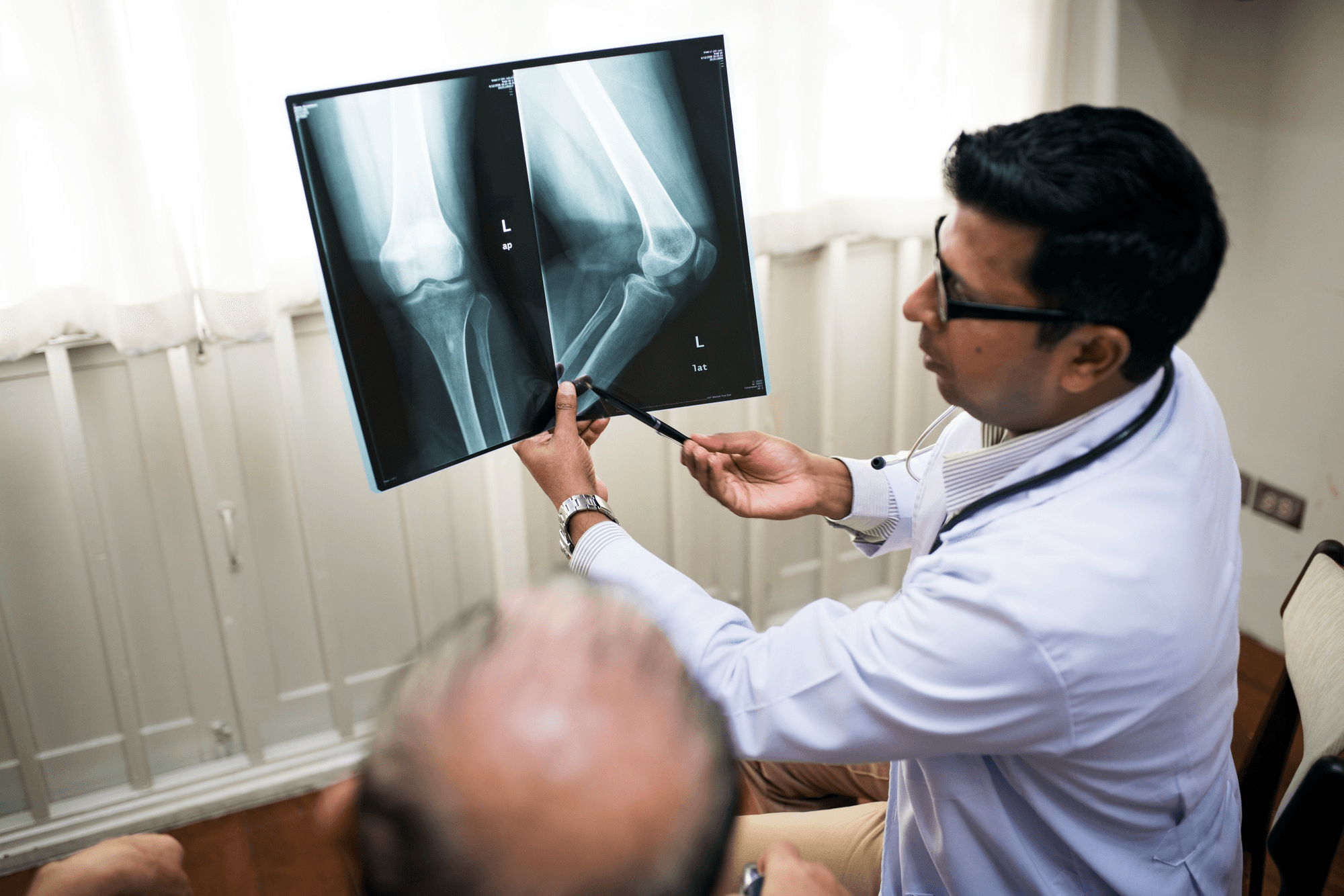
Aseptic loosening: The most common long-term cause. The bond between the implant and bone — whether cement or bone ingrowth — weakens over time. The implant becomes loose in its bony housing, causing pain with weight-bearing. X-rays show a radiolucent line developing around the implant interface. Occurs more rapidly in patients who are very active, overweight, or have poor bone quality.
Infection (periprosthetic joint infection): Can occur early (within weeks) or late (years post-surgery, via bloodstream seeding). Destroys the bond between implant and bone. One of the most serious and difficult-to-treat complications. Always requires surgical management — either DAIR (washout with implant retention) in early infection, or two-stage revision (remove, antibiotics, re-implant) in established infection.
Polyethylene wear: The plastic insert between the metal components gradually wears with use. Wear debris causes osteolysis — bone destruction by the body's immune reaction to plastic particles. This can loosen the implant. Modern highly cross-linked polyethylene has dramatically reduced wear rates, but it still occurs over decades.
Instability: The knee replacement is too loose in one or more directions, causing giving way, a sense of instability, and pain. May require implant revision to a more constrained (more linked) design, or soft tissue reconstruction.
Stiffness (arthrofibrosis): Excessive scar tissue formation limiting range of motion. May require manipulation under anaesthesia or arthroscopic release before considering revision.
Fracture around the implant: A fall or injury can fracture the bone around the implant. Depending on the fracture pattern and implant stability, this may be fixable without revision or may require component revision alongside fracture fixation.
Implant fracture: Uncommon but occurs — usually of the polyethylene insert or tibial tray in older designs. Causes acute mechanical failure of the joint. Requires revision.
Malalignment: If the original components were placed at incorrect angles, revision may be needed to restore proper mechanics before the joint wears out prematurely.
How Often Is Revision Actually Needed?
Modern registry data consistently shows:
- Over 90% of total knee replacements survive 15 years without revision
- 82–90% survive 25 years
These are strong numbers. The revision rate is genuinely low.
But: for patients who are 50 when they have surgery and live to 85, the 25-year mark is relevant. The younger and more active the patient, the higher the likelihood of eventually requiring revision.
Risk factors for earlier revision:
- Young age at surgery (under 55)
- Higher physical activity level (loading the implant more per year)
- Obesity (greater load per step)
- Male sex (higher average activity level)
- Infection (unpredictable, can occur at any time)
What Revision Surgery Actually Involves
Revision is genuinely more complex than primary (first) knee replacement. Here is why:
Implant removal: Extracting a well-fixed cemented implant means carefully breaking the cement bond — with specialised osteotomes, high-speed burrs, and ultrasonic devices — without fracturing the bone underneath. This requires patience, precision, and adds considerable time to the operation.
Bone loss: Removing a well-fixed implant inevitably removes some bone. Additionally, whatever process caused the failure (loosening, infection, osteolysis) may have destroyed additional bone. The revision surgeon must manage missing bone that didn't exist in the original surgery.
Revision implants: Standard primary knee implants are designed to work with normal bone. Revision implants are designed for the compromised situation. They typically have:
- Longer stems (to bypass damaged proximal bone and fix further down the canal)
- Metal augments (blocks that fill missing bone)
- Constrained hinges or rotating platform designs (to compensate for damaged ligaments)
- More metal overall, to manage the larger construct
Soft tissue challenges: If the original failure involved infection, the surrounding soft tissue may be scarred, thinned, or damaged. Wound closure in revision surgery is sometimes more challenging than in primary surgery.
Longer operation: Primary knee replacement takes 60–90 minutes. Revision takes 2–4 hours, sometimes longer in complex cases.
The Two-Stage Infection Revision: Worth Knowing
When infection is the reason for revision, it cannot simply be done in one operation in most cases.
Stage 1: All implant components are removed. Infected tissue is thoroughly debrided. An antibiotic-loaded cement spacer is placed in the knee — a temporary structure that holds the space, delivers antibiotics locally, and allows the patient to partially mobilise for 6–12 weeks while systemic antibiotics are administered.
Stage 2: After confirmed infection clearance (normal inflammatory markers, negative joint aspirate), new permanent implants are placed.
This two-stage process is the current standard for chronic periprosthetic joint infection. It is a major undertaking — two surgeries, prolonged antibiotic treatment, and a functional knee only at the end of Stage 2.
Recovery After Revision
Recovery is longer and more variable than after primary replacement:
- Hospital stay: typically 5–7 days
- Walking with a frame: usually day 1–2 post-operatively
- Protected weight-bearing: often longer than primary replacement, depending on bone quality and construct used
- Physiotherapy: intensive and protracted — 6–12 months to functional plateau
- Full recovery: typically 12–18 months
Patients should expect the recovery to be harder than their original replacement.
Outcomes of Revision Surgery
Results are good but less predictable than primary replacement. Studies consistently show:
- 70–85% of revision cases achieve satisfactory pain relief and function
- Some residual pain and functional limitation is more common than after primary replacement
- Outcomes are best when revision is performed at experienced centres with high revision volume
The quality of the revision — the surgeon's experience, the centre's capabilities, and the specific cause being addressed — matters enormously. Revision surgery should not be a "routine" procedure done at the same volume and centre as primary replacement.
Dr. Mayank Chauhan at Prakash Hospital, Noida
Patients with concerns about existing knee replacements — whether experiencing new or worsening pain, swelling, instability, or other symptoms suggesting possible failure — are welcome for evaluation at Prakash Hospital, Sector 33, Noida. Assessment includes clinical examination, weight-bearing X-rays, and where needed, CT scanning, nuclear medicine imaging, or joint aspiration for infection workup.
To book a consultation, call the number listed on the website.