Orthopaedic vs. Orthopedic — Is There Actually a Difference?
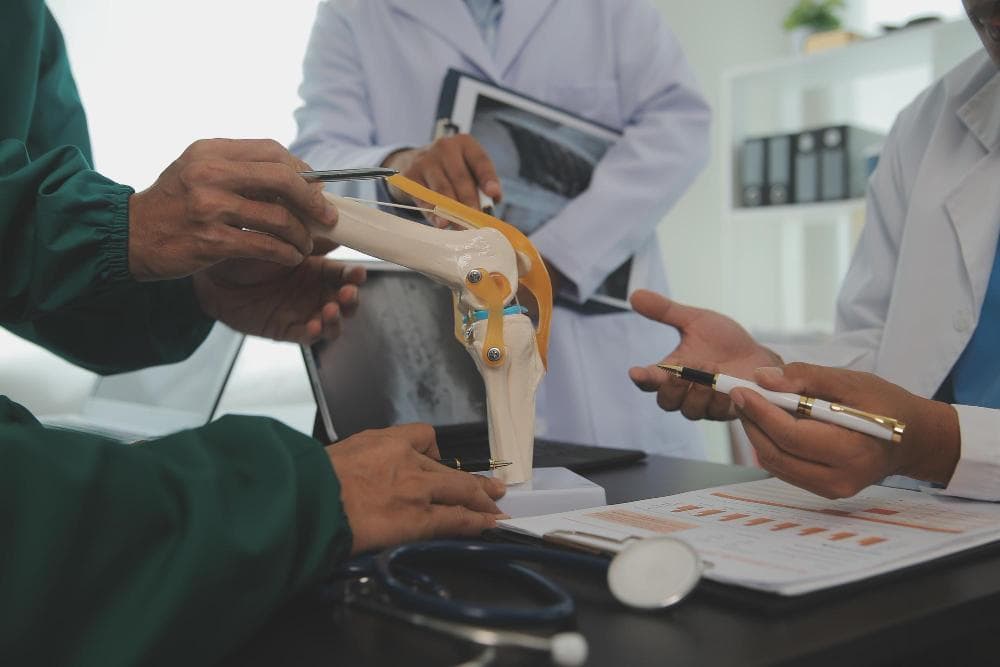
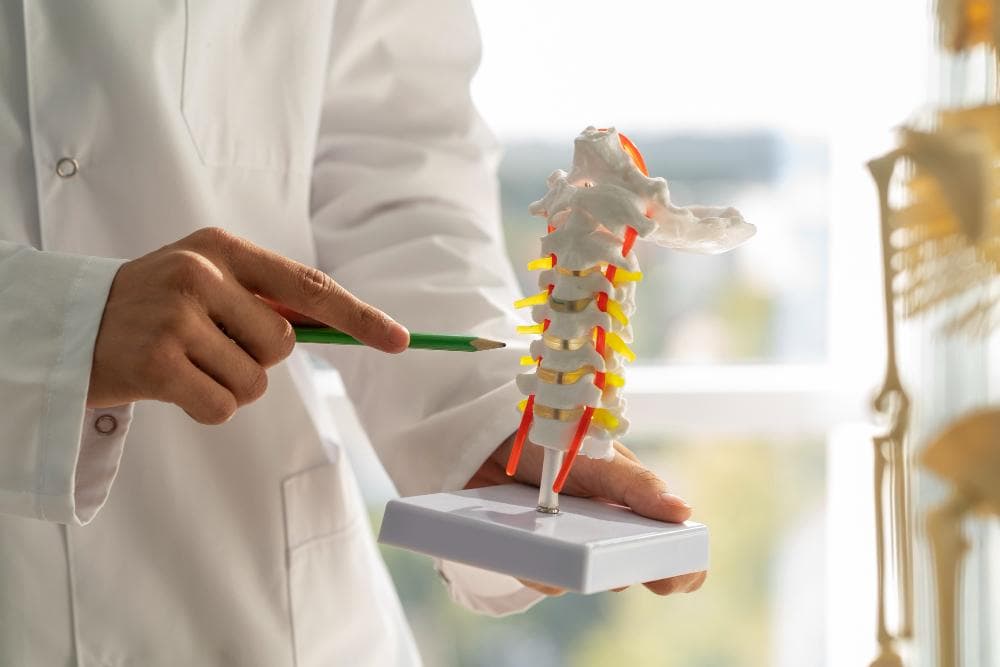
An orthopedic physician shows a patient's knee anatomy in a clinic by using a knee model.
If you've ever Googled a bone doctor in Noida, you've probably noticed something odd. Some clinic websites say "orthopedic surgeon." Others say "orthopaedic surgeon." Hospital signs use both. Medical certificates mix them up. Even reputable international medical bodies — including the American Academy of Orthopaedic Surgeons — use the spelling that looks more "British."
So which one is right? Are they the same thing? And does the spelling actually tell you anything useful about the doctor or clinic?
Here's the complete, honest answer.
The Short Answer
Both spellings mean exactly the same thing. There is zero medical or scientific difference between "orthopedic" and "orthopaedic." The only distinction is geographical and historical — one spelling came from British English, the other from American English.
Both refer to the same branch of medicine: the diagnosis, treatment, and rehabilitation of conditions affecting the bones, joints, muscles, ligaments, tendons, and cartilage.
The History Behind the Words
To understand why two spellings exist, you have to go back to 1741 — and to a book written by a French physician named Nicolas Andry, a professor of medicine at the University of Paris.
Andry wrote a book called L'Orthopédie, which translates roughly as "The Art of Correcting and Preventing Deformities in Children." He constructed the word from two Greek roots:
- Orthos — meaning "straight" or "correct"
- Paidion — meaning "child"
The field he described was originally focused entirely on children — correcting conditions like scoliosis, clubfoot, and other deformities that affected a child's ability to stand and walk upright. Over the next two centuries, the specialty expanded to include people of all ages and a vastly broader range of conditions — but the name stuck.
How did the spelling split happen?
When the word traveled to Britain, it was absorbed into British English as orthopaedic — retaining the classical Latin and Greek digraph "ae" that British English tends to preserve. Think of how British English writes "anaesthesia" while American English writes "anesthesia," or "foetus" versus "fetus."
When the word crossed to America and entered Webster's dictionary in the 19th century, American English did what it typically does — it simplified. The "ae" became just "e," giving us orthopedic. This was part of a broader pattern of American spelling reforms that reduced many such digraphs.
So the timeline looks like this:
- 1741 — Nicolas Andry coins orthopédie in French
- British English adopts it as orthopaedic
- American English simplifies it to orthopedic
- Both travel around the world as medicine internationalizes
Which Is Used in India?
India's medical establishment was shaped heavily by the British system — MBBS, MS, the structure of medical councils, the terminology in textbooks — and this influence shows in spelling preferences too.
In India, you'll find both spellings used interchangeably. Most hospital signboards, government medical college departments, and formal medical documents lean toward orthopaedic — the British form. Meanwhile, online searches, websites, and informal usage increasingly favor orthopedic — the American form that dominates global internet content.
In practice, neither spelling signals anything about the quality of care, the training of the doctor, or the legitimacy of the clinic. A doctor who writes "orthopaedic" on their letterhead is not more qualified than one who writes "orthopedic" — and vice versa.
The Interesting Paradox — American Institutions Use the British Spelling
Here's where it gets genuinely curious. Despite "orthopedic" being the Americanized spelling, many of the most prestigious American orthopedic institutions use the British form:
- American Academy of Orthopaedic Surgeons (AAOS)
- American Orthopaedic Association (AOA)
- American Orthopaedic Society for Sports Medicine (AOSSM)
- Journal of Bone and Joint Surgery uses "orthopaedic"
The reason, as most orthopedic historians explain, is that many American orthopedic societies were founded before the spelling was fully standardized, and chose the "ae" form as a deliberate nod to the classical origins of the word — a way of signaling alignment with the history and principles of the field. Some practitioners in the US still argue that the "ae" matters — that paideia (the full Greek root, meaning education and the rearing of children) is meaningfully different from just paidion (child), and that the "ae" preserves that distinction.
Most medical professionals, however, treat this distinction as largely symbolic rather than practical.
Does It Matter for Patients?
Not at all — at least not medically.
If you're searching for a bone and joint specialist in Noida or Greater Noida, both "orthopedic surgeon in Noida" and "orthopaedic surgeon in Noida" will lead you to the same type of specialist. Both terms describe a doctor who has completed:
- An MBBS degree (5.5 years)
- A postgraduate MS in Orthopedics or DNB in Orthopedics (3 years)
- Often additional fellowship training in subspecialties like joint replacement, spine surgery, or sports medicine
In India, orthopedic surgeons are registered with the Medical Council of India (or the respective State Medical Council) and must meet standardized training requirements regardless of which spelling appears on their signboard.
Why Does the Confusion Persist?
A few reasons:
1. SEO and internet searches
Because so much medical content comes from American sources, "orthopedic" dominates Google results globally. Indian patients searching in English often use the American spelling, which means Indian doctors increasingly use it too to make their websites more searchable.
2. Formal vs. informal usage
In formal documents, hospital registrations, and government medical records in India, "orthopaedic" is more common. In everyday conversation, WhatsApp messages, and online searches, "orthopedic" wins.
3. Patient uncertainty
Many patients genuinely don't know if the two words refer to different things. The answer — they don't — is worth knowing so you don't waste time worrying about which word to use when searching for a specialist.
What to Actually Look for in an Orthopedic/Orthopaedic Surgeon
Since the spelling doesn't tell you anything useful, here's what does matter when choosing a specialist:
Qualifications — Look for MS (Orthopedics) or DNB (Orthopedics) from a recognized Indian institution. Additional fellowship training — especially from international programs — adds a significant layer of expertise.
Subspecialty experience — Orthopedics is a broad field. A surgeon who has additional fellowship training in joint replacement, spine surgery, or sports medicine brings focused expertise to those specific areas.
Hospital infrastructure — The quality of the operating theatre, imaging equipment, anesthesia team, and post-operative care significantly affects surgical outcomes.
Patient outcomes and reviews — Verified patient testimonials and Google reviews give you a real-world sense of how a surgeon communicates, manages complications, and follows up with patients.
Philosophy of care — A good orthopedic surgeon explores all conservative options first and recommends surgery only when it's genuinely necessary. Surgeons who default to operating without adequate non-surgical trial are worth being cautious about.
About Dr. Mayank Chauhan — Orthopedic / Orthopaedic Surgeon in Noida
Whether you call it orthopedic or orthopaedic, Dr. Mayank Chauhan is a Senior Consultant Orthopaedic Surgeon at Prakash Hospital, Sector 33, Noida — serving patients across Noida, Greater Noida, and the wider Delhi NCR region.
His qualifications include:
- MBBS from Maulana Azad Medical College, Delhi University — one of India's most respected medical institutions
- MS Orthopedics from Era's Lucknow Medical College
- SICOT Fellowship in Arthroplasty and Joint Reconstruction, Dr. L H Hiranandani Hospital, Mumbai
- International Fellowship in Orthopedics, Hallym University Hospital, South Korea
Registered with both the Maharashtra Medical Council and the Delhi Medical Council, Dr. Chauhan has over 15 years of clinical experience managing the full spectrum of orthopedic conditions — from complex fractures and sports injuries to joint replacement surgery using advanced minimally invasive techniques.
To book a consultation, call +91 7303245544.
Clinic hours: Monday to Saturday, 10 AM to 8 PM | Sunday, 10 AM to 2 PM
Location: D-12, 12A, 12B, Sector 33, Noida (next to ISKCON Temple)
Frequently Asked Questions (FAQs) About the Spelling
Q1. Is "orthopaedic" more correct than "orthopedic"?
Neither is more correct than the other. Orthopaedic is the original British spelling; orthopedic is the Americanized version. Both are accepted in medical and academic contexts worldwide. The choice between them is purely about regional language preference, not medical accuracy.
Q2. Why do some Indian hospitals use "orthopaedic" and others use "orthopedic"?
India's medical system was shaped by the British tradition, so formal and older institutions tend to use "orthopaedic." More recently established clinics and websites increasingly use "orthopedic" because it dominates internet searches (most online medical content originates from American sources). Both are valid.
Q3. If I search "orthopedic doctor near me" vs. "orthopaedic doctor near me," will I get different results?
Google is smart enough to treat both searches as equivalent and return the same type of results. Either search will show you local bone and joint specialists. You don't need to worry about which spelling you use for searching.
Q4. Does "orthopaedic" with the "ae" imply a more traditional or classical approach to medicine?
Some practitioners do use the "ae" spelling as a way of signaling alignment with the classical origins of the field. But this is a philosophical preference, not a clinical distinction. A surgeon's qualifications, fellowship training, experience, and patient outcomes are what actually matter.
Q5. Is orthopedics the same as rheumatology?
They overlap but are different. Orthopedic surgeons treat musculoskeletal conditions both surgically and non-surgically, with a focus on structural problems — fractures, joint damage, ligament tears. Rheumatologists are internal medicine specialists who focus on systemic inflammatory and autoimmune conditions like rheumatoid arthritis and lupus, typically using medications rather than surgery. For joint replacement and fracture care, an orthopedic surgeon is the right specialist. For managing autoimmune joint disease with medications, a rheumatologist is the appropriate choice.
Q6. Did orthopedics always cover adults, or was it just for children originally?
It was originally focused on children. Nicolas Andry's 1741 book was specifically about correcting musculoskeletal deformities in children. The field expanded over the 19th and 20th centuries to encompass adults, the elderly, athletes, and trauma patients — but the name (from the Greek word for child) stayed the same.
The information in this blog is for general educational and informational purposes and does not constitute medical advice. Always consult a qualified orthopedic surgeon for diagnosis and treatment relevant to your condition.