When Can You Drive After Knee or Hip Replacement Surgery?
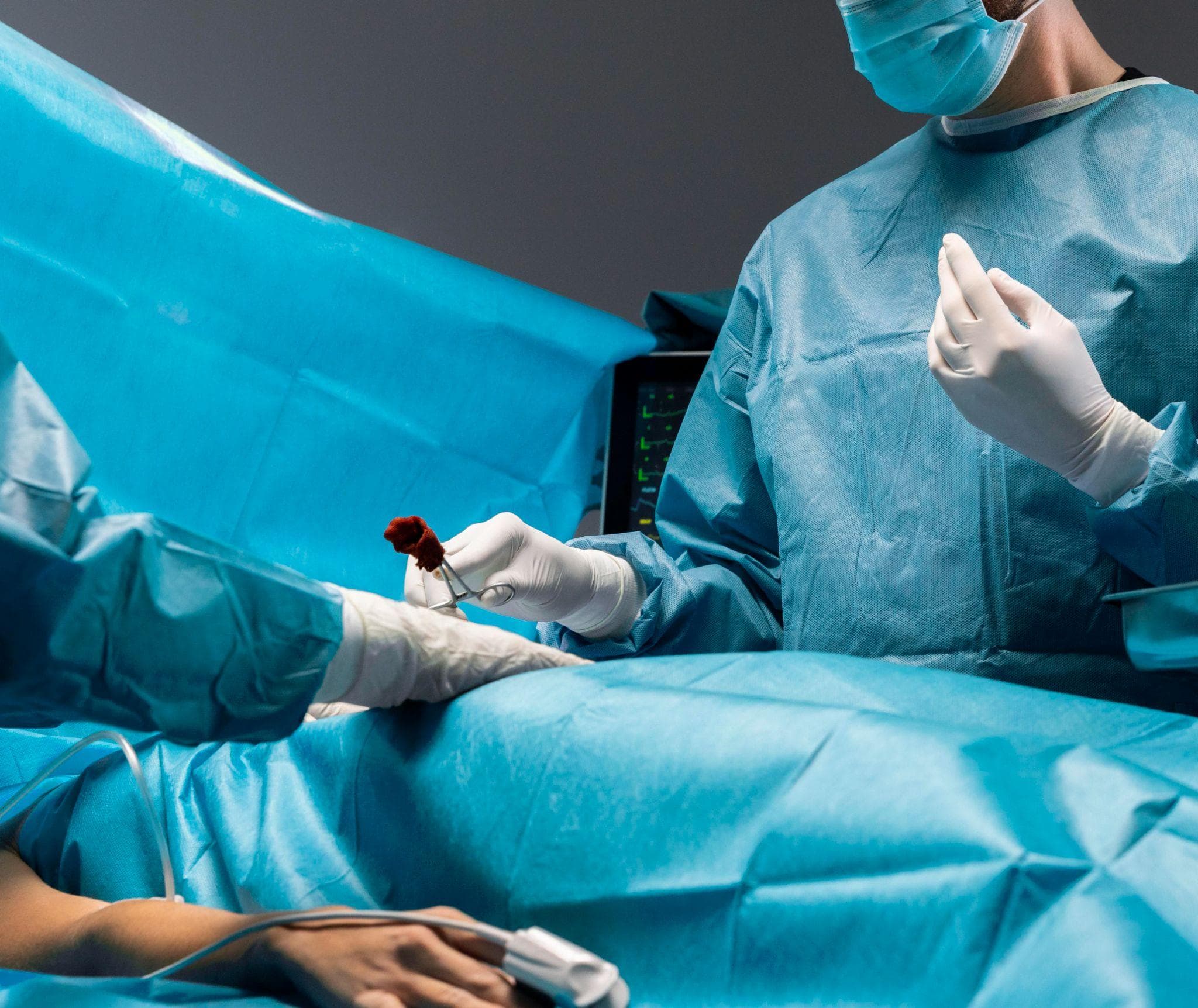
Orthopedic surgeons performing a hip replacement procedure.
For most working-age adults in India, the ability to drive is not optional — it determines whether you can get to work, take children to school, attend follow-up appointments, and manage daily life. In cities like Noida and the NCR region, where public transport varies dramatically by neighbourhood and autorickshaws and cabs are not always reliable, personal vehicle access is a genuine daily necessity.
So when patients ask "when can I drive?" after knee or hip replacement, they're not asking a casual lifestyle question. They're asking about independence.
Here's what the evidence says — and what actually determines safe return to driving.
Why You Can't Drive Immediately After Surgery
The reasons to delay driving after joint replacement are specific and important:
Reaction time: Emergency braking requires the foot to move from accelerator to brake and apply force within milliseconds. After joint replacement, two things impair this: the operated joint is temporarily weaker and less responsive, and pain medication — particularly opioids — slows cognitive and motor reaction time significantly.
Driving while impaired by opioids is dangerous and may be illegal. Most hospitals advise patients not to drive while taking any prescription opioid (tramadol, codeine, oxycodone). This is non-negotiable.
Joint mechanics: Pressing the brake pedal requires controlled dorsiflexion (right knee replacement) or hip rotation and pressure (right hip replacement). Both of these movements are restricted or painful in the first weeks after surgery.
Leg engagement during vehicle entry/exit: Getting in and out of a car involves specific hip and knee positions that can cause pain, discomfort, and — in hip replacement patients — risk of dislocation if hip precautions are active.
The General Guidelines
Knee Replacement (Total Knee)
Left knee replacement: 3–4 weeks. Because the right foot controls the primary safety function (braking), a left knee replacement imposes fewer driving-specific demands. Most patients clear left-sided knee replacement for driving sooner.
Right knee replacement: 4–6 weeks, sometimes longer. The right foot must move quickly between accelerator and brake, pressing downward with force. Recovering this capability requires adequate quadriceps strength, ankle mobility, and pain-free range of motion.
A research study assessing braking performance in simulated conditions found that braking reaction time returns to pre-operative baseline at approximately 4–6 weeks in most total knee replacement patients.
Hip Replacement (Total Hip)
Left hip replacement: 2–4 weeks for many patients. The left foot operates the clutch (manual transmission) or rests on the footrest (automatic). Less active involvement than the right foot.
Right hip replacement: 4–6 weeks. Pressing the accelerator and brake requires hip rotation, hip flexion, and controlled dorsiflexion — all involving the operated hip. Recovery of these mechanics takes longer.
Anterior approach (muscle-sparing): Some research suggests patients who have had anterior approach hip replacement can return to driving earlier than posterior-approach patients, due to less disruption of the hip abductors and faster early recovery of hip rotation control.
Automatic vs manual transmission: Driving automatic is cleared earlier in nearly all cases. Manual transmission requires clutch operation — which is left-foot dependent for the clutch but demands coordinated pedal control — and is generally delayed an additional 1–2 weeks.
What Actually Determines Readiness — Not Just Time
These are the criteria that matter more than the calendar:
1. Off all prescription opioids
This is the absolute requirement. No patient should drive while taking tramadol, codeine, oxycodone, or any other opioid. Some patients are clear of opioids within 2 weeks; others need 4–6 weeks. The opioid-off date — not the surgery date — drives the earliest possible return to driving.
2. Adequate joint function
The operated joint must have sufficient range of motion and strength to control the vehicle. For knee replacement: adequate knee flexion to position comfortably in the driver's seat, and adequate extension power to press the brake with force. For hip replacement: comfortable seating position in the car (hip usually requires >90 degrees flexion to be seated in a standard car seat).
3. Not still in a sling, brace, or immobiliser that prevents vehicle control
Hip replacement patients on hip precautions (posterior approach): avoidance of deep flexion, which is required to seat in a low car. An elevated seat cushion or high seat position may help initially.
4. Emergency stop capability
The practical test: can you stamp on the brake with sufficient force, in a fraction of a second, without hesitation from pain or weakness? This requires adequate limb strength, pain levels low enough not to hesitate, and cognitive alertness (no sedating medication).
5. Surgeon clearance
Always obtain explicit clearance from your surgeon before returning to driving. At Prakash Hospital, Noida, this is assessed at the first post-operative outpatient review (typically 2–3 weeks post-surgery for most patients), with a formal discussion of driving readiness.
The Self-Test
Before driving again, a simple self-assessment in your own driveway (engine off, car stationary) can help determine readiness:
- Can you get in and out of the driver's seat without significant pain or difficulty?
- Can you sit comfortably in the driver's seat for 20–30 minutes?
- Can you press the brake pedal firmly and quickly without wincing or hesitating?
- Can you check mirrors and turn adequately to see approaching traffic?
- Are you completely free of any medication that causes drowsiness?
If all answers are yes, and your surgeon has given clearance, starting with a short, low-traffic drive in familiar territory is a reasonable next step.
Start conservatively: First drive in an empty car park. Then quiet residential streets. Then progressively normal traffic. Don't use the NCR highway as your first driving experience after surgery.
Practical Tips for Getting in and Out of a Car After Joint Replacement
For knee replacement:
- Push the car seat as far back as possible to maximise legroom
- Lower the seat if the car allows it, to reduce the degree of knee flexion needed to sit
- Lead with the operated leg when getting out (swing it out first, then push up)
- Use the door frame or the grab handle above the door for support
For hip replacement (posterior approach):
- Use an elevated seat cushion to keep the hip above 90 degrees
- Push the seat back as far as possible
- Back into the seat: back up to the car, lower yourself sitting first, then swing both legs in together — do not twist or pivot into the seat
- The front passenger seat gives more space to manage hip positioning than the rear seat
Insurance and Legal Considerations
In India, motor vehicle laws do not specify a mandatory waiting period after joint replacement surgery. However, the general road transport law requires drivers to be in full control of their vehicle. Driving with impaired reaction time or while on sedating medication creates legal liability in the event of an accident, regardless of whether the recovery is from surgery.
From an insurance perspective, most Indian motor vehicle policies do not explicitly exclude recently post-operative drivers — but being in an accident while provably impaired (e.g., prescription opioids in the blood) could complicate a claim.
Common sense and surgeon guidance are the practical standards.
Patients from Greater Noida and NCR
Patients at Prakash Hospital, Sector 33, Noida (and the Greater Noida campus at Sector Omega-1) who have had joint replacement surgery receive explicit driving clearance advice at their post-operative follow-up appointments. There is no standard "X weeks equals safe to drive" rule — Dr. Mayank Chauhan assesses each patient's recovery, medication status, and joint function individually.
To book a consultation, call the number listed on the website.