Decompression Surgeries: When Spine Problems Become Serious
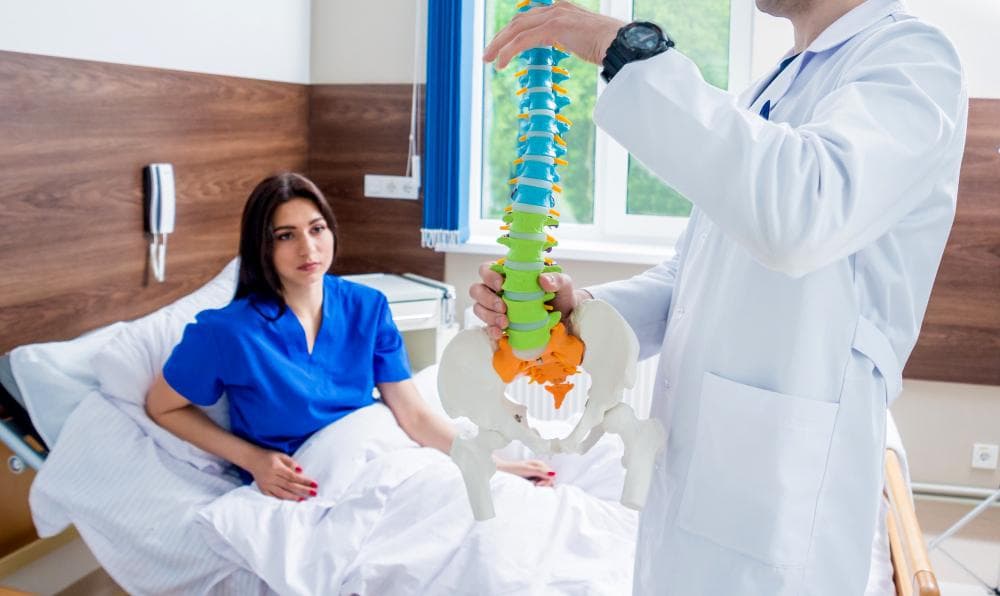
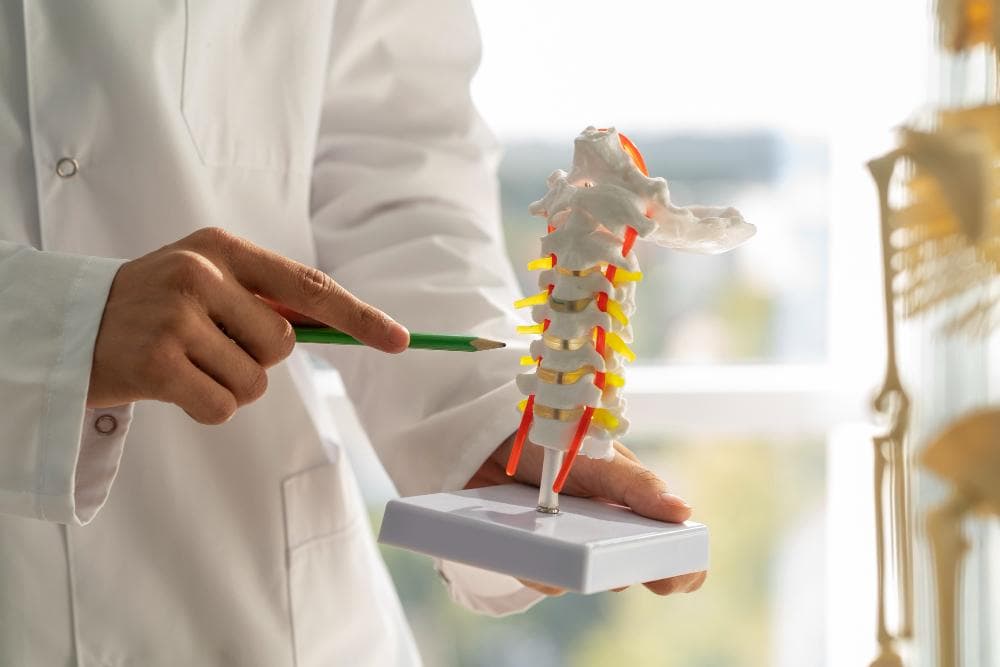
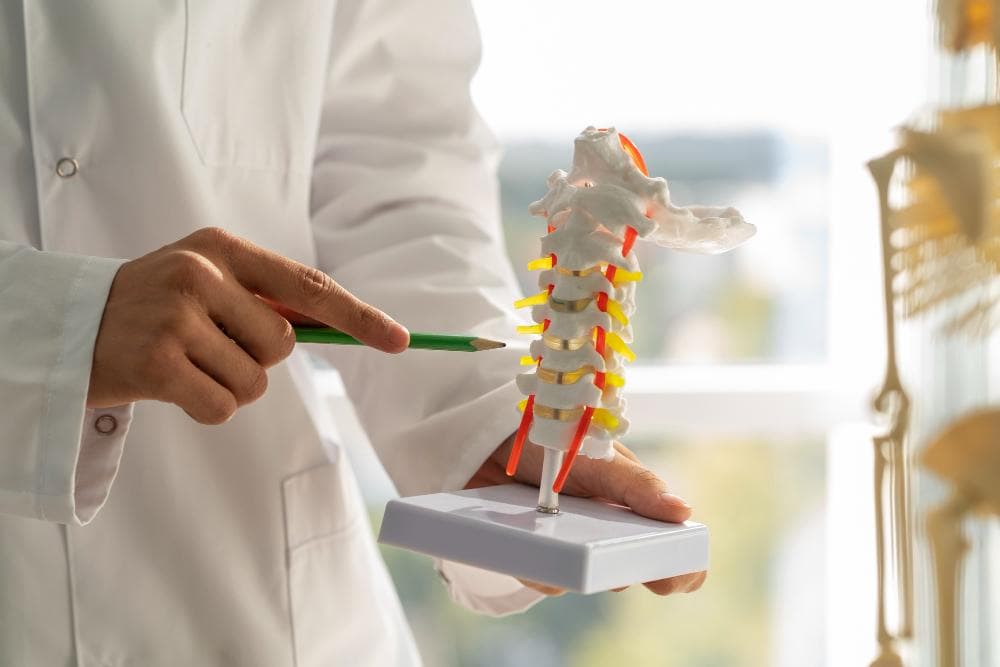
A doctor demonstrates a colorful spine model to a female patient in a hospital bed.
Back pain is a frequent problem; however, if your pain starts interfering with your day-to-day activities, this may suggest something more than just minor discomfort. It may also be that the spinal problem may not simply resolve on its own; with rest, pain medication, and/or physiotherapy, it may be something more complex. There may be something actually pressing on the nerves of your spine and thus causing constant, ongoing pain, weakness, and numbness.
This is where decompression surgery comes in. It is not a primary treatment; rather, it becomes appropriate when other treatments (conservative) fail to alleviate pressure on the spinal cord or nerve, thus removing the cause of the problem instead of just treating the symptoms. Decompression surgery creates space in the spine, allowing pain relief and restoration of the nerve functions, to significantly improve the patient's quality of life.
In this guide, you will be introduced to and learn more about what decompression surgery is, the situations in which the surgery might be recommended, the nature of the procedure itself, and what to expect during recovery from the surgery.
What Is Decompression Spine Surgery?
Spine decompression surgery is a surgical treatment used to relieve pressure on the spinal cord or its nearby nerves. This is often a result of conditions such as herniated discs, extra bone growth, or spinal stenosis (the narrowing of the spinal canal). The nerves, when compressed, can produce pain, a burning or tingling sensation, a loss of feeling in the affected area, and weakness of the legs or arms.
The entire aim of spine decompression is to simply alleviate the pressure that the nerve is receiving from a structure or structures.
How Spine Decompression Is Performed?
Before surgery is undertaken, the patient's spine is scanned using CT and MRI to help diagnose the exact area of the problem. While operating, the surgeon will remove or reshape the structures, putting pressure on the nerve. These may be portions of the discs, bone, or hardened ligaments. Depending on the condition, spinal fusion may also be carried out simultaneously with decompression of the spine.
When Does Spine Decompression Become Necessary?
There is no reason to resort to surgery in all cases of back pain. Decompression is typically suggested when symptoms are chronic or severe.
- Persistent pain that is resistant to non-surgical treatments - Medications, rest, or physiotherapy may alleviate most back/neck pain, but not symptoms that are caused by nerve damage.
- Numbness/tingling in arms/legs - "pins and needles" sensations are characteristic of a compressed nerve.
- Muscle weakness - Damage to nerves will result in a loss of power in muscles, and this makes it difficult to walk, lift objects, and may even make standing a struggle.
- Difficulty walking or standing up - If symptoms are exacerbated when upright or moving and worsen with walking, this will indicate a narrowed spinal canal.
- Loss of control of bowel or bladder - These are particularly alarming symptoms requiring surgical intervention and urgent attention.
Common Conditions Treated With Decompression Surgery
Several spine conditions causing prolonged pain and discomfort or immobility are treatable with decompression procedures. These are outlined below.
1. Herniated Disc
A slipped or bulging disc happens when the jelly-like center of a spinal disc protrudes through its outer wall. This may put pressure on nearby nerves, which can result in sudden sharp pains, numbness, or weakness down either arm or leg, depending on where the condition is. Decompression procedures relieve this pressure once other conservative methods of management have failed.
2. Spinal Stenosis
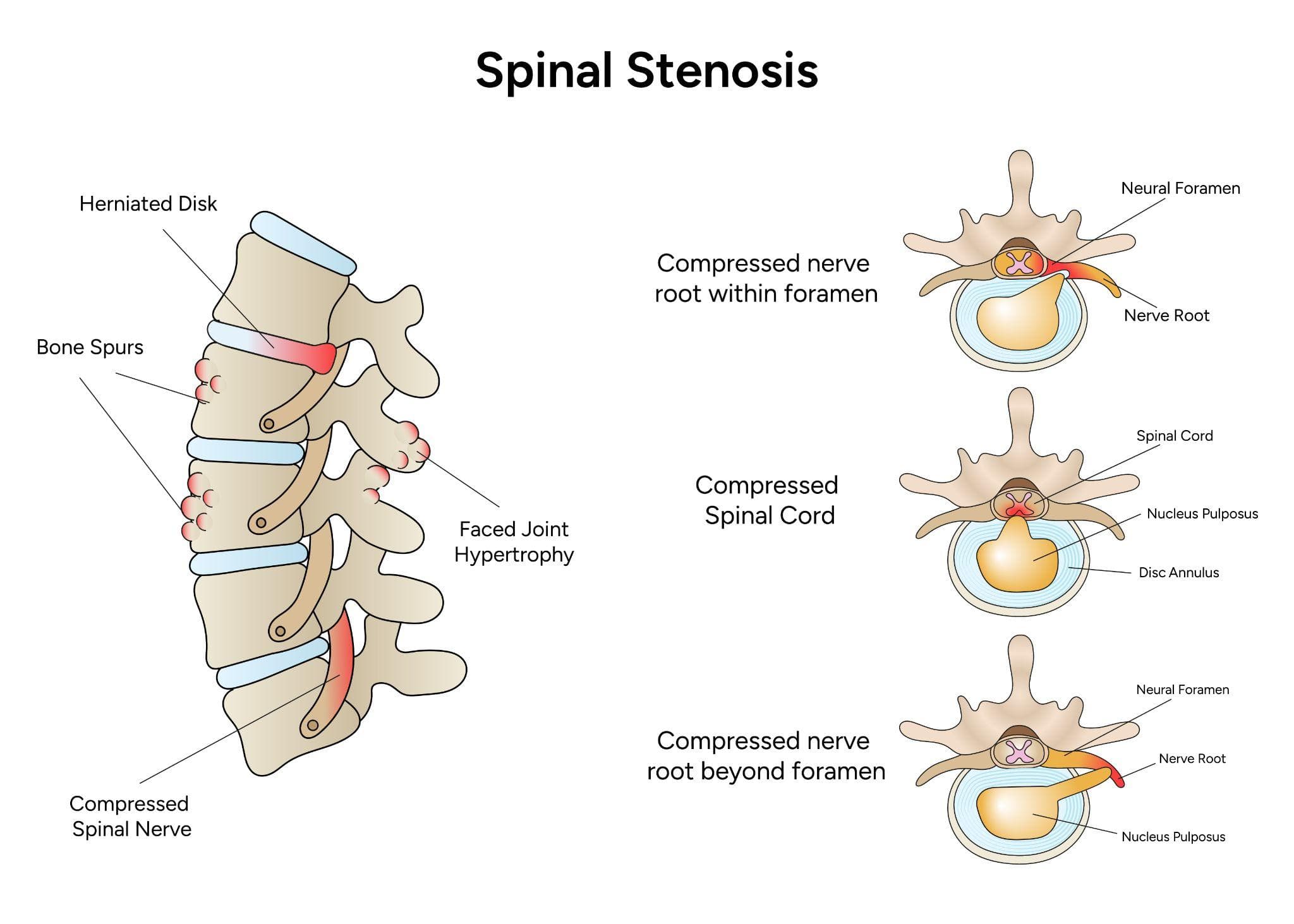
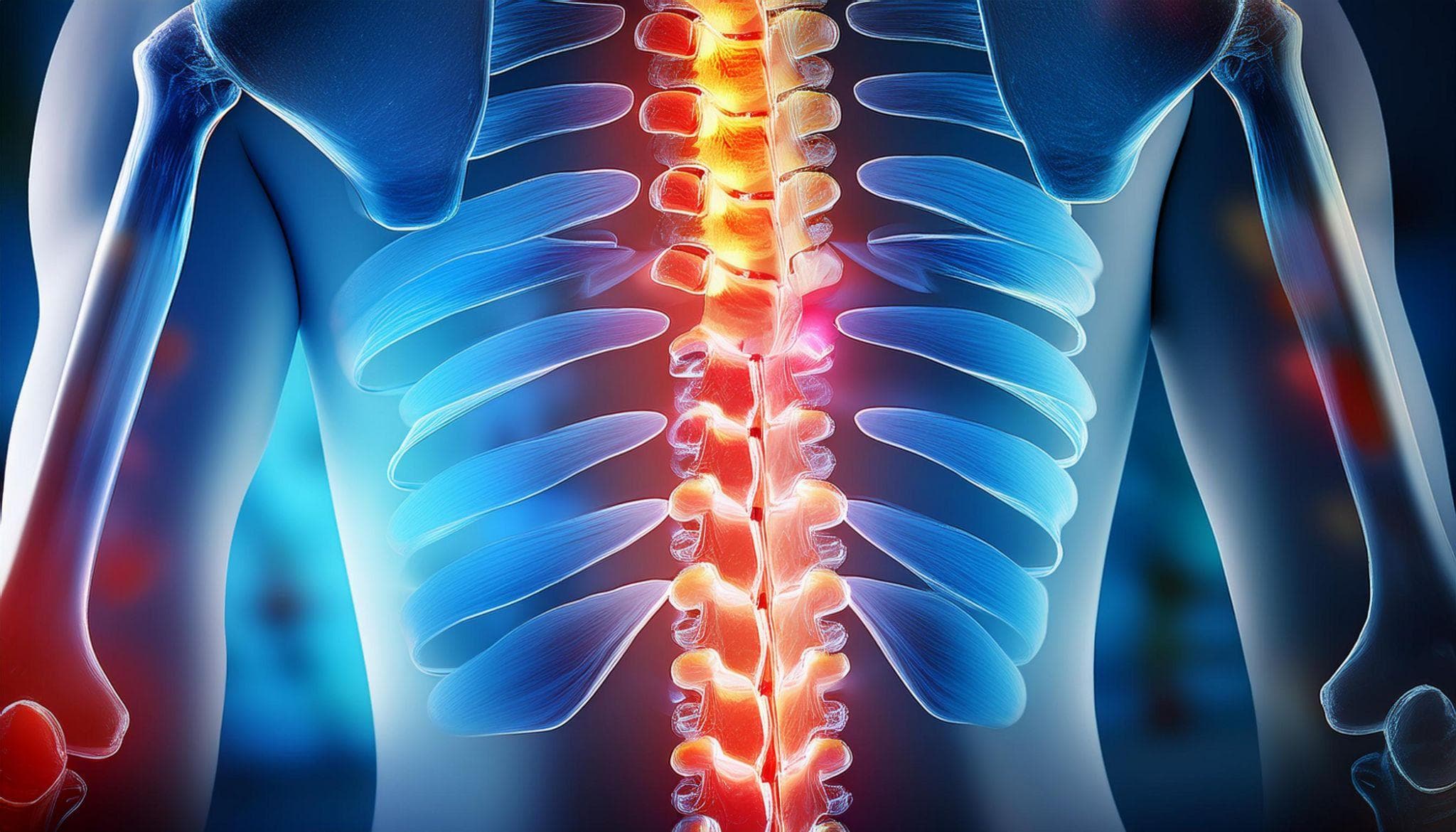
An anatomical diagram showing spinal stenosis and related issues, including herniated discs and compressed nerves.
The most common cause is aging or degenerative changes of the spine; this leads to a narrowing of the spinal canal where the nerves pass. This puts pressure on the spinal cord or nerve roots, causing heavy, crampy feelings or pain, exacerbated when walking and standing, for example. Decompression procedures provide relief by removing this pressure from the spine.
3. Sciatica
Sciatica is not a condition itself but a symptom. The condition causing sciatica is most frequently pressure on the sciatic nerve, leading to pain travelling from the lower back down into the buttocks and legs, and also the hips. If long-standing and severe, the sciatic nerve will benefit from decompression procedures.
4. Bone Spurs
These form due to friction or 'wear and tear', particularly in connection with arthritis. They tend to grow at the ends of the vertebrae; this excess bone can encroach upon space within the spine and nerve roots, thereby producing pressure. Decompression procedures remove these growths and improve nerve functionality.
5. Degenerative Disc Disease
Discs become less hydrated, more fragile, and less cushiony between the vertebrae. This may lead to instability within the spine and can compromise the nerve roots, increasing the chance of them being compressed. Decompression will again help this and may need to be performed in combination with stabilizing operations.
6. Spondylolisthesis
A condition whereby the spine vertebrae slide forward over each other, possibly resulting in nerve impingement. This can produce lower back pain, stiffness, and pain extending into the legs. Nerve decompression will provide pain relief by relieving nerve pressure. It can be done in conjunction with a fusion.
7. Facet Joint Hypertrophy
Enlargement of the facet joints, due to osteoarthritis, can narrow the spinal canal. The enlarged structure(s) may then impinge on the spinal nerves, causing local pain and limitation of movement. Nerve decompression relieves this by removing or reshaping the joint.
8. Spinal Tumours (Selected Cases)
Abnormal growth within the spine can press on the spinal cord and or nerve. The tumor can be resected or debulked to relieve symptoms.
9. Thickened Ligaments (Ligamentum Flavum Hypertrophy)
Spinal ligaments can gradually thicken, thus narrowing the spinal canal and adding to the problem of nerve compression in spinal stenosis. This can relieve pressure.
Types Of Decompression Surgeries
The surgical technique that is used will depend on the location, cause, and degree of compression the nerve experiences. All techniques aim to take pressure off the nerves while maintaining the structure of the spine.
1. Laminectomy
This involves the removal of the lamina, which is the back portion of each vertebra, that forms a roof over the spinal canal. Its removal provides additional room for the spinal cord and nerves, therefore decompressing the nerves. Laminectomy is frequently used for spinal stenosis to alleviate pain and improve walking distance.
2. Discectomy
A discectomy involves removing the damaged or herniated portion of the disc that is causing the compression of a nerve. This is typically suggested when a slipped disc causes significant pain, tingling, and numbness or weakness down the leg. In most cases, minimally invasive techniques are used and allow the patient to recover faster and with minimal tissue damage.
3. Foraminotomy
A foraminotomy involves widening of the narrow passageways(foramina) that carry the nerves out from the spinal cord, via bone growths or disc disease, and therefore compressing the nerves. Symptoms of this include pain radiating down the arm and numbness.
4. Laminotomy
Laminotomy is very similar to laminectomy; it involves the removal of a portion of the lamina to relieve compression of the nerves passing through the spinal column. Less removal occurs in laminotomy than in laminectomy to help with spinal stability.
5. Corpectomy
A corpectomy is similar to a laminectomy; however involves the removal of part of the vertebral body along with discs. The main reason to carry this out is where there is severe compression of the spinal cord by something else in the spinal column, such as trauma or tumors. The space created by removing a section of the vertebral body is typically filled in using bone graft or implants to keep the spine stable.
Benefits Of Decompression Surgery

A young man in a white t-shirt holds his lower back in pain, standing against a pink background.
This type of surgery provides major advantages where conventional treatments have not succeeded.
- Pain relief - Relieves pressure from the affected nerves and therefore the source of the pain is directly relieved.
- Better movement and mobility - Mobility becomes less restricted, and the patient is often able to move freely without pain.
- Better nerve function - Relieves numbness and tingling, and a greater level of sensation is achieved. Patients will find that they regain strength in any weakened limbs.
- Better quality of life - Patients will become capable of undertaking simple daily activities without pain and discomfort.
- Good long-term outcomes - Where this procedure is correctly timed, it should provide a long-term benefit to the patient.
Recovery After Decompression Surgery
The recovery from decompression surgery will depend on which surgical procedure has been performed and how the patient is in general terms.
- Hospital admission - Depending on the type of decompression that has been performed, most people will be in the hospital for only a short stay.
- Pain treatment - You will be prescribed several drugs that will ease the post-operative pain.
- Physiotherapy and rehabilitation - After an operation has been performed, the patient will then need to complete a rehabilitation program to increase the strength, range of movement, and flexibility in the limbs or area of the body that has been operated on.
- Return to normal activity - The patient will be advised about a graded return to everyday activities, working up from each achieved stage of progress.
- Follow-up visits - The patient will be seen at regular intervals by their specialist to ensure they are healing correctly and that no complications are developing.
Risks And Considerations
Like with any surgery, there is a range of possible complications that may occur with a decompression procedure:
- Infection
- Bleeding
- Nerve injury (rare)
- Return of symptoms
Careful evaluation and appropriate management by an expert or specialist will greatly decrease the likelihood of any of these risks developing.
When To See An Orthopedic Specialist
A specialist for your spine should be consulted if any of the following symptoms occur or continue:
- Constant back or neck pain
- Pain travels down into the legs or arms
- Tingling or numbness
- A weakness that affects normal day-to-day movements
- issues with movement and/or stability
Final Thoughts
The back and spine decompression surgery is not only about alleviating pain; rather, it is about restoring mobility and a quality of life. If the conditions in the spine are hampering the mobility, functioning, and freedom of movement, the same should not be left for the last stage.
See Dr. Mayank Chauhan in Noida for examination and advanced spine surgery at its best. His compassionate and advanced surgical treatment will surely ensure your ability to be pain-free, mobile, and live a better life again.
Frequently Asked Questions (FAQs)
Is decompression surgery painful?
The surgery will be carried out under anesthesia, and post-operatively, the pain can be managed with prescribed drugs.
Can decompression surgery be avoided?
Mild symptoms can normally be managed with physical therapy, medication, and lifestyle changes.
What is the success rate of decompression spine surgery?
Generally, decompression surgeries have a very high success rate, particularly if performed for causes involving nerve compression.
Will I require physiotherapy postoperatively?
Yes, physiotherapy is essential after surgery to regain strength, mobility and to avoid potential problems.