Cricket Injuries - The Most Common Problems and How Indian Cricketers Recover

A cricket bowler delivering the ball with precise body mechanics and balance.
Cricket is India's most culturally embedded sport. It's played in every format — professional IPL games watched by hundreds of millions, domestic matches, corporate cricket leagues, weekend park games, school matches, and the constant backyard cricket that starts as soon as an open space is found. And at every level — from international pace bowlers to the weekend enthusiast diving after a boundary — the same injury patterns emerge.
Cricket may look gentler than football or rugby, but it is a demanding sport that places specific and repetitive stresses on the body. Musculoskeletal injuries account for approximately 80% of all cricket injuries, with fast bowlers particularly susceptible due to the unique and extreme biomechanics of their action. But batsmen, fielders, and wicketkeepers all have their characteristic injury patterns too.
This guide covers the most common cricket injuries seen in orthopedic and sports medicine clinics in Noida and Delhi NCR — what causes each one, what it feels like, and what treatment and recovery actually look like.
Why Cricket Injuries Are Different
Cricket's injury profile is distinct from most other sports because of the combination of:
- High-intensity explosive movements (a pace bowler's delivery, a batsman's drive, a fielder's dive)
- Long periods of relative inactivity (standing in the field for hours between moments of action) — the transition from inactivity to explosive movement is a significant injury risk
- Repetitive, high-load actions (a fast bowler may deliver 30–50 balls in an innings, each with a bowling action that places extreme force on the lumbar spine and shoulder)
- Year-round play in India's climate, with IPL, domestic cricket, and international tours creating chronic overuse patterns, particularly in young fast bowlers
Fast Bowler Injuries — The Most Injury-Prone Position in Cricket
Fast bowling is biomechanically one of the most demanding actions in sport. The delivery action requires:
- A high jump at the crease
- Extreme rotation of the trunk and shoulder
- A violent extension-flexion motion of the lumbar spine
- Maximum shoulder internal rotation for ball release at high speed
- Extreme deceleration forces as the arm follows through
This combination produces a very specific injury pattern in pace bowlers.
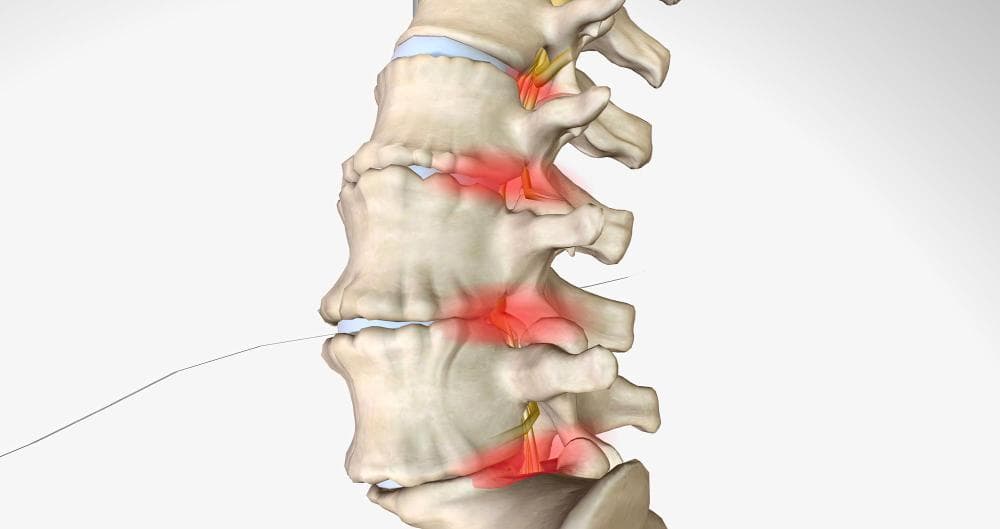
1. Lower Back Stress Fractures (Spondylolysis)
The most common serious injury in fast bowlers — and the one that has ended the careers of more promising Indian pacers than any other.
What it is: A stress fracture of the pars interarticularis — a specific part of the vertebra (typically at L4 or L5). The repetitive extension-rotation loading of fast bowling creates fatigue fractures at this vulnerable point. Bowlers who bowl over 140 km/h and those with hyperextension bowling actions are at the highest risk.
Symptoms: Gradually worsening lower back pain during and after bowling. Pain with extension (backward bending) of the spine. May radiate into the buttock. Initially dismissed as "muscle soreness" — this is dangerous, as continuing to bowl through the pain allows the fracture to progress.
Diagnosis: Plain X-rays may miss early stress reactions. MRI or CT scan with SPECT (single-photon emission computed tomography) is needed for definitive diagnosis. A bone scan can identify early stress reactions before structural fracture.
Treatment:
- Complete rest from bowling — 3–6 months typically
- Physiotherapy for core strengthening
- Bracing in some cases
- Return to bowling only when imaging confirms healing AND clinical testing shows readiness
- Surgery is rarely needed for true stress fractures that heal with rest
Prevention: This is the most important point. Young fast bowlers bowling too many overs per session and per season without adequate rest intervals is the primary risk factor. The BCCI and Cricket Australia have fast bowler workload guidelines for good reason — they are based on this evidence.
2. Side Strain (Internal Oblique Tear)
A bowler's injury — specifically caused by the abrupt lateral flexion of the non-bowling arm side at the point of ball release. The internal oblique, external oblique, or transversalis fascia tears at their attachment to the lower ribs.
Symptoms: Sharp pain on the non-dominant side of the lower ribcage, occurring at the moment of delivery. Painful breathing, coughing, and any trunk rotation. Can be severely debilitating.
Diagnosis: MRI confirms the tear location and extent.
Treatment: Rest — typically 4–8 weeks minimum depending on severity. Progressive return to bowling only when pain-free and strength is restored. No specific surgical treatment.
3. Shoulder Injuries
The shoulder in a fast bowler bears significant load — both in the bowling action (extreme internal rotation and follow-through) and in throwing from the field.
Rotator cuff injuries: Repetitive overhead load leads to supraspinatus and infraspinatus tendinitis and partial tears. A bowler with shoulder pain during the follow-through should not push through it — early assessment prevents small problems from becoming structural tears.
Labral tears (SLAP lesions): The superior labrum (the cartilage ring of the shoulder socket) tears at its biceps anchor point. Common in overhead throwers. Causes pain and weakness during specific shoulder positions. May require arthroscopic repair in significant tears.
Shoulder instability: Fast bowlers who dislocate or sublux (partial dislocation) their shoulder — often from fielding dives — are at high risk for recurrent instability. Arthroscopic Bankart repair is highly effective and allows return to competitive bowling.
Batsman Injuries
4. Hamstring Strains
The most common injury among batsmen and fielders. Running between wickets — particularly the explosive start and sudden deceleration — creates high eccentric loads on the hamstring muscle-tendon unit. Sharp shooting pain in the back of the thigh during a sprint characterises the acute presentation.
Grades: Grade 1 (minor, returns in 1–2 weeks), Grade 2 (significant tear, 3–6 weeks), Grade 3 (complete tear, 8–12 weeks minimum, may need surgery).
Treatment: Immediate RICE protocol, physiotherapy with progressive eccentric loading (the evidence strongly supports eccentric strengthening — the Nordic hamstring exercise is the most studied), gradual return to running. Return to full cricket only when strength symmetry between legs is confirmed (limb symmetry index > 90%).
5. Wrist and Hand Injuries
Batsmen are directly in the line of fire — a ball hitting the gloves at 140+ km/h can fracture the metacarpals, phalanges, or the hamate bone. More commonly, the batting grip subjects the wrist to repeated vibration and impact.
Hook of hamate fracture: A specific fracture from the grip pressure of repeated bat impact. Causes persistent wrist pain on the little finger side. Often missed on standard X-rays — requires CT for diagnosis. Sometimes requires surgical removal of the hook fragment for reliable return to batting.
Finger fractures and dislocations: Common from a direct ball impact. Management ranges from buddy-taping to surgical fixation depending on the fracture pattern and whether it involves the joint surface.
Tennis elbow (lateral epicondylitis): Repetitive grip and wrist extension forces — during batting — can cause lateral epicondyle pain. Common in batsmen who bat for long periods. Managed with physiotherapy, bracing, and injection therapy.
Fielding Injuries
6. Ankle Sprains
The most common injury in fielders — a sudden change of direction, a misstep on uneven outfield ground, or a landing from a dive causes the lateral ankle ligaments to sprain. As discussed in the sports medicine section, ankle sprains are the most undertreated sports injury — "walking it off" leads to chronic instability.
Prevention: Ankle stability exercises and proprioception training are the most effective prevention. A Functional Ankle Instability programme (balance exercises on unstable surfaces) significantly reduces recurrence risk.
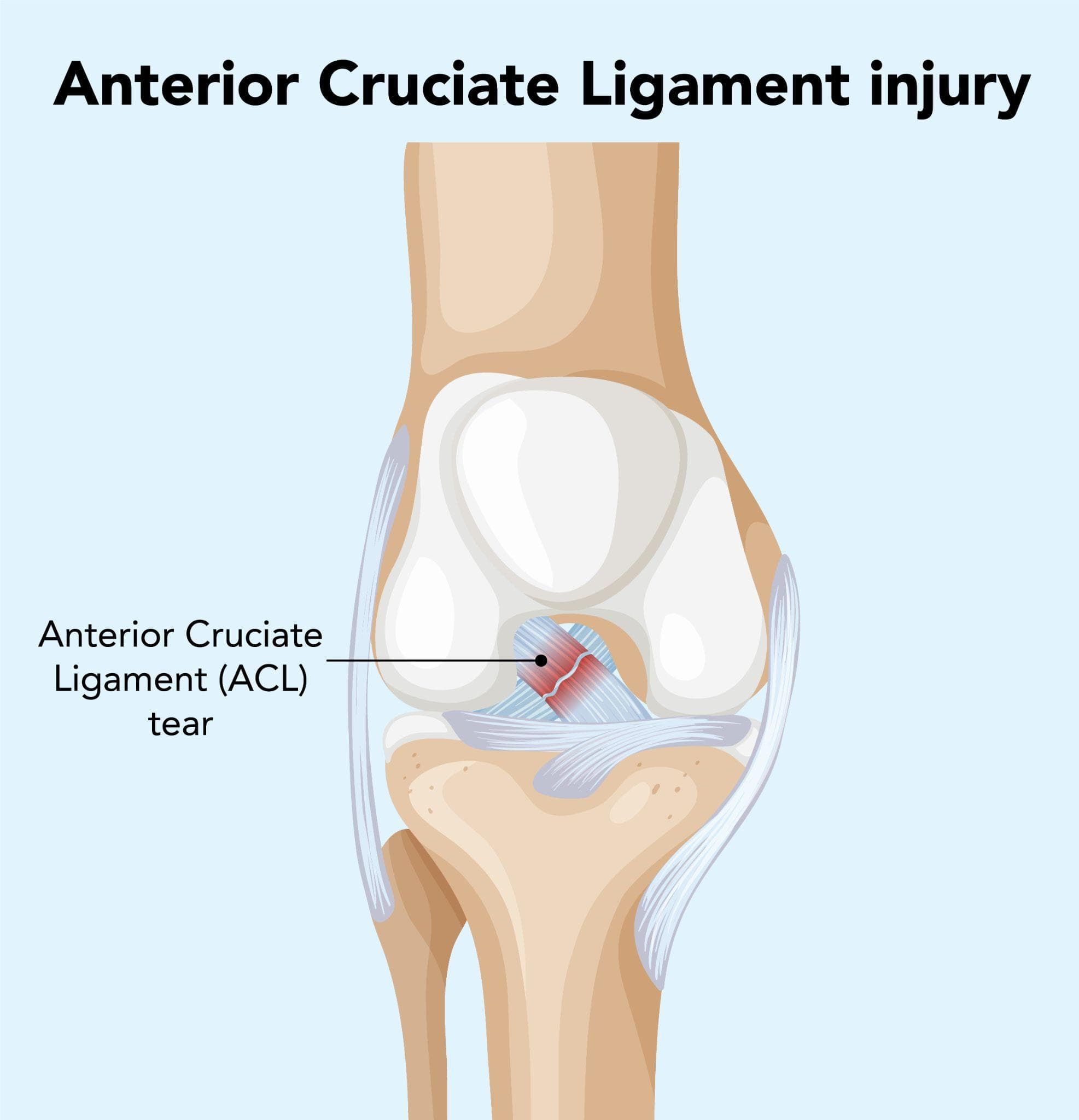
7. ACL and Knee Ligament Injuries
Fielders — particularly in the shorter formats where fielding intensity has dramatically increased — are exposed to the same ACL injury mechanisms as other sports: sudden pivoting, planting and cutting, and awkward landings from dives and jumps.
An ACL tear in a competitive cricketer typically requires reconstruction and a 6–9-month rehabilitation before return to competitive play. The motivational challenge is substantial — but properly managed ACL reconstruction has excellent return-to-sport rates.
8. Shoulder Dislocation from Diving
Fielders diving to stop boundaries often land on an outstretched arm — one of the classic ACL dislocation mechanisms. The shoulder dislocates anteriorly. As discussed, young athletes with a first dislocation have a very high recurrence rate without surgical stabilisation. For a cricketer who wants to continue fielding at a high level, Bankart repair is the appropriate intervention after a first traumatic dislocation in most cases.
Wicketkeeper Injuries
Wicketkeepers spend entire innings in a crouched position — sustained knee flexion with repeated rising and squatting. This posture:
- Stresses the patellar tendon (jumper's knee / patellar tendinopathy)
- Loads the medial compartment of the knee
- Strains the quadriceps
Wicketkeepers also receive the ball repeatedly at pace — high risk of finger fractures, dislocations, and ligament injuries to the small joints of the fingers.
Cricket Injury Management — Key Principles
The Return-to-Play Decision
One of the most important — and most frequently wrong — decisions in cricket injury management is when to return to play. Common mistakes:
Returning too early: The athlete feels "fine," but the healing is not complete. The risk of re-injury is dramatically higher in the first 4–6 weeks after many soft tissue injuries.
Using pain as the only guide: Some injuries (particularly stress fractures) can feel manageable to play through while causing progressive damage.
Ignoring strength deficits: A hamstring that is healed from pain but is at 70% of the other side's strength will tear again on the first explosive sprint.
The correct approach uses objective criteria — imaging confirmation of healing where relevant, strength symmetry testing (limb symmetry index), functional movement tests — not just symptomatic resolution.
Workload Management — Prevention for Fast Bowlers
The evidence for workload management in preventing fast bowler injuries is very strong. For club and recreational cricketers in Delhi NCR, this means:
- Not bowling more than 6–7 consecutive overs without a break
- Not bowling more than 20–25 overs per day
- Not bowling fast, medium, and short-ball deliveries repetitively without technique coaching
- Building conditioning through the off-season — core strength, hip strength, and shoulder stability
Warm-Up — Consistently Neglected at Recreational Level
The transition from inactivity (standing in the field for an hour) to explosive action (suddenly being called to bowl or sprint) is a primary injury mechanism. A 10-minute dynamic warm-up before cricket — leg swings, hip circles, shoulder rotations, short sprints — dramatically reduces soft tissue injury risk. At recreational cricket levels in Noida, this is almost universally skipped.
Cricket Injury Treatment in Noida — Dr. Mayank Chauhan at Prakash Hospital
Dr. Mayank Chauhan, Senior Orthopedic Surgeon at Prakash Hospital, Sector 33, Noida, treats cricket-related injuries from recreational players through to competitive cricketers — from acute ACL tears and shoulder dislocations requiring surgery to hamstring management, ankle rehabilitation, and lower back stress reactions in fast bowlers.
For cricketers in Noida and Greater Noida dealing with injury, early evaluation — ideally before continuing to play through pain — gives the best chance of both an accurate diagnosis and a full return to cricket.
To book a consultation, call the number listed on the website.
The Bottom Line
Cricket is a sport that, when played repeatedly and competitively, produces predictable injury patterns. Knowing what those patterns are — and seeking early assessment rather than playing through pain — is the difference between a short recovery and a prolonged one.
The fast bowler who dismisses back pain as muscle soreness and keeps bowling is risking a stress fracture that could sideline them for 6 months. The batsman who ignores persistent wrist pain from impact may develop an untreated hamate fracture. The fielder who "walks off" repeated ankle sprains develops chronic instability.
Cricket injuries are treatable — get them assessed properly.
To consult Dr. Mayank Chauhan, Senior Orthopedic Surgeon and Sports Medicine specialist in Noida, call the number listed on the website.