Post-Surgery Recovery Tips for Orthopedic Patients - What Actually Makes the Difference

Doctor applying a bandage to a patient’s leg after knee replacement surgery.
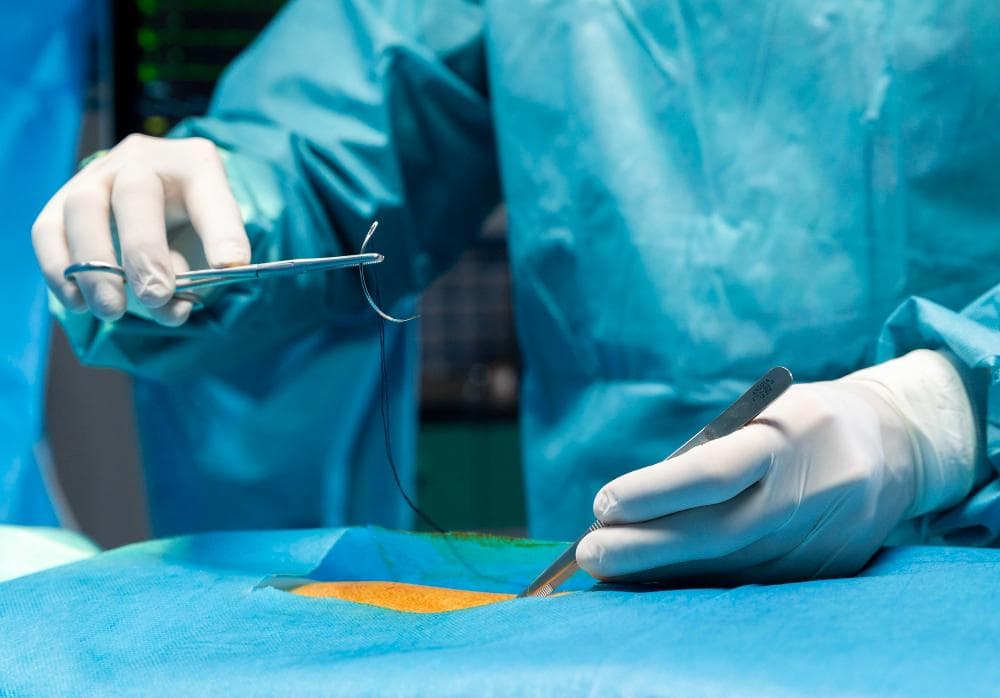
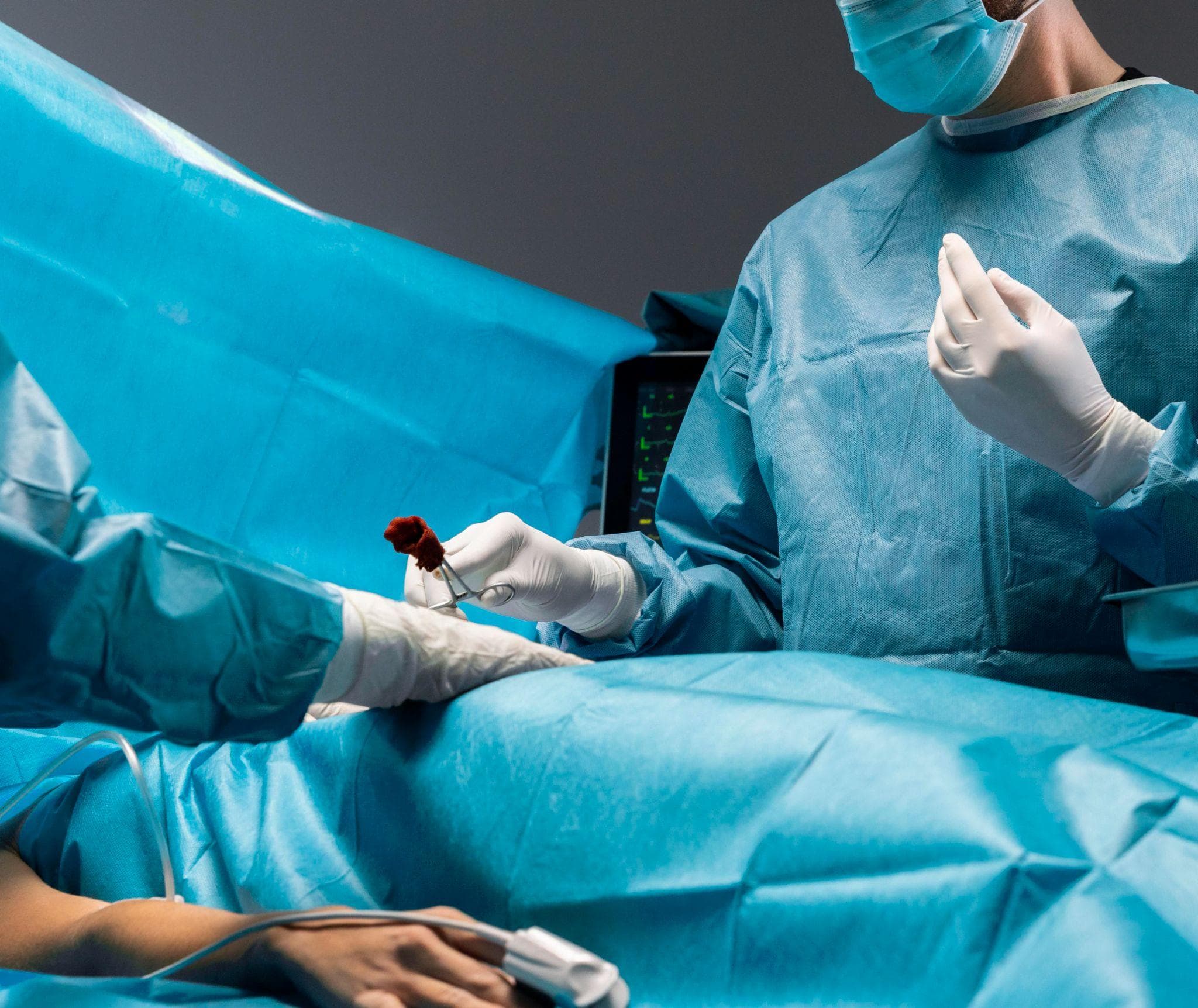
Orthopedic surgery is a partnership. The surgeon's role is to perform the procedure with technical precision — restoring the correct anatomy, fixing the fracture, replacing the joint, reconstructing the ligament. But what happens in the weeks and months after surgery — at home, in physiotherapy, in the patient's daily choices — determines whether that surgical work translates into excellent function or a mediocre outcome.
The difference between patients who recover quickly and completely and those who struggle — often from the same procedures at the same quality — is almost entirely determined by what happens outside the operating theatre.
This guide covers the post-operative habits, practical preparations, and specific advice that make the biggest difference to orthopedic recovery. These are not generic wellness suggestions — they are clinically grounded recommendations based on what the evidence consistently shows matters.
Before Surgery — The Pre-Operative Foundation
The best recovery starts before surgery. Patients who prepare properly before elective procedures consistently recover faster and with fewer complications.
Prehabilitation (Prehab)
"Prehab" — physiotherapy and exercise before surgery — significantly improves post-operative outcomes, particularly for joint replacement and major ligament reconstruction.
For knee replacement patients: 4–6 weeks of quadriceps strengthening, hip strengthening, and aerobic conditioning before surgery. Patients who arrive at surgery with stronger muscles recover faster, have shorter hospital stays, and achieve better functional outcomes.
For ACL reconstruction, upper body and hip conditioning maintain overall fitness during the recovery period that follows.
For spine surgery: core strengthening and flexibility maintenance before spinal decompression or fusion.
Even 2–3 weeks of focused strengthening before an elective procedure produces measurable improvement.
Nutritional Preparation
The body uses protein as the raw material for tissue healing. Patients with low protein intake heal more slowly and with more complications. In the 2–4 weeks before elective surgery:
- Target protein intake: 1.2–1.5g of protein per kg of body weight per day
- Best Indian protein sources: Dal, paneer, curd, eggs, chicken, fish — at each main meal
- Iron: Correct anaemia before surgery — iron supplements if haemoglobin is below 12 g/dL
Vitamin D
As covered in the Vitamin D blog, deficiency is near-universal in urban Indians. Vitamin D is essential for bone healing after fractures and joint replacement. If surgery is planned 4–6 weeks away, checking and correcting Vitamin D status before surgery is worthwhile.
Quit Smoking
Smoking reduces blood flow to healing tissue, impairs immune function, and significantly increases post-operative complications — wound healing problems, infection, and poor bone healing. Ideally, smoking cessation should begin 4–6 weeks before surgery. The longer before surgery, the better.
The First Week at Home — The Critical Window
The first week after discharge is the highest-risk period for most post-operative complications. Managing this period correctly protects the surgical outcome.
Ice, Elevation, and Movement — The Triad
Ice: Apply an ice pack (wrapped in a cloth — never direct skin contact) for 15–20 minutes after each physiotherapy session and after any significant activity. Ice reduces post-operative swelling and pain — both of which impair early mobility. This remains useful for at least 6 weeks post-operatively.
Elevation: Keep the operated limb elevated above the level of the heart when resting. For knee and ankle/foot surgery, this means sitting with the leg propped on pillows on a sofa or chair — not just putting the leg on a low footstool. For hip surgery, standard supine positioning with a pillow under the calf (not the knee).
The sequence that works best: physiotherapy exercise → short walk → ice and elevation for 20 minutes → rest. This cycle, repeated 3–4 times per day, is the most effective formula for the first 2 weeks.
Movement: The most counterintuitive advice — but consistent with all the evidence — is that patients who move more (within prescribed limits) after orthopedic surgery do better than those who rest. Complete rest causes muscle atrophy, stiffness, and DVT. The movement must be of the right type (the exercises prescribed by the physiotherapist) rather than random activity, but the principle is clear.
DVT Prevention — Non-Negotiable
Deep vein thrombosis (blood clots in the leg veins) is the most common serious complication after major orthopedic procedures — particularly knee and hip replacement. Without prevention, DVT occurs in 40–60% of patients after total joint replacement.
What prevents DVT:
- Blood-thinning medication: Taken as prescribed — either injection (LMWH) or tablets (rivaroxaban, aspirin). Do not skip doses. Continue for the full prescribed duration (typically 2–4 weeks).
- Compression stockings: Worn during waking hours for 6 weeks.
- Ankle pumps: The simplest and most accessible DVT prevention exercise — rhythmically flexing and pointing the foot while resting. Do this every 30–60 minutes while awake.
- Walking: Even short walks promote venous circulation.
Signs of DVT to report immediately:
- Calf pain, swelling, warmth, or redness (typically one-sided)
- Chest pain or breathlessness (pulmonary embolism — emergency)
Wound Care
- Keep the wound dry until the surgeon confirms it is safe to wet (typically at the 2-week review)
- Report any increasing redness, warmth, swelling, or discharge from the wound — these may indicate infection developing
- Showering: cover the wound with a waterproof dressing; avoid submerging in water until fully healed
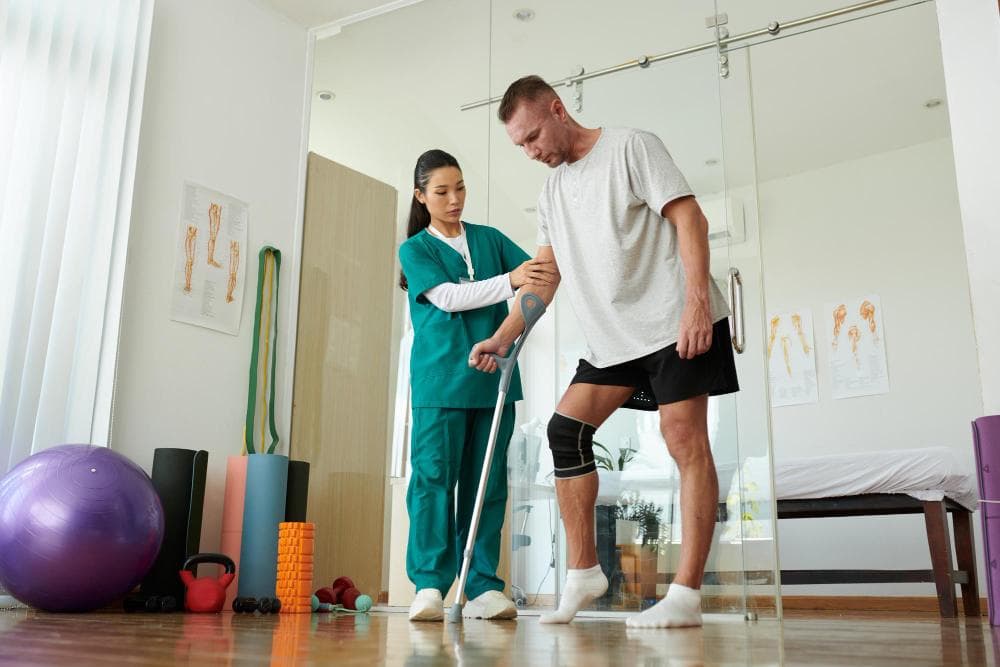
Physiotherapy — The Most Important Thing You Do
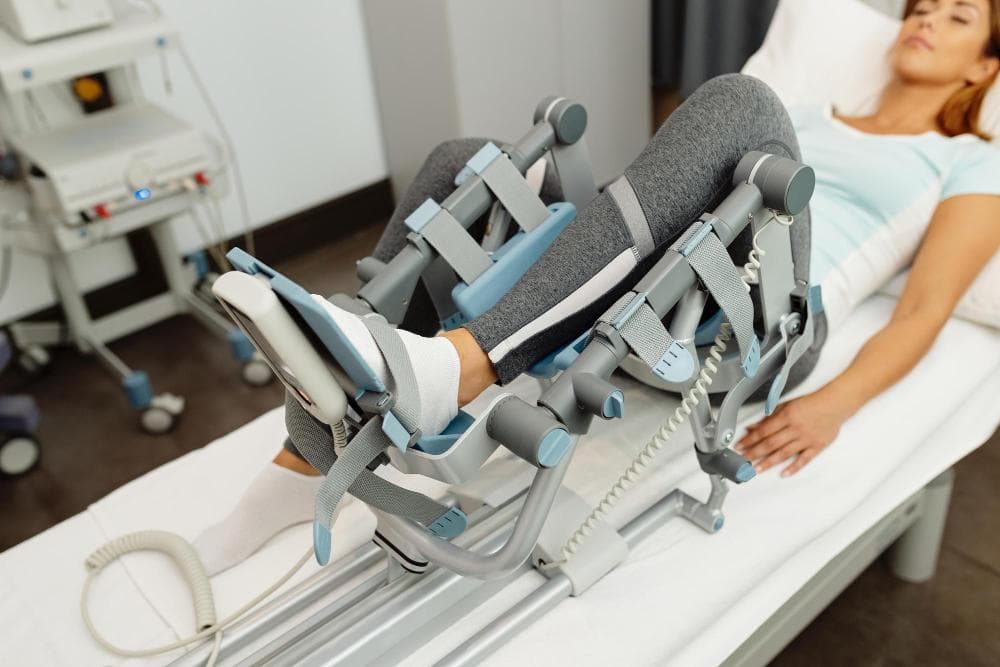
No post-operative intervention has a bigger impact on recovery than physiotherapy. The exercises are not optional, they are not background tasks, and they do not produce results when done half-heartedly three times a week.
What Good Physiotherapy Compliance Looks Like
Frequency: The prescribed exercises should be done daily — in most cases, twice a day. Not when you feel like it. Not only when the physiotherapist is watching. Every day.
Duration: Most post-operative exercise programmes require 30–60 minutes of dedicated exercises per day in the acute phase. This is a meaningful time commitment — factor it into daily planning.
Progression: The programme should progress. An exercise that was challenging in Week 2 should feel easy by Week 4 — and the programme should have advanced accordingly. If you are doing the same exercises with the same level of difficulty at 8 weeks that you did at 2 weeks, the programme is stalled and needs to advance.
Pain guidance: There is a difference between discomfort from muscles being worked (expected and acceptable) and sharp joint pain that signals something wrong (stop and consult). Most physiotherapy exercises for orthopedic recovery produce some discomfort. This is not harmful — it is the tissue being appropriately loaded.
Home Exercise Programme vs. Clinic Visits
Most post-operative physiotherapy involves a combination of clinic visits (2–3 times per week, where the physiotherapist progresses and guides the programme) and home exercises (done daily, guided by a written or illustrated programme from the physiotherapist).
The home exercises are not less important than the clinic visits — they are more important, because they happen daily while clinic visits happen twice a week. Patients who do their clinic sessions diligently but skip the home exercises get half the benefit.
Nutrition During Recovery — Fuelling Healing
Post-operative nutrition directly affects how quickly and completely tissue heals.
Protein — The Healing Nutrient
Surgical wounds, bone, tendons, and ligaments are all repaired using collagen — a protein. Without adequate dietary protein, collagen synthesis is impaired and healing slows.
Target: 1.2–1.5g of protein per kg of body weight per day through the recovery period.
Practical daily protein targets for a 70kg patient:
- Morning: Dal with roti — approximately 20g protein
- Lunch: Paneer or chicken with dal — 25–30g protein
- Evening: Curd with nuts — 15–20g protein
- Dinner: Fish or eggs with dal — 25–30g protein
Protein supplements (whey protein mixed into milk or smoothies) are a practical way to boost intake for patients who find it difficult to hit the dietary target.
Vitamin C
Vitamin C is essential for collagen synthesis. 500–1000 mg of Vitamin C daily during the healing period is beneficial and safe. Amla (Indian gooseberry) is one of the richest dietary sources.
Vitamin C also reduces CRPS risk — studies show that 1000 mg daily for 6 weeks after distal radius fractures significantly reduces the incidence of complex regional pain syndrome.
Calcium and Vitamin D (for bone procedures)
For fractures, joint replacement, and spinal fusion — calcium (1000–1200 mg daily) and Vitamin D (as supplemented) support bone healing and implant integration.
Avoid alcohol during the healing period
Alcohol impairs wound healing, increases infection risk, and interferes with some post-operative medications. Avoid for at least 4–6 weeks after major surgery.
Pain Management — Finding the Balance
Post-operative pain is expected and normal. The goal of pain management is not to eliminate pain — it is to keep pain at a level that allows participation in physiotherapy and early mobilisation.
Take medication on a schedule, not just when pain is severe:
Pain is much harder to control once it has escalated. Regular paracetamol (every 4–6 hours), combined with prescribed NSAIDs and any stronger medication recommended by your surgeon, maintains a consistent analgesic effect. Waiting until pain is severe before taking medication means playing catch-up.
Reduce dependency on stronger painkillers over time:
Opioid medications prescribed for post-operative pain (tramadol, codeine) are appropriate for the first 5–10 days but should be weaned off progressively. Prolonged opioid use beyond 2 weeks after elective orthopedic surgery is rarely necessary and should be discussed with the surgeon.
Ice is analgesic:
Applying ice after physiotherapy and activity provides meaningful additional pain relief — non-pharmaceutical, non-addictive, always available.
Sleeping and Resting Positions
A correct sleeping position reduces pain and protects the surgical work.
After knee replacement: Sleep with the leg flat — a pillow under the calf (not the knee) is fine. Do not prop the knee in a bent position — this creates a flexion contracture (the knee doesn't fully straighten), one of the most common early complications of knee replacement.
After hip replacement (posterior approach): The "hip precautions" — don't bend the hip past 90 degrees, don't cross the legs, don't turn the foot inward. A pillow between the knees when sleeping on the side. Follow these for 6 weeks.
After spine surgery: Follow the surgeon's specific guidance — sleeping positions vary by level operated on and approach used.
After ACL reconstruction: Sleeping flat with the leg straight protects extension. A knee brace is sometimes worn at night in the first 2 weeks.
Practical Home Modifications
Small home modifications make a significant difference to the safety and comfort of recovery.
Raised toilet seat: Essential for knee and hip surgery patients who cannot flex below 90 degrees in the early weeks. Available at medical supply stores in Noida.
Firm chair with armrests: Rising from low, soft sofas is very difficult with a new knee or hip. A firm chair with armrests from which the patient can push up with their arms is essential.
Non-slip surfaces in the bathroom: Wet tile floors are the highest fall-risk surface in any home. A non-slip bath mat and grab rail next to the toilet are worth installing before surgery.
Clear walking paths: Remove loose rugs, cables, and any obstacles from the paths between the bed, toilet, and kitchen. Falls are most common in the first 2 weeks when balance and confidence are limited.
Essential items at accessible height: Anything needed frequently — glasses, phone, medication, water — should be within reach without bending or stretching that stresses the surgical site.
Psychological Recovery — Managing Expectations
Recovery from orthopedic surgery rarely follows a straight line. There are weeks of clear progress followed by weeks of plateau. There are days when the knee hurts more than usual after physiotherapy. There is often a period around Weeks 3–4 when the initial post-operative improvement stalls and the patient wonders if they will ever feel normal.
What helps:
- Understanding that plateaus are normal — the underlying healing continues even when symptoms are not dramatically changing
- Tracking objective progress (range of motion, walking distance, specific exercises) rather than focusing only on pain — pain is the last thing to fully resolve
- Maintaining social connections and normal routines as much as possible
- Setting small, specific, achievable goals for each week
When to seek additional support:
Post-operative depression — a period of low mood, frustration, and anxiety — affects a significant proportion of patients after major orthopedic surgery. This is a medical condition, not a character weakness. If low mood persists beyond 2–3 weeks, discuss it with your surgeon or GP.
Post-Operative Care in Noida — Dr. Mayank Chauhan at Prakash Hospital
Every patient of Dr. Mayank Chauhan at Prakash Hospital, Sector 33, Noida, receives specific, individualised post-operative guidance — including a written home exercise programme, wound care instructions, DVT precautions, and clear guidance on what to do if concerns arise between follow-up appointments.
Follow-up appointments at Prakash Hospital are structured to assess healing at the appropriate milestones — and to identify and address any complications or rehabilitation delays early.
For patients in Noida and Greater Noida who have had recent orthopedic surgery and have concerns about their recovery progress, a review consultation is available. To book a consultation or follow-up, call the number listed on the website.
The Bottom Line
Post-operative recovery from orthopedic surgery is determined primarily by what the patient does — not just by the quality of the surgery. Consistent physiotherapy, appropriate nutrition, DVT prevention, correct sleeping position, and a realistic psychological approach are all within the patient's control. The patients who do these things consistently and correctly recover faster, more completely, and with better long-term function. The surgery creates the foundation — the patient builds on it.
To consult Dr. Mayank Chauhan, Senior Orthopedic Surgeon in Noida, call the number listed on the website.