Reviewed by Dr. Mayank Chauhan
Rheumatoid Factor (RA Factor) Test: What Your Result Really Means
Rheumatoid factor ranges differ between labs, so compare your result with the range printed on your own report.
The RA factor result has come back, and it is flagged high. Or it is normal, but your hands are still swollen every morning. Either way, the little number on the report seems to carry more weight than it should. People often read "RA positive" as "I have rheumatoid arthritis" and "RA negative" as "I am in the clear."
Neither conclusion is safe. The RA factor test is a useful clue, but it is only one clue, and it is wrong in both directions more often than people realise.
What is rheumatoid factor?
Rheumatoid factor (RF) is an antibody, a protein made by the immune system, that attacks the body's own antibodies (immunoglobulin G). It was named because it was first found in people with rheumatoid arthritis. The RA factor test measures how much of it is in your blood.
Most healthy people have little or none. In rheumatoid arthritis, RF is often raised, and a high level can go along with more active, more severe disease. But RF is not made only in RA.
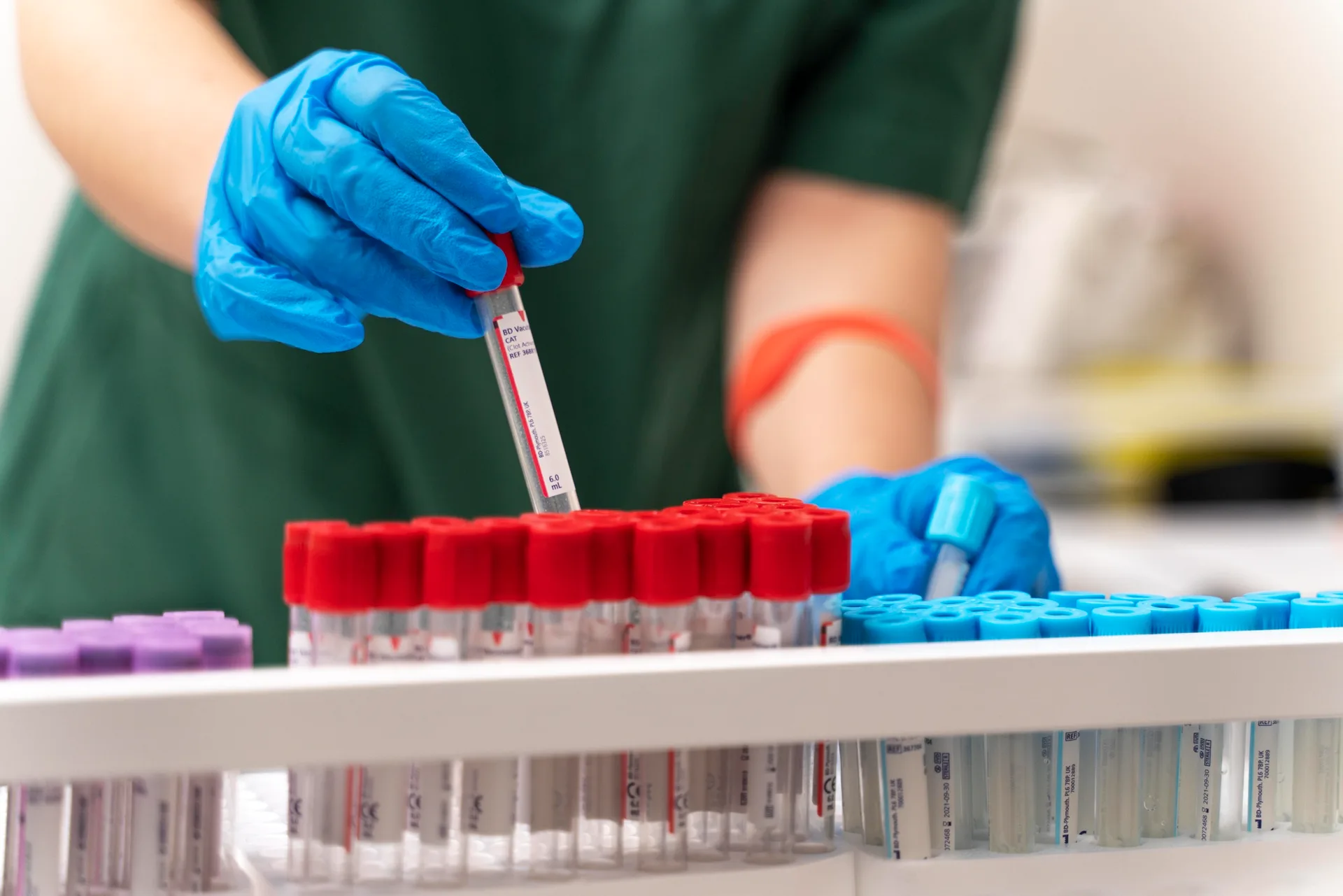
How the test is done
- A simple blood test, no special preparation needed in most cases
- Reported as a titre or in IU/mL, depending on the lab
- Different labs use different methods (latex agglutination, nephelometry, ELISA), so reference ranges differ
Because of this, always compare your result to the range printed on your own report. A common cut-off is around 14 to 20 IU/mL, with values above this considered positive, but this varies.
Some labs report a titre such as 1:80, where higher dilution means higher RF. Others just say "positive" or "negative."
What does a positive RA factor mean?
A positive RF means that rheumatoid factor was detected above the lab's cut-off. It does not by itself mean you have rheumatoid arthritis.
RF can be positive in people without RA
- Healthy people. A small percentage of healthy adults test positive, and the proportion rises with age, so older adults are more likely to have a positive result with no disease.
- Other autoimmune diseases. Sjögren's syndrome, lupus, systemic sclerosis and mixed connective tissue disease can all raise RF.
- Chronic infections. Hepatitis C, tuberculosis, endocarditis, syphilis, malaria and some viral infections.
- Liver and lung disease.
- Some cancers, such as lymphoma.
- Recent vaccination or illness can briefly raise it.
High levels are more suspicious
A strongly positive RF, particularly with joint symptoms, makes RA more likely. Very high titres are associated with a more aggressive disease course and with complications outside the joints, such as nodules.
What does a negative RA factor mean?
A negative result does not rule out RA. A sizeable proportion of people with RA, perhaps one in five or more, are seronegative, meaning the RF is negative. Some become positive later. Seronegative RA behaves like any other RA and needs the same careful treatment.
If your RF is negative but you have the typical symptoms (swollen small joints, prolonged morning stiffness, symmetrical pattern), you should still be assessed further. Our article on the early signs of rheumatoid arthritis lists what to look for.
Anti-CCP: the better partner test
Anti-cyclic citrullinated peptide (anti-CCP, also called ACPA) antibodies are another blood test used alongside RF.
- Anti-CCP is more specific for RA than RF. A positive result is less likely to occur in other conditions.
- It can become positive years before symptoms appear.
- Strongly positive anti-CCP signals a higher risk of erosive disease.
- Being positive for both RF and anti-CCP strengthens the suspicion.
Doctors often order both together. Anti-CCP can be positive when RF is negative, which helps identify seronegative-for-RF cases.
Other tests used in the RA workup
The diagnosis of RA is made by putting several pieces together.
Inflammation markers
- ESR (erythrocyte sedimentation rate) and CRP (C-reactive protein) rise when inflammation is active. They are not specific to RA, but they help assess disease activity and response to treatment.
Blood counts
- Anaemia of chronic disease, raised platelets or white cell changes may appear.
Other autoantibodies
- ANA (antinuclear antibodies) help look for lupus and related conditions.
- Other antibody tests may be ordered depending on symptoms.
Imaging
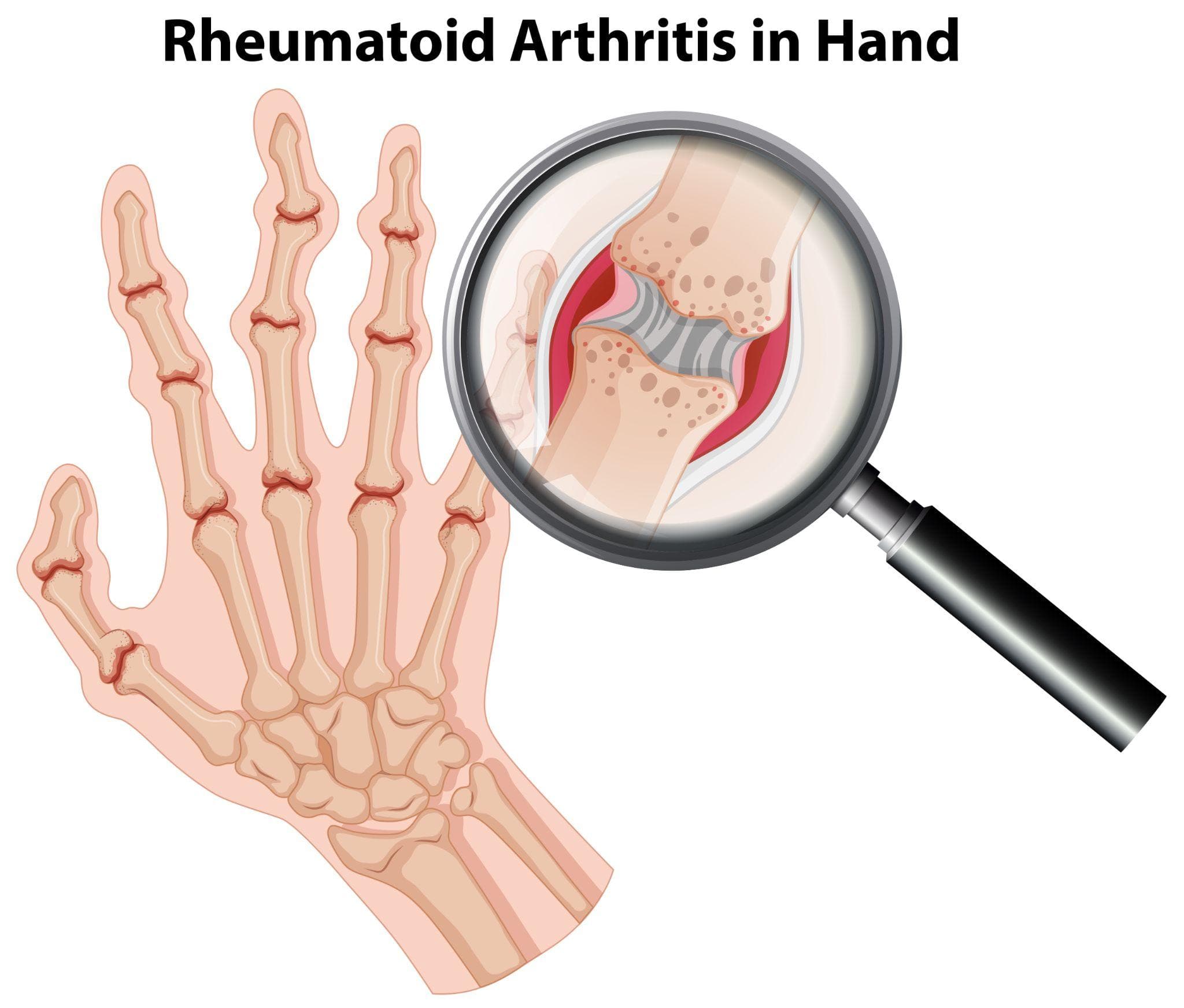
- X-rays of the hands and feet can show swelling and, later, erosions.
- Ultrasound and MRI detect inflammation of the joint lining and early bone changes before X-rays do.
Joint fluid analysis
- In some cases, fluid from a swollen joint is tested to rule out gout, infection and other causes.
Clinical examination
Perhaps the most important part. The doctor looks at which joints are swollen and tender, whether the pattern is symmetrical, how long morning stiffness lasts, how long symptoms have been present and whether there are other features such as nodules or eye and skin problems.
How doctors diagnose RA
There is no single test for RA. Classification criteria combine:
- Number and type of joints involved
- Blood tests: RF and anti-CCP (low or high positive)
- Inflammation markers (ESR or CRP)
- Duration of symptoms (six weeks or more counts for more points)
A person with several swollen joints, positive anti-CCP or RF, raised inflammation markers and symptoms lasting more than six weeks is likely to meet the criteria. But the final diagnosis is a clinical judgement, made by a specialist who sees the whole picture.
Things that can change or confuse the result
- Age. RF becomes more common in healthy older adults, so a mildly raised value after 60 or 65 carries less weight than the same value at 30.
- The lab's method. Latex tests, nephelometry and ELISA do not always agree, so a result of 20 on one report is not the same as 20 on another.
- Timing. In early disease RF may be negative and turn positive months later. If symptoms continue, a repeat test along with anti-CCP is reasonable.
- Treatment. Some RA medicines can lower RF levels over time, which is one reason doctors do not use it to judge how well treatment is working.
- Cryoglobulins and other blood proteins can interfere with the test in rare cases, and the lab may flag this.
Rheumatoid factor in children
Children with joint swelling are tested less often for RF, because juvenile arthritis is a different group of conditions. Many children with juvenile idiopathic arthritis have a negative RF. A paediatric rheumatologist should interpret the result together with the pattern of joints involved.
Common questions
I have a positive RA factor but no symptoms. Do I have RA? Not necessarily. A positive RF in the absence of symptoms can be a normal variant or related to another cause. Your doctor may keep an eye on you, especially if anti-CCP is also positive or you have a family history. Do not start RA medicines on the basis of a blood test alone.
My RA factor is negative, but my joints are swollen. What now? Get examined. Seronegative RA exists, and other forms of inflammatory arthritis (psoriatic, reactive, gout) and infections such as chikungunya can look similar. Anti-CCP, inflammation markers, imaging and clinical review help.
Does the RA factor level show how severe my disease is? A high level is associated with more severe disease in some studies, but it is not a reliable measure of disease activity. Doctors track joint counts, ESR, CRP and symptoms instead.
Should the RA factor be repeated? Repeating RF is not usually helpful for monitoring. It tends to stay about the same over time. Disease activity is followed with other measures.
Can RA factor be positive after a viral infection? Yes. Infections can temporarily raise RF, which is another reason not to interpret it in isolation.
Is a normal RA factor value the same for everyone? No. Ranges differ between labs, and RF rises slightly with age. Use the reference range on your report.
What to do with your result
- Do not self-diagnose or panic. One blood result is not a diagnosis.
- Look at your symptoms. Are there swollen joints? Is morning stiffness over an hour? Are both hands affected? Has this lasted more than six weeks?
- Book an assessment with an orthopedic doctor or rheumatologist, taking your reports with you.
- Expect further tests such as anti-CCP, ESR, CRP and, if needed, imaging.
- Start treatment early if RA is confirmed. The first few months matter most for protecting the joints. Read our guide on rheumatoid arthritis treatment options for what to expect.
Joint pain with swelling that lasts more than a few weeks should be assessed even when the blood tests are normal.
When to seek urgent care
Go to the emergency department if you have:
- A hot, red, very swollen joint with fever or chills
- Sudden inability to use a joint
- Chest pain or breathlessness
- New weakness or numbness
Prakash Hospital in Noida has a 24 hour emergency department.
Arthritis assessment in Noida with Dr. Mayank Chauhan
If your RA factor is positive, negative or borderline and you have joint symptoms, a proper examination will tell you more than the report alone. Dr. Mayank Chauhan is a senior orthopedic surgeon at Prakash Hospital, D-12A/12B, Sector 33, Noida, next to the ISKCON Temple. He has more than 15 years of experience, trained at Maulana Azad Medical College, Delhi, and completed an arthroplasty fellowship at Hallym University Hospital, South Korea. His patients rate him 4.9 out of 5 on Google.
Prakash Hospital is NABH and NABL accredited, with a laboratory accredited by NABL, and works with CGHS, ECHS, ESI and major insurers. OPD hours are Monday to Saturday, 10 AM to 8 PM, and Sunday, 10 AM to 2 PM.
To book a consultation, call the number listed on the website.
This article is for general information and does not replace a medical examination. Reference ranges differ between laboratories; always use the range on your own report.