Robotic Knee Replacement Surgery in Noida: Everything You Need to Know

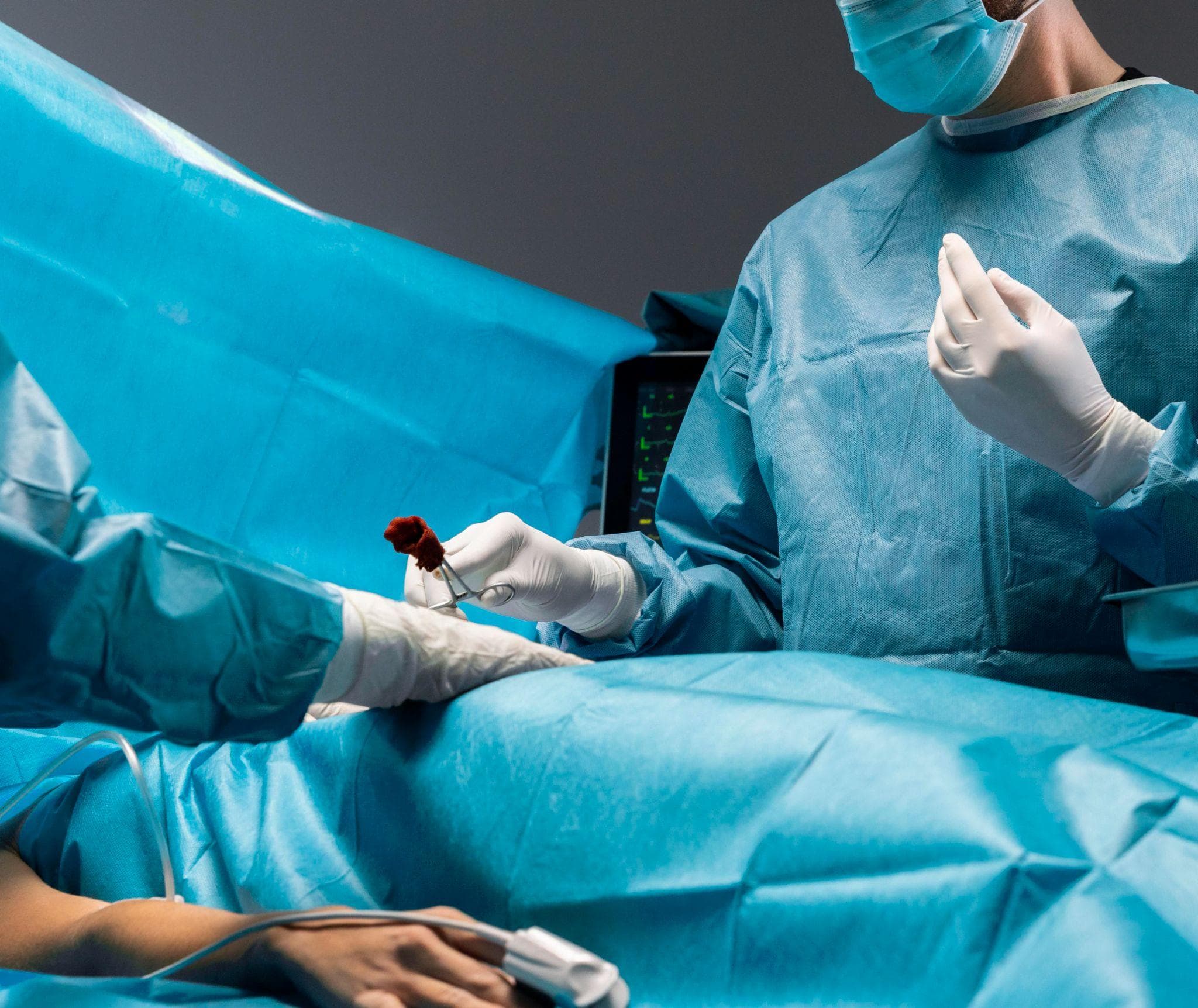
Robotic knee replacement surgery using advanced robotic arm technology. Precision-guided knee joint replacement for improved alignment and recovery
The word "robotic" makes a lot of patients imagine something out of a science fiction film — a machine performing surgery while the surgeon watches from another room. That's not how it works. Not even close.
Robotic knee replacement surgery is one of the most talked-about advances in orthopedics right now, and a fair number of patients coming to see an orthopedic surgeon in Noida are asking about it. That's a good thing. It means people are doing their research before making a decision. But there's also a lot of misinformation floating around — on websites, in WhatsApp forwards, in family group chats. This guide cuts through all of that.
What Is Robotic Knee Replacement Surgery?
Robotic knee replacement is not a different surgery. It's a different way of performing the same surgery — using a robotic arm system to assist the surgeon with greater precision than is possible with conventional instruments alone.
Here's how it actually works
Before surgery, a CT scan of the patient's knee is taken. This scan is used to build a 3D digital model of that specific patient's joint — the exact size, shape, angles, and bone structure. The surgeon uses this model to plan the surgery digitally: deciding exactly where to cut, how deep, and at what angle to position the implant.
In the operating theatre, the robotic arm is guided by the surgeon (who is fully in control throughout). The system uses haptic feedback — meaning if the surgeon's hand moves even slightly outside the pre-planned zone, the arm resists. This prevents accidental bone removal and ensures the implant is placed exactly where the digital plan specified.
The robot does not operate independently. It does not make decisions. It is a precision instrument controlled entirely by the surgeon — one that enforces accuracy in a way that human hands alone cannot.
How Is Robotic Knee Replacement Different From Traditional Surgery?
Traditional knee replacement surgery has a strong track record — it's been done for over 40 years and has helped millions of patients worldwide. So what does robotic assistance actually add?
1. Precision in Implant Placement
In conventional surgery, the surgeon uses mechanical guides and their own clinical judgment to align cuts and position the implant. This is highly skilled work, and experienced surgeons do it well. But human variability exists. The robotic system removes that variability by enforcing pre-planned angles to within fractions of a degree.
Why does this matter? Because implant alignment directly affects how long the knee lasts and how well it functions. A misaligned implant wears unevenly and can fail sooner.
2. Less Bone Removal
Because the robotic system is more precise, only the bone that needs to be removed is removed. There's no margin for over-cutting. This is particularly important for younger patients who may need a revision surgery decades later — more preserved bone makes future procedures easier.
3. Personalised Surgery
Every patient's anatomy is different. Conventional surgery uses standardised sizing and alignment protocols. Robotic surgery starts with your CT scan and plans the surgery around your specific joint geometry.
4. Reduced Soft Tissue Damage
The precision of robotic cuts typically means less disruption to the surrounding muscles, tendons, and ligaments — which translates to a smoother early recovery.
What Are the Benefits of Robotic Knee Replacement?
Patients asking about robotic knee replacement in Noida and Greater Noida typically want to know whether it's actually worth it. Here's an honest answer.
Benefits supported by clinical evidence:
- Higher accuracy in implant positioning compared to conventional surgery
- Reduced risk of implant malalignment and early failure
- Potentially longer implant lifespan due to better load distribution
- Shorter hospital stays in many cases
- Faster early recovery due to reduced soft tissue trauma
- More natural knee feel post-surgery (because the anatomy is precisely restored)
A realistic note: The long-term data on robotic knee replacement is still accumulating. What the studies consistently show is significantly better short-term outcomes and implant positioning. The surgeon's experience with the system also matters — a robotic-assisted surgeon who has performed thousands of cases will get better outcomes than one who has performed a few.
Robotic Systems Used in Delhi NCR
Two robotic platforms are most commonly used for knee replacement in India — the MAKO system (by Stryker) and the ROSA system (by Zimmer Biomet). Some hospitals in Delhi NCR also use the CUVIS robotic system, which is an active robotic system using infrared cameras.
All of these systems work on the same principle: CT-based pre-operative planning combined with real-time robotic guidance in the OT. The differences are in the software, the type of robotic arm (active vs. semi-active), and the implant systems they work with.
Your surgeon will recommend the system they are trained and experienced with.
Who Is a Good Candidate for Robotic Knee Replacement?
Not everyone needs robotic surgery, and not everyone is equally suited to it. Here's what surgeons typically consider:
Good candidates:
- Patients with knee osteoarthritis who have been recommended total or partial knee replacement
- Younger, more active patients for whom implant longevity is a priority
- Patients with complex anatomy or deformity where precise planning matters more
- Patients who want the most accurate, personalised surgical approach available
Cases where conventional surgery may be equally suitable:
- Elderly patients with straightforward anatomy and limited activity requirements
- Patients where the hospital's robotic system is not a good match for the required procedure
The honest conversation is this: conventional knee replacement by an experienced surgeon is a very good operation. Robotic-assisted surgery is a better version of that operation in terms of precision. If robotic surgery is available and your surgeon is experienced with it, it's generally worth considering.
Recovery After Robotic Knee Replacement
Recovery after robotic knee replacement follows the same general timeline as conventional surgery, but many patients report a somewhat smoother early recovery period.
Day 1–2 (Hospital): You'll be up walking with a walker within 24–48 hours. The knee will be swollen and tender, but the physiotherapy team starts working with you from day one.
Week 1–2 (Home): Gentle exercises, elevating the leg, ice packs for swelling management. Most patients manage comfortably with oral pain medication.
Week 3–6: Range of motion improves significantly. Walking distances increase. Most patients can manage stairs.

In a clinic, a female doctor is doing physiotherapy on the knee of a male patient who is lying down and looks relaxed.
6 weeks onwards: Many patients return to light activities. Driving can typically resume (for the operated leg) around the 6-week mark.
3–6 months: Full recovery for most patients. The knee continues to improve for up to a year.
The quality of physiotherapy during recovery matters enormously. Surgery gets the knee right — rehabilitation restores full function.
Is Robotic Knee Replacement Available in Noida?
Yes. Robotic knee replacement is available at several hospitals in Noida and across Delhi NCR. The key is not just whether the hospital has the equipment, but whether the surgeon has extensive experience using it.
Dr. Mayank Chauhan, Senior Orthopedic Surgeon at Prakash Hospital, Sector 33, Noida, performs robotic-assisted knee replacement surgery with a focus on personalised outcomes and long-term joint health. Every surgical plan is developed individually based on the patient's anatomy, age, activity level, and overall health.
Patients from across Noida, Greater Noida, and Delhi NCR come to Dr. Chauhan for knee replacement evaluations. The process starts with a consultation, appropriate imaging, and an honest conversation about what approach — robotic or conventional — makes the most sense for that particular patient.
To book a consultation, call the number listed on the website.
What Patients Ask Most
1. Does the robot perform the surgery or the surgeon?
The surgeon performs the surgery. The robotic arm is a tool — it gives the surgeon real-time feedback and precision assistance, but every cut, every decision, is made by the surgeon.
2. Is robotic knee replacement more painful than regular surgery?
Not typically. Because soft tissue disruption is often less, early post-operative pain is frequently reported as more manageable.
3. How long does the surgery take?
Similar to conventional surgery — roughly 90 minutes to 2 hours, sometimes slightly longer due to set-up time.
4. Is robotic knee replacement more expensive?
Yes, the additional technology adds to the cost. Whether insurance covers it depends on your specific policy. Many plans do cover it when it is clinically recommended.
5. Can robotic surgery be done for partial knee replacement?
Yes — in fact, robotic assistance is particularly valuable for partial (unicompartmental) knee replacement, where precision in preserving healthy joint tissue is even more critical.
The Bottom Line
Robotic knee replacement surgery is not marketing hype. The precision it offers — in a procedure where millimetres matter for long-term outcomes — is clinically meaningful. It's a significant step forward from conventional surgery, particularly for patients who want the most accurate, personalised approach to one of the most important orthopedic decisions of their lives.
If you're exploring knee replacement options in Noida or Greater Noida, ask your surgeon specifically about their experience with robotic surgery, how many cases they've performed with the system, and whether your anatomy and condition make you a suitable candidate.
For an evaluation with Dr. Mayank Chauhan, Senior Orthopedic Surgeon at Prakash Hospital, Sector 33, Noida, call the number listed on the website.