Reviewed by Dr. Mayank Chauhan
Physiotherapy for Sciatica: What a Treatment Plan Actually Looks Like
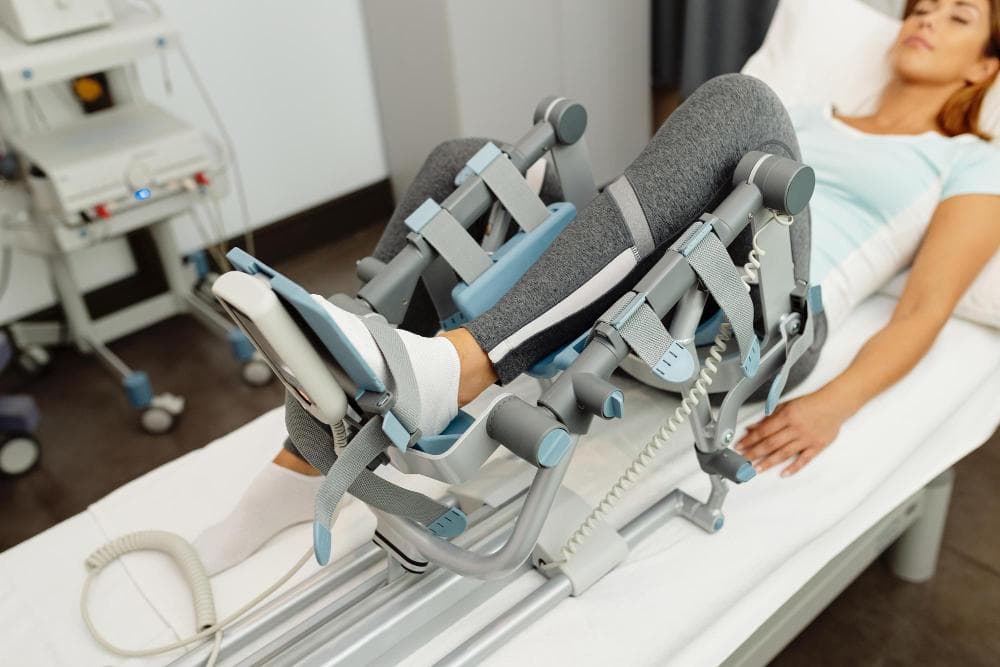
The straight leg raise shows how sensitive the sciatic nerve is to stretch, which helps set the starting point of the plan.
"Go for physiotherapy" is one of the most common pieces of advice given to people with sciatica, and also one of the vaguest. What happens in the first session? Which machines are useful and which are mostly for show? How many visits does it take? And what should you be doing at home between appointments?
A good physiotherapy plan for sciatica is not a bundle of heat pads and electrical stimulation. It is a structured programme that calms the nerve, restores movement, builds strength and teaches you how to avoid a repeat. Knowing what to expect makes it easier to judge whether the treatment you are getting is the right one.
Does physiotherapy work for sciatica?
For most people, yes. The majority of sciatica caused by a disc herniation improves with time and conservative care, and guided exercise is a core part of that care. Staying active and doing appropriate exercise generally leads to better recovery than prolonged bed rest. Physiotherapy cannot shrink a disc overnight, but it can reduce nerve irritation, improve how the spine and hips move, strengthen the muscles that protect the back and help you return to normal life sooner.
It works best when:
- The diagnosis is clear, and red flag conditions have been excluded
- Treatment is matched to your pattern of symptoms
- You do the home exercises, not just the clinic sessions
- You stay patient. Nerve pain settles over weeks, not days
Before the plan begins: the assessment
A proper first session takes time. Expect:
- History. When did it start? What triggered it? Where does the pain travel? What makes it better or worse? Any numbness, weakness, bladder or bowel changes?
- Movement testing. Bending forward, backward and sideways, and noting which direction provokes or eases the leg pain.
- Neurological examination. Strength, reflexes and sensation in the legs.
- Nerve tension tests. The straight leg raise and slump test check how sensitive the nerve is to stretch.
- Hip, pelvis and posture assessment, since these can mimic or contribute to sciatica.
- Red flag screening. Warning signs lead to an urgent medical referral instead of exercise.
If the examination suggests a significant problem, such as progressive weakness, the physiotherapist should refer you back to a doctor for further tests.
Phase 1: Calm the nerve (first one to two weeks)
The aim is to settle the pain, not to push through it.
Position and movement advice
- Find positions that ease the leg pain and use them. This might be lying on your back with knees bent, lying on one side with a pillow between the knees, or standing and walking short distances.
- Avoid prolonged sitting. Change position every 20 to 30 minutes.
- Keep walking in short, comfortable bouts. Gentle movement often helps more than rest.
Directional preference exercises
Some people find that repeated movement in one direction reduces leg pain and moves it closer to the back, a phenomenon known as centralisation. This is the principle behind approaches such as the McKenzie method.
- For many disc related cases, gentle extension (for example lying on the stomach and propping up on the elbows) relieves symptoms.
- Others do better with flexion (knees to chest), especially in spinal stenosis.
- The physiotherapist tests which direction suits you. Doing the wrong one can make you worse, so this is a good reason to be supervised at the start.
Pain relief techniques
- Heat or cold applied for 15 minutes can ease muscle spasm.
- TENS (transcutaneous electrical nerve stimulation) may give short-term comfort for some people, though its long-term effect is limited.
- Manual therapy, such as soft tissue work and gentle joint mobilisation, may help for a short period when combined with exercise.
Passive treatments like these are add-ons. If a clinic offers only machines and no exercise, it is worth asking why.
Phase 2: Restore movement and nerve mobility (weeks two to four)
As irritation settles, the focus shifts to regaining flexibility.
Nerve gliding (neural mobilisation)
Gentle "flossing" movements slide the sciatic nerve through its surroundings without stretching it hard. An example is sitting on a chair, straightening one knee while lowering the head, then bending the knee while lifting the head. These should feel like a mild pull, never sharp pain, and are done a few times, not forced.
Stretching
- Hamstring stretches (lying, with a towel)
- Hip flexor stretches
- Piriformis and glute stretches, such as the figure-four stretch lying on your back
- Calf stretches
Hold each for 20 to 30 seconds, and stop if the leg pain increases.
Mobility for the spine and hips
- Pelvic tilts
- Cat-camel
- Gentle trunk rotation (knees rocking side to side while lying)
- Hip range of motion exercises
Phase 3: Build strength and control (weeks four to eight)
This is the stage that protects against recurrence, and where many people drop out as soon as the pain eases. It deserves attention.
Core stabilisation
- Deep abdominal activation (drawing the lower tummy in gently)
- Bird-dog
- Dead bug
- Side plank (from the knees at first)
- Glute bridge
Hip and leg strength
- Clamshells and side-lying leg raises
- Squats to a chair
- Step-ups
- Sit-to-stand practice
Posture and movement patterns
- Hip hinge training to bend and lift safely
- Standing and sitting posture correction
- Workstation and driving set-up
Aerobic fitness
Walking, swimming, cycling or an elliptical machine as tolerated. Aerobic activity improves blood flow to the discs and nerves and helps with pain.
Phase 4: Return to normal life and prevent recurrence (beyond eight weeks)
- Progress to heavier lifting and sport gradually
- Build a regular exercise habit (three to four sessions a week)
- Learn how to recognise early warning signs, and what to do about them
- Develop a short "flare plan" of exercises and positions that help you
Sciatica from a disc often recurs in some people, so this maintenance phase matters.
Techniques you may be offered, and what to think about them
| Technique | What it is | Comment | |---|---|---| | Directional preference exercises | Repeated movements in the direction that eases symptoms | Evidence-informed and useful in selected patients | | Nerve gliding | Gentle sliding movements of the nerve | Often helpful when done gently | | Core strengthening | Stabilising the trunk | Strong support for long-term back health | | Manual therapy | Hands-on mobilisation and soft tissue work | May give short-term relief alongside exercise | | Traction | Gently stretching the spine with a machine or manual pull | Mixed evidence; some people feel better, others do not | | TENS | Electrical stimulation for pain | Short-term comfort only | | Ultrasound therapy | Deep heat from a machine | Limited evidence for sciatica | | Dry needling / acupuncture | Needle-based treatment | May help some individuals with pain, with variable evidence |
The backbone of a good plan is education and active exercise. Passive modalities are optional extras.
How long does it take?
Typical timelines, though everyone varies:
- Weeks 1 to 2: The pain usually begins to ease.
- Weeks 4 to 6: Many people notice meaningful improvement.
- Weeks 8 to 12: Most disc related sciatica has settled or improved substantially.
- Numbness and weakness may take longer to recover than pain.
A typical programme involves one to three supervised sessions per week at first, tapering as you learn the home routine. Often six to twelve sessions are enough, though this depends on the severity.
What to do at home
- Do your prescribed exercises daily, even if brief
- Walk regularly
- Take breaks from sitting
- Sleep in a supportive position (our article on sciatica sleeping positions can help)
- Avoid heavy lifting and deep forward bends during a flare
- Keep a simple diary of what helps and what aggravates
When physiotherapy is not enough
Tell your doctor if:
- There is no improvement after six weeks of consistent treatment
- Pain is getting worse
- Weakness or numbness progresses
- Pain is severe and unrelenting, preventing sleep and work
- A scan is needed to make a decision
Options then may include an MRI, medicines for nerve pain, an epidural or nerve root injection and, for selected cases, surgery. Surgery is considered for persistent disabling pain after proper non-surgical care, or for progressive weakness.
Stop and seek urgent help if you develop:
- Numbness around the groin or inner thighs
- Difficulty passing urine or loss of bladder or bowel control
- Rapidly worsening leg weakness
- Pain in both legs with these symptoms
- Severe back pain with fever or unexplained weight loss
Prakash Hospital in Noida has a 24 hour emergency department.
Choosing a physiotherapist
Look for someone who:
- Takes a full history and examines you properly
- Explains the diagnosis and the plan in plain language
- Prescribes exercises you can do at home
- Adjusts the plan as you improve
- Communicates with your doctor when needed
- Does not promise a guaranteed cure in a fixed number of sessions
Sciatica care in Noida with Dr. Mayank Chauhan
An orthopedic assessment helps confirm the diagnosis and decide whether physiotherapy alone is right for you. Dr. Mayank Chauhan is a senior orthopedic surgeon at Prakash Hospital, D-12A/12B, Sector 33, Noida, next to the ISKCON Temple. He has more than 15 years of experience, trained at Maulana Azad Medical College, Delhi, and completed an arthroplasty fellowship at Hallym University Hospital, South Korea. His patients rate him 4.9 out of 5 on Google.
Prakash Hospital is NABH and NABL accredited and works with CGHS, ECHS, ESI and major insurers. OPD hours are Monday to Saturday, 10 AM to 8 PM, and Sunday, 10 AM to 2 PM.
To book a consultation, call the number listed on the website.
This article is for general information and does not replace a medical examination or an individual physiotherapy assessment.