Reviewed by Dr. Mayank Chauhan
Partial ACL Tear: Does It Need Surgery?
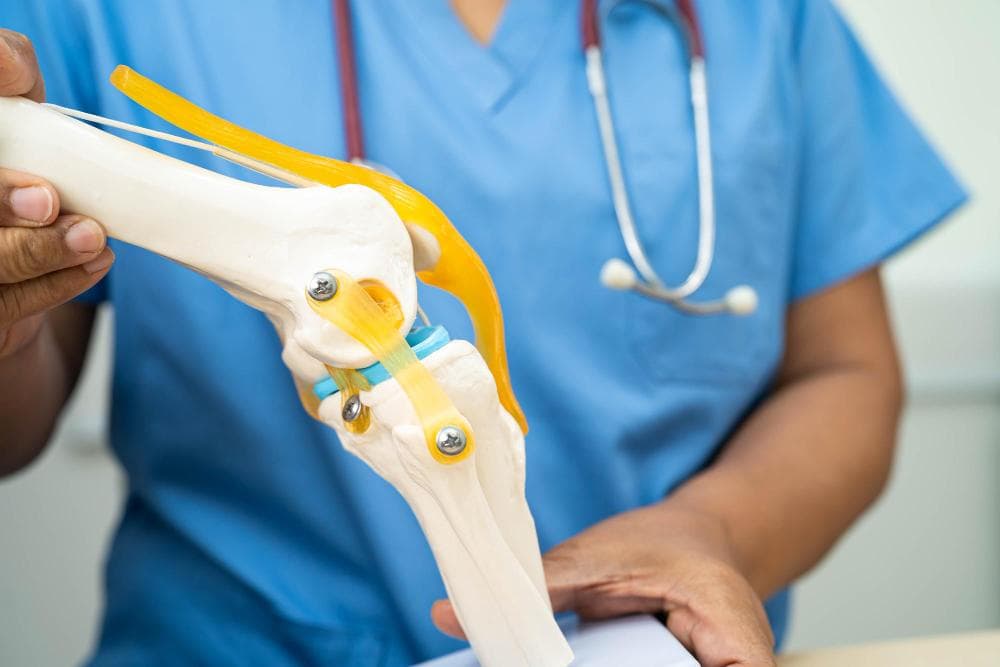
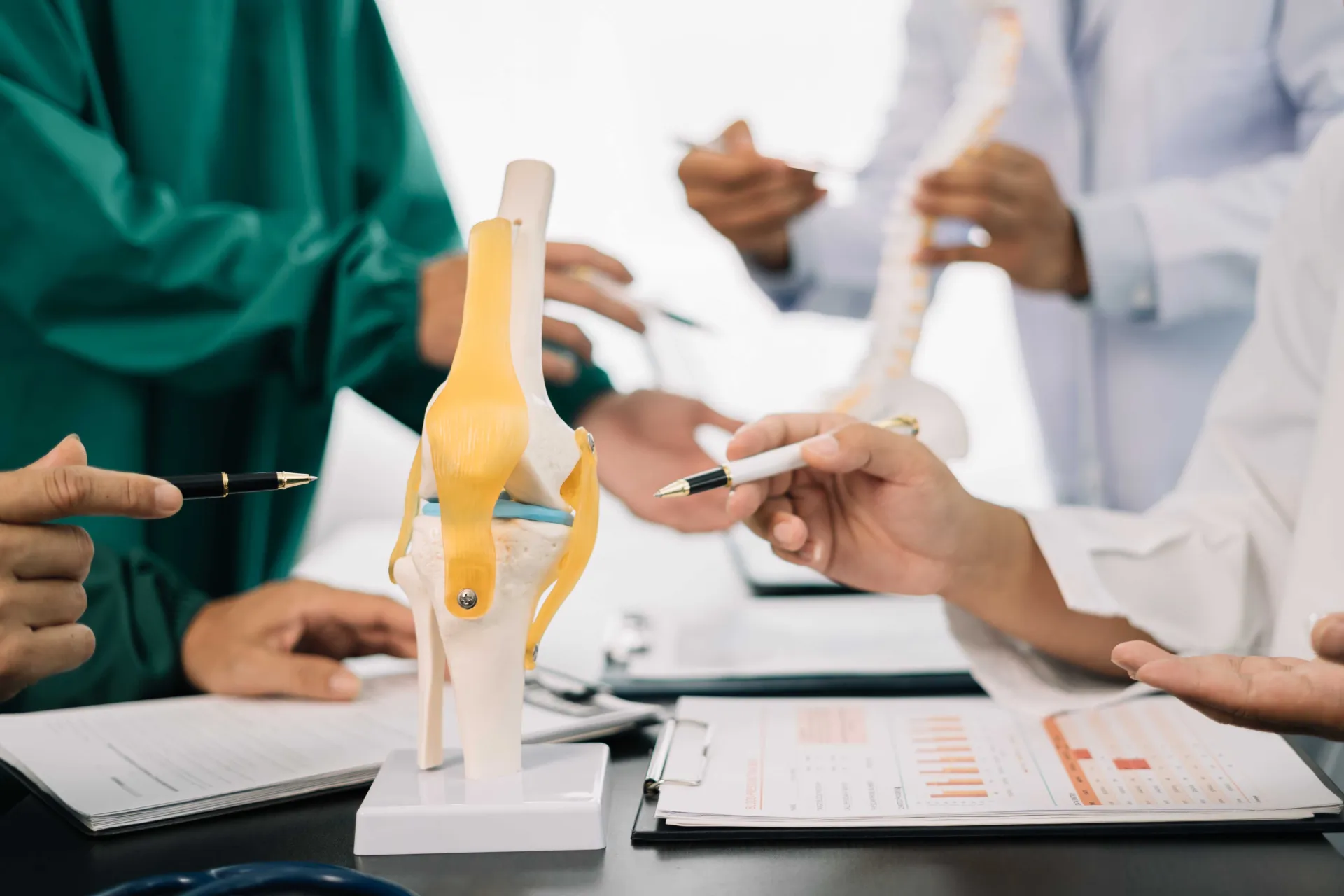
The ACL has two bundles of fibres, so a partial tear can damage one and leave the other intact.
The MRI report says "partial tear of the anterior cruciate ligament", and a bit of relief sets in. Partial sounds better than complete. Surely this means no operation?
Sometimes, yes. But partial can mean very different things. A ligament with a few frayed fibres is a different injury from one that has lost most of its fibres and is hanging on by a thread. And the answer depends as much on the person as on the scan: how unstable the knee feels, how active you are, how old you are, and what else was damaged at the time.
What the ACL does
The anterior cruciate ligament (ACL) is one of the four main ligaments of the knee. It runs diagonally through the middle of the joint, from the thigh bone to the shin bone. Its job is to stop the shin bone from sliding forward under the thigh bone, and to control rotation, especially when you pivot, cut, land from a jump or stop suddenly.
The ACL is made of two main bundles of fibres, one called the anteromedial bundle and the other the posterolateral bundle. Because there are two bundles, a tear can involve one bundle and leave the other intact. That is how a "partial" tear occurs.
How the injury happens
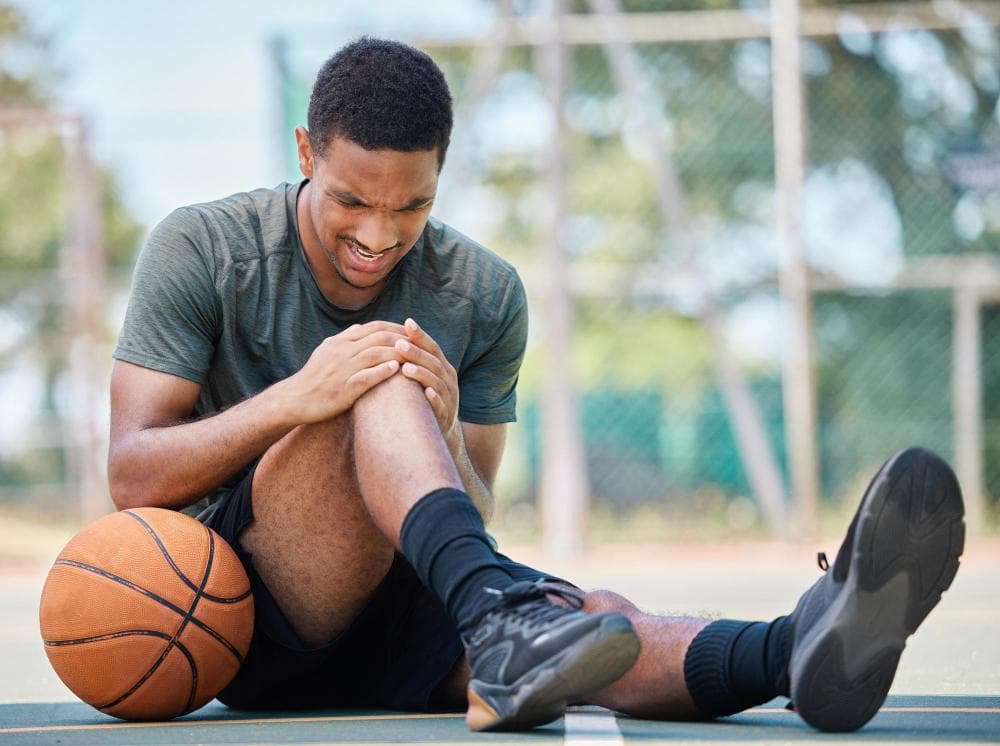
Most ACL injuries happen without contact: a sudden stop, a sharp change of direction, a poor landing or a twist with the foot planted. Football, badminton, basketball, kabaddi, cricket and skiing are common causes. Contact injuries, such as a tackle or road accident, can also tear the ligament.
Typical story:
- A pop or tearing sensation in the knee
- Immediate pain and inability to continue
- Swelling within a few hours, because of bleeding into the joint
- A feeling that the knee gave way or shifted
With partial tears, the story can be less dramatic. The knee may swell and ache, then settle over a few weeks, but feel unreliable on twisting movements.
Grading the injury
Ligament sprains are graded by how much damage there is.
- Grade 1. The ligament is stretched with microscopic tearing. The knee remains stable.
- Grade 2. A partial tear. Some fibres are torn, and the knee has some looseness.
- Grade 3. A complete rupture. The ligament has lost continuity and the knee is unstable.
The term "partial tear" generally covers grade 2, and it can vary from a small percentage of fibres to a large one. A partial tear with most fibres torn can behave almost like a complete tear, while a minor partial tear may leave a stable knee.
How a partial tear is diagnosed
Examination
A specialist assesses swelling, range of movement and ligament stability. Key tests include:
- Lachman test. The most sensitive test for ACL injury. The shin bone is gently pulled forward with the knee slightly bent. The amount of movement and the quality of the "end point" are noted.
- Anterior drawer test. Similar, at a greater bend.
- Pivot shift test. Looks for rotational instability. It is the test that best reflects the "giving way" patients feel, though it can be hard to perform in a painful knee.
In a partial tear, the Lachman test often shows increased movement but with a firm end point, since some fibres are still intact.
MRI
MRI shows the ligament and the rest of the knee. In a partial tear, it may show a thickened, partly disrupted ligament, some continuous fibres and fluid around it. It is also used to look for associated injuries, such as meniscus tears, cartilage damage and bone bruising. MRI is helpful, but it can both over and under-call partial tears, so the findings must be considered alongside your symptoms and examination.
Other tests
An X-ray is often done to rule out a fracture. In selected cases, arthroscopy, a keyhole look inside the knee, can directly assess how much of the ligament is intact. Some surgeons use instrumented laxity measurements to compare the two knees.
Can a partial ACL tear heal?
A torn ACL does not heal well on its own, because it lies inside the joint bathed in fluid that washes away the clot needed for healing. However, a partial tear is different from a complete one, because some fibres remain in continuity and still do their job. In some people, the remaining fibres, together with strong surrounding muscles, provide enough stability for the knee to function well.
What does the research say? A systematic review of randomised trials of non-surgical management of partial ACL tears found that supervised exercise appeared to help in patients treated without surgery, reducing pain and improving strength and proprioception (the knee's sense of position). The evidence, though, was limited: only two small trials, involving relatively inactive adults, with short follow up. The authors called for larger, longer studies. In short, non-surgical treatment is a reasonable option for the right patient, but the research does not yet tell us exactly who will do well in the long run.
Clinical experience adds some practical points:
- Some partial tears progress to complete tears, especially in people who keep playing pivoting sports on an unstable knee.
- Others remain stable for years.
- A knee that gives way repeatedly can damage the meniscus and cartilage over time.
That risk of "further damage from instability" is the main reason surgeons watch partial tears carefully.
Factors that point toward non-surgical treatment
A trial of rehabilitation without surgery is more likely to succeed when:
- The tear involves a small part of the ligament, with most fibres intact
- The knee feels stable in daily life, with no giving way
- The Lachman test shows a firm end point and the pivot shift test is negative or mild
- You have no significant meniscus tear or other injuries that need surgery
- Your lifestyle does not involve pivoting or cutting sports, or you are willing to modify these activities
- You are older or less active, or have lower demands on the knee
- You are committed to a proper rehabilitation programme
Factors that favour surgery
Reconstruction should be discussed when:
- The knee gives way during everyday activities or sport
- The tear involves most of the ligament, or the remaining fibres are poor in quality
- Examination and tests show significant instability, especially a positive pivot shift
- You are young and active and want to return to pivoting sports
- There are associated injuries, such as a repairable meniscus tear, which is best treated at the same time as the ligament
- A trial of rehabilitation has not restored a stable, functional knee
- Your work demands a stable knee, for example in sport, the military or the police
There is no single formula. Two people with the same MRI report may do best with different plans.
Non-surgical treatment: what it involves
Early phase
- Protect the knee. Rest, ice, compression and elevation for swelling. A brace or crutches may be used for comfort in the first days.
- Regain movement. Gentle range of motion exercises to restore full straightening and bending.
- Control swelling. A swollen knee inhibits the thigh muscles.
Strengthening phase
- Quadriceps and hamstring strengthening
- Hip and core strengthening, which help control the knee
- Balance and proprioception training, such as single leg stands and wobble board work
- Gradual progression to squats, step ups and lunges
Return to activity
- Straight line running, then agility drills
- Sport specific training
- Return to pivoting sports only once strength, balance and confidence are good, and after your doctor's approval
Typical timelines are around 6 to 12 weeks to regain good function for everyday activities, and often three to six months before returning to sport, though this varies with the injury and the person. A hinged knee brace may be recommended for sport, although it is no substitute for a strong, well controlled knee.
Monitoring
Follow up is vital. If the knee gives way, swells repeatedly, or you feel it cannot cope with your activity, a repeat assessment is needed. Rehabilitation that fails is not a failure on your part. It is information that surgery may be the better route.
Surgical treatment
ACL reconstruction
The standard operation replaces the torn ligament with a graft. It is done through keyhole (arthroscopic) surgery, with the graft taken from your own tissue, commonly a hamstring tendon or a part of the patellar tendon, or sometimes the quadriceps tendon. Tunnels are drilled in the bones and the graft is fixed in position.
Our patient guide on ACL surgery describes the procedure step by step.
Partial reconstruction or augmentation
In some selected partial tears, surgeons preserve the intact bundle and reconstruct only the torn one. These techniques are less commonly used and depend on the surgeon's experience and the specific tear pattern.
Treating other injuries
If the meniscus or cartilage is also damaged, it is often addressed during the same operation. See our articles on meniscus surgery and on cartilage damage in the knee.
Recovery after reconstruction
- Walking with or without crutches within days
- Physiotherapy beginning soon after surgery
- Return to jogging at around 3 to 4 months in many programmes
- Return to pivoting sport commonly in the range of 9 to 12 months, guided by strength and functional tests, not just the calendar
Rehabilitation matters as much as the operation itself, and rushing back is a common cause of re-injury.
Risks of leaving an unstable knee untreated
If the knee keeps giving way, repeated twisting can lead to:
- Meniscus tears
- Cartilage damage
- Earlier arthritis
That is why instability, not the MRI wording, should drive the decision. If your knee feels solid and you are doing well, there is no need for surgery simply because a report says "tear". If it gives way, take it seriously.
Protecting your knee while you decide
- Avoid pivoting, cutting and jumping sports until assessed
- Use a brace for added confidence if recommended
- Do not ignore giving way or locking
- Keep your thigh muscles strong
- Maintain a healthy weight
- Warm up before activity, and learn proper landing technique
- Return to sport gradually
When to see a doctor
Get examined promptly if:
- You have had a twisting injury with a pop or rapid swelling
- Your knee gives way, locks, or feels unstable
- Swelling returns repeatedly
- You cannot straighten or fully bend the knee
- You are an athlete or want to return to sport
Go to an emergency department if you cannot bear weight, the knee looks deformed, or the knee is hot and red with fever.
ACL care in Noida with Dr. Mayank Chauhan
A partial ACL tear needs a decision based on your knee and your goals, not just the scan. Dr. Mayank Chauhan is a senior orthopedic surgeon at Prakash Hospital, D-12A/12B, Sector 33, Noida, next to the ISKCON Temple, with more than 15 years of experience. He trained at Maulana Azad Medical College, Delhi, and completed an arthroplasty fellowship at Hallym University Hospital, South Korea. His patients rate him 4.9 out of 5 on Google.
Prakash Hospital is NABH and NABL accredited, with 24 hour emergency care, and works with CGHS, ECHS, ESI and major insurers. OPD hours are Monday to Saturday, 10 AM to 8 PM, and Sunday, 10 AM to 2 PM.
To book a consultation, call the number listed on the website.
This article is for general information and does not replace a medical examination. Research findings mentioned reflect published studies at the time of writing.