Partial Knee Replacement — Who Is It For and How Is It Different?

A person walking up the stairs.
When most people hear "knee replacement," they picture the entire knee being replaced. The whole joint, removed and substituted with metal and plastic.
That's total knee replacement — and it's the right operation for many patients. But not all of them.
A meaningful proportion of people with knee arthritis have damage in only one part of the joint, not the whole thing. For these patients, replacing the entire knee would involve removing healthy tissue, bone, and cartilage that doesn't need to go — unnecessarily larger surgery with unnecessarily longer recovery.
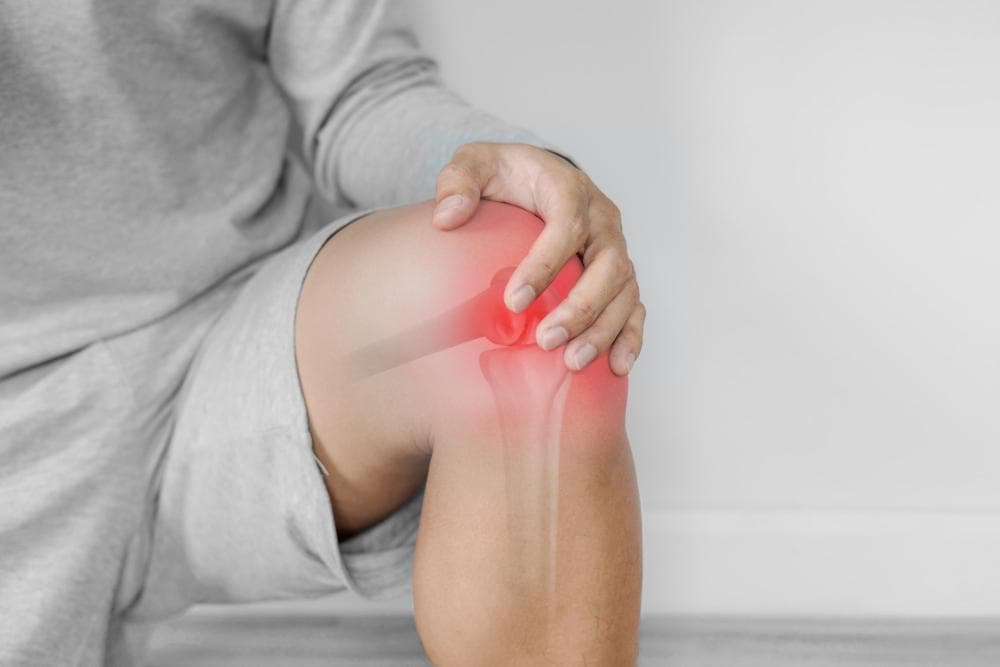
Partial knee replacement — technically called unicompartmental knee arthroplasty (UKA) or unicondylar knee replacement — was developed precisely for this group. It replaces only the damaged compartment, leaves everything else intact, and typically delivers a knee that feels more natural than its total replacement counterpart.
Around 10–15% of patients with knee arthritis are appropriate candidates. The challenge is that many of them are never told this option exists.
Understanding the Three Knee Compartments
The knee is not a single joint surface — it has three distinct compartments, each of which can wear independently:
Medial compartment: The inner side of the knee (between the two legs). This is the compartment most commonly affected by arthritis in India, largely because of varus (bow-leg) alignment that concentrates load on the inner side.
Lateral compartment: The outer side of the knee. Lateral compartment arthritis is less common and involves valgus (knock-knee) alignment.
Patellofemoral compartment: The front of the knee, where the kneecap articulates with the thigh bone.
In many cases of osteoarthritis, the damage is concentrated in one compartment — usually medial — while the other two remain perfectly healthy. Replacing the entire joint in this situation involves removing healthy cartilage and bone that could otherwise last decades.
Who Is a Candidate for Partial Knee Replacement?
The selection criteria are specific, and this is why not every patient with knee arthritis qualifies.
Criteria that make someone a good candidate:
- Arthritis confirmed to one compartment only (on weight-bearing X-rays)
- Intact cruciate ligaments (ACL and PCL must be functioning)
- No significant inflammatory arthritis (rheumatoid arthritis is generally not suitable for partial replacement)
- Flexion deformity of less than 10 degrees and range of motion greater than 90 degrees
- Correct leg alignment (no severe varus or valgus beyond 15 degrees)
- Failure of conservative treatment (physiotherapy, injections, NSAIDs)
- Age typically above 40; no strict upper age limit
Criteria that generally exclude someone:
- Arthritis affecting more than one compartment
- Damaged or torn cruciate ligaments
- Inflammatory arthritis (rheumatoid, psoriatic)
- Significant fixed deformity of the knee
- Obesity (very high BMI can affect implant performance and longevity)
- Avascular necrosis affecting the femoral condyle
Around 13 out of 100 Indian women and 10 out of 100 Indian men aged 60 and over have symptomatic knee osteoarthritis. Of those, a meaningful proportion will have single-compartment disease that makes them candidates for partial replacement. The question is whether they're evaluated specifically for this option.
How Partial Knee Replacement Is Performed
The surgical process is similar to total knee replacement in its outline but considerably smaller in scope.
Anesthesia: Spinal or general, same as total knee replacement.
Incision: Significantly smaller — about 7–10 centimetres compared to 20–25 centimetres for total knee replacement. The surgeon accesses only the affected compartment.
Tissue preservation: Because the surgery accesses only one compartment, the muscles, ligaments, and healthy cartilage in the other compartments remain completely undisturbed. The ACL is preserved. The joint capsule is disturbed minimally.
Bone cuts: Only the damaged surface of the affected femoral condyle and tibial plateau is removed. The healthy compartments are not touched.
Trial and implant: Trial components check fit and stability. The permanent implant — a metal component on the femur and a metal tray on the tibia with a plastic spacer between them — is fixed with cement.
The operation takes roughly 45–60 minutes.
Partial vs. Total Knee Replacement: A Practical Comparison
| | Partial (UKA) | Total (TKA) |
| Compartments replaced | 1 | All 3 |
| Incision size | 7–10 cm | 20–25 cm |
| Hospital stay | 2–3 days (often less) | 3–5 days |
| Time to walking | Earlier (often same day) | 24–48 hours |
| Blood loss | Less | More |
| Recovery to daily activities | Faster | Standard |
| Knee feels natural | More natural | Slightly mechanical |
| Can be converted to total if needed | Yes | N/A |
| Long-term survival | 90–95% at 10 years | 90–95% at 10–15 years |
| Suitable for all knee arthritis | No | Yes |
The survivorship data is worth noting: multiple studies, including a large Indian study published in peer-reviewed literature, show unicompartmental knee replacement survival of 94–100% at 10 years and around 90% at 15 years, when performed in correctly selected patients. These are strong outcomes.
The Advantage Most Patients Notice Most
The most consistent piece of feedback from patients who have had partial knee replacement is that the knee "feels like a knee."
In total knee replacement, healthy tissue and ligaments are removed along with the diseased ones. This changes how proprioception (the knee's sense of its own position) works. Many patients describe the knee as functional but slightly different from natural.
In partial replacement, the cruciate ligaments remain intact. The healthy compartments with their natural cartilage remain. The mechanical feedback from the joint is much closer to what the brain expects. Many patients forget they have an implant.
This is particularly relevant for:
- Younger patients (50–65) who are active and want as natural a knee as possible
- Patients who need a faster return to activity due to work or lifestyle demands
- Elderly patients for whom a smaller, faster operation carries lower risk
The Honest Limitations
Partial replacement is not the right option for every patient, and it's important to say so.
Patients with multi-compartment disease need total replacement — there's no surgical shortcut around that. Partial replacement in a knee with hidden disease in a second compartment leads to early failure and premature revision surgery.
There is also a small but real risk that arthritis progresses in the other compartments over time, eventually requiring conversion to total knee replacement. This is a more complex procedure than primary total replacement, though it is done successfully by experienced surgeons.
Getting the patient selection right is everything. In the right hands, with the right patient, partial knee replacement produces excellent results. In the wrong patient, it underperforms.
What to Ask Your Surgeon
If you've been told you need knee replacement and you have pain primarily on one side of your knee (the inner side in most cases), it's worth asking specifically:
- "Is my arthritis in one compartment or more than one?"
- "Am I a candidate for partial knee replacement?"
- "What are the long-term outcomes for partial replacement in my situation?"
You should also ask about the surgeon's specific experience with partial replacement — technique matters significantly in this procedure.
Partial Knee Replacement in Noida
Dr. Mayank Chauhan at Prakash Hospital, Sector 33, Noida, evaluates each knee replacement patient for the most appropriate surgical option — including unicompartmental replacement where indicated. With 15+ years of experience in joint replacement and an international fellowship in arthroplasty, he applies the precision that partial replacement demands.
Prakash Hospital is well-connected from across Noida, Greater Noida, and the Delhi NCR region.
To book a consultation, call the number listed on the website.