How to Increase Bone Density — A Practical Guide for Indian Adults

Young woman stretching outdoors, demonstrating exercises that help maintain bone density and strengthen bones.
Bone density is one of those health metrics that most people don't think about until something goes wrong. A fracture from a minor fall. A DEXA scan that comes back with a T-score in the red. A parent diagnosed with osteoporosis who suddenly makes you wonder about your own bones.
The good news is that bone density responds to what you do. Not immediately, and not dramatically — but consistently, over months and years, the right habits shift the trajectory.
The even better news: the most effective strategies are not expensive, do not require a gym membership, and are available to almost everyone. The challenge is separating what actually works from the noise.
How Bones Actually Change
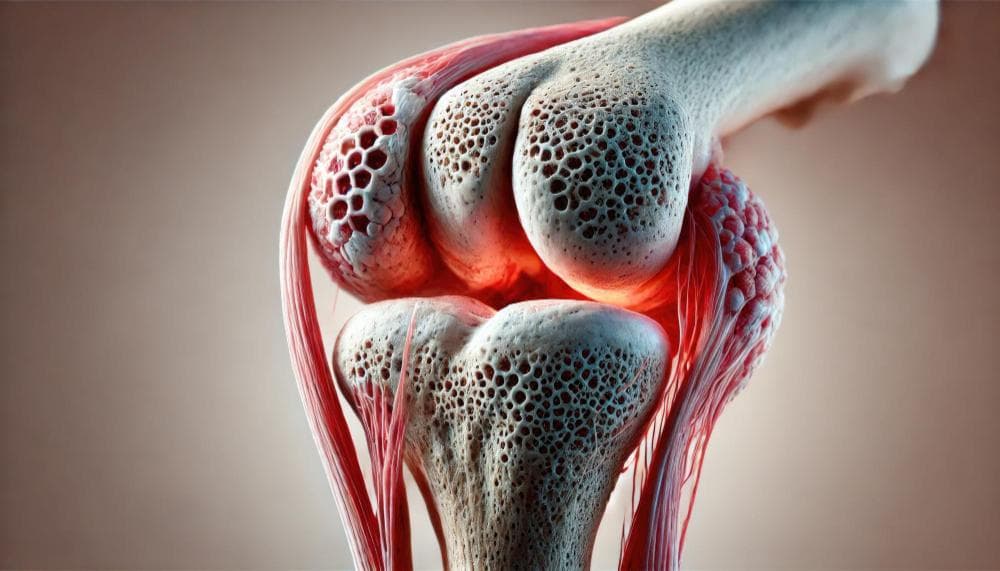
Bone is not inert. It's living tissue, continuously being broken down by cells called osteoclasts and rebuilt by cells called osteoblasts. This cycle of resorption and formation — called remodelling — responds to mechanical loading, hormones, and nutrition.
When a bone is subjected to stress, the body interprets that stress as a signal to reinforce that bone. The osteoblasts increase activity. More calcium is deposited. The bone becomes denser at that site.
When a bone is not loaded — in prolonged bed rest, sedentary lifestyle, or weightlessness (as astronauts know well) — the osteoclasts become relatively more active than the osteoblasts. Bone is resorbed faster than it's rebuilt. Density drops.
The implication is straightforward: bones respond to demand. The question is how to create that demand in a way that is safe, sustainable, and effective.
1. Weight-Bearing Exercise: The Foundation
Not all exercise is equal for bones. Swimming and cycling are excellent for cardiovascular health and joint protection, but they're not weight-bearing — your skeleton isn't carrying your body weight against gravity. For bone density, weight-bearing means activities where your bones bear your weight.
Walking: The most accessible starting point. 30 minutes of brisk walking per day is associated with slower bone loss at the hip. It's a maintenance strategy more than a building strategy, but for many people, it's the practical starting point.
Jogging and running: More impactful than walking because the ground reaction forces are higher. More bone stimulation per step. If your joints allow it, jogging a few days per week adds meaningful bone benefit over walking alone.
Stair climbing: Often overlooked. Climbing stairs loads the hip and spine effectively and is free, available anywhere, and takes no additional time if done during normal daily activity.
Dancing and aerobics: Multi-directional movement applies force to bones from different angles, which may be more beneficial than unidirectional activities like walking.
2. Resistance Training: The Most Effective Strategy
If there is one intervention with the strongest evidence for actually building bone density in adults, it's progressive resistance training.
When muscles contract, they pull on the bones they're attached to. This pulling force is a direct mechanical stimulus for bone formation at that site. The greater the force — the heavier the weight — the greater the stimulus.
A comprehensive 2025 meta-analysis of 40 studies confirmed that resistance training improves bone mineral density, with combined training (resistance plus aerobic) producing the greatest overall benefit.
What works for bones in resistance training:
- Compound, multi-joint exercises: Squats, deadlifts, lunges, rows, overhead presses. These place load on the hips, spine, and wrists — the fracture sites that matter most in osteoporosis.
- Progressive overload: Gradually increasing resistance over time. Bone responds to increasing demands. Doing the same weight forever provides minimal additional stimulus.
- Frequency: 2–3 sessions per week is the research-backed minimum for bone benefit.
- Heavy enough: Research suggests heavier loads (70–85% of maximum capacity) stimulate more bone response than lighter loads with high repetitions.
For Indians who have not exercised with weights before, starting with bodyweight exercises (squats, lunges, wall push-ups) is appropriate. Progressing to resistance bands or light dumbbells over weeks is safe for most adults, even those in their 60s.
If you have existing joint disease or previous fractures, work with a physiotherapist to design an appropriate program before starting resistance training independently.
3. Calcium: Getting the Dose Right
The body cannot build bone without adequate calcium. Most Indian adults consume 300–400 mg per day against a recommended 1,000 mg.
Closing that gap through food is the priority
- Ragi: 350 mg per 100 g — exceptional and affordable
- Sesame seeds: 88 mg per tablespoon
- Milk: 240 mg per 200 ml
- Curd: 120 mg per 100 g
- Paneer: 200 mg per 100 g
- Moringa leaves: 185 mg per 100 g
Practical approach: aim for two to three calcium-rich servings daily. Ragi roti replaces some plain wheat roti. A serving of curd with lunch. A spoonful of sesame seeds in cooking. These small shifts add up.
When diet genuinely cannot meet needs — lactose intolerance, restricted eating, or confirmed deficiency — calcium supplementation is appropriate. Split doses of 500 mg or less are better absorbed than a single large dose.
4. Vitamin D: The Absorption Gatekeeper
Calcium without vitamin D is substantially less effective. Vitamin D is the hormone that tells the gut to absorb calcium from food into the bloodstream.
Despite living in a sunny country, approximately 85% of Indians are vitamin D deficient. Urban lifestyles, indoor work, and covered clothing mean that daily sun exposure is simply insufficient for most people.
The practical fix: 15–20 minutes of direct sun exposure (face, arms, and legs exposed) in the morning or early afternoon several times per week. Sunscreen blocks UV-B rays that produce vitamin D, so direct sun without sunscreen is needed — though brief exposure for this purpose is generally not associated with significant skin cancer risk.
When sun exposure is consistently inadequate, vitamin D3 supplementation is appropriate. Getting blood levels tested first tells you whether you're genuinely deficient (below 20 ng/mL) or just borderline. Deficiency typically requires a loading dose followed by ongoing maintenance.
5. Protein: Bone Is Not Just Mineral
Bone is roughly 30% protein matrix and 70% mineral. The matrix — primarily collagen — provides the structural framework into which calcium and phosphorus are deposited. Without adequate protein, the framework is weak regardless of mineral content.
Several large studies have found positive associations between protein intake and bone mineral density, particularly in older adults.
The Indian diet is frequently protein-insufficient, especially in vegetarian populations. Adequate protein from dal, paneer, soya, eggs, and legumes supports not just muscle recovery from exercise but also bone matrix maintenance.
Aim for 1–1.2 g of protein per kilogram of body weight per day as a reasonable starting point.
6. Magnesium and Vitamin K2
These two nutrients are less discussed but genuinely relevant.
Magnesium is involved in converting vitamin D to its active form and in bone mineralisation. Around 60% of the body's magnesium is stored in bone. Indian diets that rely heavily on refined grains and processed food tend to be magnesium-poor. Good sources include whole grains, legumes, nuts (especially almonds), seeds, and dark green vegetables.
Vitamin K2 (not to be confused with vitamin K1 from leafy greens) plays a role in directing calcium into bones and away from arteries. Growing research supports its role in bone health, though Indian diets are typically low in it. Fermented foods like natto (Japanese, not common in India) are the primary dietary sources; supplementation is an option being explored by researchers.
7. Stop Smoking. Seriously.
Tobacco directly suppresses bone-building cells (osteoblasts), impairs calcium absorption, and reduces oestrogen in women. The bone loss from smoking is dose-dependent and has been consistently demonstrated across large studies.
There is no safe level of smoking for bone health.
8. Limit Alcohol
Excessive regular alcohol disrupts calcium absorption, suppresses bone formation, increases fall risk, and impairs the liver's role in vitamin D metabolism. Moderate consumption (no more than one drink per day for women, two for men) appears safe. Regular heavy drinking is a significant bone health risk.
9. Fall Prevention Matters Too
Building bone density is one side of fracture prevention. Reducing the likelihood of a fall that would put that density to the test is the other.
Balance training — yoga, tai chi, single-leg exercises — improves proprioception and coordination, both of which degrade with age. Regular balance practice significantly reduces fall frequency in older adults.
Home modifications (non-slip mats in bathrooms, adequate lighting, removing trip hazards) are practical and often neglected. If you have older parents at home, this is worth assessing.
What to Expect: The Timeline
Bone density does not change quickly. Expect to see measurable improvement on a DEXA scan only after 6–12 months of consistent effort. The goal during that period is not dramatic rebuilding — it's slowing loss, stabilising, and gradually pushing in the right direction.
Most people do not rebuild significantly deteriorated bone through lifestyle alone. But most people also start before deterioration becomes severe, which is where lifestyle intervention is most powerful.
Should You Get a DEXA Scan?
A bone density scan (DEXA) is the standard way to know where your bones actually stand. It's painless, takes about 15 minutes, uses very low radiation, and gives a precise measurement at the hip and spine.
Consider getting screened if:
- You're a woman over 50 or a man over 60
- You have a family history of osteoporosis or hip fracture
- You've had a fracture from a minor impact
- You've been on long-term steroids
- You have other risk factors (early menopause, low BMI, smoking history)
If the results show osteopenia or osteoporosis, the lifestyle steps above remain relevant — and medical treatment (bisphosphonates, teriparatide) may also be recommended.
Dr. Mayank Chauhan is a senior orthopedic surgeon at Prakash Hospital, Sector 33, Noida, with experience in fracture management, bone health evaluation, and joint replacement for patients with osteoporosis-related complications.
To book a consultation, call the number listed on the website.