Reviewed by Dr. Mayank Chauhan
Hamstring Injury — Grades, Treatment, and Returning to Sport

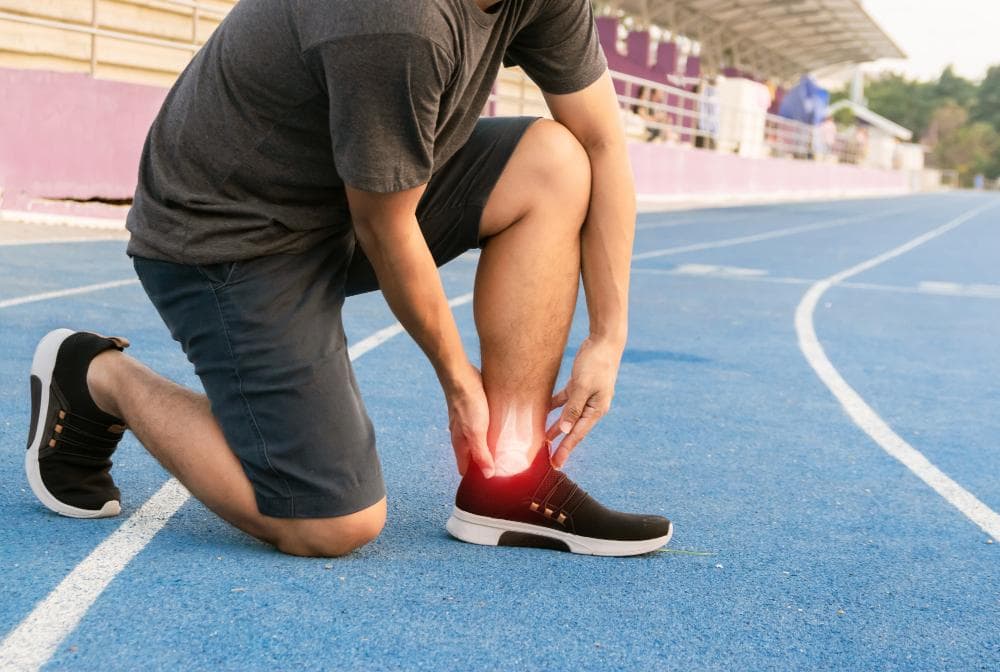
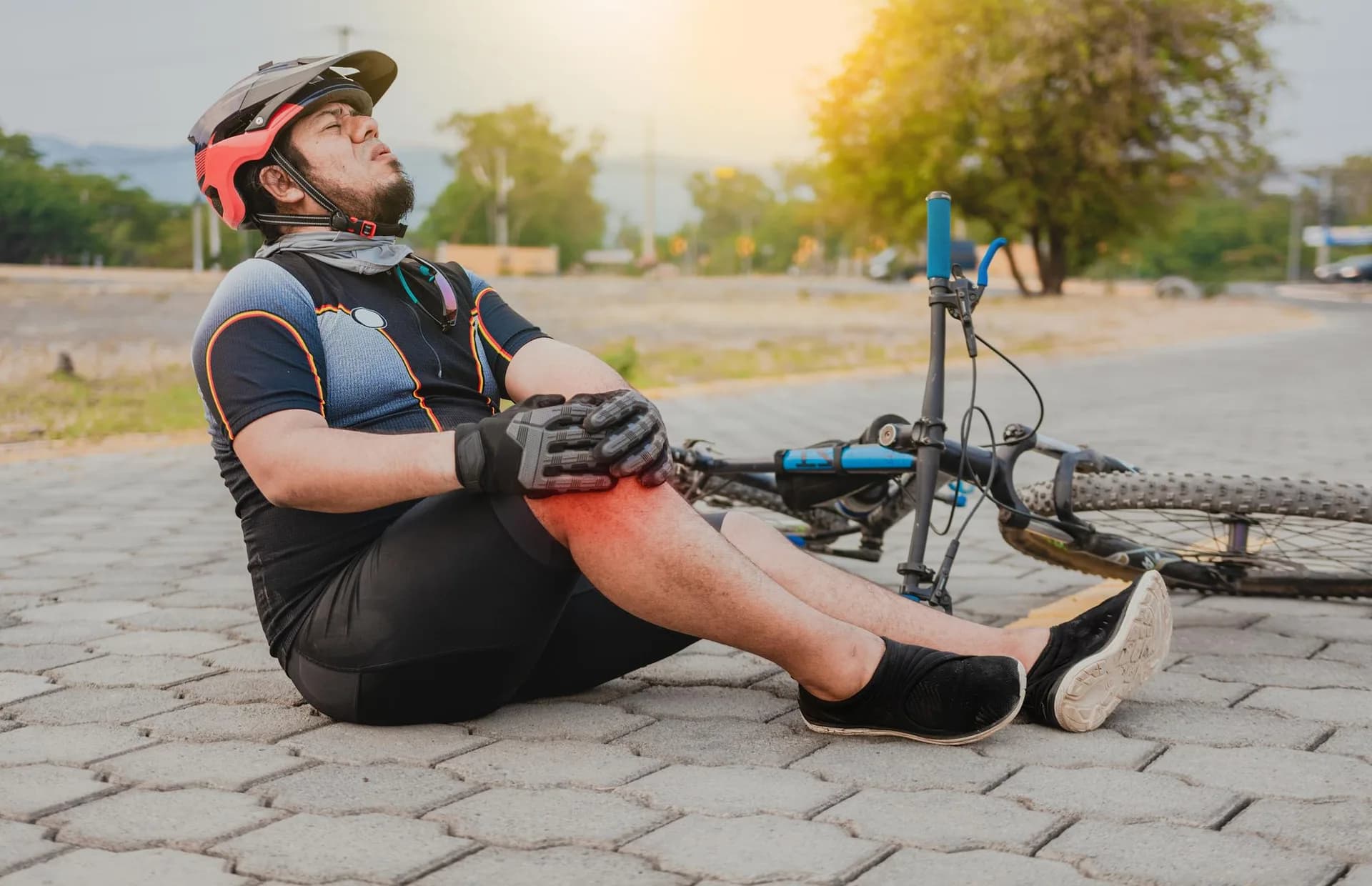
Man sitting on the ground holding his painful leg after an injury
The hamstring is the most commonly injured muscle group in Indian sport. Cricket fielders sprinting between wickets, football players accelerating into a challenge, kabaddi players diving and twisting — the explosive, asymmetric demands of these activities are exactly the conditions in which hamstring fibres fail.
Hamstring injuries account for the highest number of days lost to injury in professional cricket, football, and athletics. But they're not just a problem for elite athletes. Recreational runners, gym-goers, and anyone who does any sudden sprint or heavy stretch without adequate preparation can tear their hamstrings.
Understanding the grade, the appropriate treatment, and the realistic timeline for return to sport prevents the most common mistake patients make: returning too early and re-injuring the same muscle.
What Is the Hamstring?
The hamstring is not a single muscle. It's a group of three muscles running along the back of the thigh:
- Biceps femoris (has two heads — long and short)
- Semitendinosus
- Semimembranosus
These muscles share a common attachment at the back of the pelvis (the ischial tuberosity, the bony prominence you sit on) and extend down to the knee, where they attach to the tibia and fibula. Their primary functions are flexing the knee and extending the hip.
The vulnerability of the hamstring is greatest during the terminal swing phase of running — when the hip is flexed and the knee is simultaneously extending, placing the muscle at maximum stretch under eccentric load. This is when tears occur.
Classification: Three Grades of Hamstring Injury
Grade 1 — Mild Strain
A few muscle fibres are overstretched or minimally torn. The muscle remains intact and functional.
Symptoms: Mild pain at the back of the thigh. Mild tightness. Able to walk normally but discomfort with running or stretching. No significant swelling or bruising.
Recovery: 1–3 weeks with appropriate rest and physiotherapy.
Grade 2 — Partial Tear
A significant number of muscle fibres are torn, but the muscle is not completely ruptured. This is the most variable grade — it encompasses everything from a moderately large partial tear to a very nearly complete one.
Symptoms: Moderate-to-severe pain at the time of injury. Often an audible or felt "pop." Significant swelling and bruising appearing within 24–48 hours. Unable to run or sprint. Walking may be painful. Weakness with resisted knee flexion.
Recovery: 6–12 weeks depending on the extent of the tear and the quality of rehabilitation.
Grade 3 — Complete Rupture
All or nearly all fibres of one or more hamstring muscles are completely torn. Can be a mid-belly tear or, more commonly in athletes, an avulsion — where the proximal tendon tears off the ischial tuberosity, sometimes taking a fragment of bone with it.
Symptoms: Sudden, severe pain. Often an audible pop. Immediate swelling, bruising tracking down into the back of the thigh and buttock. Significant functional loss — difficulty walking, climbing stairs, or sitting. Palpable defect in the muscle belly may be present.
Recovery: 3–6 months without surgery. Proximal hamstring avulsions (complete tendon detachment) often benefit from surgical repair, particularly in active patients under 50.
Diagnosis
Clinical examination by an experienced sports medicine physician will differentiate the grades based on the mechanism of injury, severity of symptoms, tenderness pattern, and functional testing.
MRI is the gold standard for confirming the diagnosis, grading the tear, and — crucially — identifying proximal hamstring avulsions. MRI shows the exact location of the tear, the percentage of muscle cross-section involved, the degree of retraction (how far the torn end has pulled away), and involvement of the sciatic nerve in severe proximal injuries.
Ultrasound is a useful adjunct, particularly for monitoring healing over time and guiding injection procedures.
Treatment: Grade by Grade
Grade 1 — PRICE and Early Movement
- PRICE: Protection (avoid sprinting), Rest (relative — complete immobility is counterproductive), Ice, Compression, Elevation in the first 48–72 hours
- Early gentle movement: Passive stretching within pain tolerance from Day 1
- Physiotherapy: Progressive eccentric exercises (the Nordic hamstring curl is the most evidence-based strengthening exercise for hamstring rehabilitation and prevention)
- Return to sport: 1–3 weeks, criterion-based (not just time-based)
Grade 2 — Structured Rehabilitation Programme
- Initial 5–7 days: Protected weight-bearing, ice, compression, gentle range-of-motion exercises
- Week 2 onwards: Progressive loading programme with a physiotherapist — isometric exercises progressing to isotonic, then eccentric, then sport-specific
- Platelet-rich plasma (PRP) injection: An emerging adjunct for Grade 2 tears, particularly at the mid-belly. PRP delivers growth factors directly to the injured tissue. Evidence is growing but not yet definitive. May reduce time to return to sport in selected cases.
- Return to running: Usually 4–6 weeks
- Return to full sport: 8–12 weeks, criterion-based
A 2025 systematic review found that surgical repair of proximal hamstring injuries resulted in significantly higher return-to-sport rates at pre-injury performance levels compared to non-operative management (65.2% vs 50.7%). For Grade 2 tears at the musculotendinous junction, however, non-operative management with good rehabilitation remains standard.
Grade 3 / Proximal Avulsion — Surgical Consideration
Complete proximal hamstring avulsions — where the tendon pulls entirely off the ischial tuberosity — are the subset most clearly benefited by surgery.
When surgery is indicated:
- Complete avulsion (all three tendons) in an active patient under 55–60
- Significant retraction of the tendon (more than 2 cm on MRI)
- Evidence of sciatic nerve involvement with progressive neurological deficit
- Partial avulsion that fails to respond to 3–6 months of conservative management
The procedure: Through an incision at the back of the buttock, the retracted tendon is identified and re-attached to the ischial tuberosity using suture anchors. The proximity to the sciatic nerve requires careful surgical technique.
Recovery after surgical repair: 6–9 months to full return to sport. Physiotherapy is intensive and begins early.
For isolated mid-belly Grade 3 tears in less active patients, conservative management is typically appropriate.
Return to Sport: Why Getting It Right Matters
Premature return to sport is the most common cause of re-injury — and hamstring re-injury is usually more severe than the original.
The concept of criterion-based return to sport rather than purely time-based is critical:
Before returning to full training and competition, the following should be established:
- Full range of motion equal to the uninjured side
- Hamstring strength at least 90% of the uninjured leg (tested with an isokinetic dynamometer or standardised testing)
- Limb symmetry in sprint mechanics
- Completion of sport-specific running and agility drills without pain
- Confidence and psychological readiness
Simply being pain-free at walking or light jogging speed is not sufficient. A player who cannot sprint at full effort without discomfort or protective guarding is not ready to return to competitive sport, regardless of time elapsed.
Preventing Hamstring Injuries
Prevention is better than treatment. Evidence-based strategies:
Nordic hamstring curl (NHC) programme: The most rigorously studied injury prevention exercise for hamstrings. Performed twice per week in season (and more frequently in pre-season), it significantly reduces hamstring injury rates in team sports. Studies in European football showed 50% reduction in hamstring injury rates with NHC programmes.
Warm-up protocols: Dynamic warm-up (leg swings, hip rotations, progressive running drills) before training or competition — not static stretching, which does not prevent acute muscle tears.
Adequate conditioning: Ensuring the player is fit for the demands being asked. Most hamstring injuries in cricket occur early in the season when players are not adequately conditioned.
Manage fatigue: Most hamstring injuries occur late in training sessions or late in matches, when neuromuscular fatigue affects protective muscle activation.
Sports Injury Care at Prakash Hospital, Noida
Dr. Mayank Chauhan at Prakash Hospital, Sector 33, Noida, manages hamstring injuries across all grades — from early rehabilitation planning to MRI interpretation and surgical management of proximal avulsions. He evaluates athletes and recreational players from across Noida and the NCR region.
To book a consultation, call the number listed on the website.