Hip Replacement for Elderly Patients — Is Age a Barrier?
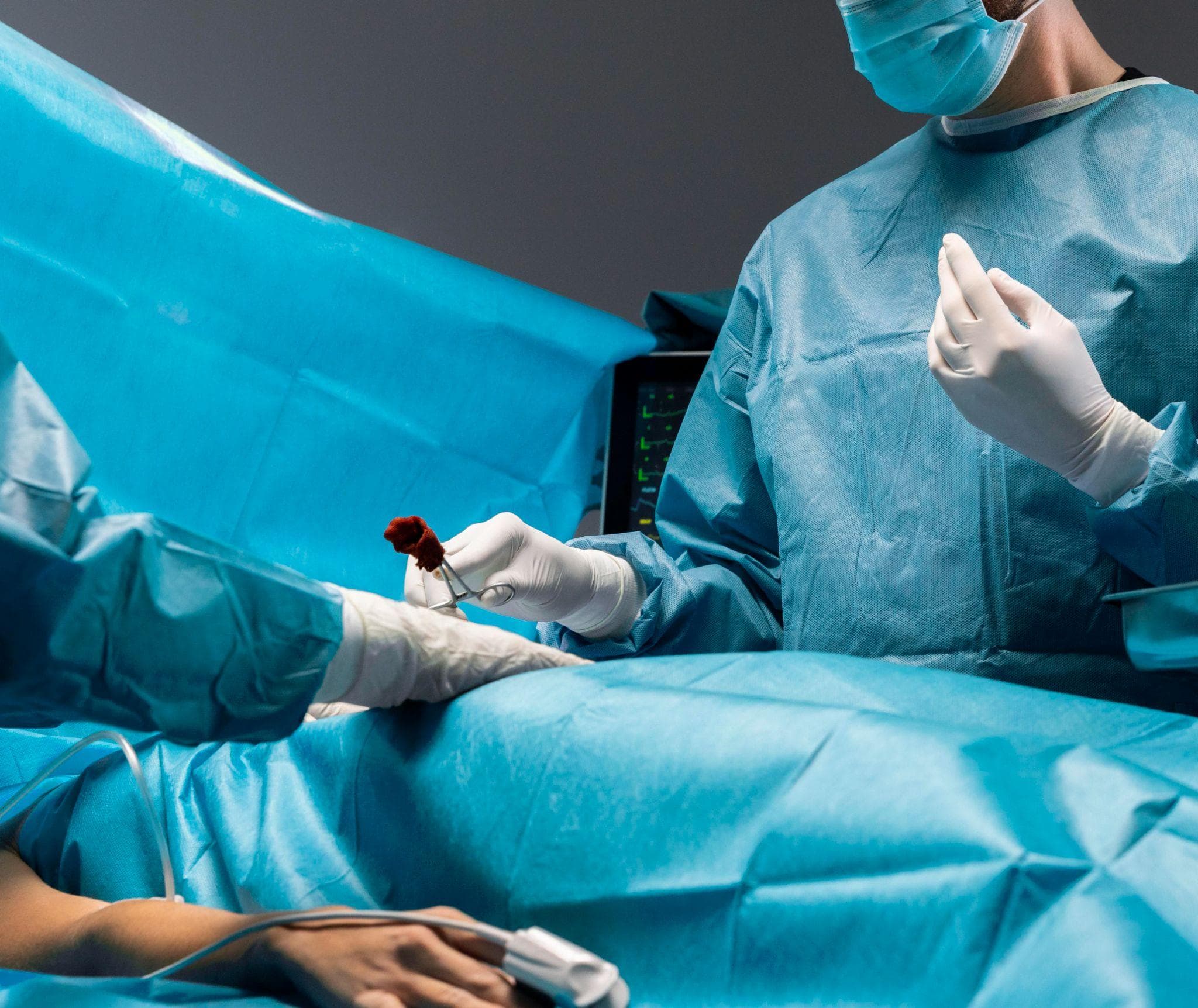
Orthopedic surgeons performing a hip replacement procedure.
There is a persistent belief among older patients in India — and sometimes among their families — that at some age, hip replacement surgery becomes "too risky" or "too much" to be worth attempting. The age varies in the telling: some say 70, others say 75, others say 80.
The evidence does not support this as a fixed rule. Age, by itself, is not a barrier to hip replacement.
What matters is not the number in the date of birth. What matters is physiological fitness — the functional reserve of the cardiovascular, respiratory, and metabolic systems to tolerate surgery and support recovery. Many people at 78 are biologically more robust than others at 65.
This matters particularly for hip fractures, where the elderly patient who cannot undergo surgical fixation or replacement faces a choice between prolonged bedrest with catastrophic consequences, or surgery that addresses the fracture but carries real operative risk. In both hip fracture and elective arthroplasty, age alone is a poor guide.
What the Evidence Shows
Multiple large registry studies and clinical trials have evaluated hip replacement outcomes across age groups, including patients over 75 and over 80.
The consistent findings
- Older patients achieve equivalent or excellent pain relief after hip replacement. The subjective benefit — freedom from pain, ability to sleep, ability to walk — is often described as dramatic.
- Functional outcomes are somewhat lower in very elderly patients, reflecting pre-operative baseline function, frailty, and the effect of other medical conditions on rehabilitation capacity.
- Peri-operative complication rates are higher in elderly patients with multiple comorbidities. But in patients who are carefully selected and pre-operatively optimised, the absolute complication risk is manageable.
- The alternative to surgery is not neutral. An elderly patient with severe hip arthritis who does not undergo replacement faces years of progressive pain, immobility, dependence, and the secondary health consequences of inactivity (cardiovascular deterioration, falls, pressure sores, depression).
For the right elderly patient — adequately selected, medically optimised, with appropriate realistic expectations — hip replacement is appropriate and beneficial.
The Hip Fracture Context: Why Age Cannot Be a Barrier
Hip fractures in the elderly are a genuine emergency — and one where deferring surgery based on age has clearly documented negative consequences.
When an elderly person falls and fractures the femoral neck (neck of the hip bone), the standard treatment is surgical: either fixation of the fracture with a sliding hip screw or internal fixation (if the fracture pattern allows), or replacement of the femoral head with a hemiarthroplasty or total hip replacement.
What happens if surgery is declined or delayed?
- Prolonged bedrest leads to pneumonia, pressure sores, deep vein thrombosis, and rapid functional decline
- Without surgical fixation, the pain of a hip fracture prevents any meaningful mobilisation
- Mortality rates for non-operatively managed hip fractures in the elderly are extremely high
Guidelines from orthopaedic bodies worldwide recommend surgery within 24–48 hours of hip fracture admission for medically fit patients. The evidence strongly supports that early surgery reduces mortality, shortens hospital stay, and produces better functional recovery.
The question for elderly hip fracture patients is not whether to operate — it is which operation, and how to optimise the patient for the safest possible anaesthetic and recovery.
Elective Hip Replacement in Elderly Patients: Selecting the Right Patient
For elective hip replacement (not fracture — planned surgery for arthritis), the key assessment is not age but physiological age and surgical risk.
What Is Assessed Before Surgery
Cardiac reserve: The heart must tolerate the fluid shifts, blood loss, and physiological stress of surgery. An ECG is standard. If significant cardiac disease is identified, cardiology review and optimisation precede surgery. A thorough cardiac assessment may include stress testing.
Pulmonary function: Adequate lung reserve is needed for recovery from anaesthesia and for the respiratory effort of rehabilitation. Patients with poorly controlled COPD or significant pulmonary disease require optimisation before elective surgery.
Cognitive function: Elderly patients are at risk for post-operative delirium — an acute state of confusion that occurs commonly in hospitalised elderly patients after major surgery. It is temporary in most cases, but is distressing and slows recovery. Patients with significant pre-existing cognitive impairment (dementia) are at higher risk, and this is factored into the decision and the family's preparation.
Nutritional status: Malnourished elderly patients have higher complication rates. Albumin level is a simple blood test that reflects nutritional status. Patients with hypoalbuminaemia benefit from nutritional support before surgery.
Frailty assessment: Modern orthopaedic care increasingly uses frailty assessment tools (Clinical Frailty Scale, Edmonton Frailty Scale) to characterise patients' physiological reserve beyond traditional comorbidity counts. A mildly frail patient may still benefit substantially from surgery. A severely frail patient warrants a careful discussion about whether the rehabilitation demands of surgery are achievable.
Medication review: Elderly patients are often on multiple medications. Blood thinners must be managed. Some medications interact with anaesthesia. Osteoporosis medication may affect bone quality around the implant.
Anaesthesia for Elderly Hip Replacement Patients
For elderly patients, spinal anaesthesia (a spinal injection numbing the lower body) is generally preferred over general anaesthesia. Reasons:
- Avoids the risks of general anaesthesia in elderly patients (cognitive effects, chest complications)
- Better post-operative pain control
- Lower risk of post-operative delirium compared to general anaesthesia in elderly patients
Most elderly patients tolerate spinal anaesthesia very well. Combined with a minimally sedating perioperative approach, many elderly patients are awake and alert within hours of surgery.
Post-Operative Care for Elderly Patients: Specific Considerations
Delirium prevention: Maintaining adequate hydration, good pain control (reducing opioid use as much as possible through multimodal analgesia), ensuring familiar faces are present (family at bedside), maintaining normal day/night rhythm, and early mobilisation all significantly reduce delirium incidence.
Physiotherapy: Elderly patients need physiotherapy to begin on the day of or day after surgery — even if progress is slow. The risk of prolonged bedrest (DVT, pneumonia) outweighs the discomfort of early mobilisation in the vast majority of cases.
Fall risk: Elderly patients are at higher fall risk during the rehabilitation phase. Appropriate mobility aids (walker, not crutches), non-slip footwear, and home safety assessment are important before discharge.
Discharge planning: Elderly patients may not be safe for immediate return to a home without support. Some may benefit from a short inpatient rehabilitation stay before returning home. Discharge planning should involve the family and — where needed — a social worker.
What Older Patients Gain
Surveys of elderly patients after hip replacement consistently show:
- Substantial pain relief, enabling sleep through the night — often described as transformative by patients who have not slept well in months or years
- Improved independence — ability to walk to the bathroom, dress, cook
- Reduced dependence on family members for basic care
- Reduced fall risk (paradoxically — a painful, stiff hip destabilises gait and increases falls; a recovered replacement hip improves it)
- Meaningful quality of life improvement for the remaining years
Hip Replacement for Elderly Patients at Prakash Hospital, Noida
Dr. Mayank Chauhan evaluates elderly patients with hip disease individually at Prakash Hospital, Sector 33, Noida. The pre-operative workup includes cardiac clearance, anaesthesia review, and a realistic discussion of what surgery offers and what recovery requires.
Patients from across Noida, Greater Noida, and NCR are welcome for evaluation.
To book a consultation, call the number listed on the website.