Reviewed by Dr. Mayank Chauhan
What Affects the Cost of Knee Replacement Surgery?
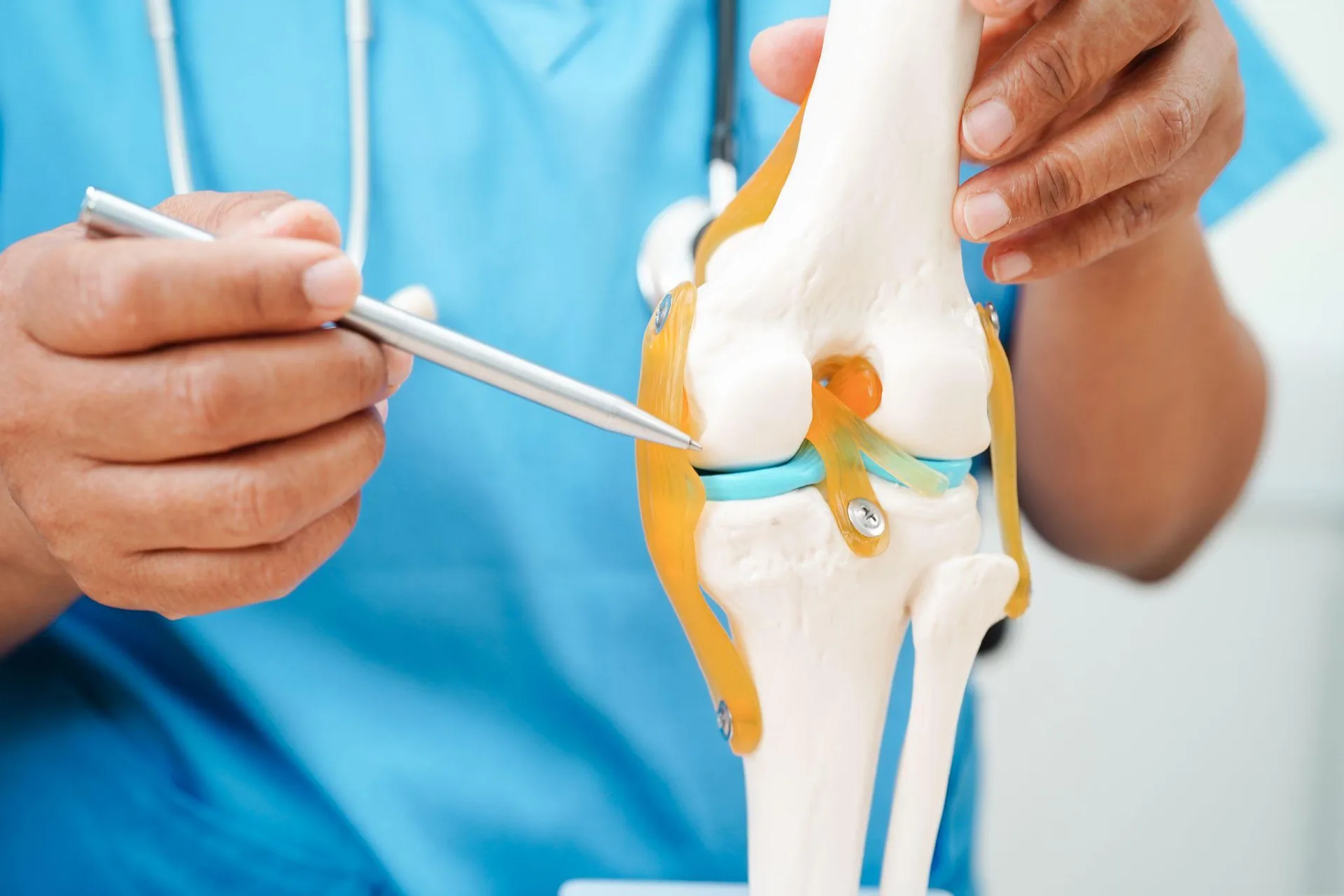
The implant is one of the biggest variables in what a knee replacement costs.
Ask three hospitals about the cost of a knee replacement and you will get three different answers. Sometimes the gap is large enough to make you wonder whether they are describing the same operation.
They usually are, more or less. The surgery is similar, but the package around it is not. The implant, the room, the length of stay, the surgeon's experience, the technology used and what is included in the quote all change the final figure. Comparing two quotes without knowing what is inside each one is like comparing two thalis by the number of items on the menu.
Why one number never fits everyone
Knee replacement is not a single product. It is a combination of decisions made for you by your surgeon and your circumstances. Two patients with similar looking X-rays can need very different plans because of age, weight, other illnesses, bone quality, the shape of the deformity and what they hope to do afterwards.
That is why any figure you see on a website or hear from a friend is, at best, a starting point. Your friend may have had one knee done with a standard implant in a shared room, while your plan involves both knees, a particular implant and a private room. The label is the same, but the content differs.
The main factors that affect the cost
1. The implant
The implant is one of the biggest variables. Knee implants differ in design, materials and manufacturer.
- Material and design. Standard cobalt chrome implants with a polyethylene (plastic) insert are widely used and have a long track record. Other options exist, such as designs made for a wider range of bending or for patients with metal sensitivities. Our guide on knee replacement implant types explains the choices.
- Brand and origin. Implants from large international manufacturers often cost more than those made in India, though both can perform well. The right choice depends on your anatomy, age and activity level, not just on price.
- Fixation. Most knee implants are fixed with bone cement. Some designs are cementless, which depend on bone growing into the implant. The choice depends on your bone quality and age.
A higher priced implant is not automatically better for you. A well chosen, well fitted standard implant often performs beautifully. What matters most is that the implant suits your knee and that the surgeon is experienced with it.
2. The type of surgery
- Total knee replacement replaces all surfaces of the joint and is the most common.
- Partial knee replacement is for damage confined to one compartment of the knee. It uses a smaller implant and may suit selected patients. See our guide on partial knee replacement.
- Both knees at once or in stages. Operating on both knees under the same anesthesia changes the implant count, the stay and the recovery plan. Our guide on bilateral knee replacement covers when this is advised.
- Revision surgery to replace a worn or failed implant is more complex than a first operation, and the cost reflects that. See knee replacement failure.
3. Robotic or computer assisted technology
Robotic and navigation systems help the surgeon plan and execute bone cuts and implant position with precision. They add equipment, software and set up costs, which can raise the package. For some patients the improved alignment is worth it, while for others a conventional technique gives an excellent result. Our guide on robotic knee replacement explains how it works and who might benefit. Ask your surgeon whether the technology is likely to change your outcome, not just whether it is available.
4. The hospital
Hospitals differ in infrastructure, accreditation, nursing ratios, operating theatre standards, infection control and emergency back up. These all influence cost.
- Accreditation. NABH accredited hospitals follow defined quality and safety standards.
- Facilities. Dedicated joint replacement operating rooms, laminar air flow, ICU access and trained rehabilitation staff matter more than a fancy lobby.
- Location. Hospitals in metro areas generally have higher overheads than those in smaller towns.
A hospital with strong systems can make a real difference to infection risk and recovery, so the cheapest option is not always the most economical in the long run.
5. Room category and length of stay
The type of room you choose, whether general ward, semi private, private or deluxe, affects the bill each day. So does the number of days you stay. Most patients go home within a few days if recovery is smooth, though this varies. See our guide on hospital stay after joint replacement. Complications, slow wound healing or other medical problems can extend the stay.
6. Surgeon's fees and experience
Surgeon's fees reflect training, volume and track record. Experience in joint replacement matters, because studies consistently show that surgeons and hospitals that do more joint replacements tend to have better outcomes. Selecting a surgeon only for the lowest quote is a risk worth thinking about carefully.
7. Anesthesia and operating theatre charges
Anesthesia, the anesthesiologist's fees, theatre time, disposables and monitoring equipment form part of the bill. Our guide on anesthesia for orthopedic surgery explains the options. Operating theatre charges often vary with the complexity and duration of the case.
8. Pre-operative tests and preparation
Before surgery, you will need blood tests, an ECG, chest X-ray, knee X-rays and sometimes other checks, such as heart or lung evaluation or dental clearance. If you have diabetes, heart disease or kidney problems, extra assessment may be needed. Preparing well reduces the chance of complications. Read about prehabilitation before knee replacement.
9. Medicines, blood and supplies
This covers antibiotics, painkillers, blood thinners, nerve blocks, dressings, and blood products if required. Your health conditions and the surgical approach influence how much is needed.
10. Physiotherapy and rehabilitation
Rehab is a part of the treatment, not an extra. Physiotherapy starts the day after surgery and continues for weeks. Some packages include in hospital sessions only, while others include a set number of outpatient or home visits. Clarify what is covered.
11. Follow up care
Wound checks, X-rays and consultations in the weeks after surgery are part of the process. Some packages include them, some do not.
12. Complications and unexpected needs
Though serious problems are uncommon, things like infection, blood clots or the need for ICU care can add to the bill. Good planning lowers the risk. Our guide on DVT and blood clots after surgery explains one of the main safeguards.
Package versus itemised billing
Hospitals bill in two main ways.
Fixed package. A single estimate covers the surgery, implant, standard room, a set number of days and listed services. It makes budgeting easier, but only if you know what is in and what is out.
Itemised billing. You pay for each service used. It can be fair for complicated cases, but the final total is harder to predict.
Whichever you choose, ask for a written estimate and read the inclusions and exclusions. A package that looks lower may leave out tests, physiotherapy, medicines, blood or higher room charges.
Questions to ask when you get a quote
- Which implant is included, and what are its brand and design?
- Is it a total or partial replacement, and one knee or both?
- Is robotic or navigation assistance included?
- What room category does the estimate assume?
- How many days of stay are included?
- Which tests, medicines, anesthesia, theatre charges and physiotherapy are included?
- What happens if I need to stay longer?
- Are follow up visits and X-rays included?
- What is excluded or likely to cost extra?
- Is the estimate in writing?
Insurance, CGHS, ECHS and ESI
Many patients worry that they cannot afford surgery, but there are routes to coverage that are worth exploring before you decide.
Private health insurance
Most health insurance policies cover knee replacement when it is medically necessary, usually after a waiting period for pre-existing conditions. Points to check:
- The waiting period for orthopedic procedures
- The sum insured and any room rent limit (a limit on room charges can reduce what the insurer pays overall)
- Sub limits on implants or joint replacement
- Co-payment clauses
- Whether cashless treatment is available at your hospital
- What documents the insurer needs for pre authorisation
Government and employer schemes
Eligible central government employees, pensioners and their dependants can use CGHS. Ex-servicemen and their families can use ECHS. Insured workers can use ESI. Prakash Hospital in Noida is empanelled with all three, along with major insurers. Rates and rules under these schemes are set by the scheme, and eligibility is checked at the time of admission.
What to do before admission
- Speak to the hospital's insurance or TPA desk early.
- Share your policy or scheme details so they can check coverage.
- Get pre authorisation approved before the planned date, rather than relying on emergency admission.
- Keep copies of every document.
Our guide on whether orthopedic surgery can be avoided also helps if you are not yet sure surgery is right for you.
Is a lower quote really cheaper?
Cost deserves attention, but it is not the only thing that decides what you get. A few points are worth keeping in mind.
- A knee replacement is meant to last, often 20 years or more. Over that time, the quality of the operation matters far more than the difference between two quotes.
- Complications, revision surgery and prolonged rehabilitation can cost much more than any initial saving.
- Cheaper does not necessarily mean unsafe, and costlier does not necessarily mean better. The question is what you are paying for.
For more on durability, see how long a knee replacement lasts.
Practical ways to plan well
- Get your evaluation first. A proper assessment, with X-rays, tells you whether you need surgery and what type.
- Compare like with like. Ask for estimates that state the same inclusions so you can compare fairly.
- Check your insurance in advance. A call to your insurer or TPA can prevent last minute surprises.
- Time your surgery. Planned surgery lets you arrange pre authorisation, tests and leave from work.
- Build in a buffer. An extra day or an unexpected medicine can happen.
- Prepare your home. A raised toilet seat, grab rails and a clear path reduce the risk of falls and extra costs afterwards.
- Ask about payment options. Hospitals can explain what is available, including insurance processing.
- Focus on the surgeon and hospital. The best value comes from a team you trust and a process you understand.
Knee replacement in Noida with Dr. Mayank Chauhan
If you are weighing up knee replacement, the first step is an examination and a clear, written plan for your case. Dr. Mayank Chauhan is a senior orthopedic surgeon at Prakash Hospital, D-12A/12B, Sector 33, Noida, next to the ISKCON Temple. He has more than 15 years of experience in joint replacement, trained at Maulana Azad Medical College, Delhi, and completed an arthroplasty fellowship at Hallym University Hospital, South Korea. His patients rate him 4.9 out of 5 on Google.
Prakash Hospital is a 100 bed, NABH and NABL accredited hospital with 24 hour emergency care. It is empanelled with CGHS, ECHS, ESI and major insurers. OPD hours are Monday to Saturday, 10 AM to 8 PM, and Sunday, 10 AM to 2 PM.
For an estimate that fits your knee, your health and your coverage, a consultation is the right place to start.
To book a consultation, call the number listed on the website.
This article is general information about factors affecting cost. It does not state or promise any price. A written estimate from the hospital after examination is the only reliable figure for your case.