Best Foods for Bone Health — A Complete India-Specific Diet Guide
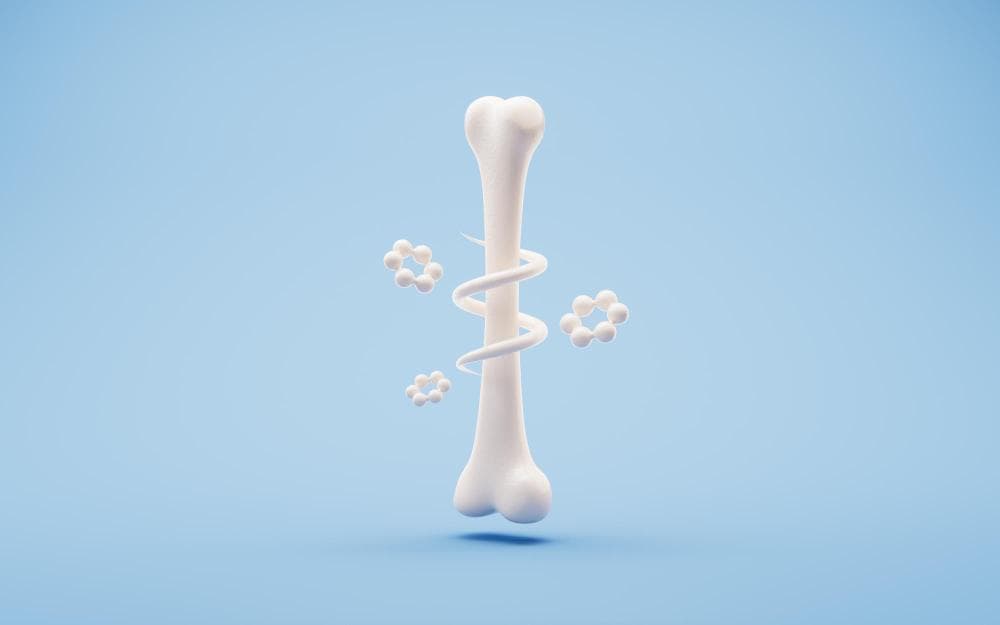
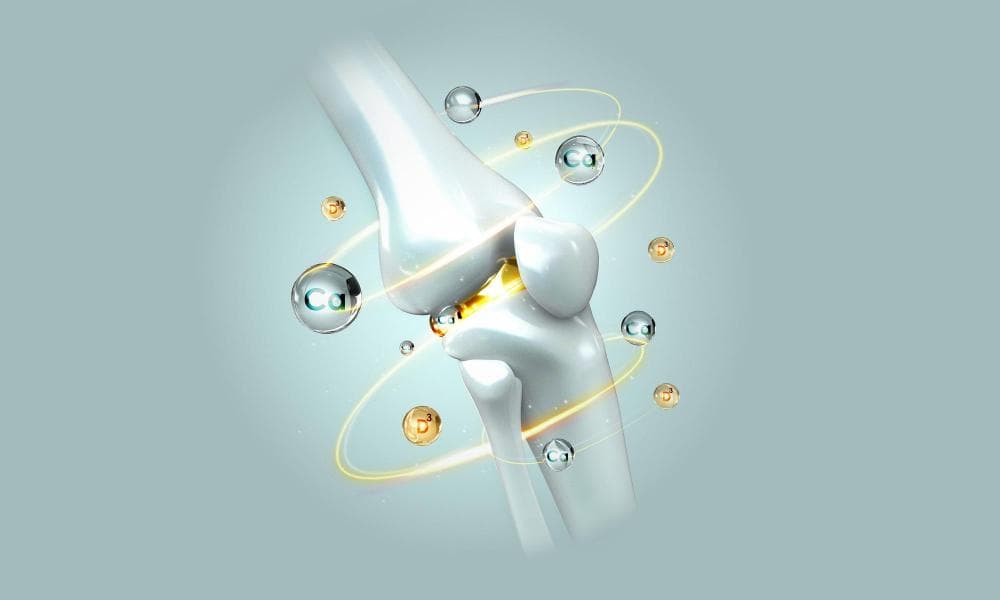
3D illustration of a human bone with calcium molecules around it on a blue background.
Most bone health nutrition articles in India take the same approach: list calcium-rich foods, mention dairy, mention vegetables, and recommend supplements. Useful up to a point. But the nuance — how much calcium is actually absorbed from each source, which foods work together, and which common habits quietly undo all of it — almost never makes it in.
This guide goes deeper. It covers the best Indian food sources for bone health, why bioavailability matters more than raw calcium content, and the overlooked daily habits that determine whether those nutrients actually reach your bones or get lost along the way.
The Number That Should Concern Everyone
Most Indian adults consume 300–400 mg of calcium per day. The recommended daily intake for adults under 50 is 1,000 mg. For adults over 50, it's 1,200 mg.
That gap — 600 to 800 mg per day — isn't a minor shortfall. It's compounded every day for decades, and the skeleton is the one paying for it, quietly, until a fracture makes the problem impossible to ignore.
The good news is that Indian food has some of the most powerful bone-building ingredients available anywhere in the world. The challenge is that most people don't know which foods they are or how to prepare them to actually absorb the calcium they contain.
Understanding Bioavailability: Why the Number on the Label Isn't the Full Story
Calcium content and calcium absorption are two different things.
Milk provides about 120 mg of calcium per 100 ml. The body absorbs roughly 30–35% of that — so about 36–42 mg of usable calcium per 100 ml.
Ragi provides about 344 mg per 100 g. But ragi contains phytates (antinutrients that bind calcium and reduce absorption). Without processing, absorption may be as low as 15–20%. With traditional processing — soaking, fermenting, sprouting — phytate content drops by 60–90%, and absorbed calcium rises substantially.
This is why your grandmother's insistence on soaking grains overnight was not superstition. It was calcium delivery.
The practical implication: combining multiple calcium sources is more reliable than relying on any single food, and preparing them correctly (soaking, fermenting, pairing with vitamin C and vitamin D) makes a meaningful difference to what actually reaches the bone.
The Top Indian Foods for Bone Health
1. Ragi (Finger Millet / Nachni)
Ragi is the single best plant-based calcium source in the Indian diet. According to the Indian Food Composition Tables (National Institute of Nutrition), 100 g of ragi contains approximately 344 mg of calcium — three times the calcium in the same weight of milk.
It is also a good source of magnesium and iron, making it unusually complete for bone health among plant foods.
How to use it: Ragi roti instead of some plain wheat rotis at meals. Ragi dosa. Ragi porridge for breakfast. Ragi added to atta when kneading dough. Ragi laddoos (particularly popular in Karnataka and Tamil Nadu).
Preparation tip: Soak ragi flour or grain before use. Fermenting the batter (as in dosa) dramatically reduces phytate content and improves calcium bioavailability.
2. Sesame Seeds (Til / Nuvvula)
Sesame seeds are one of the most calcium-dense foods in any cuisine. Per 100 g, sesame contains approximately 975–1,000 mg of calcium — the highest of any common Indian food by weight. Just 2 tablespoons of sesame seeds contribute approximately 175–200 mg of calcium.
They also provide magnesium, phosphorus, and zinc — all important for bone mineralisation.
How to use it: Til chutney powder (nuvvula karam podi) mixed into food. Sesame seeds sprinkled over sabzi or dal. Til ki chikki (sesame jaggery brittle — a traditional winter food that delivers calcium in exactly the right form). Tahini (sesame paste) added to dressings or dips. Sesame seeds mixed into roti dough.
Preparation tip: Unhulled sesame seeds have higher calcium than hulled varieties. Lightly roasted sesame is preferred for both flavour and calcium accessibility.
3. Moringa (Drumstick Leaves / Shigru)
Moringa leaves contain approximately 185–440 mg of calcium per 100 g depending on preparation and source data. They also contain vitamin K, which is essential for directing calcium into bone tissue, and vitamin C, which supports collagen formation in the bone matrix.
Moringa is available across India — it grows prolifically in tropical and subtropical climates and has been used in South Indian cooking for centuries. Drumstick pods in sambar is one of the most common preparations, though the leaves are far more nutritious than the pods.
How to use it: Moringa leaves in sambar, chutneys, sabzi, or dal. Moringa powder (widely available) added to roti dough, dal, or smoothies. One teaspoon of moringa powder in warm water or milk is a common daily supplement approach.
4. Dairy — Milk, Curd, and Paneer
Dairy remains one of the most efficient calcium sources because its calcium is highly bioavailable (30–35% absorption) and it's consumed daily by most Indian households.
- Milk: approximately 120 mg calcium per 100 ml (300 mg per 250 ml glass)
- Curd (dahi): approximately 120 mg per 100 g
- Paneer: approximately 200 mg per 100 g
- Chaach (buttermilk): lower calcium per serving, but easy to consume daily
The Endocrine Society of India's 2025 guidance on calcium emphasises dairy as the most practical and bioavailable source for most Indians, with plant alternatives for those who cannot or do not consume it.
Practical note: Curd is preferable to sweetened processed dairy products. Fermenting milk into curd adds probiotic benefit and preserves the calcium content. Commercial curd (dahi) available across India is an excellent daily bone health food.
5. Green Leafy Vegetables — Methi, Amaranth, Palak, Moringa
Green leafy vegetables contribute calcium alongside magnesium, vitamin K, vitamin C, and iron.
- Methi (fenugreek leaves): 395 mg calcium per 100 g
- Amaranth leaves (rajgira/chaulai): 365 mg per 100 g
- Bathua: 150 mg per 100 g
- Palak (spinach): Calcium content is high (~100 mg/100 g) but bioavailability is significantly reduced by oxalate content — spinach is a less efficient calcium source than the others listed
How to use them: As sabzi, in dals, in parathas, in chutneys. Including a daily green leafy sabzi provides a meaningful calcium and mineral contribution alongside fibre and vitamins.
Note on oxalates: Cooking (particularly boiling) reduces oxalate content in leafy greens. Cooking spinach before eating releases more absorbable calcium than eating it raw. Pairing greens with a source of vitamin C (lemon juice, tomatoes) improves iron absorption without affecting calcium.
6. Pulses and Legumes — Rajma, Chana, Moong, Urad Dal
Pulses provide calcium alongside protein, iron, and fibre:
- Rajma: approximately 140 mg calcium per 100 g cooked
- Kabuli chana: approximately 105 mg per 100 g cooked
- Urad dal: approximately 150 mg per 100 g cooked
- Soybeans/soya: approximately 200+ mg per 100 g
Pulses are particularly valuable for vegetarians combining calcium with complete or near-complete protein.
Preparation tip: Soaking pulses overnight reduces phytate content by 20–40%, improving both calcium and iron absorption. Sprouting further increases bioavailability.
7. Almonds and Nuts
Almonds provide approximately 264 mg calcium per 100 g, alongside magnesium (essential for vitamin D metabolism and bone mineralisation), healthy fats, and protein.
A small daily handful of soaked almonds (10–15 nuts) contributes approximately 50–60 mg calcium plus meaningful magnesium. Walnuts, in contrast, are rich in omega-3 fatty acids (anti-inflammatory) but not significant calcium sources.
8. Small Fish Eaten with Bones
For non-vegetarian Indians, small dried fish eaten whole — a common practice in coastal regions of Maharashtra, Kerala, West Bengal, Odisha, and the Northeast — are an exceptional calcium source. The bones provide calcium that is well-absorbed.
Large fish like rohu or catla (without bones) provide protein and omega-3 but limited calcium. The bone-in small fish — dried sardines, small anchovies, small river fish — are the calcium-rich option.
What Reduces Calcium Absorption — The Overlooked Side
Knowing the best sources is only half the picture. Several daily habits reduce how much calcium the body retains, regardless of intake:
Excess salt (sodium): High sodium intake increases urinary calcium excretion. The Indian diet is typically high in sodium — pickles, papads, processed snacks, salt added at the table. Every gram of excess sodium excretes approximately 26 mg of urinary calcium.
Caffeine: High tea and coffee consumption moderately reduces calcium absorption and increases urinary excretion. Consuming tea or coffee immediately with calcium-rich meals (roti with chai at breakfast) reduces absorption somewhat. A 30-minute gap between tea and calcium-rich foods is worth trying.
Fizzy drinks (particularly cola): Phosphoric acid in colas is associated with lower bone density in heavy regular consumers. Not a major concern for moderate occasional consumption.
Phytates in unprocessed grains: Addressed by soaking, sprouting, and fermenting — traditional preparation methods that have additional bone health rationale beyond simple taste and digestion.
Vitamin D deficiency: The most important factor of all. Without adequate vitamin D, only 10–15% of dietary calcium is absorbed from the gut. No amount of dietary calcium adequacy compensates for vitamin D deficiency. Most Indians are deficient. Get tested.
The Co-Stars: What Else Bones Need Besides Calcium
Bone is not pure calcium. It's a composite material — approximately 30% organic matrix (primarily collagen) and 70% mineral. A complete approach to bone health includes:
Vitamin D: Enables calcium absorption. 15–20 minutes of midday direct sun exposure on bare skin, several days per week. Supplement if blood levels are deficient.
Vitamin K2: Activates osteocalcin (the bone protein that binds calcium) and directs calcium away from arteries and into bone. Sources: egg yolks, fermented foods. Consider supplementation (MK-7, 90–200 mcg) if diet lacks these sources.
Magnesium: Required for vitamin D activation and bone crystal formation. Sources: pumpkin seeds, nuts, whole grains, dark leafy greens.
Protein: The collagen framework of bone requires adequate daily protein. 1–1.2 g/kg/day minimum for adults.
Weight-bearing exercise: Bones respond to mechanical load. Walking, jogging, resistance training all stimulate bone formation. Sedentary lifestyles accelerate bone loss regardless of diet.
A Practical Daily Plan for Bone Health
This is what eating for bone health looks like in practice, without supplements:
Breakfast: Ragi roti or ragi dosa + curd (calcium approximately 400–500 mg)
Mid-morning: A small portion of til (sesame) chutney or til laddoo + 10 soaked almonds (calcium approximately 200 mg)
Lunch: Dal + moringa or methi sabzi + curd (calcium approximately 250 mg)
Evening: Warm milk or chaach (calcium approximately 150 mg)
Dinner: Rajma/chana + vegetable + small portion of paneer (calcium approximately 250 mg)
Total: approximately 1,250 mg of dietary calcium — meeting the adult recommended intake with no supplementation.
This is achievable. It requires awareness and deliberate food choices, not exotic ingredients or expensive supplements.
Dr. Mayank Chauhan is a senior orthopedic surgeon at Prakash Hospital, Sector 33, Noida, with expertise in bone health assessment, fracture management, and joint replacement. DEXA bone density scanning is available on-site.
To book a consultation, call the number listed on the website.