Reviewed by Dr. Mayank Chauhan
Tennis Elbow: Causes and Treatment Without Surgery
In one trial, about 90 percent of people with tennis elbow had recovered or much improved at one year.
You have never held a tennis racket in your life, and yet your elbow hurts every time you lift a kettle or turn a door handle. A bag of vegetables feels heavy. A handshake makes you wince. Your doctor says tennis elbow, and you wonder whether that is a joke.
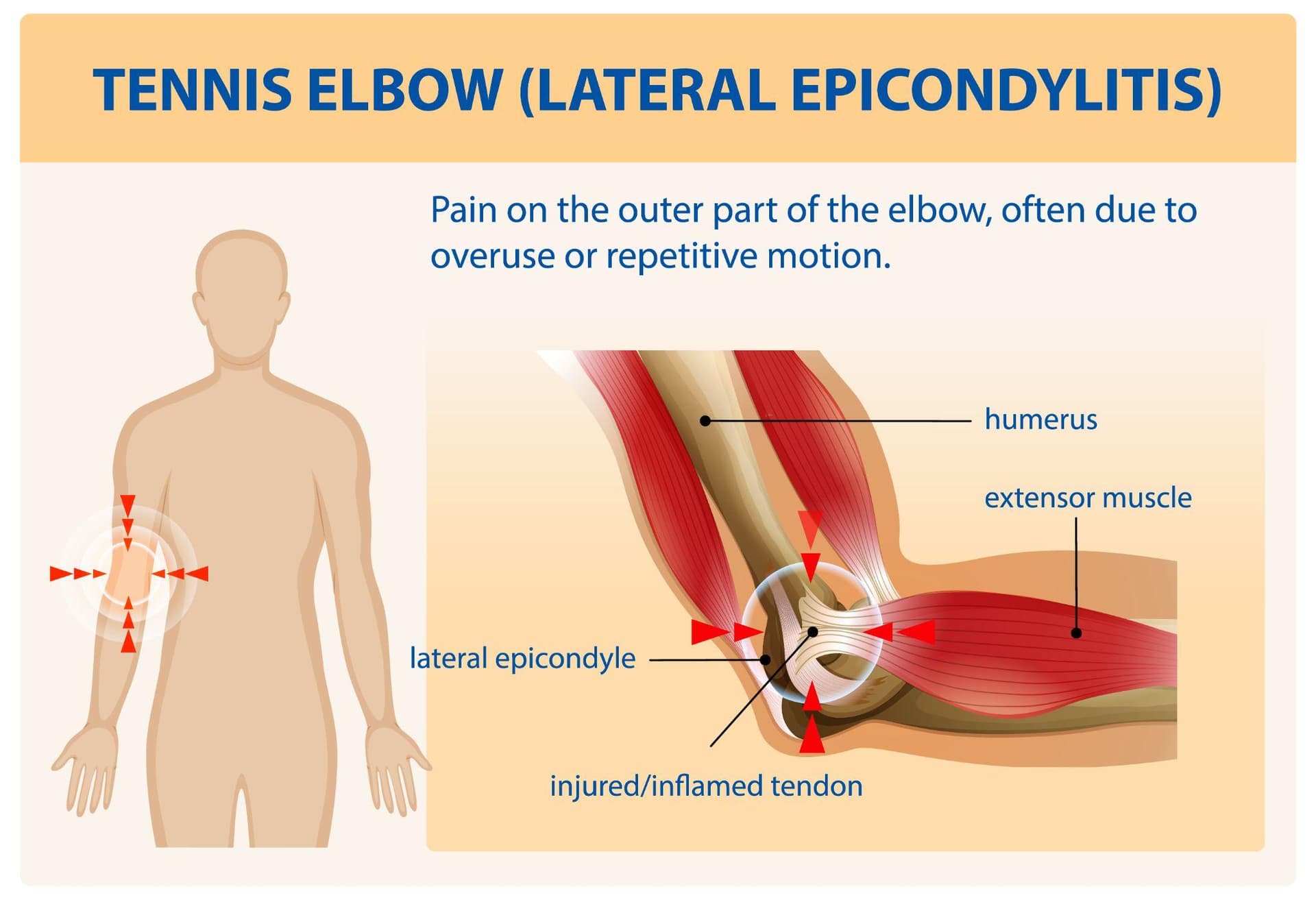
Tennis elbow, medically called lateral epicondylitis or lateral epicondylalgia, affects far more office workers, carpenters, homemakers and painters than tennis players. It is an overuse problem of the tendons on the outer side of the elbow. It is also one of those conditions where the common treatments are not always the best ones, and where patience is rewarded.
What is tennis elbow?
The muscles that straighten your wrist and fingers attach to a bony bump on the outside of the elbow (the lateral epicondyle) through a common tendon. The extensor carpi radialis brevis is the tendon most often involved. When it is overloaded repeatedly, tiny tears and degenerative changes develop in the tendon where it attaches to bone.
Although it is often called "-itis," studies of the tissue suggest it is more of a tendon degeneration than a simple inflammation. This matters because it explains why anti-inflammatory approaches do not always work and why loading exercises do.
Symptoms
- Pain on the outer side of the elbow, which may spread down the forearm
- Pain when gripping, lifting, twisting or shaking hands
- Weak grip, with dropping of cups and objects
- Tenderness when pressing on the bony bump
- Pain on extending the wrist against resistance
- Morning stiffness in the elbow
- Usually worse with activity, then ache afterwards
It most often affects the dominant arm and typically appears between 30 and 50.
What causes it?
Repetitive strain
- Computer mouse and keyboard use with the wrist extended
- Painting, plastering, carpentry and plumbing
- Cooking, chopping and kneading dough
- Using screwdrivers, hammers or heavy tools
- Gardening
- Racquet sports, especially with poor technique or a heavy or tightly strung racket
- Repetitive lifting with the palm facing down
Contributing factors
- Sudden increase in activity or an unfamiliar task
- Weak forearm and shoulder muscles
- Poor technique or ergonomics
- Age: tendon quality declines after 30 to 40
- Smoking
- Previous elbow injury
- Sometimes diabetes or other conditions that affect tendons
Many people can recall nothing in particular. The overload builds quietly over weeks.
Is it really tennis elbow? Other causes of elbow pain
Not every outer elbow pain is tennis elbow. A doctor will consider:
- Radial tunnel syndrome, where the radial nerve is compressed, causing deeper aching in the forearm
- Cervical (neck) problems that refer pain to the arm
- Elbow arthritis
- Posterolateral rotatory instability or plica problems
- Golfer's elbow, which affects the inner side of the elbow (our article on tennis elbow versus golfer's elbow explains how to tell the two apart)
- Bursitis or a ligament injury
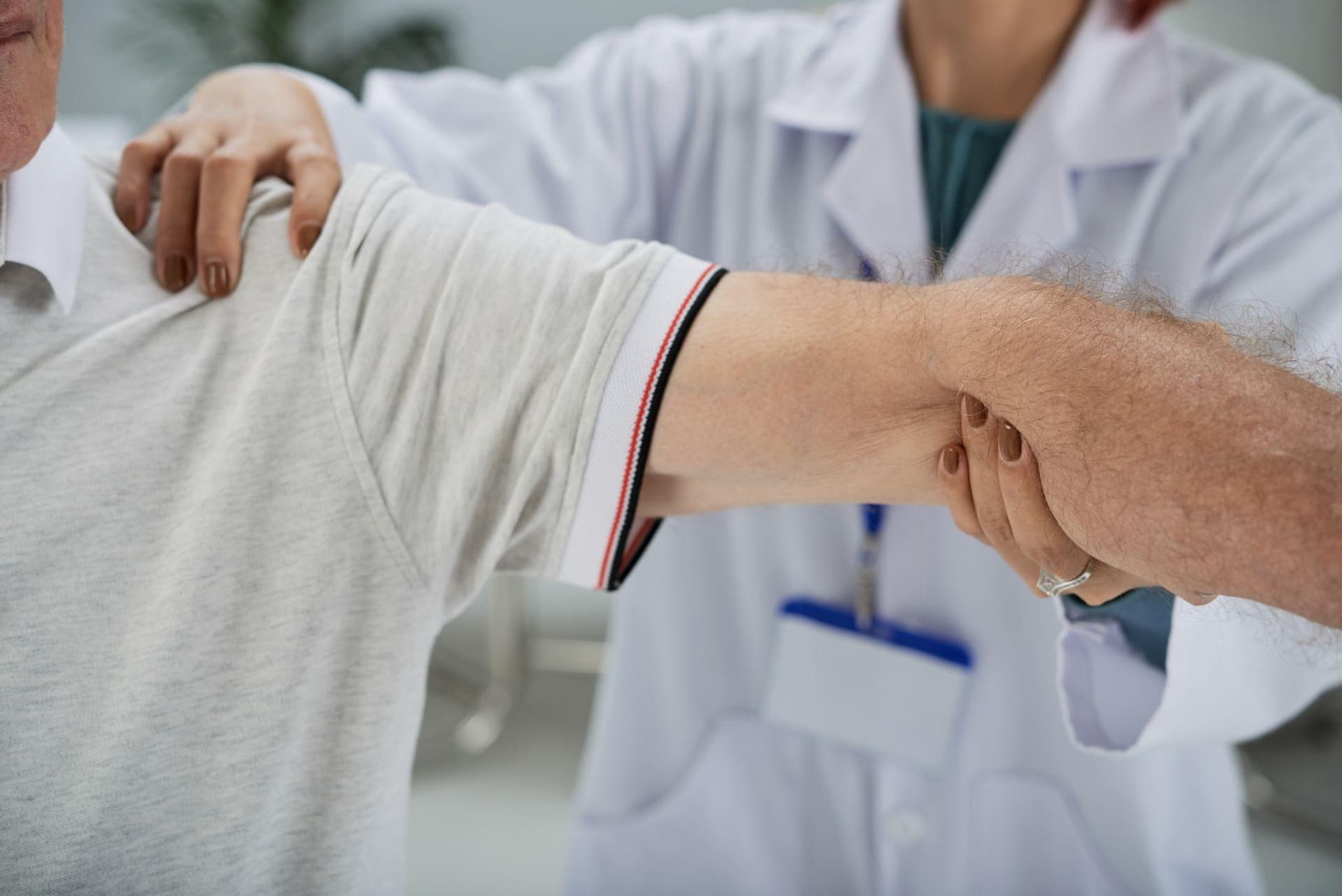
A clinical examination is usually enough. X-rays are not routinely required but may be used to rule out arthritis, calcification or fractures. Ultrasound or MRI are used if the diagnosis is uncertain or symptoms are prolonged.
How long does tennis elbow last?
The reassuring part is that tennis elbow is largely self-limiting. In most people, it settles over months. A well-known randomised trial of 165 adults with tennis elbow found that around 90 percent were either completely recovered or much improved at one year, regardless of the treatment they received, and this is considered the natural course of the condition. Recovery can still take six to twelve months, and a minority of people have symptoms for longer than a year or two.
That timeline can feel discouraging, but it shapes the right approach: protect the tendon, load it progressively, and avoid treatments that might delay recovery.
Treatment without surgery
More than 90 percent of cases are managed without surgery.
1. Relative rest and activity modification
Notice what provokes the pain and change it, instead of stopping everything.
- Avoid forceful gripping with the wrist bent back
- Lift objects with the palm facing up when possible
- Use both hands for heavy items
- Take breaks from repetitive tasks
- Use a larger-handled tool, which reduces grip force
2. Ergonomic changes
- Keep the wrist in a neutral position when using a mouse or keyboard
- Use a wrist rest or a vertical mouse if it helps
- Check the grip size and string tension of your racket, and have your technique reviewed by a coach
3. Exercise (loading) therapy
Targeted exercise is the cornerstone of treatment.
Isometric holds: Rest your forearm on a table with the palm down. Extend your wrist slightly and hold against light resistance (for example, your other hand) for 30 to 45 seconds. Repeat a few times. Isometrics can reduce pain in the short term.
Eccentric wrist extension: With a light weight (a small water bottle or a light dumbbell), use the other hand to lift the wrist up, then slowly lower it with the affected arm over three to four seconds. Aim for three sets of 10 to 15, once or twice a day, increasing weight gradually. A mild discomfort is acceptable, but sharp pain is not.
Wrist extensor stretching: Extend your arm with the palm down and gently bend the wrist downward with your other hand until you feel a stretch on the outer forearm. Hold for 20 to 30 seconds and repeat.
Grip and forearm strengthening: Progress to squeezing a soft ball, rotating a light weight (pronation/supination) and strengthening the shoulder and upper back.
Be consistent for at least 8 to 12 weeks before judging the result. Tendons adapt slowly.
4. Counterforce brace (tennis elbow strap)
A band worn around the forearm just below the elbow can reduce load on the tendon attachment during activity and provide some pain relief. It is a short-term helper, not a cure. Wear it during tasks that provoke pain, and remove it at rest.
A wrist splint at night may help some people with morning pain.
5. Pain relief
- Ice for 10 to 15 minutes after activity if it relieves soreness
- Topical anti-inflammatory gels may help local pain
- Oral painkillers as advised by a doctor, for short periods
6. Physiotherapy
A physiotherapist can supervise a progressive loading programme, check technique, use manual therapy and advise on ergonomics. Physiotherapy shows a clear benefit in the short term, with patients often using less pain medication.
What about injections?
Corticosteroid (steroid) injections
Steroid injections are popular because they often give quick pain relief. But the long-term story is less comfortable. In the randomised trial mentioned above, patients who received a corticosteroid injection did worse at one year than those who received a placebo injection: 83 percent were completely recovered or much improved with steroid, versus 96 percent with placebo. Recurrence of symptoms was also much higher after steroid, at 54 percent compared with 12 percent. The study also found that adding physiotherapy did not change the one-year recovery, although the physiotherapy group needed fewer painkillers.
What this tells us:
- Steroid injections can help in the short term, but they may slow long-term recovery and increase recurrence.
- Repeated injections are discouraged.
- If an injection is considered, it should be discussed carefully, with realistic expectations. Many doctors now reserve it for severe cases with a specific reason, rather than routine use.
Platelet-rich plasma (PRP) and other injections
PRP, in which a concentrate from your own blood is injected near the tendon, has been studied for tennis elbow, with mixed results. Some studies suggest a benefit, others do not show a clear advantage over alternatives. Other injections, including autologous blood and prolotherapy, have limited high-quality evidence. Talk to your doctor about what is available and what the evidence supports.
Other options
- Extracorporeal shockwave therapy. Evidence is mixed, and it is sometimes tried for stubborn cases.
- Botulinum toxin injections. Occasionally considered, with limited evidence and side effects such as finger weakness.
When is surgery considered?
Surgery is rarely needed. It is considered when:
- Symptoms have lasted six to twelve months or longer
- A full course of non-surgical treatment (including loading exercises) has been tried
- Pain significantly affects daily life or work
- The diagnosis is firm and other causes have been excluded
The operation removes the diseased part of the tendon and may release or reattach the tendon, either open or arthroscopically. Most people improve, but recovery takes time, with a period of protection and rehabilitation. Surgery is an option, not an automatic next step.
Prevention and long-term care
- Warm up before sport or repetitive tasks
- Build up activity gradually
- Strengthen the forearm and shoulder muscles
- Use proper technique and equipment
- Take regular breaks from repetitive tasks
- Keep your wrist neutral at the keyboard
- Avoid smoking
- Respond to early symptoms, instead of working through pain
When to see a doctor
See a doctor if:
- Elbow pain has lasted more than two to three weeks
- Pain is interfering with sleep or work
- You cannot straighten the elbow, or it locks or catches
- There is numbness, tingling or weakness in the hand
- Pain follows a fall or injury
- Home measures have not helped after six to eight weeks
Seek urgent care for:
- Severe pain after a fall, with swelling or deformity
- A hot, red, swollen elbow with fever
- Chest pain or breathlessness with left arm pain
Prakash Hospital in Noida has a 24 hour emergency department.
Elbow care in Noida with Dr. Mayank Chauhan
Tennis elbow responds best to the right plan from the start. Dr. Mayank Chauhan is a senior orthopedic surgeon at Prakash Hospital, D-12A/12B, Sector 33, Noida, next to the ISKCON Temple. He has more than 15 years of experience, trained at Maulana Azad Medical College, Delhi, and completed an arthroplasty fellowship at Hallym University Hospital, South Korea. His patients rate him 4.9 out of 5 on Google.
Prakash Hospital is NABH and NABL accredited and works with CGHS, ECHS, ESI and major insurers. OPD hours are Monday to Saturday, 10 AM to 8 PM, and Sunday, 10 AM to 2 PM.
To book a consultation, call the number listed on the website.
This article is for general information and does not replace a medical examination. Research findings mentioned reflect published studies at the time of writing.