Minimally Invasive Spine Surgery — How It Works and Who Can Benefit
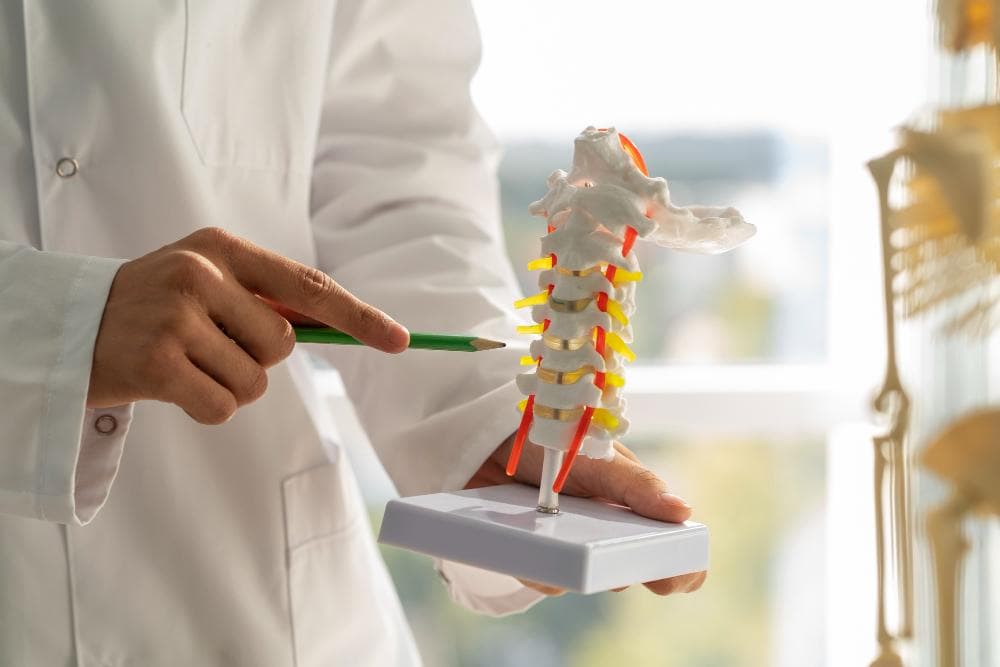
A close-up shot of a doctor’s hands explaining the anatomy of a spine through a model and holding a pencil in another hand.
The phrase "back surgery" tends to land heavily. People picture large incisions, significant blood loss, a long hospital stay, and months of careful recovery. For a long time, that picture was accurate.
Traditional open spine surgery does involve all of those things. A 10–15 cm incision. Significant dissection of the paraspinal muscles, which have to be cut or stretched to give the surgeon access to the spine. Days in hospital. Weeks before normal activity resumes.
Minimally invasive spine surgery (MISS) changes that picture — considerably, and with equivalently good outcomes for many spinal conditions.
It is not new technology. Minimally invasive spine techniques have been developing since the 1990s and are now well-established in India's leading spine centres. What has improved in recent years is the range of conditions they can address, the precision of the instruments, and the availability of surgeons trained to perform them.
What Makes It Minimally Invasive?
The key difference is muscle handling.
In open spine surgery, the paraspinal muscles that run along either side of the spinal column have to be physically moved aside — a process called retraction — and held out of the way for the duration of the operation. This causes significant muscle injury, leading to pain, weakness, and a prolonged recovery even when the spinal problem itself has been successfully addressed.
In minimally invasive approaches, the surgeon reaches the spine through one or more small incisions — typically 1–2 cm — using a series of progressively larger tubular dilators that spread the muscle fibres rather than cutting them. Once the tube is in place, specialised instruments (and often an endoscope or microscope) work through this corridor.
The muscles are not cut. They're displaced temporarily and return to their original positions when the instruments are removed.
The results for the patient are:
- Smaller incisions with less or no visible scarring
- Significantly less post-operative pain from the approach itself
- Less blood loss during surgery
- Shorter hospital stay (often 1–3 days, sometimes same-day discharge)
- Faster return to daily activity
- Equivalent or superior long-term outcomes compared to open surgery for appropriate cases
The Main Minimally Invasive Spine Procedures
Microdiscectomy
The most common minimally invasive spine procedure in India. Used to treat herniated (slipped) lumbar discs that are pressing on nerve roots and causing sciatica — the shooting pain, numbness, or weakness running down the leg.
Through a tube about 2 cm wide, the surgeon removes only the portion of the disc that has herniated out and is compressing the nerve. The rest of the disc is left intact. The nerve is decompressed. Sciatica typically resolves within days to weeks.
Success rates for endoscopic microdiscectomy are consistently reported as equivalent to open microdiscectomy in large studies. Recovery is faster, muscle disruption is less, and hospital stay is often just one night.
Minimally Invasive Decompression (Laminotomy/Laminectomy)
Used to treat spinal stenosis — narrowing of the spinal canal that compresses nerves, causing pain, weakness, and difficulty walking (neurogenic claudication).
Through small incisions, the surgeon removes only the specific bone and tissue causing the compression, without destabilising the spine. Contrast this with open laminectomy, which involves removing more of the bony arch of the vertebra.
Percutaneous Vertebroplasty and Kyphoplasty
For osteoporotic vertebral compression fractures — very common in older Indian women — these procedures involve injecting bone cement into a collapsed vertebra through a needle, stabilising it and dramatically reducing pain.
They require no incision at all in the traditional sense: just a needle through the skin, guided by imaging. Many patients are discharged the same day or the next morning with substantial pain relief.
Minimally Invasive Spinal Fusion
When two vertebrae need to be fused together (for instability, spondylolisthesis, or failed disc disease), this can now be accomplished through small incisions and a tubular access system rather than wide-open exposure.
The fusion result is the same as open surgery, but with considerably less approach-related trauma and faster rehabilitation.
Endoscopic Spine Surgery (Full Endoscopic Approach)
The most technically advanced minimally invasive approach, using a camera (endoscope) through a 7–8 mm incision. The surgeon operates entirely on a screen. This approach is used for disc herniations at multiple levels, foraminal stenosis, and increasingly for more complex pathology.
It requires highly specialized training and is offered at select spine centres in India.
Who Is a Candidate?
Minimally invasive techniques are not appropriate for every spinal condition. Some cases still require open surgery — including certain complex deformity corrections, multi-level fusions, or surgery in patients who have had previous spinal operations that have created significant scar tissue.
Good candidates for minimally invasive approaches typically include
- Single-level or two-level disc herniation causing persistent sciatica
- Lumbar spinal stenosis causing neurogenic claudication that hasn't responded to physiotherapy and injections
- Osteoporotic vertebral compression fractures (for kyphoplasty)
- Single-level spondylolisthesis requiring decompression or fusion
- Patients who are generally fit and have not had prior complex spine surgery
- Patients where early return to function is a priority
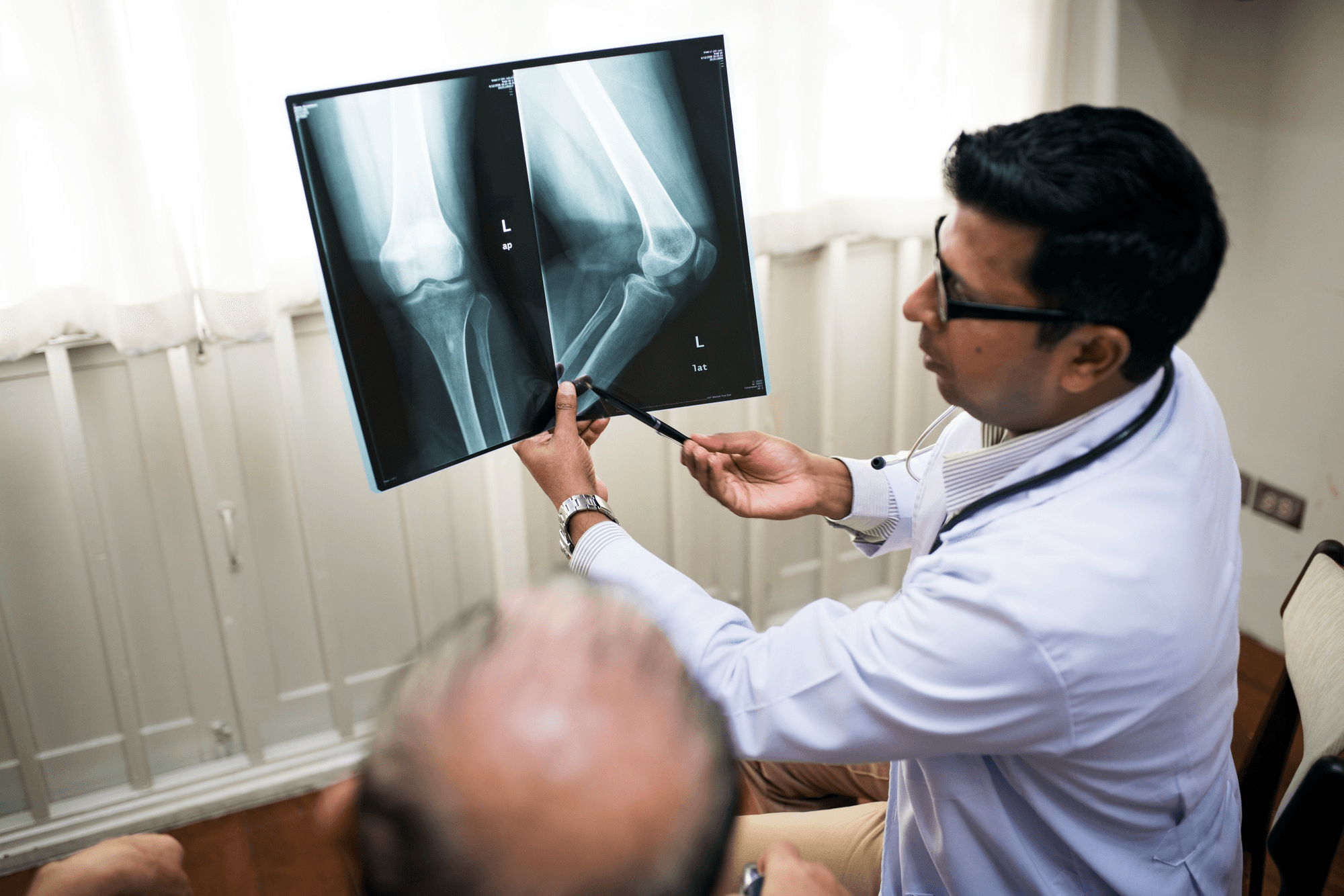
The evaluation includes a careful review of MRI and CT images to determine whether the anatomy and pathology are compatible with a minimally invasive approach. Not every herniated disc, not every case of stenosis, is suitable — it depends on the level, the extent of the pathology, and the specific technique being considered.
MISS vs. Open Surgery: What the Evidence Says
For lumbar disc herniation (microdiscectomy), multiple large studies and meta-analyses have found that minimally invasive and endoscopic approaches produce outcomes equivalent to open surgery — with less post-operative pain, shorter hospital stay, and faster return to work.
For lumbar stenosis, minimally invasive decompression achieves equivalent nerve decompression with significantly less muscle trauma.
For spinal fusion, MISS fusion shows equivalent fusion rates and clinical outcomes to open fusion in well-selected patients, with the advantage of less approach-related morbidity.
The important caveat: minimally invasive techniques require specific surgical training and appropriate instrumentation. A surgeon with limited MISS experience performing these procedures does not produce the same results as someone with high-volume training. When evaluating a surgeon for minimally invasive spine surgery, ask directly about their specific experience and volume with the procedure being considered.
What Recovery Actually Looks Like
This varies by procedure, but the contrast with open surgery is meaningful:
Microdiscectomy: Discharge 24–48 hours post-surgery. Walking the same day. Return to sedentary work within 2–3 weeks. Physical work within 6–8 weeks.
Minimally invasive decompression: 1–3 day hospital stay. Walking with support within hours. Return to daily activities within 2–4 weeks.
Kyphoplasty for vertebral fracture: Often same-day discharge or next-day. Significant pain relief within 48–72 hours. Immediate weight-bearing.
Minimally invasive fusion: 2–4 day hospital stay. Walking with support within 24 hours. Progressive rehabilitation over 3–6 months.
What Minimally Invasive Surgery Cannot Do
Some things need to be said plainly:
MISS doesn't mean "without risks." Infection, nerve injury, dural tear (a leak of spinal fluid), and implant-related complications are all possible, as with open surgery.
MISS doesn't mean faster in all respects. The approach trauma is less, but the spinal healing — fusion, nerve recovery — takes the same biological time as open surgery.
MISS is not always technically feasible. For some complex pathology, open surgery remains the most appropriate choice, and an experienced surgeon will tell you so.
The goal is always the right operation for the right patient. Minimally invasive approaches are a powerful tool in that context — not a universal solution.
Spine Surgery in Noida
Dr. Mayank Chauhan is a senior orthopedic surgeon at Prakash Hospital, Sector 33, Noida, with expertise in both surgical and non-surgical management of spinal conditions. His training includes minimally invasive orthopedic techniques and international fellowship exposure.
Patients from across Noida, Greater Noida, and the wider Delhi NCR region consult at Prakash Hospital for back pain, disc-related conditions, spinal stenosis, and spine injuries.
To book a consultation, call the number listed on the website.