Osteoporosis vs Osteopenia — What's the Difference and What Should You Do?
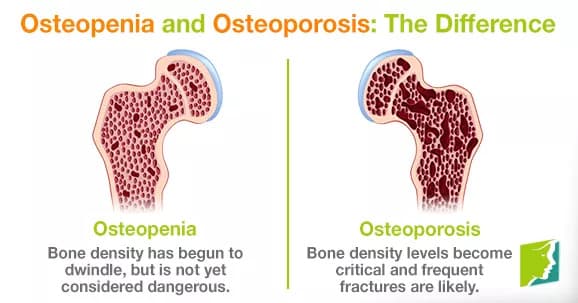
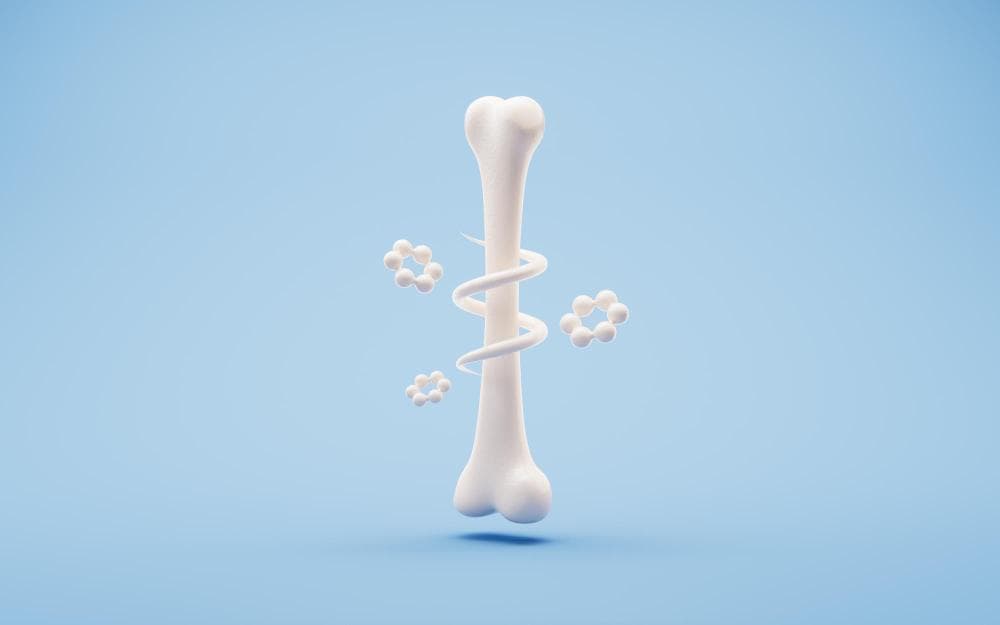
An illustrated comparison explaining the difference between osteopenia and osteoporosis based on bone density and fracture risk.
You've had a bone density scan and been told you have "osteopenia" or "osteoporosis." The letter from the radiologist has numbers in it. There's a T-score. Maybe a Z-score. Your GP has said "your bones are low" and recommended calcium. That's... it.
Most patients leave these appointments with a scan report they cannot interpret and a vague anxiety about fractures they don't know how to quantify.
Let's sort this out directly.
The Same Condition, Two Points on a Spectrum
Osteoporosis and osteopenia are not two separate diseases. They're two points on the same continuum of bone density loss — the labels come entirely from where your T-score falls on a scale.
Normal bone density: T-score above -1.0
Osteopenia (low bone mass): T-score between -1.0 and -2.5
Osteoporosis: T-score of -2.5 or below
These cutoffs come from WHO criteria established in the 1990s, based on comparing bone density against the average peak bone density of a healthy young adult in their late 20s or early 30s.
One important clarification: osteopenia is not a disease. It's a description. A 55-year-old Indian woman with a T-score of -1.5 at the hip has bone density below what a 28-year-old would have — but so does almost every 55-year-old woman, because bone loss with ageing is normal. Whether that T-score of -1.5 represents a problem requiring treatment depends on many other factors beyond the number alone.
What the T-Score Actually Measures
A DEXA scan uses two very low-dose X-ray beams at different energy levels to measure the mineral content of bone at specific sites — most commonly the lumbar spine (L1–L4) and the femoral neck (top of the hip bone). These sites are chosen because they're where osteoporotic fractures most commonly occur.
The machine calculates bone mineral density (BMD) in grams per square centimetre, then compares your result to a reference database of young healthy adults. The difference is expressed as a T-score:
- T-score of 0 means your bone density is exactly equal to the young adult average
- T-score of -1.0 means one standard deviation below
- T-score of -2.5 means two and a half standard deviations below
Each standard deviation below average roughly doubles fracture risk.
The Z-score is a different comparison: your bone density vs. people of your same age, sex, and ethnicity. A low Z-score (below -2.0) is more concerning than a low T-score in the same patient, because it suggests your bones are losing density faster than would be expected for your age — pointing toward a secondary cause (medication, disease, hormonal problem) rather than normal ageing.
Why Two People With the Same T-Score Can Face Very Different Risks
This is the part that most scan reports don't explain.
A T-score of -1.8 in a 45-year-old woman with no other risk factors, who exercises regularly, doesn't smoke, and has a calcium-rich diet, represents a very different situation from the same T-score in a 68-year-old woman who smokes, has had one previous fracture, is on long-term steroids for rheumatoid arthritis, and rarely walks.
The tool that puts T-scores in context is called FRAX (Fracture Risk Assessment Tool). FRAX calculates a patient's 10-year probability of a major osteoporotic fracture (spine, hip, wrist, shoulder) using bone density plus clinical risk factors:
- Age
- Sex
- Body weight and height
- Prior fracture history
- Parental hip fracture history
- Smoking
- Alcohol use
- Rheumatoid arthritis
- Glucocorticoid use
- Secondary osteoporosis causes
A patient with osteopenia (T-score between -1 and -2.5) but multiple clinical risk factors may have a higher calculated fracture risk than a patient with osteoporosis (T-score below -2.5) but none. This is why the T-score alone should not drive treatment decisions.
Osteopenia: What It Actually Means for You
In India, a large study of postmenopausal women in Punjab found osteopenia in 44.2% and osteoporosis in 30.5%. Another study of patients undergoing orthopaedic procedures found that 76.4% had low bone mineral density.
These are striking numbers. They also explain why osteopenia, if left unaddressed, eventually becomes osteoporosis for many patients.
Osteopenia is often appropriately managed without prescription medication — through lifestyle measures:
- Adequate calcium (1,000–1,200 mg daily from food and supplements)
- Vitamin D correction and maintenance
- Weight-bearing and resistance exercise
- Smoking cessation, alcohol reduction
- Reassessment DEXA scan in 1–2 years to track change
However, even with "just osteopenia," medication may be appropriate for patients with high FRAX scores — particularly those with a previous fragility fracture, very low T-scores at the lower end of the osteopenia range (-2.2 to -2.4), or significant clinical risk factors.
The principle is that a fracture at -1.8 is just as serious as a fracture at -2.6. The goal is preventing that fracture, not waiting for the T-score to cross an arbitrary threshold.
Osteoporosis: What It Actually Means for You
A T-score of -2.5 or below is the diagnostic threshold for osteoporosis. In practical terms, it means bone density is substantially below where it should be, and the risk of fracture from everyday activities or minor falls is meaningfully elevated.
At this level, fracture prevention becomes the primary goal — and lifestyle measures alone are typically insufficient. Most patients with confirmed osteoporosis and fracture risk above clinical thresholds warrant pharmacological treatment:
- Bisphosphonates (alendronate, risedronate, zoledronic acid) are first-line — well-studied medications that slow bone resorption and reduce fracture risk by approximately 40–50%
- Denosumab — an injectable alternative for patients who can't use oral bisphosphonates
- Teriparatide — an anabolic (bone-building) agent for high-risk patients with multiple fractures or severe density loss
The decision about which medication is appropriate depends on the severity of bone loss, fracture history, kidney function, other medical conditions, and patient preference.
The Fracture That Changes Everything: Fragility Fracture
One clinical finding overrides T-score thresholds entirely: a fragility fracture.
A fragility fracture is a fracture that results from a force no greater than falling from standing height — the kind of fall that would cause bruising but not breaking in a person with healthy bones. Common sites: hip, spine (often silent), wrist, and shoulder.
A patient with a T-score of -1.8 who has had a fragility fracture has already demonstrated that their bones cannot handle normal everyday loading. This patient needs treatment regardless of whether the T-score meets the "osteoporosis" threshold.
Vertebral fractures deserve particular attention because many are silent — they occur without a dramatic fall, from activities as mundane as bending to pick something up or sneezing. A vertebral fracture can be the first indication that osteoporosis treatment is long overdue.
The Indian Context
Indian women typically have peak bone mineral density at the hip and spine that is significantly lower than their Western counterparts, even when T-scores are corrected for this population. The mean age of menopause in India is around 47 — about 4 years earlier than in Europe — meaning the period of accelerated post-menopausal bone loss begins earlier.
These factors mean that the standard population thresholds may underestimate fracture risk in Indian women. A T-score that crosses -2.5 in a 52-year-old Indian woman with early menopause and low dietary calcium intake warrants serious attention.
Key Takeaways
T-score above -1.0: Normal. Continue good lifestyle habits. No medication needed for bone health alone.
T-score between -1.0 and -2.5 (osteopenia): Lifestyle modification is the primary approach. Medication may be appropriate for high FRAX scores or clinical risk factors. Repeat DEXA in 1–2 years.
T-score -2.5 or below (osteoporosis): Bone loss is significant. Fracture risk is elevated. Medication should be strongly considered alongside lifestyle measures.
Any fragility fracture: Treatment urgently needed regardless of T-score.
Getting Assessed in Noida
Dr. Mayank Chauhan at Prakash Hospital, Sector 33, Noida, assesses bone health as part of comprehensive orthopedic care, including evaluation of DEXA scan results, FRAX calculation, and appropriate management for patients across the osteopenia-to-osteoporosis spectrum.
Prakash Hospital has on-site DEXA bone density scanning capability.
To book a consultation, call the number listed on the website.