Reviewed by Dr. Mayank Chauhan
Hospital Stay After Joint Replacement — What to Expect Day by Day
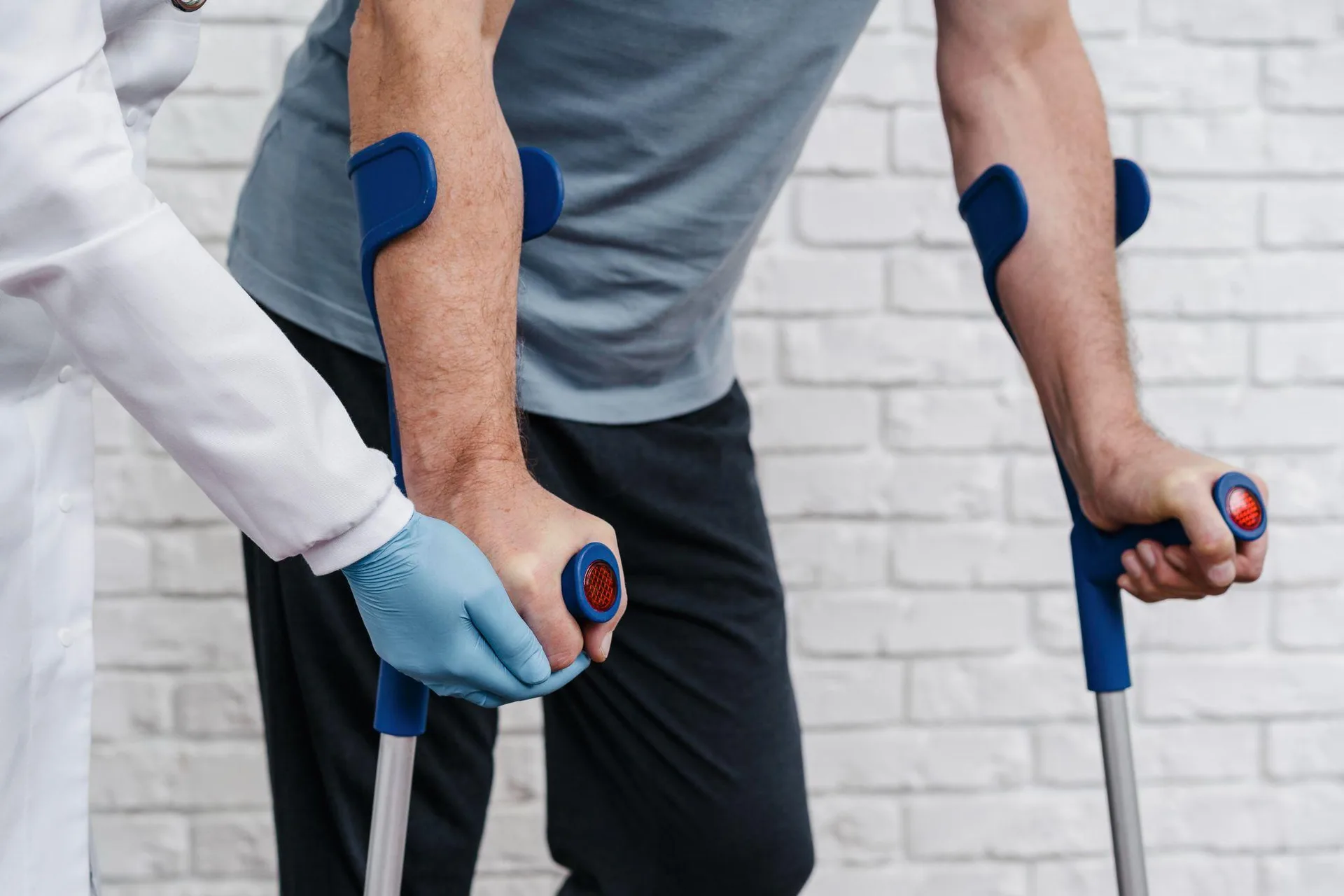
A doctor helping a person walk.
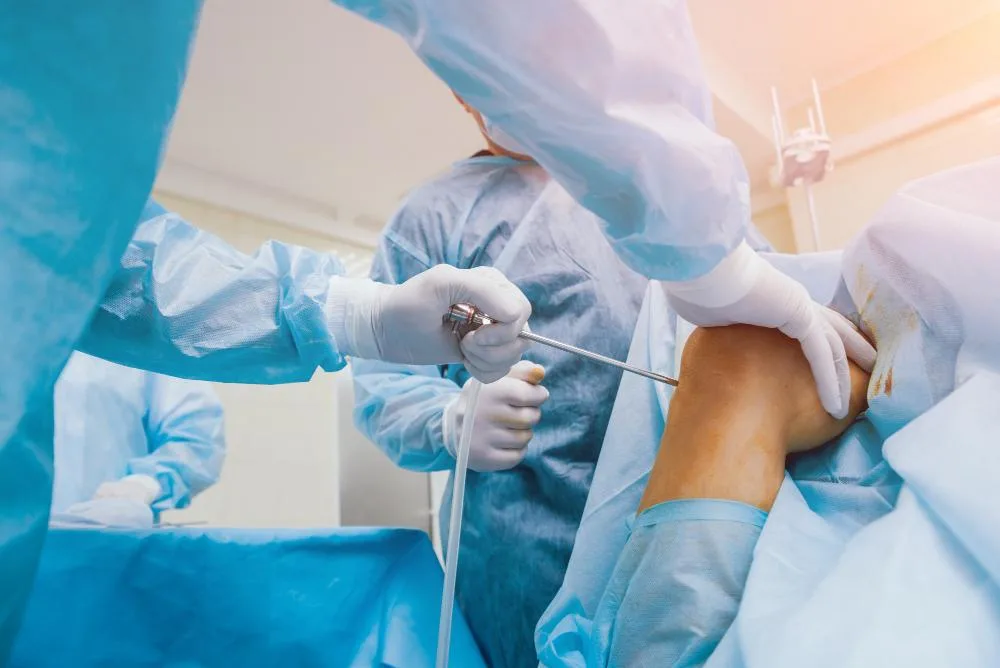
The surgery conversation gets a lot of attention. The consultation, the decision, the preparation. What happens in the operating room.
The days immediately after surgery — the 3–5 days in hospital before you go home — get far less discussion. And these days matter enormously. What happens in the hospital in those first days determines the trajectory of your recovery.
This guide walks through the typical inpatient experience after total knee or hip replacement at a modern orthopedic hospital, day by day.
Day of Surgery
The operation itself: typically 60–90 minutes for primary knee or hip replacement. You spend 30–60 minutes in the recovery room (PACU) while your anaesthesia wears off and the team monitors your vital signs, pain level, and wound.
The nerve block window: If a nerve block was used (adductor canal for knee, or pericapsular nerve block for hip), the first 12–18 hours are often more comfortable than patients expect. Many patients wake from anaesthesia surprised by how little pain they have.
IV line: You'll have an intravenous line for fluids and early medication. This typically comes out after 1–2 days once you're drinking and eating normally.
Urinary catheter: Often placed for joint replacement, particularly hip replacement where getting to the toilet in the first 24 hours is difficult. Removed by Day 2 in most cases.
Wound drain: A small tube draining blood-tinged fluid from the joint may be placed and removed within 24 hours.
Starting fluids and food: Most patients can have clear fluids within a few hours of returning to the ward. Light food follows as appetite returns. Full meals by Day 1 in most cases.
Pain in the evening: As the nerve block fades (usually 12–24 hours post-operatively), pain typically increases. The nursing team will be giving scheduled oral pain medication (paracetamol, NSAIDs, and short-course opioids as needed). This is the period where communicating pain level clearly is important — pain should be controlled, not just tolerated.
Day 1 Post-Surgery
The First Steps
This is the day most patients are simultaneously dreading and surprised by: you will be standing and walking.
Not running. Not independently moving to the bathroom and back. But standing with support from a walker or frame, and taking a few supervised steps with the physiotherapist.
This early mobilisation is deliberate and important:
- Activates the calf muscle pump, reducing DVT risk
- Prevents the joint from stiffening
- Signals to the body that healing should support movement, not immobility
- Substantially reduces the risk of post-operative pneumonia (getting upright aids lung expansion)
The first walk is typically to a standing position, a few steps in the room, and back to the bed or chair. It may be 2–5 metres. That's enough for Day 1.
Physiotherapy Assessment
A physiotherapist assesses your movement, helps you with initial exercises, and begins teaching you how to move safely:
- Ankle pumps (moving foot up and down — done in bed, several times per hour)
- Knee flexion and extension exercises for knee replacement patients
- Hip precautions for hip replacement patients (posterior approach — which positions to avoid)
Compression Stockings and DVT Prevention
Anti-embolism compression stockings will have been applied. Pneumatic compression boots (which intermittently squeeze and release the calf) may also be in use. Blood thinner medication (anticoagulant) will be started.
Wound Check
The wound will be inspected by the surgical team on Day 1. The dressing is typically changed. Any wound concerns — unexpected discharge, bleeding, wound edge tension — are identified and addressed early.
Day 2
Walking Further
The physiotherapy session on Day 2 typically involves walking a longer distance — down the corridor and back. Most patients walk 20–50 metres by Day 2.
For knee replacement patients: work on bending (flexion). The goal by discharge is to achieve 90 degrees of knee flexion — enough to sit comfortably, get in and out of a car, and walk on flat surfaces.
For hip replacement patients: early weight-bearing as tolerated. Avoidance of forbidden positions (posterior approach). Practising specific hip precautions for activities like sitting, standing, dressing.
Catheter Removal
The urinary catheter is typically removed by Day 2, with toilet use assisted by the nursing team and mobility aids.
Reducing IV Medication
Transitioning from IV to oral medication. Most patients are on a regimen of scheduled oral paracetamol, NSAIDs (if appropriate), and a short-course oral opioid for breakthrough pain.
Starting Oral Blood Thinner
If oral anticoagulant (rivaroxaban, apixaban, or aspirin-based protocol) was chosen rather than injectable LMWH, this typically starts on Day 1–2 and continues at home.
Day 3–4
Increasing Independence
Most patients are walking 50–100 metres by Day 3, managing stairs with supervision, and beginning to perform basic daily activities (getting out of bed, sitting in a chair, going to the bathroom) with decreasing assistance.
Physiotherapy continues twice daily. The focus shifts to:
- Increasing walking distance and confidence
- Stair practice (essential before discharge — most homes have stairs)
- Teaching the home exercise programme that will continue after discharge
- Reviewing discharge criteria
Discharge Criteria
Patients are typically ready for discharge when they can:
- Walk independently with a walker or crutches for a reasonable distance (50+ metres)
- Manage stairs safely
- Transfer in and out of bed and on/off a toilet independently or with family assistance
- Have adequate pain control on oral medication alone
- Have no wound concerns requiring inpatient management
- Have confirmed anticoagulation plan
- Have confirmed follow-up appointment
- Have confirmed home support in place
Typical hospital stay: 3 days for hip replacement (anterior approach patients often 2 days). 4–5 days for knee replacement. Longer if complications or comorbidities require monitoring.
What to Bring to Hospital
Personal items:
- Loose, comfortable clothing — especially for the operated limb. Wide-leg trousers or pyjamas are practical. Button-front shirts for shoulder patients.
- Non-slip footwear — flat shoes with good grip (no flip-flops or heeled sandals)
- Personal toiletries
- Phone charger
- Any reading material or entertainment
Medical items:
- List of all current medications with doses
- Insurance documents, ID, and any pre-authorisation paperwork
- Previous medical reports (ECG, blood tests, imaging)
What Family Members Should Prepare Before Discharge
The first weeks at home are easier if the home is prepared before surgery:
- Raised toilet seat: Makes getting on and off the toilet safer with limited hip or knee flexion
- Grab rails at toilet and bathroom: For stability
- Non-slip mat in the bathroom
- Firm chair with armrests: Easy to push up from
- Bed height adjustment: Should be high enough to sit on and stand from without excessive joint flexion
- Remove loose rugs and floor obstacles: Fall prevention
- Items at accessible height: Frequently used items should not require bending or high reaching
Joint Replacement Inpatient Care at Prakash Hospital, Noida
Prakash Hospital at Sector 33, Noida, has a 100-bed inpatient facility with dedicated physiotherapy support, 24/7 nursing care, and a 45-bed ICU for post-operative monitoring when required. The hospital is empanelled with CGHS, ECHS, ESI, and all major private insurers.
To book a consultation with Dr. Mayank Chauhan, call the number listed on the website.