Blood Clots (DVT) After Orthopedic Surgery — What Patients Need to Know
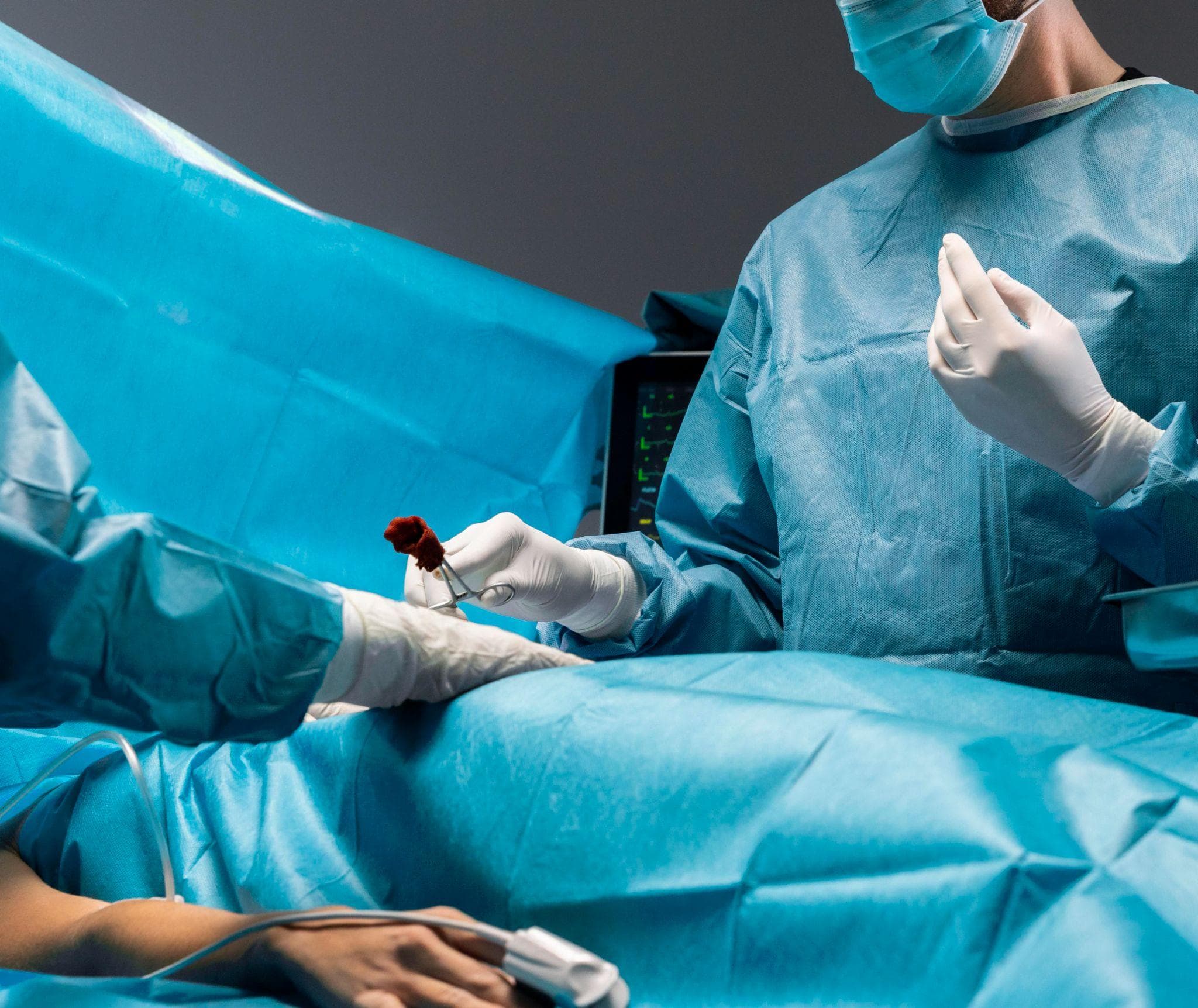
Orthopedic surgeons performing a hip replacement procedure.
Deep vein thrombosis — DVT — is a condition where blood clots form in the deep veins of the leg. After major orthopedic surgery, particularly hip and knee replacement, it is one of the most serious potential complications. Not because it's common in the modern era (it isn't, with proper prevention), but because when it does occur and is missed, the consequences can be severe.
Understanding what DVT is, why orthopedic surgery specifically increases the risk, what prevention looks like, and what symptoms warrant immediate attention is information every joint replacement patient deserves before their operation.
Why Joint Replacement Surgery Creates DVT Risk
DVT doesn't happen randomly in healthy people with normal activity. Three conditions — together called Virchow's Triad — predispose to clot formation: slow blood flow, blood vessel injury, and changes in blood clotting tendency. Major orthopedic surgery, particularly hip and knee replacement, triggers all three.
Slow blood flow: Surgery requires the patient to be still for extended periods. General or spinal anaesthesia causes the leg muscles to relax. Blood flow in the deep veins slows significantly. Pooling venous blood is a clotting risk.
Blood vessel injury: The surgery itself involves retraction of tissues, manipulation of the leg, and use of a tourniquet (in knee replacement) — all of which cause some degree of vessel wall trauma that activates the clotting cascade.
Hypercoagulability: The surgical stress response increases production of clotting factors. This is the body's protective mechanism against surgical bleeding, but it also increases the risk of unwanted clots.
Without preventive treatment, studies have shown DVT rates of 40–60% after major orthopedic surgery when assessed with sensitive imaging. With modern prevention protocols, the rate of clinically significant DVT drops to approximately 3%, and life-threatening pulmonary embolism occurs in under 1.5%.
The highest-risk period is 2–10 days after surgery, and patients remain at elevated risk for approximately 3 months.
The Difference Between DVT and Pulmonary Embolism
DVT itself is serious — it causes pain, swelling, and long-term venous damage. But the feared complication of DVT is pulmonary embolism (PE): a fragment of the clot breaking off, travelling through the heart, and lodging in the blood vessels of the lungs.
Pulmonary embolism can be:
- Subclinical: detected only on imaging
- Symptomatic: causing breathlessness, chest pain, and rapid heart rate
- Massive: causing cardiovascular collapse and death
PE is the leading cause of emergency hospital readmission and death following joint replacement surgery. This is why DVT prevention is not optional and not casual — it is a structured medical priority.
Prevention: What Your Surgical Team Will Do
Modern DVT prevention after joint replacement is multi-modal — several strategies are used simultaneously.
Anticoagulation (Blood Thinners)
The cornerstone of prevention. An anticoagulant medication is started the day after surgery (usually 12–24 hours post-operatively, once surgical bleeding risk has settled) and continued for a defined period.
Common anticoagulants used in India
Low molecular weight heparin (LMWH): Daily subcutaneous injection. Very effective and widely used. Commonly used agents include enoxaparin (Clexane), nadroparin. Requires injection but has a strong evidence base.
Oral anticoagulants: Rivaroxaban (Xarelto), apixaban (Eliquis), and dabigatran are oral alternatives that many patients find more convenient. They are effective for VTE prevention after joint replacement and increasingly used in India.
Aspirin: Low-dose aspirin alone provides some VTE protection after joint replacement in lower-risk patients and is used as a step-down from more potent anticoagulation in some protocols.
Duration: Typically 10–35 days after surgery, depending on the specific procedure (hip replacement has a longer high-risk period than knee replacement), the agent used, and individual patient risk factors.
Mechanical Prevention (Compression)
Compression stockings: Graduated compression stockings worn from surgery until full mobilisation help prevent venous pooling in the calf veins.
Pneumatic compression devices (sequential compression devices): Intermittent pneumatic compression wraps that periodically squeeze and release the calf muscles, simulating the muscular pump effect of walking. Used during hospital stay, often from the operating table onwards. Very effective at reducing DVT in the immediate post-operative period.
Early Mobilisation
This is perhaps the simplest and most intuitive prevention: get the patient walking as soon as safely possible after surgery.
Walking activates the calf muscle pump — the rhythmic contraction and relaxation of calf muscles during walking that squeezes blood from the deep veins back toward the heart. This is one of the most important physiological mechanisms preventing venous stasis and clot formation.
At Prakash Hospital Noida, patients are typically stood and taken a few steps on the day of or the day after joint replacement surgery. This early mobilisation is a deliberate clinical decision with DVT prevention as one of its primary purposes.
Risk Factors That Increase DVT Risk After Surgery
Some patients are at higher risk than average and may require more aggressive prevention:
- Obesity (BMI over 30)
- Advanced age (over 70)
- Prior history of DVT or PE
- Active cancer or recent cancer treatment
- Immobility before surgery (patients who were completely bed-bound pre-operatively)
- Oral contraceptive use or hormone replacement therapy
- Inherited clotting disorders (thrombophilia) — factor V Leiden mutation, protein C/S deficiency, antiphospholipid syndrome
- Varicose veins (large, prominent varicosities indicate pre-existing venous insufficiency)
- Bilateral simultaneous joint replacement (more physiological stress than unilateral)
These factors are assessed pre-operatively and may lead to modified or extended anticoagulation protocols.
Warning Signs: What to Watch for After Discharge
This is the information patients most need. DVT often develops in the days after discharge — when the patient is at home and the hospital team is no longer directly monitoring.
Symptoms of DVT in the Leg
- Swelling: New or increasing swelling in the calf or thigh of the operated leg that is more than expected post-operative swelling and does not improve with elevation
- Pain: Calf pain or tenderness that is disproportionate to expected surgical pain, especially if localised to the calf
- Warmth and redness: The affected area may feel warm and look red
- Hardness: A palpable, firm cord-like structure in the calf or behind the knee
Note: approximately half of all DVTs cause no symptoms. The absence of these signs does not rule out DVT. But their presence should prompt immediate contact with the surgical team or attendance at an emergency department.
Symptoms of Pulmonary Embolism — Seek Emergency Care Immediately
- Sudden shortness of breath: Breathlessness that appears unexpectedly and is worse than baseline
- Chest pain: Particularly pleuritic chest pain — sharp pain that worsens with breathing
- Rapid heart rate: Heart beating faster than usual without exertion
- Dizziness, lightheadedness, or fainting
- Coughing up blood
These symptoms require immediate emergency assessment. Do not wait and see.
After Discharge: Patient Responsibilities
Patients have an active role in DVT prevention after hospital discharge:
Take the prescribed anticoagulant exactly as directed: This is not optional. Stopping early — because the patient feels fine or finds injections inconvenient — significantly increases clot risk. Complete the full prescribed course.
Stay mobile: Regular walks around the home, multiple times per day, even if short. Avoid prolonged sitting or bed rest. When sitting, regularly flex and extend the ankles (ankle pumps — moving the foot up and down).
Ankle pumps when resting: A simple exercise — pulling the foot up toward the shin, then pushing it down — activates the calf pump. Do this every hour when sitting or lying.
Elevate the leg when resting: Elevating the operated leg above the level of the heart when resting encourages venous drainage.
Stay hydrated: Dehydration increases blood viscosity and DVT risk.
Attend follow-up appointments: DVT monitoring may include clinical review and, if symptomatic, Doppler ultrasound.
Long-Term Consequences of DVT
Even when DVT is treated and resolved, a proportion of patients develop post-thrombotic syndrome — chronic venous insufficiency in the affected leg causing persistent swelling, pain, discolouration, and skin changes. Approximately one-third of DVT patients experience some degree of this over 10 years.
This underscores why prevention — not just treatment — is the correct focus.
Joint Replacement with DVT Prevention at Prakash Hospital, Noida
At Prakash Hospital, Sector 33, Noida, DVT prevention is a standard component of every joint replacement programme. Dr. Mayank Chauhan's peri-operative protocol includes risk stratification, appropriate anticoagulation, mechanical compression, and early mobilisation from Day 1 post-operatively.
To book a consultation, call the number listed on the website.