Spinal Deformities: What to Do When Your Spine Isn’t Straight
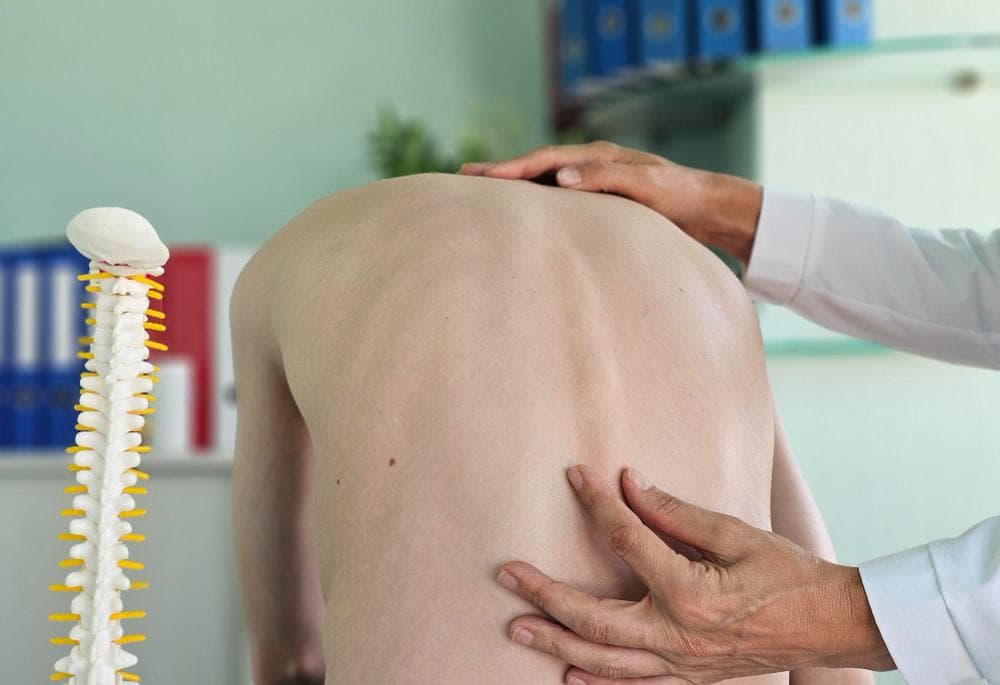
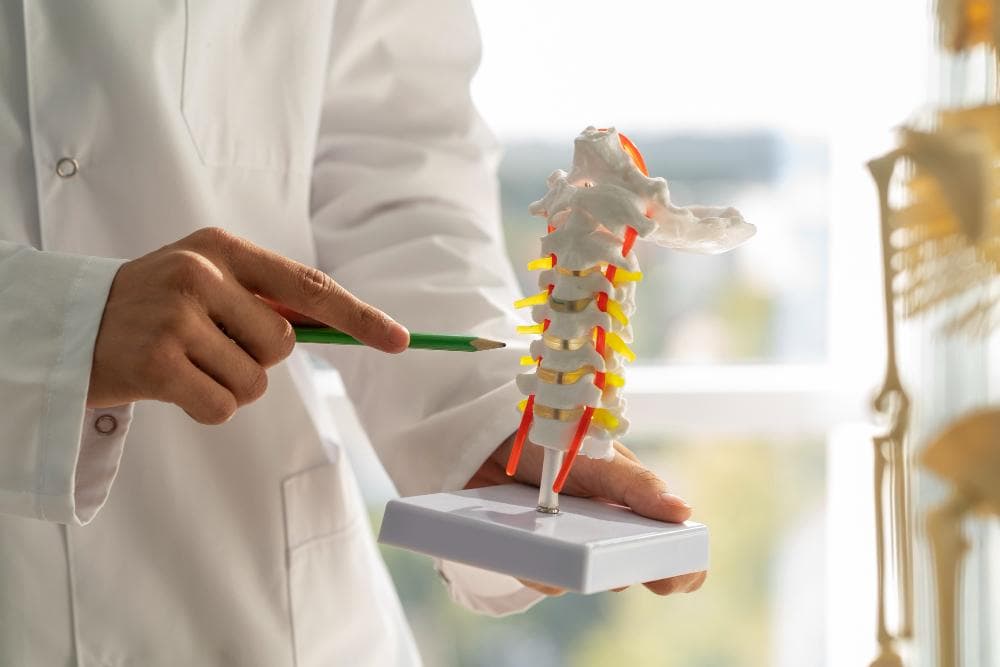
A doctor assesses a patient's back, with a model spine in view.
People often ignore posture issues until pain or visible changes begin to interfere with daily life. A spine that isn’t properly aligned doesn’t just affect how one looks; it impacts movement, balance, and overall health. Spinal deformities can develop gradually or be present from birth, and without proper care, they can worsen over time.
These conditions aren’t just about a curved back or uneven shoulders. They can lead to discomfort, reduced mobility, and even complications if left untreated. The good news is that with early diagnosis and the right treatment, most spinal deformities can be managed effectively.
In this guide, let’s understand what spinal deformities are, why they happen, and when it’s important to consult an orthopedic specialist for proper care.
What Are Spinal Deformities?
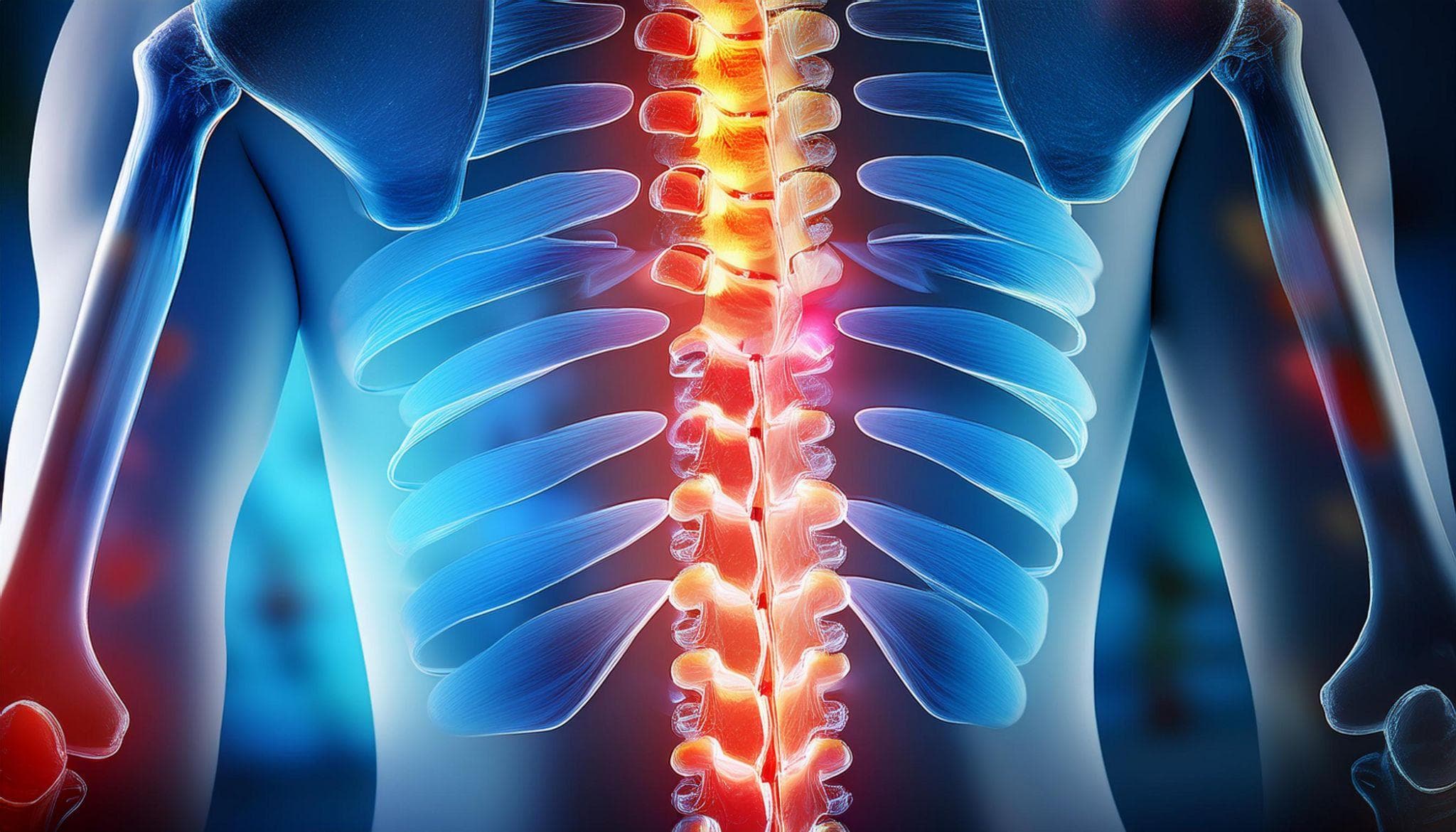
Spinal deformities refer to abnormal curvatures or misalignments of the spine. Instead of maintaining its natural shape, the spine bends or twists in ways that affect posture and movement. Common types include:
- Scoliosis - Sideways curvature of the spine
- Kyphosis - Excessive forward rounding of the upper back
- Lordosis - Excessive inward curve of the lower back
These conditions can range from mild to severe and may affect people of all age groups.
Causes Of Spinal Deformities
Spinal deformities can develop due to various reasons, depending on age, lifestyle, and medical history.
- Congenital Conditions - Some individuals are born with spinal abnormalities that develop as they grow.
- Poor Posture - Long hours of sitting, especially with improper posture, can gradually affect spinal alignment.
- Degenerative Changes - With age, the spine undergoes wear and tear, which may lead to deformities.
- Injuries Or Trauma - Accidents or fractures can alter spinal structure if not treated properly.
- Neuromuscular Conditions - Disorders affecting nerves and muscles can lead to abnormal spinal positioning.
Symptoms To Watch Out For
Spinal deformities don’t always cause immediate pain, which is why they often go unnoticed early on.
- Uneven shoulders or hips
- Visible curvature in the spine
- Back pain or stiffness
- Difficulty standing straight
- Fatigue after prolonged sitting or standing
- Reduced flexibility or mobility
How Spinal Deformities Are Diagnosed
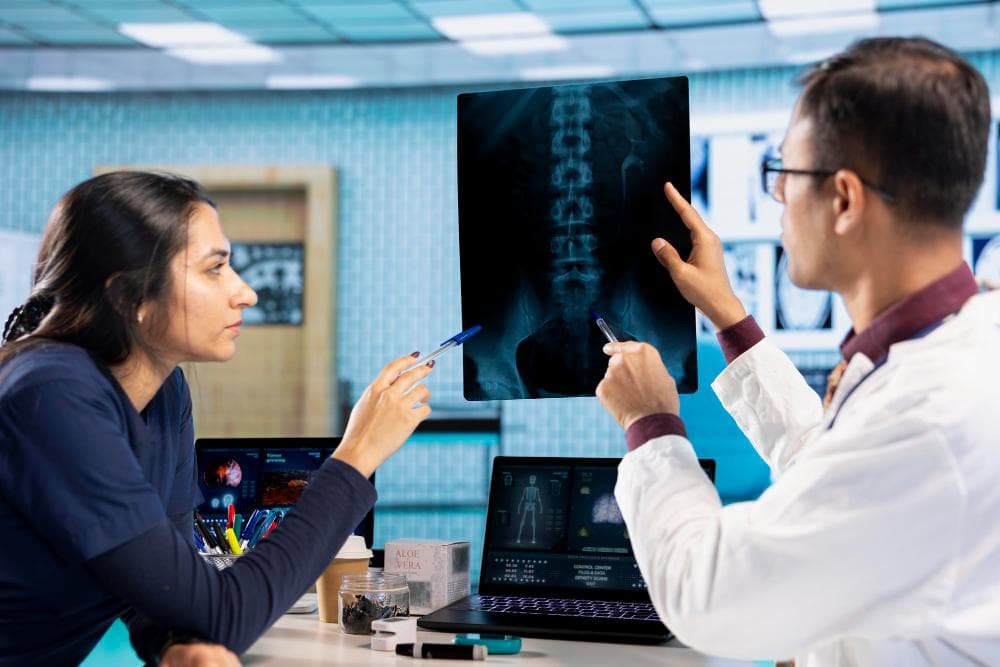
Two medical professionals examine a spine X-ray together in a clinical setting.
Diagnosis begins with a physical examination where posture, alignment, and movement are assessed. Doctors may also recommend:
- X-rays to evaluate spinal curvature
- MRI or CT scans for detailed imaging
- Postural assessments to identify imbalances
To ensure accurate diagnosis and effective treatment, visiting Dr. Mayank Chauhan in Noida can help patients receive personalized care and expert guidance.
Treatment Options For Spinal Deformities
Treatment depends on the severity, type of deformity, and the patient’s overall condition.
1. Physiotherapy
Physiotherapy is often the first-line treatment, especially for mild to moderate deformities. It doesn’t “straighten” the spine structurally in most cases, but it significantly improves function and quality of life.
- Focuses on strengthening core and back muscles that support the spine.
- Includes stretching exercises to reduce stiffness and improve flexibility.
- Helps correct postural imbalances and muscle asymmetry.
- Techniques like Schroth therapy (a specialized exercise method for the spinal
- deformities) may be used in conditions like scoliosis.
- Also reduces pain and prevents worsening due to poor posture habits.
2. Bracing
Bracing is mainly used in children or adolescents whose bones are still growing.
- Designed to halt progression, not reverse the curve.
- Works best when the spinal curve is in a moderate range (often 25–40 degrees in scoliosis).
- Requires consistent wear (often 16–23 hours a day, depending on severity).
- Common types include rigid braces (like TLSO braces) and nighttime braces.
- Compliance is crucial as irregular use reduces effectiveness significantly.
3. Medications
Medications are supportive rather than corrective.
- Pain relievers (NSAIDs) help reduce inflammation and discomfort.
- Muscle relaxants may be prescribed if muscle spasms are present.
- In chronic cases, doctors may consider nerve pain medications.
- These do not treat the deformity itself but make daily functioning easier.
4. Lifestyle Modifications
Often underestimated, but extremely important for long-term management.
- Ergonomic adjustments (correct chair height, lumbar support, screen positioning).
- Avoid prolonged sitting or poor posture habits.
- Maintaining a healthy weight to reduce stress on the spine.
- Regular low-impact activities like swimming, walking, or yoga.
- Practicing posture awareness during daily activities.
5. Spinal Fusion Surgery
This is the most common surgical procedure for significant deformities.
- Involves joining (fusing) two or more vertebrae so they heal into a single, stable bone.
- Metal rods, screws, or plates are used to hold the spine in correct alignment during healing.
- Recommended when the curve is severe (often >40–50 degrees), the deformity is progressing rapidly, there’s pain, nerve compression, or organ impact.
- Recovery can take several months, but results are generally long-lasting.
6. Minimally Invasive Spine Surgery (MISS)
A more advanced approach with smaller incisions.
- Causes less muscle damage compared to open surgery.
- Leads to reduced blood loss, less pain, and faster recovery.
- Often used in select cases where precision correction is possible.
- Not suitable for all types of deformities, as it depends on the complexity and location.
7. Corrective Osteotomy
A more complex surgical option is used in severe or rigid deformities.
- Involves cutting and reshaping bones to restore proper spinal alignment.
- Often combined with spinal fusion for stability.
- Used in cases where the spine is stiff or significantly misaligned (e.g., kyphosis or post-traumatic deformity).
- Requires highly specialized surgical planning and expertise.
8. How Doctors Decide The Treatment Plan
The choice depends on multiple factors:
- Type of deformity (e.g., scoliosis, kyphosis, lordosis)
- Degree of curvature
- Age and growth status
- Symptoms (pain, breathing issues, nerve involvement)
- Progression rate of the condition
In many cases, early intervention with physiotherapy and monitoring can prevent the need for surgery. But if the deformity progresses or starts affecting daily life, surgical correction becomes the more reliable option for long-term stability and function.
Role Of Physiotherapy In Spinal Deformities
Physiotherapy plays a major role in both treatment and prevention.
- Strengthens core and back muscles
- Improves posture and spinal alignment
- Enhances flexibility and mobility
- Reduces pain and stiffness
- Prevents progression of mild deformities
It focuses on long-term improvement rather than temporary relief.
When To See An Orthopedic Specialist
Ignoring spinal issues can make them worse over time. It’s important to seek medical advice when:
- Persistent Back Pain - Pain lasting more than a few weeks needs evaluation.
- Visible Postural Changes - If the spine looks uneven or curved, it should not be ignored.
- Limited Movement - Difficulty in bending or standing straight is a warning sign.
- Progressive Symptoms - If the condition seems to be worsening, early intervention is crucial.
Complications Of Untreated Spinal Deformities
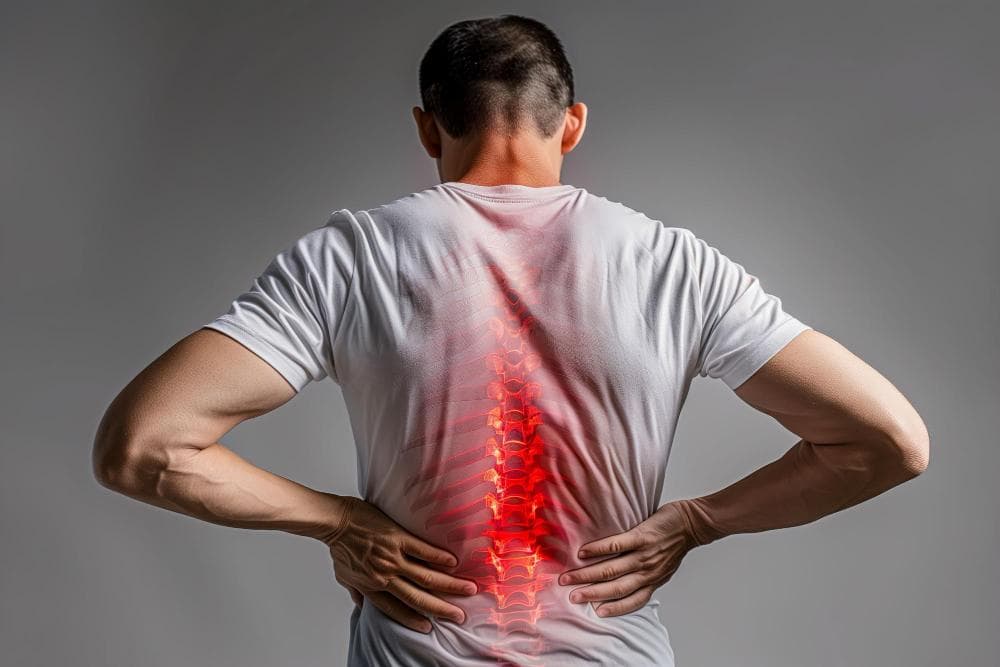
A man holds his lower back in pain, with a red spine illustration highlighting discomfort.
- Chronic pain and discomfort
- Reduced mobility and flexibility
- Breathing issues in severe cases
- Nerve compression leading to weakness or numbness
- Visible deformity affects confidence and quality of life.
Final Thoughts
Spinal deformities are more than just a posture concern, as they directly impact how the body functions every day. The earlier they are identified, the easier they are to manage. With the right combination of physiotherapy, lifestyle changes, and medical support, individuals can improve posture, reduce pain, and maintain a better quality of life.
For accurate diagnosis and effective treatment, visiting Dr. Mayank Chauhan in Noida ensures expert care tailored to individual needs. The focus remains on correcting alignment, improving mobility, and helping patients get back to a pain-free and active life.
Frequently Asked Questions (FAQs)
1. What is the most common spinal deformity?
Scoliosis is the most common spinal deformity, especially in adolescents.
2. Can spinal deformities be corrected without surgery?
Mild to moderate cases can often be managed with physiotherapy and bracing.
3. Are spinal deformities painful?
They may not cause pain initially, but can lead to discomfort as they progress.
4. When should one see a doctor for spinal curvature?
If there is visible curvature, pain, or movement difficulty, medical evaluation is recommended.