Reviewed by Dr. Mayank Chauhan
Best Knee Replacement Surgeon in Delhi NCR: How to Choose the Right One
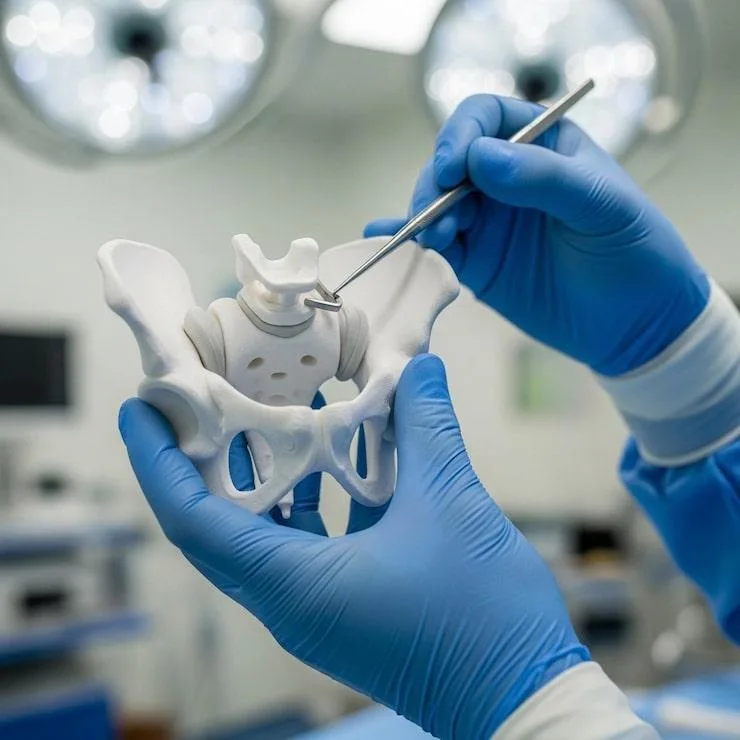
A good surgeon explains every option, including non-surgical ones and waiting, before recommending an operation.
If you search for the best knee replacement surgeon in Delhi NCR, you will find lists, rankings, star ratings and a lot of confident promises. What you will not find is anyone who can tell you who is best for your knee, because "best" is not a title that one person holds for everyone.
A knee replacement is a decision that you will live with for twenty years or more. Choosing the surgeon is probably the most important part of it. The hard part is knowing what to look at, since the usual signals, a glossy website, a famous hospital, a long list of awards, tell you less than you would hope.
What "best" should actually mean
For a joint replacement patient, a good surgeon is one who:
- Has done a high number of joint replacements, particularly knees
- Examines you properly and listens before recommending surgery
- Explains options honestly, including non-surgical ones and the option of waiting
- Uses implants and techniques with a good track record
- Works in a hospital with strong safety systems
- Is open about outcomes, risks and complications
- Is available for follow up and manages problems if they arise
None of this can be captured by an advert. It shows up in how a consultation feels and in answers to specific questions.
Qualities to look for
1. Training and credentials
At a minimum, your surgeon should be a qualified orthopedic surgeon with a postgraduate degree such as MS Orthopaedics or DNB. Further training in joint replacement, such as a fellowship, shows deliberate focus on this area. Check that the doctor is registered with the relevant medical council.
2. Experience and volume
Research on joint replacement repeatedly finds that surgeons who do more of these operations tend to have fewer complications. You can ask directly: "How many knee replacements do you do in a year?" and "How long have you been doing them?" A surgeon with a steady joint replacement practice will answer without hesitation.
3. A balanced recommendation
Be cautious if surgery is pushed on you at the first visit, or if every knee seems to need the same operation. A good surgeon will look at your X-rays, examine your leg alignment and range of movement, ask about your daily life, and discuss alternatives first: exercise, weight management, medicines, injections and bracing. Our guide on whether orthopedic surgery can be avoided describes that conversation.
4. Willingness to match the operation to you
Not every knee needs a total replacement. For some patients, a partial replacement is a better fit. Others need a different approach because of bone shape or earlier surgery. A surgeon who offers several options, and explains why one suits you, is thinking about you and not just a standard package. Read more about partial knee replacement and the question of age.
5. Familiarity with modern techniques
Technology such as robotic assistance and computer navigation can improve precision for some patients. The surgeon's experience with the tool matters more than the tool itself. Ask what technology they use, why, and whether it would change your result. Our guide on robotic knee replacement explains the idea.
6. Hospital quality
The hospital is part of the treatment. Look for:
- NABH accreditation for patient safety and quality standards
- A dedicated operating theatre set up for joint surgery with good infection control
- An ICU and 24 hour emergency cover
- Trained anesthesiologists and nursing staff
- A physiotherapy team that starts rehabilitation early
7. Communication and follow up
Notice whether the surgeon explains things in plain language, draws on your X-ray to show you the problem, and welcomes questions. Ask who you contact if you have a problem after discharge, and what the follow up schedule looks like. A good outcome depends heavily on the weeks after surgery.
Questions to ask at your consultation
Take this list with you, or save it on your phone.
- Do I need a knee replacement now, or can I wait or try other options?
- Which type of replacement do you recommend for me, and why?
- How many knee replacements do you perform each year?
- Which implant would you use, and what is its track record?
- Will you use robotic or computer assistance, and would it change my result?
- What kind of anesthesia is planned?
- What are the main risks for someone with my health conditions?
- How long will I stay in hospital, and what does rehabilitation involve?
- When can I walk, climb stairs, drive and return to work? (See our guides on driving after surgery and recovery.)
- What is included in the hospital estimate, and what might cost extra? (See what affects the cost of knee replacement.)
- How long will the implant last? (See how long a knee replacement lasts.)
- Who do I call if something worries me after I go home?
A surgeon who welcomes these questions is a good sign. One who gets irritated is worth thinking about.
Warning signs
Be wary if you notice:
- A promise of a perfect, painless result or a guarantee
- Pressure to book surgery quickly, with no time to think
- No examination, or a decision made from X-rays alone with no conversation
- Reluctance to explain risks or alternatives
- Vague answers about implant brand, experience or the hospital
- A quote that cannot be put in writing
- Claims of being "the best" or "number one" without anything to back them up
- Heavy reliance on discounts or "special offers" for surgery
Surgery is not a product to be sold with offers. A good surgeon respects your right to take your time.
Should you get a second opinion?
Yes, when it makes sense. A second opinion is routine in medicine, and good surgeons expect it. It is especially useful when:
- You have been told you need surgery but are unsure
- Two doctors have given you conflicting advice
- Your case is complicated, such as a previous knee operation, deformity, or other major illness
- You are young for a knee replacement
Bring your X-rays, scans and reports to both appointments. If both surgeons agree, you can proceed with more confidence. If they differ, ask each to explain their reasoning.
Reading reviews wisely
Online reviews can be useful, but they need care.
- Look at patterns across many reviews, not a single glowing or angry one.
- Notice comments about communication, waiting time, explanation, follow up and how problems were handled.
- Reviews reflect the patient's experience, not the technical quality of the operation.
- Treat unnamed testimonials and "top doctor" lists with caution. Rankings on some sites are paid placements.
A high rating over many reviews is a good sign. Dr. Mayank Chauhan, for example, has a 4.9 out of 5 rating on Google. Still, the best check is meeting the surgeon yourself.
Choosing within Delhi NCR: practical points
Delhi NCR has an enormous range of hospitals and surgeons across Delhi, Noida, Greater Noida, Gurugram, Ghaziabad and Faridabad. Here are the practical factors that matter for a long recovery.
Distance and travel. You will need follow up visits in the first weeks, and physiotherapy afterwards. A hospital that is hours away in traffic can wear you out. Noida patients often find that a hospital in Noida saves time compared with travelling into Delhi, while patients from Ghaziabad, Indirapuram and Greater Noida find Noida reachable for follow ups.
Insurance and scheme coverage. Check that the hospital is empanelled with your insurer, or with CGHS, ECHS or ESI if you are eligible. This avoids last minute paperwork.
Family support. Someone should be with you in hospital and at home afterwards. Choose a place that makes this realistic for your family.
Emergency back up. Make sure the hospital has 24 hour emergency care and ICU access, since this is where a surgeon's safety net matters.
What a good consultation looks like
A good first visit with a joint replacement surgeon usually includes:
- A conversation about your pain, what you can no longer do, and what you hope to get back to
- A physical examination of your knees, hips, spine and legs
- A review of weight bearing X-rays, and sometimes MRI
- A discussion about non-surgical measures you have already tried
- A clear explanation of your options, with the pros and cons of each
- Time for your questions, with no pressure to decide that day
Our guide on how knee replacement is performed gives a step by step look at the operation itself so you know what to expect.
Meet Dr. Mayank Chauhan
Rather than ask you to take a claim on trust, here is the background so you can check it yourself.
Dr. Mayank Chauhan is a senior orthopedic and joint replacement surgeon at Prakash Hospital, D-12A/12B, Sector 33, Noida, next to the ISKCON Temple.
- Education: MBBS from Maulana Azad Medical College, Delhi, and MS in Orthopaedics
- Fellowship: Arthroplasty fellowship at Hallym University Hospital, South Korea
- Experience: More than 15 years in orthopedic and joint replacement surgery
- Patient rating: 4.9 out of 5 on Google
- Procedures: Total and partial knee replacement, hip replacement, revision joint surgery, arthroscopy and fracture care
Prakash Hospital is a 100 bed, NABH and NABL accredited hospital with 24 hour emergency care, empanelled with CGHS, ECHS, ESI and major insurers.
Our guide on choosing a joint replacement hospital in Noida explains what to look for in the hospital side of the decision.
OPD hours are Monday to Saturday, 10 AM to 8 PM, and Sunday, 10 AM to 2 PM.
To book a consultation, call the number listed on the website.
The takeaway
The best knee replacement surgeon for you is the one who examines you carefully, tells you the truth, matches the operation to your knee, works in a safe hospital and stays available afterwards. Use the questions above, compare more than one opinion if you are unsure, and trust the answers more than the advertising.
This article is general information and does not rank or compare specific doctors. Decisions about surgery should be made after a personal examination.