Tennis Elbow Vs Golfer’s Elbow: Key Differences
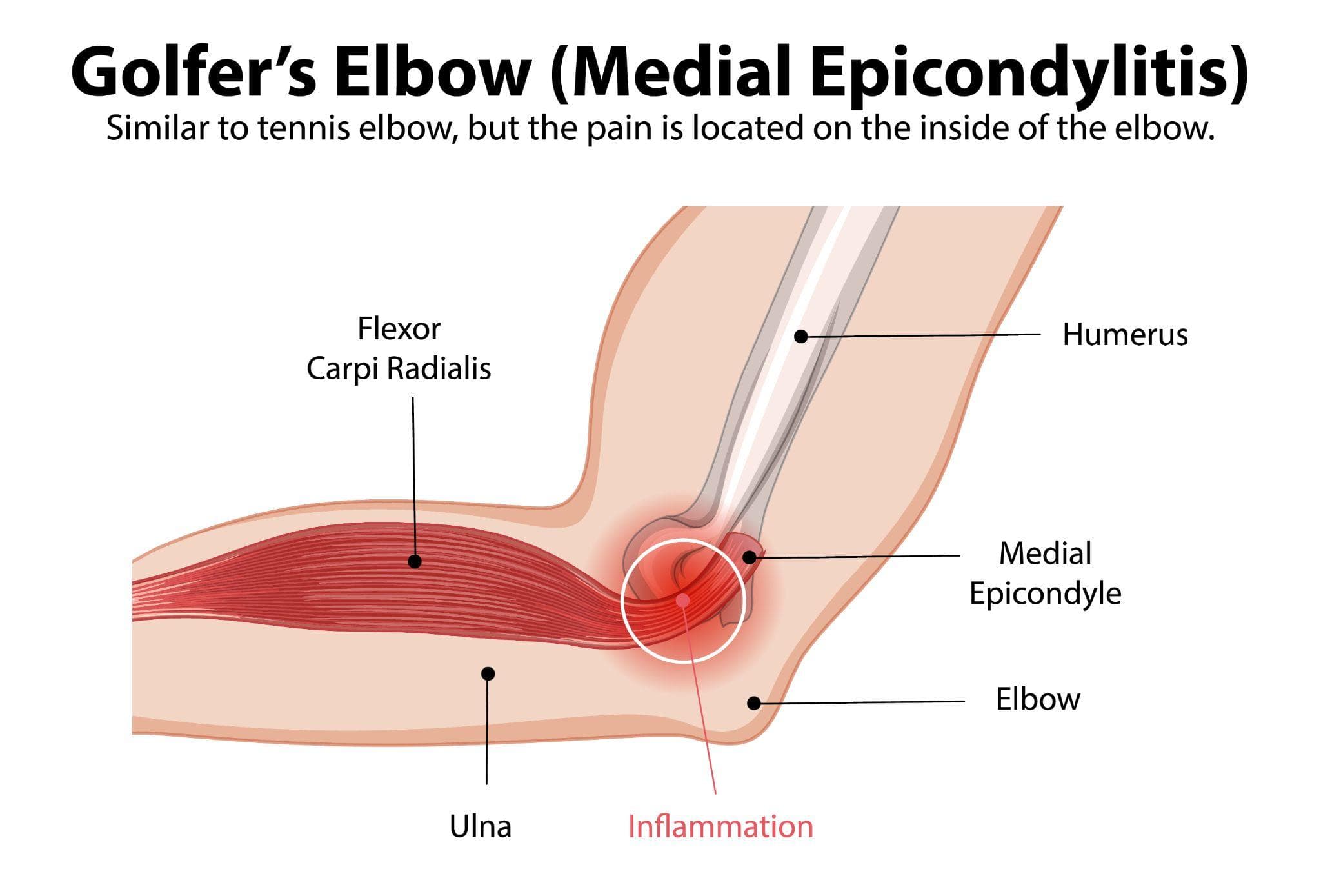
Diagram of golfer's elbow with key structures labeled.
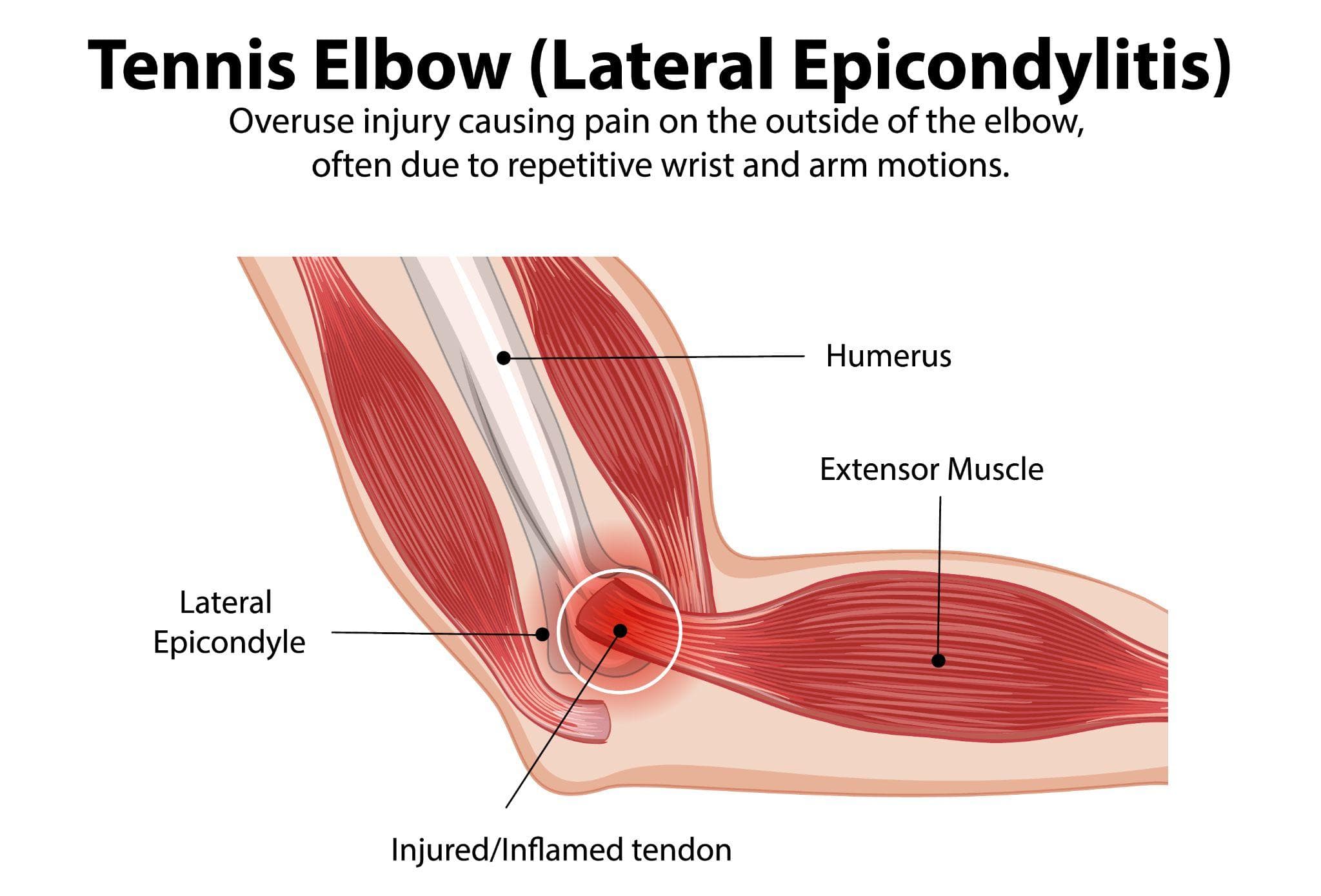
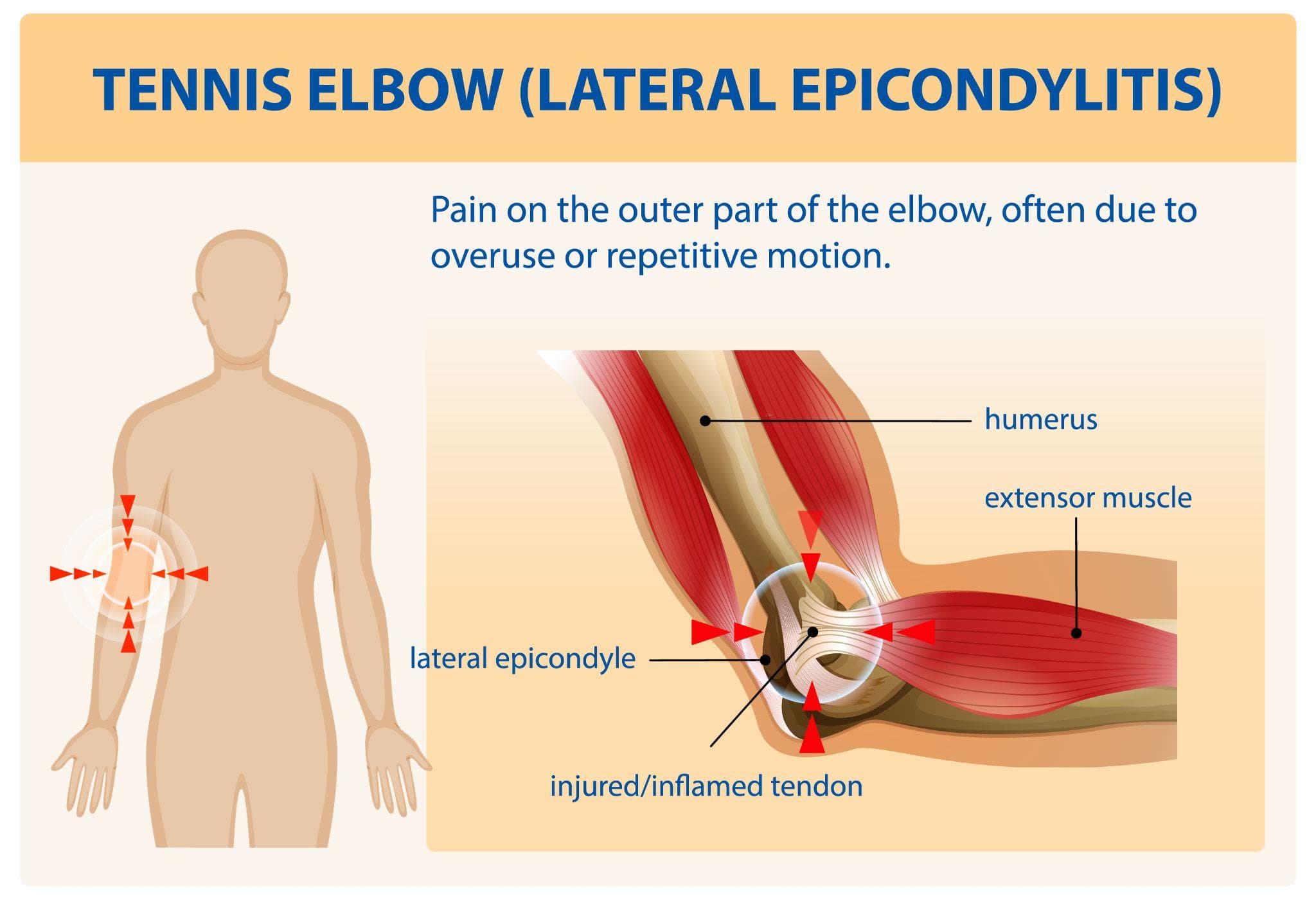
Diagram of tennis elbow with relevant anatomy marked.
Tennis elbow and golfer’s elbow are often considered to be two forms of the same injury. However, this is not true. Both injuries cause pain in the elbow area, but in different parts.
These injuries are not limited to sportspeople. Office workers, gym enthusiasts, and anyone who performs repetitive activities in their day-to-day lives may also suffer from these injuries. However, the pain does not occur due to a single event but is accumulated over time.
Identifying the two injuries and their causes will help in providing proper treatment to alleviate pain. This article will discuss the differences between tennis elbow and golfer’s elbow, their causes, and when to consult an orthopedic specialist.
What Is Tennis Elbow?
Tennis elbow, also known as lateral epicondylitis, is a condition that affects the lateral elbow region. The condition is caused by excessive use of the tendons on the lateral elbow due to repetitive movements of the wrist and forearm.
Contrary to its name, tennis elbow is not limited to people who play tennis. The condition can befall any person who engages in activities that involve repetitive use of the hand and wrist, for example, typing, lifting, and using tools.
What Is Golfer’s Elbow?
Golfer’s elbow, also known as medial epicondylitis, is a condition that affects the medial elbow region. The condition is caused by strain on the tendons on the inside of the elbow due to excessive use of the elbow in repetitive movements, especially when using the wrist and fingers to grasp objects.
Like tennis elbow, this condition is not limited to golfers. The condition can befall any person who engages in activities that involve excessive use of the hand and wrist, for example, lifting, throwing, and excessive use of smartphones.
Key Distinctions Between Tennis Elbow And Golfer’s Elbow
Even though both conditions occur as a result of repetitive tendon use, there are several key differences between the two conditions. Some of the key distinctions between the two conditions are discussed below:
1. Pain Localization
Tennis elbow pain occurs on the lateral aspect of the elbow, whereas golfer’s elbow pain occurs on the medial aspect of the elbow.
2. Etiology
Tennis elbow pain occurs as a result of repetitive use of the tendons from wrist extension and gripping, whereas golfer’s elbow pain occurs as a result of repetitive use of tendons from wrist flexion.
3. Involved Tendons
Tennis elbow pain occurs from tendinous attachment on the lateral epicondyle, whereas golfer’s elbow pain occurs from tendinous attachment on the medial epicondyle.
4. Typical Activities
Tennis elbow pain occurs in people involved in activities such as typing, painting, or racket games, whereas golfer’s elbow pain occurs in people involved in activities such as lifting, throwing, or gripping.
5. Pain Referral
Tennis elbow pain may radiate distally along the forearm, whereas golfer’s elbow pain may radiate to the wrist and fingers.
Symptoms Of Tennis Elbow
The symptoms of tennis elbow usually develop gradually and increase in intensity with time and with the use of the affected limb.
- Pain in the lateral region of the elbow.
- Weak grip of the hands.
- Pain while lifting objects or during handshakes.
- Pain while extending wrists.
Symptoms Of Golfer’s Elbow
The symptoms of golfer’s elbow also increase gradually with time.
- Pain in the medial region of the elbow.
- Stiffness in the elbow.
- Weak grip of hands and wrists.
- Tingling sensations in fingers.
Causes And Risk Factors
Both of these conditions are caused by repetitive overuse, but certain factors increase the risk of getting them. They include:
- Repetitive movements of the arm.
- Poor technique in sports or exercises.
- Lack of adequate warm-up.
- Weak forearm muscles.
- Prolonged periods of desk work or improper desk ergonomics.
Treatment Options
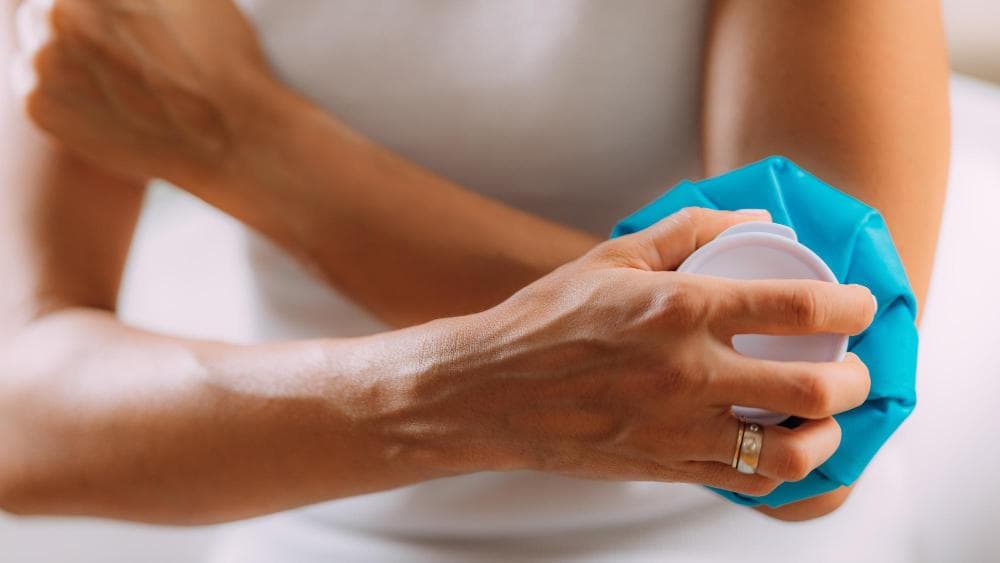
A hand applies a cold pack to an elbow.
Treatments for both conditions-tennis elbow and golfer's elbow-aim to manage pain, heal the injured tendons, and prevent the injury from recurring. As these are caused by an overuse injury, it's important to allow the tendons to heal and progressively work on restoring strength and flexibility to the affected tendons.
1. Rest And Activity Modification
It's first and foremost important to avoid any activity that puts stress on your elbow tendons. However, you don't need to stop all activity; instead, try to reduce or change the motion that brings on the pain, such as repetition in lifting, gripping, or wrist movements. Allowing tendons to heal and rest can really alleviate pain.
2. Ice And Pain Relief
Icing the affected tendons for about 15-20 mins multiple times a day should relieve some swelling and pain, and should be especially used after activities. Non-prescription pain relief can be used to offer short-term relief from pain; however, you should not use it to mask the pain as a means to continue with harmful activities, as it can worsen the condition.
3. Physiotherapy
Physiotherapy is an important part of the treatment regimen for these injuries. It's best to ensure that the physiotherapy exercise program, which will usually involve stretching and strengthening the forearm muscles/tendons, helps in reducing the risk of further injuries to this tendon and restoring the mobility of the elbow/forearm in general, and to prevent recurrence as well as to correct wrong biomechanics that led to the injury.
4. Bracing Or Support
Wearing an elbow brace or strap can really take pressure off your injured tendons. This is achieved as it spreads the pressure around the tendon rather than concentrating it on the damaged section, and so takes stress off this area.
5. Medications Or Injections
If pain is moderate to severe or persists through activity, then anti-inflammatory medication may be prescribed, the goal of which would be to reduce swelling. For injuries that haven't fully healed following a standard physiotherapy/medical program, other treatments such as a corticosteroid or therapeutic injection into the site of inflammation may be used to relieve pain.
For diagnosis and effective treatment, visit Dr. Mayank Chauhan in Noida for expert advice on the right course of treatment for you.
When To See An Orthopedic Specialist
The pain does not heal on its own and sometimes needs medical attention.
- Prolonged pain that has lasted for over 1-2 weeks.
- If grip strength is weak or objects are dropped frequently.
- Stiffness or lack of mobility in the elbow.
- Pain with day-to-day activities like picking up objects, typing, or holding a cup.
Is Tennis Elbow Worse Than Golfer's Elbow?

A woman appears uncomfortable while holding her elbow.
No, either tennis elbow or golfer's elbow is not worse than the other. The severity of the condition depends upon how long it has gone untreated for, and how much further strain the area is put under. With the right treatment early on, both conditions will resolve, but the longer it goes on, the longer the condition will take for the condition to heal and could cause long-term pain.
Final Thoughts
Tennis elbow and golfer's elbow sound similar, but they affect different areas of the elbow and need to be treated slightly differently. If the symptoms are recognized and addressed promptly, they may not become any worse than they are. With the help of proper treatment, rest, and physiotherapy, most conditions recover fully, and people can return to normal daily routines.
Dr. Mayank Chauhan in Noida can help patients who want effective and professional treatment in order to alleviate pain and restore daily activity.
Frequently Asked Questions (FAQs)
What if I don't treat golfer's elbow?
It could lead to chronic pain, weakness in your grip, or long-term tendon damage.
Can I still do weightlifting if I have golfer's elbow?
You may be able to do light training, but if the pain is increased by lifting weights or using the forearm, you may need to wait.
Why did I get a tennis elbow so abruptly?
Although you associate tennis elbow with playing tennis, it usually results from overuse and is exacerbated by using the muscles and tendons in your forearm in repetitive movements like typing or lifting.
How can I tell whether I have tennis or golfer's elbow?
You will experience the pain of tennis elbow on the outer side of your elbow and the pain from golfer's elbow on the inner side.